The Symbiotic Lens: Tamara Dean’s Ethereal Exploration of Human-Nature Interconnectivity
CAMBEWARRA MOUNTAIN, NSW — In the contemporary art world, where the divide between the "built environment" and the "natural world" is often depicted as a chasm of conflict, Australian artist Tamara Dean offers a different, more primordial vision. From her studio in the foothills of Cambewarra Mountain in New South Wales, Dean has spent years refining a visual language that rejects the notion of humanity as a mere observer of the environment. Instead, her work presents the human form as a biological extension of the earth—a philosophy that is currently undergoing a significant evolution as she prepares for a landmark solo exhibition at Michael Reid Sydney.
Main Facts: The Artistic Philosophy of Tamara Dean
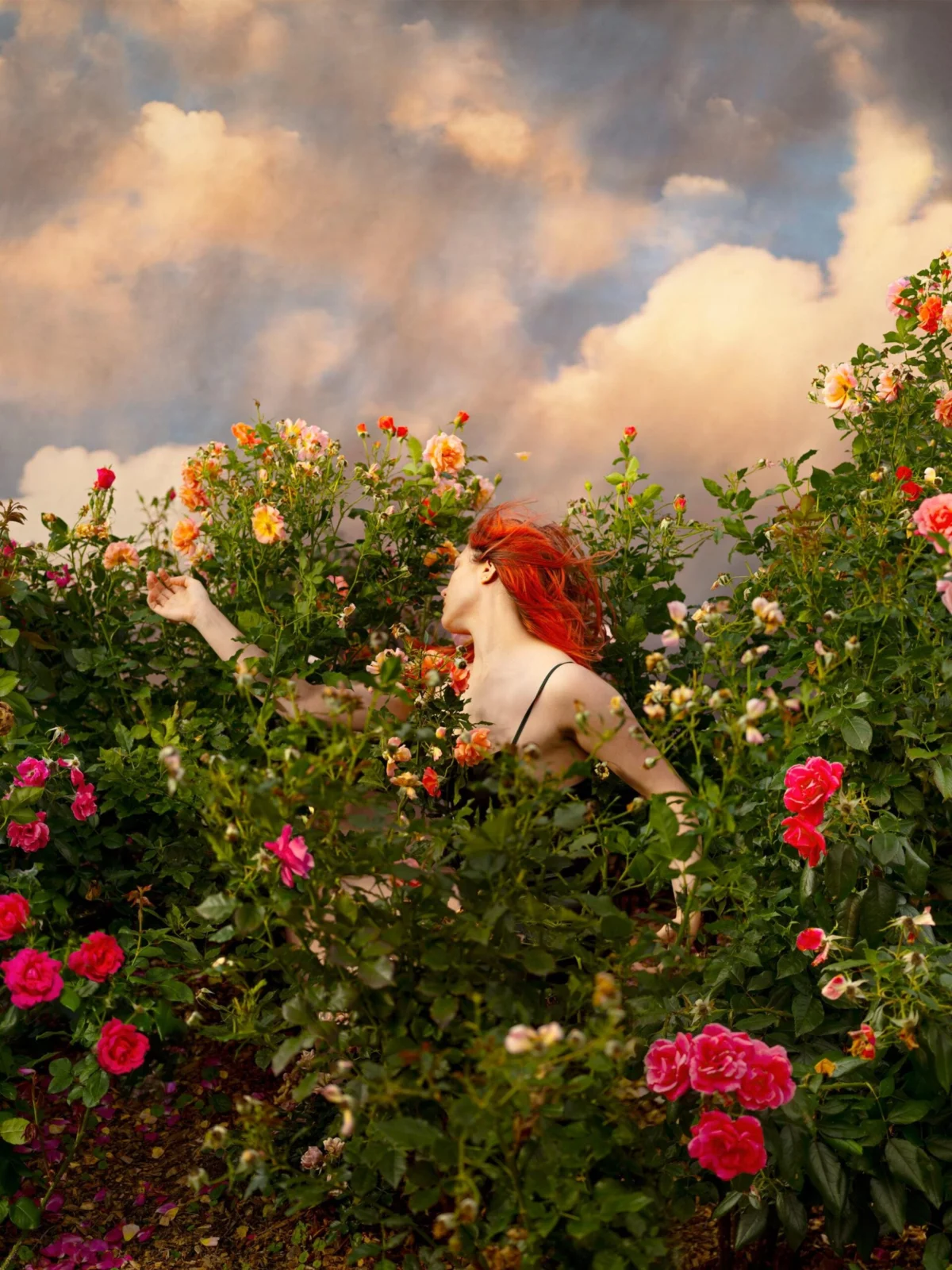
Tamara Dean’s practice is rooted in a singular, driving ambition: to explore the reality that humans are not separate from nature, but intrinsically part of it. This is not merely a thematic choice but a foundational worldview that informs every frame she captures. Her photography is characterized by an ethereal, almost otherworldly quality that blurs the lines between portraiture and landscape.

In Dean’s compositions, the human figure is rarely the dominant subject in the traditional sense. You will not find conventional portraits that center on individual identity or social status. Instead, her subjects—often nude or semi-clothed in garments that mimic organic textures—exist as elements embedded within the scene. They emerge from thickets of lotus plants, submerge into tannin-stained waters, or crouch among the roots of ancient trees.
Key Elements of Dean’s Work:
- Mimicry and Camouflage: Using color and form to make the human body appear "plant-like" or "animal-like."
- Intuitive Movement: A process-heavy approach where subjects respond to the rhythms and symmetries of the surrounding flora.
- Environmental Context: A deep focus on the seasonal shifts of the Australian landscape, particularly in New South Wales.
- Interdisciplinary Shift: A recent expansion into the medium of painting, integrating her photographic eye with tactile, hand-rendered techniques.
Chronology: From the Darkroom to the Canvas
Tamara Dean’s career has been a steady ascent through the ranks of contemporary Australian photography, but her recent trajectory suggests a "second blooming" of her creative spirit.

The Foundational Years (2010–2017)
During this period, Dean established her reputation for capturing the "liminal space" between youth and adulthood, often set against the backdrop of the Australian bush. Works like Sacred Lotus (Nelumbo nucifera) in Spring (2017) and Elephant Ear (Alocasia odora) in Autumn (2017) showcased her early fascination with botanical specificity. These works weren’t just about beauty; they were about the seasons of the human life cycle mirroring the seasons of the earth.
The Peak of Photographic Mimicry (2018–2022)
As her style matured, Dean began to experiment more boldly with color and costume. In 2018, her work In Bloom featured individuals with hot-pink hair crouching among lotus plants, their heads perfectly mimicking the shape and hue of the flower buds. This era also saw the creation of the Introversion series, where the use of frilly blue tutus served as a metaphor for the instinctive impulse to camouflage. In Taking Aim (2021), this concept took on a sharper edge, blending the delicate aesthetics of the tutu with the primal imagery of a crossbow, suggesting a defensive, yet integrated, existence within the wild.

The Current Transition (2023–Present)
Lately, Dean has experienced a significant shift in her daily practice. After decades of focusing primarily on the lens, she has returned to painting—a medium she had previously kept in the "background" of her creative process. This transition coincides with a major life milestone: her children reaching the ages of 19 and 20. The newfound time and mental space have allowed her to dedicate herself fully to the canvas, leading to an interdisciplinary approach that will be the centerpiece of her upcoming solo show in early 2025.
Supporting Data: Analysis of Key Works and Techniques
To understand the impact of Dean’s work, one must look at the technical and symbolic layers she employs. Her photography is often the result of long periods of immersion in a specific location, waiting for the right light and the right "response" from her models.

Case Study: "In Bloom" (2018)
In this photograph, the visual data is striking. The lotus plants provide a dense, repetitive pattern of green and pink. By introducing models with hair dyed to match the lotus buds, Dean creates a visual "glitch" for the viewer. For a moment, the eye cannot distinguish between the biological plant and the biological human. This is the "merging" Dean speaks of—a rejection of the human as a "foreign object" in the landscape.
Case Study: "Sunken Forest" (2023) and "Phototropism" (2024)
Underwater photography presents unique technical challenges, but for Dean, it is the ultimate medium for exploring the "elemental" state. In Sunken Forest, the water acts as both a literal and metaphorical lens, distorting the body until it resembles the swaying underwater vegetation. In Phototropism, a botanical term referring to an organism’s growth in response to light, the human subject is seen drifting through a thicket of aquatic plants, moving toward the surface in the same way a plant reaches for the sun.

Comparative Mediums:
| Feature | Photography (Dean) | Painting (Dean) |
|---|---|---|
| Primary Focus | Light, Moment, Interaction | Texture, Perspective, Reflection |
| Role of Body | Embedded Element | Abstracted Extension |
| Creative Speed | Rapid Capture, Long Prep | Slow, Meditative Evolution |
| Goal | Documentation of Connection | Interpretation of Essence |
Official Responses: Insights from the Artist
In interviews and artist statements, Dean is articulate about the spiritual and philosophical underpinnings of her work. She views her role not just as a creator of images, but as a facilitator of an "intuitive response."
"I am interested in those moments when the body appears to merge with the landscape, becoming almost plant-like, animal-like or elemental," Dean explained in a recent reflection on her process. "It suggests that we are participants in nature rather than observers of it."

Regarding her process with models, Dean emphasizes the lack of rigid posing. "I often encourage them to respond intuitively to their surroundings," she says. "At times, this involves reflecting the structures, rhythms, or symmetries found in nearby flora and foliage through their physical placement, posture, or gesture."
The transition to painting has been described by Dean as both a challenge and a liberation. "It’s something I have always done quietly in the background… But only now that my children are 19 and 20 have I been able to dedicate myself to it more fully. I’m enjoying the challenge of working in a different medium and the change in perspective it brings."

Critics and curators have noted that Dean’s move to painting is a natural progression. By removing the literal "truth" of the photograph, her paintings allow her to explore the feeling of being part of nature with even more abstraction and emotional weight.
Implications: The Future of the Human-Nature Narrative
The significance of Tamara Dean’s work extends beyond the gallery walls. In an era increasingly defined by the climate crisis and the "Anthropocene"—the geological age of human impact—her art serves as a necessary psychological corrective.

Environmental Implications
By depicting humans as "intrinsically part" of nature, Dean’s work fosters a sense of empathy and kinship with the environment. If the viewer sees the human body as being as delicate as a lotus bud or as submerged as a river weed, the destruction of those ecosystems becomes a personal, bodily threat rather than an abstract scientific concern.
Artistic Implications
Dean’s upcoming exhibition at Michael Reid Sydney is expected to be a pivotal moment for Australian contemporary art. It represents a growing trend of "interdisciplinary exploration," where artists refuse to be pigeonholed into a single medium. Her ability to translate the "ethereal" quality of her photography into the tactile world of painting suggests that her exploration of the natural bond is deepening.

Societal Implications
On a more personal level, Dean’s recent surge in productivity highlights the "creative rebirth" many women artists experience as their children reach adulthood. Her story is a testament to the endurance of the creative spirit and the way in which different stages of life can inform and enrich an artist’s perspective.
As the art world looks toward the early next year, the anticipation for Dean’s solo exhibition continues to build. It promises to be more than just a display of new works; it will be a profound meditation on where we come from, what we are made of, and how we might learn to live as "participants" in the world that sustains us.

Tamara Dean’s upcoming solo exhibition will open in early 2025 at Michael Reid Sydney. Her work continues to be a focal point for those interested in the intersection of environmentalism, photography, and the evolving human condition.