
The Synod of Whitby: A Defining Moment for Early English Christianity
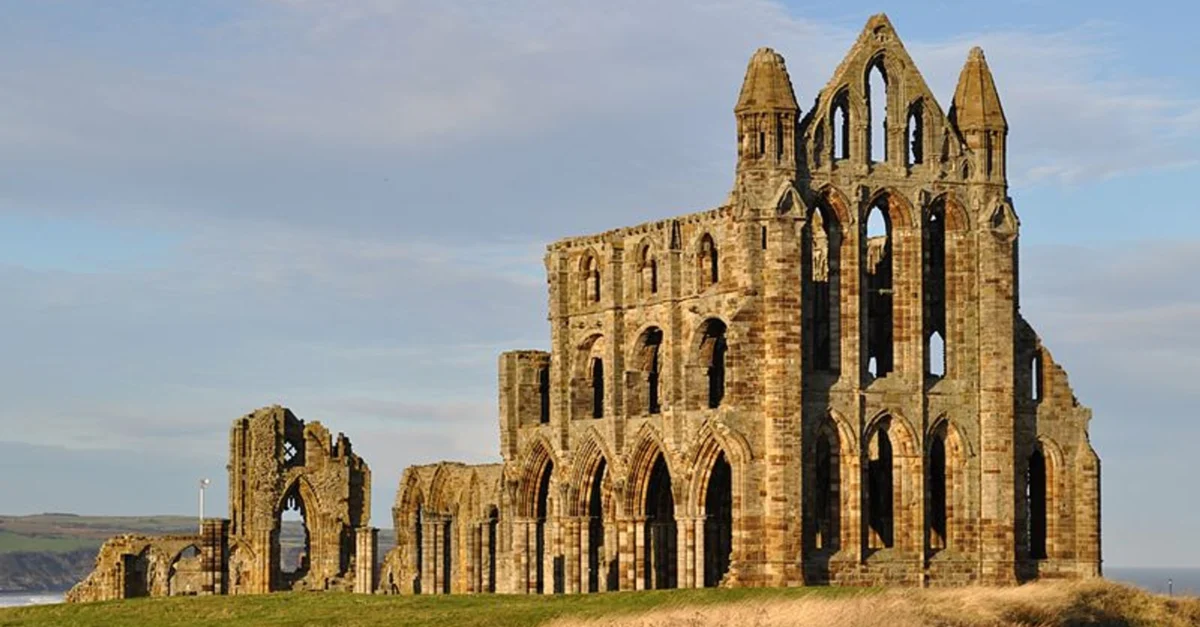
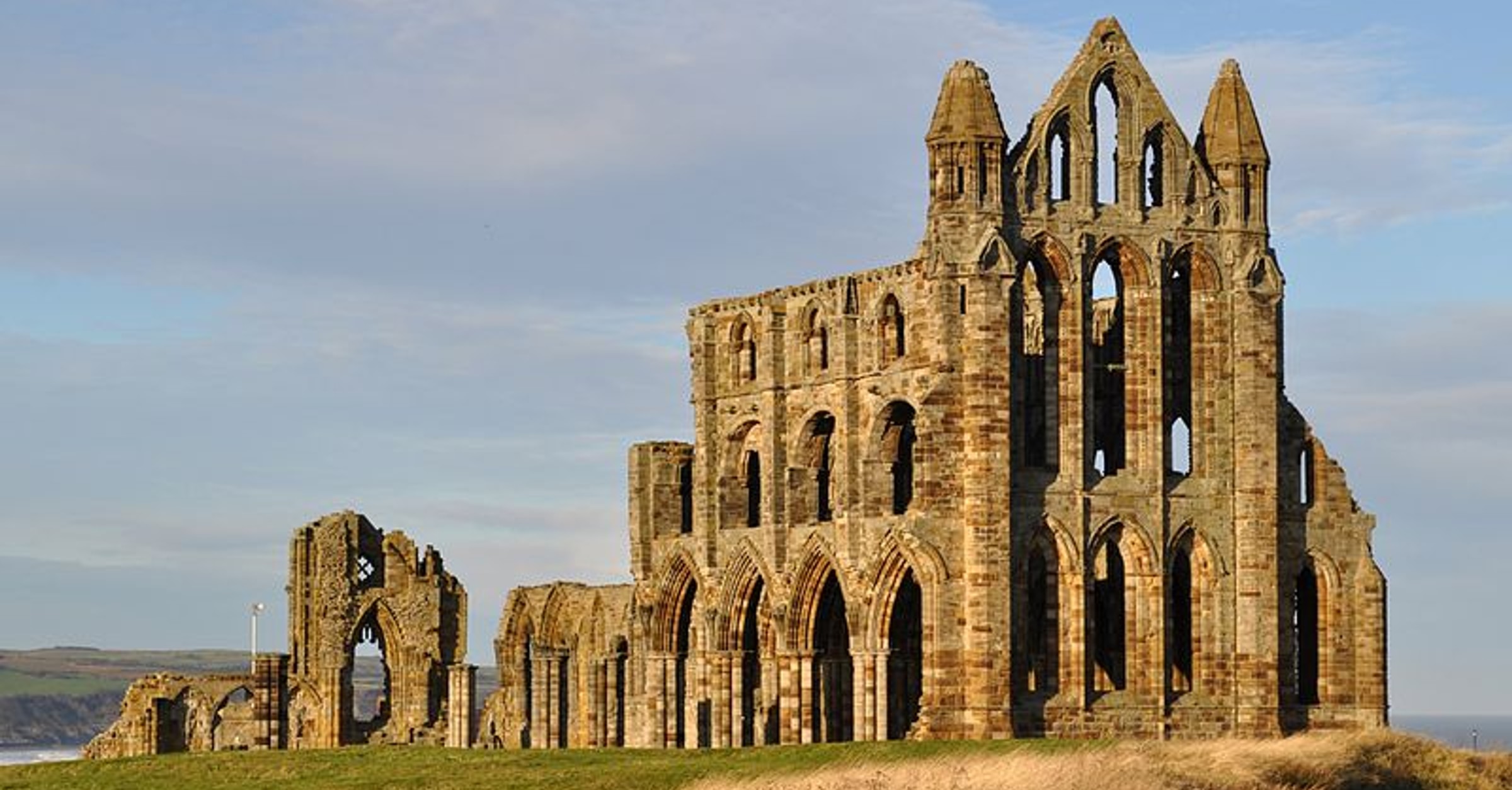
Whitby, Northumbria – 664 AD – In the rugged coastal monastery of Streanæshalch, later to be known as Whitby Abbey, a pivotal assembly was convened by King Oswiu of Northumbria. The year was 664, and the fate of Christian practice in his powerful Anglo-Saxon kingdom hung in the balance. This gathering, famously dubbed the Synod of Whitby, was not merely a theological debate but a high-stakes political drama, culminating in a decision that would profoundly shape the religious and cultural trajectory of England for centuries to come.
At its core, the synod aimed to resolve a fundamental disagreement: whether Northumbria would adhere to the Christian customs aligned with Rome, particularly concerning the calculation of Easter, or continue to follow the traditions of the Irish Christians from the influential monastery of Iona. King Oswiu, himself raised in the Celtic tradition, presided over a court deeply divided, with his own son and wife championing the Roman cause. The outcome, a resounding endorsement of Roman practices, would reconcile two distinct Christian traditions, align Northumbrian religious life with mainland Europe, and solidify the political landscape of a nascent English identity.
A Kingdom Divided: The Core Dispute
The central contention at Whitby revolved around the computus, the method for calculating the date of Easter. While seemingly a minor liturgical detail, this discrepancy led to significant practical and symbolic discord. In Northumbria, it meant that King Oswiu and his Celtic-aligned household might be celebrating Easter while his Roman-observing wife, Queen Eanflæd, and their retinue were still observing the penitential fast of Lent. Such disunity within the royal court was not only an administrative headache but a potent symbol of deeper theological and cultural schisms.
The two opposing doctrines were robustly represented at the synod. King Oswiu, supported by his bishop Colman of Lindisfarne, argued for the traditions passed down from Iona, a venerable center of Celtic Christianity. On the other side stood Oswiu’s son, Alhfrith, who advocated for Roman customs. Alhfrith’s champion was his close friend Wilfrid, a charismatic cleric who had studied extensively in Rome and was a fervent proponent of its practices. Despite his personal history, Oswiu ultimately sided with Wilfrid and the Roman contingent, signalling a profound shift for Northumbria and, by extension, for the nascent English church. The synod, therefore, marked a critical juncture, moving Northumbria away from its insular, Celtic heritage towards a broader European ecclesiastical framework.
A Tapestry of Conflict: The Historical Context
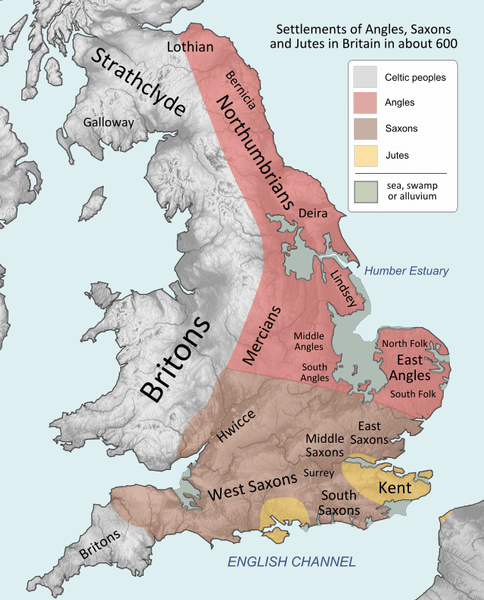
To fully grasp the significance of Whitby, one must understand the complex political and religious landscape of 7th-century Anglo-Saxon England. Northumbria, located in what is now northern England and southern Scotland, was a formidable early medieval kingdom, forged from the union of two formerly independent entities: Deira and Bernicia. Its rulers, particularly Oswiu, wielded considerable power, often acting as bretwaldas, or overlords, over other Anglo-Saxon kingdoms.
Northumbria’s Rise and Religious Dualism
The seeds of the Whitby controversy were sown decades before the synod. King Oswiu’s father, Æthelfrith, was the first Bernician king to also rule Deira, uniting the two. However, Æthelfrith’s death in battle in 616 led to a period of instability. Oswiu, then a young boy, fled Northumbria and was raised in exile in Dál Riata, an Irish kingdom spanning parts of modern-day Scotland and Ireland. It was here that he was immersed in the "Celtic" Christian faith, specifically the traditions promoted by the monks of Iona, a powerful monastic island known for its missionary zeal.
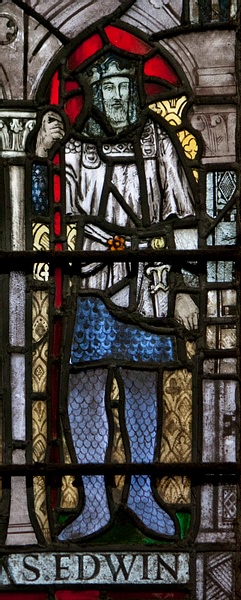
Meanwhile, Christianity was also taking root in southern England, primarily through the mission of Augustine of Canterbury in 597, which introduced "Roman" traditions. When Oswiu married Eanflæd, the daughter of Edwin, a previous king of Deira, their union brought together not only two royal lineages but also two distinct Christian traditions. Eanflæd, having been raised in Kent amidst Roman Christian customs after her father’s death, maintained her Roman practices within Oswiu’s predominantly Celtic court. This religious dualism within the very heart of the royal household created palpable tension, manifesting in the "Easter kept twice in one year" scenario famously recounted by Bede.
The Ascendancy of King Oswiu
Oswiu’s path to the Northumbrian throne was marked by significant political maneuvering and military victories. After his brother Oswald’s death in 642, Oswiu ascended, consolidating his power through further conquests. His decisive victory at the Battle of the Winwaed in 655 against Penda of Mercia not only avenged Oswald but elevated Oswiu to the pinnacle of Anglo-Saxon power, bringing Mercia under his influence and solidifying his position as bretwalda over the southern kingdoms.
The Christianization of Northumbria itself largely followed the Celtic model. Missionaries from Iona, most notably Aidan, had been invited during Oswald’s reign and established the monastery of Lindisfarne, becoming a spiritual heartland for the kingdom. This alignment with the Celtic tradition was deeply rooted in the royal family’s personal history, especially given Oswiu and his brothers’ upbringing among the Ionan monks. However, by the 660s, Oswiu’s once unassailable position as bretwalda was beginning to face challenges, and the internal religious disunity became increasingly untenable.
Underpinning the Crisis: Religious and Political Impetus
The Synod of Whitby was a complex event, driven by a confluence of religious conviction and astute political calculation. While chroniclers like Bede emphasized the theological motivations, modern scholarship reveals the intricate interplay of dynastic ambition, regional power struggles, and the broader integration of England into the European sphere.
The Liturgical Fault Lines: The Easter Controversy and Beyond
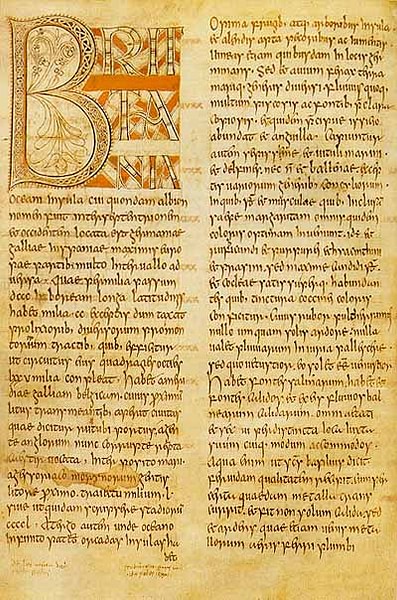
Bede’s Historia ecclesiastica gentis Anglorum (Ecclesiastical History of the English People), written in Northumbria just decades after the synod, portrays the assembly as primarily a response to "a great and frequent controversy" about Easter. The practical absurdity of "Easter twice kept in one year" within the royal household, with the king celebrating while the queen fasted, served as a potent symbol of the deeper disunity.
The core of the Easter dispute lay in different computus (calendar calculation) methods. The Roman Church, following the Alexandrian method, calculated Easter based on a 19-year cycle. The Celtic Church, largely influenced by Iona, used an older, 84-year cycle that led to different dates for the movable feast. Beyond Easter, other distinctions existed, though less central to the synod. These included the monastic tonsure (the haircut worn by monks – Roman priests shaved the crown of the head, while Celtic monks shaved a line from ear to ear across the forehead) and subtle differences in baptismal rites. For Bede, a scholar deeply invested in the science of computus and the unity of the English Church, resolving these liturgical differences was paramount.
Tensions escalated with the death of Finan, Bishop of Lindisfarne, and the succession of Colman, another monk trained in the Ionan tradition. Simultaneously, Oswiu’s son, Alhfrith, a staunch Romanist, expelled the Ionan monks from Ripon monastery and replaced them with his ally Wilfrid. This act, replacing Celtic traditions with Roman ones, including the Easter calculation, further intensified the controversy and, in Bede’s narrative, directly precipitated the calling of the synod.
The Royal Chessboard: Political Maneuvering
While Bede emphasized the religious impetus, more recent historical analysis highlights the profound political dimensions. The synod provided King Oswiu with a strategic opportunity to address multiple challenges to his authority and to solidify his kingdom’s position within a rapidly changing geopolitical landscape.
- Oswiu’s Fading Hegemony: By 664, Oswiu’s position as bretwalda was under threat. Wulfhere, son of the formidable Penda, had risen to the Mercian throne in 658, expelling Oswiu’s governors and challenging Northumbrian supremacy. The southern kingdoms, including Kent and Wessex, which largely followed Roman traditions, were crucial to Oswiu’s overlordship. Aligning Northumbria with Roman practices would bolster his legitimacy among these kingdoms and present a united front against Mercian expansion.
- Alhfrith’s Ambition: Internally, Oswiu faced a direct challenge from his eldest son, Alhfrith. Alhfrith, from an earlier marriage, likely feared his succession prospects were threatened by Ecgfrith, Oswiu’s younger son by Queen Eanflæd. By championing the Roman cause, Alhfrith positioned himself as a leader of a powerful, forward-looking faction, potentially undermining his father’s authority and strengthening his own claim to the throne. The synod thus became a stage for a dynastic power struggle. Wilfrid, Alhfrith’s ally, was not just a religious figure but a key political agent in this contest.
- The Canterbury Conundrum: The death of Deusdedit, Archbishop of Canterbury, shortly before the synod presented Oswiu with a critical dilemma. As bretwalda, he had the nominal right to nominate Deusdedit’s successor, an appointment that would confirm his authority over the southern kingdoms. However, such an appointment required papal approval. To secure this, Oswiu needed to demonstrate his fidelity to Rome, making a resolution of the Easter controversy not just desirable but politically imperative. By adopting Roman customs, he could choose an archbishop acceptable to the Pope, thereby reasserting his influence and securing a powerful ally in the church.
Thus, for Oswiu, the religious aspects of the Easter question were inextricably linked to his political survival and the consolidation of his kingdom’s influence. Convening the synod was a shrewd move to navigate these complex pressures, demonstrating his leadership and making a decisive statement about Northumbria’s future alignment.
The Deliberations at Streanæshalch: A Kingdom’s Choice
The assembly was held at the double monastery of Streanæshalch, presided over by the influential Abbess Hilda. Hilda, a formidable figure of royal lineage, herself followed the Ionan tradition, making the monastery a neutral, yet highly symbolic, venue for the crucial debate. In attendance were King Oswiu, Queen Eanflæd, their son Alhfrith, along with numerous abbots, bishops, and nobles from across the English kingdoms.
Setting the Scene: Whitby Abbey in 664
Whitby Abbey, as it would later be known, was a beacon of learning and piety in 7th-century Northumbria. Its abbess, Hilda, was renowned for her wisdom and counsel, attracting scholars and future bishops to her community. The choice of this location underscored the profound spiritual significance of the synod, framing it as a solemn ecclesiastical council, even as political undercurrents swirled beneath the surface. The atmosphere would have been charged with anticipation, as representatives of deeply held traditions prepared to make their cases before the king.
The Great Debate: Colman vs. Wilfrid
Bede’s account dramatizes the debate, presenting a clear clash of authorities. Colman, Bishop of Lindisfarne and a devout adherent of Iona’s traditions, argued passionately for the practices he had inherited. He stressed the antiquity of their custom, claiming it derived from St. John the Apostle and had been faithfully maintained by St. Columba and his successors on Iona. For Colman, this was the authentic, uncorrupted tradition, hallowed by saints and rooted in the very beginnings of Christianity.
Wilfrid, the Romanist abbot, countered with equal fervor. He asserted that the Roman practice was not merely a local custom but the universal tradition of the Catholic Church, observed "throughout the world, excepting only these two remote islands [Britain and Ireland], and that not even all of these." His most powerful argument, and the one Bede claims swayed Oswiu, invoked the authority of St. Peter. Wilfrid famously asked Colman if he could prove that St. Columba had received the "keys of the kingdom of heaven" from Christ, as St. Peter had. Oswiu, reportedly impressed by this appeal to Petrine authority, declared, "I dare not contradict the decrees of him who keeps the doors of the kingdom of heaven, lest when I come to them, there should be none to open them."
The King’s Verdict: Roman Triumph
With this pronouncement, King Oswiu delivered his verdict: Northumbria would adopt the Roman calculation of Easter. This decision was a profound moment, formally instituting Roman practices in a kingdom that had been a bastion of Celtic Christianity. The ramifications were immediate. Bishop Colman, deeply disillusioned, resigned from his bishopric and, accompanied by many of his Ionan monks, returned to Iona, effectively ending the direct influence of the Ionan mission in Northumbria.
To replace Colman, Oswiu appointed Tuda, a clergyman who, though raised in Ireland, followed the Roman tradition. This choice was strategic, demonstrating Oswiu’s commitment to the new alignment while also acknowledging the lingering Irish influence within his kingdom’s clergy. The synod thus concluded with a clear victory for the Roman cause, but the path to full ecclesiastical unity remained fraught with challenges.
Aftermath and Consolidation: Official Responses and Power Plays
The immediate aftermath of the Synod of Whitby was marked by both consolidation and continued political turbulence. While Oswiu had made a definitive choice, the implementation of Roman practices and the reordering of the Northumbrian church were not without further complications, exacerbated by ongoing dynastic struggles.
Episcopal Succession and Political Instability
Tuda’s tenure as bishop of Northumbria was tragically brief; he succumbed to the plague shortly after his appointment. This created a new vacuum, which Alhfrith, still ruling Deira under Oswiu, attempted to exploit. He requested that Deira be granted its own bishopric, effectively splitting Northumbria into two episcopal sees. He then dispatched Wilfrid to the continent for consecration as Bishop of Deira. This move was a clear attempt by Alhfrith to assert greater independence and solidify his power base, with Wilfrid as his ecclesiastical loyalist.
However, Oswiu, ever the astute politician, recognized the threat. While Wilfrid was abroad, the king apparently reversed his earlier consent. Instead of allowing two bishoprics, Oswiu moved Northumbria’s episcopal seat from the traditional Celtic stronghold of Lindisfarne to York, the royal city of Deira, and appointed Chad, a former pupil of Aidan but now embracing Roman customs, as bishop over all Northumbrians. This strategic relocation of the see to York, a Roman-founded city, symbolized the shift in ecclesiastical authority and control.
The Suppression of Alhfrith’s Revolt
Oswiu’s change of heart and the appointment of Chad over Wilfrid were almost certainly prompted by a significant political upheaval: Alhfrith, having exhausted his political options, launched an armed revolt against his father shortly after the synod. The specifics of this rebellion are scant, but Alhfrith’s subsequent disappearance from historical records strongly suggests that his revolt was decisively crushed, and he was either killed or exiled.
When Wilfrid finally returned from his consecration abroad, he found his patron Alhfrith disempowered and likely dead. With his political support evaporated, Wilfrid withdrew to Ripon, his former monastery. Oswiu had successfully navigated the internal dynastic challenge, turning his son’s political maneuvering against him and emerging with strengthened authority. The Synod of Whitby, which could have fragmented Oswiu’s rule, instead became a tool for its consolidation, neutralizing a key rival and streamlining the kingdom’s religious administration.
Enduring Legacy: Implications for England and Europe
The Synod of Whitby is indelibly etched into the narrative of early English history. While its immediate effects reshaped Northumbria, its long-term implications reverberated throughout the Anglo-Saxon kingdoms, laying crucial groundwork for the future of the English church and its relationship with continental Europe.
Unifying the English Church
The synod’s most direct consequence was the formal alignment of Northumbrian Christian practices with those prevalent across Europe. This decision was a critical step towards the "unification" of the Christian church in England. By adopting a common Easter date and other Roman customs, Northumbria integrated itself into a broader ecclesiastical network, reducing internal friction and facilitating administrative coherence across the Anglo-Saxon kingdoms.
This alignment proved instrumental in the subsequent appointment of Theodore of Tarsus as Archbishop of Canterbury in 668. Theodore, a highly organized and learned Greek monk, embarked on a comprehensive reorganization of the English church, establishing dioceses, holding synods, and enforcing Roman practices universally. Whitby had paved the way for Theodore’s reforms, providing a foundation upon which a more centralized and unified English church structure could be built, with Canterbury as its undisputed metropolitan see.
Cultural and Political Alignment with Rome
Beyond ecclesiastical administration, Whitby had profound cultural and political implications. By embracing Roman practices, England strengthened its ties to the Papacy and the wider Latin Christian world. This opened up channels for increased intellectual exchange, artistic influence, and administrative models from continental Europe. English monasteries, now firmly within the Roman orbit, became centers for scholarship, producing figures like Bede, whose works connected England to the intellectual currents of the continent.
This cultural alignment fostered a sense of shared identity and purpose with other European Christian kingdoms, facilitating diplomacy, trade, and pilgrimage. It contributed significantly to the gradual emergence of a distinct "English" identity within the broader framework of Christendom, distinct from its Celtic neighbors, yet deeply integrated into the Roman cultural sphere.
A Debated Transformation: Romanization or Natural Evolution?
The legacy of Whitby, however, remains a subject of ongoing historiographical debate. While traditionally viewed as a pivotal moment of "Romanization" – a decisive break from Celtic traditions and a forced adoption of Roman ones – many scholars now argue for a more nuanced interpretation. They suggest that the synod was less a sudden catalyst and more a stage within a broader trend of religious homogenization that was already underway.
Evidence indicates that even in Ireland, some Christian communities had begun to adopt the Roman reckoning of Easter prior to 664. The Ionan monks, once at the forefront of missionary activity, were gradually becoming outliers in a world increasingly adopting standardized Roman practices. In this view, Whitby did not force a radical transformation but rather formalized an inevitable shift, driven by practical necessity, political expediency, and the growing desire for universal Christian unity.
Regardless of whether it was a forced "Romanization" or a natural "homogenization," the Synod of Whitby stands as a symbolic landmark. It was a public declaration of intent, a strategic decision by a powerful king that cemented Northumbria’s place within the burgeoning European Christian commonwealth. Its reverberations continue to echo, reminding us of a time when religious debates were intertwined with the very fabric of political power, shaping the destiny of nations.




Leave a Comment