The Tactile Digital: Jacob Holster and the Evolution of Painterly AI Aesthetics
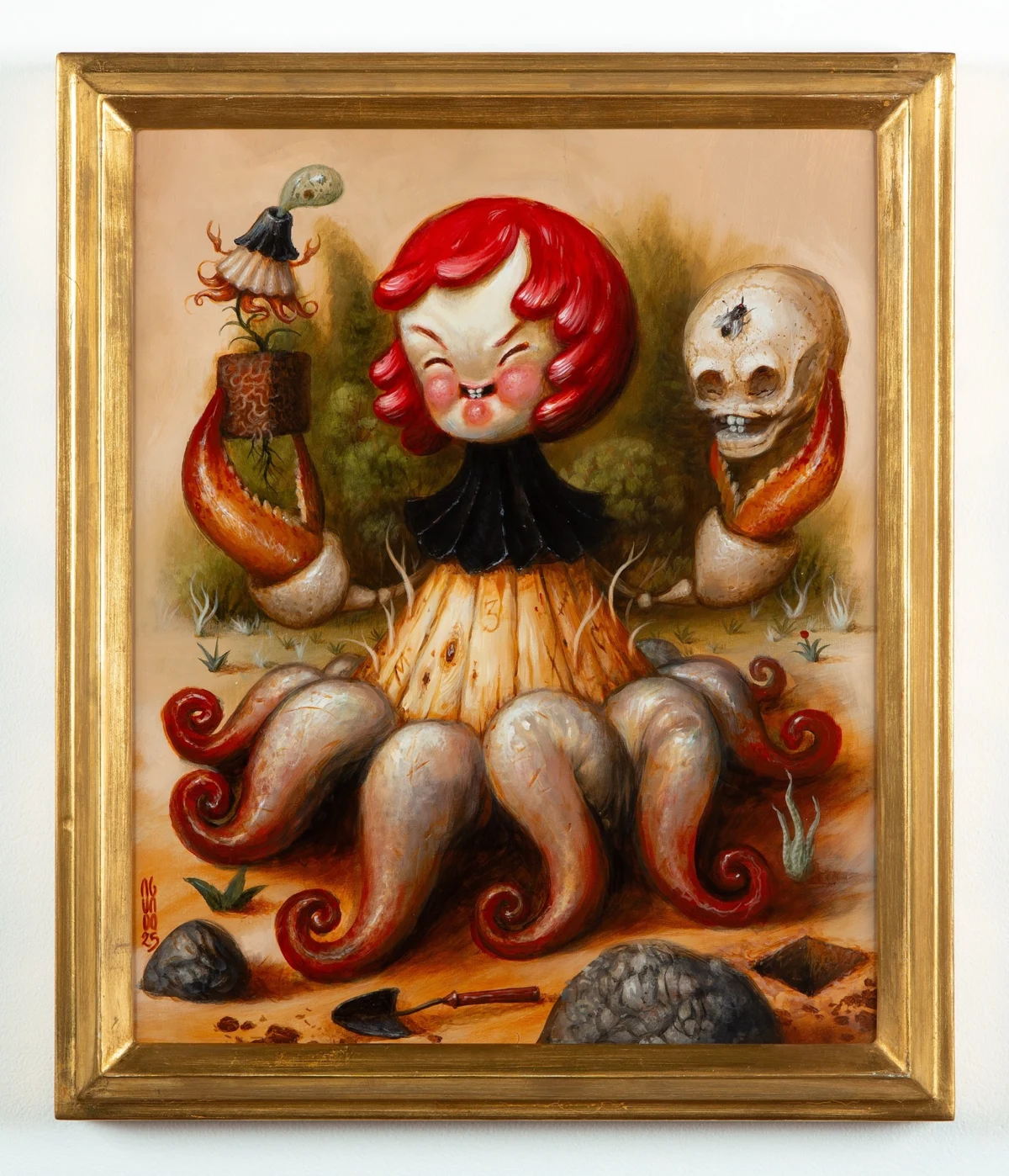
In the current era of generative media, the digital art world is often criticized for a "glossy uniformity." As artificial intelligence models like Midjourney and Stable Diffusion have become mainstream, a specific aesthetic has emerged: hyper-realistic, neon-saturated, and unnervingly smooth. However, emerging from the intersection of academia and digital experimentation is a voice that rejects the clinical precision of the machine in favor of something far more ancient: the texture of the human hand.
Jacob Holster, known in digital circles by his Instagram handle @bandyquantguy, has become a pivotal figure in the movement toward "Painterly AI." An Assistant Teaching Professor of Music Education at Penn State University, Holster’s work serves as a bridge between rigorous pedagogical research and avant-garde filmmaking. His portfolio, characterized by warm palettes and impasto-like digital textures, offers a roadmap for how technology can be used to enhance, rather than erase, the human touch.
Main Facts: Defining the Holster Aesthetic
The work of Jacob Holster is best understood as a rebellion against the "uncanny valley" of hyper-realism. While many AI creators strive to make digital renders indistinguishable from high-resolution photography, Holster leans into the abstraction of traditional fine arts.
The "Paint World" Philosophy
Holster’s most recognizable series, often titled under the "Paint World" umbrella (e.g., Paint World 28: Le Voyage and Paint World 38: Recipe for Consciousness), utilizes generative algorithms to simulate the physical behavior of oil and acrylic paints. His films are not merely sequences of images; they are fluid, temporal experiences where colors bleed and textures shift with a rhythmic quality.
Key characteristics of his work include:
- Tactile Textures: The visual surface of his films appears thick and layered, mimicking the physical "tooth" of a canvas.
- Warmth and Humanism: Eschewing the cold blues and sharp metallic edges of traditional sci-fi AI art, Holster utilizes ochres, deep reds, and soft ambers.
- Temporal Fluidity: His videos use AI motion synthesis not to replicate physics perfectly, but to create a dream-like, surrealist flow that feels more like a memory than a recording.
The Academic Intersection
Unlike many "prompt engineers" who treat AI as a shortcut to an end product, Holster’s approach is rooted in his role at Penn State University. As a professor of Music Education, his primary research interest lies in how humans learn, create, and interact with complex systems. This academic background allows him to view AI as a "pedagogical partner"—a tool that can be taught and, in turn, can teach the artist new ways of perceiving form and color.

Chronology: The Rise of Generative Surrealism
To understand Holster’s impact, one must look at the rapid evolution of the AI art landscape over the last three years.
2022: The Era of Diffusion
The release of public-facing diffusion models sparked a gold rush of digital imagery. Early adopters focused on "prompt crafting" to achieve photographic perfection. During this period, the "AI look" became synonymous with a specific type of digital airbrushing.
2023: The Shift to Motion
As video-generative AI (such as Runway and Pika) began to emerge, the challenge shifted from static images to temporal consistency. It was during this phase that Holster began experimenting with the "Paint World" series. While others were trying to create realistic AI movies, Holster was exploring how motion could be used to simulate the drying of paint or the movement of a brush.
2024–Present: The Human Terrain
In his recent work, specifically the acclaimed short film Art Is Human Terrain, Holster has moved into a more conceptual phase. He is no longer just showing "what AI can do," but is instead using the medium to comment on the nature of consciousness and the human experience. His work has moved from the experimental periphery into the center of the "NeuroSurrealist" conversation—a movement that seeks to map the subconscious using algorithmic tools.
Supporting Data: The Convergence of Music, Pedagogy, and Pixels
The depth of Holster’s work is supported by his extensive background in education and music theory. This cross-disciplinary expertise provides a unique data set for analyzing his visual output.
Music Education as a Framework
In music education, "scaffolding" is a technique used to help students master complex tasks. Holster applies this concept to AI art. He treats the generative model as a student that requires specific "musical" parameters—rhythm, tone, and harmony—to produce visual results.

Research at Penn State
Holster’s research examines the "convergence of artificial intelligence, pedagogy, and creative practice." This involves tracking how AI affects the creative agency of the user. His findings suggest that when AI is used to mimic traditional artistic styles (like oil painting), it can actually lower the "barrier to entry" for creative expression while requiring a higher level of "conceptual curation" from the artist.
The Technical Stack
While Holster’s work looks organic, it is built on a sophisticated technical foundation. By utilizing custom LoRA (Low-Rank Adaptation) models and specific noise-injection techniques, he is able to override the default "plastic" look of standard AI models. This technical "friction" is what creates the textured, painterly grain that has become his signature.
Interpretive Analysis: Deconstructing Key Works
To truly appreciate the "Painterly AI" movement, one must look at the specific narratives Holster constructs within his short films.
Art Is Human Terrain [Paint World 33]
This film serves as a manifesto for Holster’s philosophy. The title suggests that humanity is not separate from the technology it creates; rather, we are the "terrain" upon which the AI operates. Visually, the film features figures that seem to dissolve into their backgrounds, suggesting a blurring of the lines between the individual and the environment. The use of texture here is not just an aesthetic choice; it represents the "roughness" of human life in contrast to the "smoothness" of digital data.
Le Voyage [Paint World 28]
In Le Voyage, Holster explores the concept of the "internal journey." The film uses a shifting perspective that feels like a camera moving through a gallery of living paintings. It challenges the viewer’s perception of depth, using color theory to guide the eye through a series of abstract landscapes.
Recipe for Consciousness [Paint World 38]
Perhaps his most philosophical work, this film tackles the hard problem of consciousness. Through a series of morphing portraits, Holster asks whether consciousness is something that can be "cooked" or generated through a recipe of data and algorithms. The "painterly" filter acts as a metaphor for the subjective experience—the "qualia" that makes human consciousness unique.

Implications: The Future of Human-Centric AI
The work of Jacob Holster has significant implications for the future of the creative industries and the role of the artist in an automated world.
1. The Rejection of "Prompt Engineering"
Holster’s success suggests that the future of AI art does not lie in better "prompts," but in better "artistry." As AI tools become more powerful, the value of the artist will shift toward their ability to maintain a unique aesthetic voice. Holster’s "painterly" style is a form of digital branding that cannot be easily replicated by someone simply typing "oil painting" into a prompt box.
2. The Return to Tactility
As our lives become increasingly digitized and "flat" (screens, glass, sleek interfaces), there is a growing psychological craving for texture. Holster’s work anticipates a trend where digital media will seek to reclaim the tactile qualities of the physical world. This has implications for VR (Virtual Reality) and AR (Augmented Reality), where "tactile AI" could create more immersive and emotionally resonant environments.
3. Ethical and Pedagogical Shifts
As an educator, Holster is at the forefront of the debate on how AI should be taught in schools. His work proves that AI does not have to be a "cheating" tool that replaces the need for art history or technique. Instead, it can be a way to engage with those subjects more deeply. By studying the brushstrokes of the Old Masters to better "train" an AI, students can gain a deeper appreciation for traditional craft.
Conclusion: The New Renaissance
Jacob Holster (@bandyquantguy) represents a new breed of creator: the "Scholar-Artist." By grounding his digital experiments in the traditions of music education and fine art, he has carved out a space where technology feels warm, human, and deeply textured.
In a world that is increasingly obsessed with the "new," Holster reminds us that the most powerful use of technology is often to help us see the "old" in a different light. His "Paint World" is not a replacement for the canvas; it is an evolution of it—a place where the binary code of the future meets the oil and pigment of the past. As AI continues to evolve, the "Human Terrain" explored by Holster will remain the most important landscape for artists to map.