
Unearthing Europe’s Hidden Spiritual Landscape: Emma Wilby’s "Cunning Folk and Familiar Spirits" Reshapes Our Understanding of Witchcraft
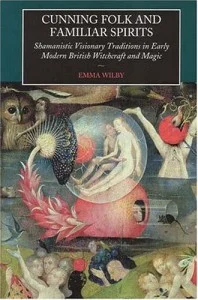
Cambridge, UK – A groundbreaking academic work is challenging long-held assumptions about European spiritual history and the notorious Witch Trials of the early modern period. Emma Wilby’s seminal book, Cunning Folk and Familiar Spirits: Shamanistic Visionary Traditions in Early Modern British Witchcraft and Magic, offers a meticulously researched and profoundly empathetic reinterpretation of practices once dismissed as mass hysteria or mere fabrication. Far from being an anomaly, Wilby argues, shamanistic traditions were a pervasive, albeit misunderstood, element of European folk belief, forming the true experiential core of what authorities later demonized as witchcraft.
This ambitious volume embarks on a journey to dismantle two deeply entrenched academic paradigms. Firstly, it robustly refutes the notion that "European shamanism" is an oxymoron, asserting its historical prevalence in Britain and beyond up until a few centuries ago. Secondly, and perhaps more controversially, Wilby contends that the sixteenth and seventeenth-century Witch Trials were not solely products of elite manipulation or collective delusion. Instead, she posits that a genuine substratum of magical and visionary practices existed among the peasantry, practices that, when viewed through a cross-cultural lens, bear striking resemblances to shamanism found in indigenous traditions worldwide. This re-evaluation demands a fundamental shift in how we perceive the accused witches, moving from victims of irrational fear to practitioners of a deeply rooted, albeit marginalized, spiritual system.
A Paradigm Shift in Historical Understanding: Main Facts of Wilby’s Research
Emma Wilby’s Cunning Folk and Familiar Spirits stands as a pivotal text for anyone seeking a more nuanced understanding of early modern European history, particularly its spiritual and magical dimensions. The book’s central thesis is twofold:
- The Pervasiveness of European Shamanism: Wilby meticulously demonstrates that shamanistic practices, often associated solely with remote indigenous cultures, were actively engaged in across Europe, particularly in Britain, well into the early modern period. This challenges the prevailing academic consensus that these traditions had largely vanished or were never significant in a "civilized" European context. By identifying key shamanistic hallmarks – such as altered states of consciousness, spirit journeying, communication with non-human entities (familiars), healing, and divination – within historical records, Wilby paints a vivid picture of a spiritually active populace.
- The Experiential Basis of Witchcraft Accusations: Contrary to theories that attribute the Witch Trials purely to mass hysteria, social control mechanisms, or fabricated confessions, Wilby uncovers a compelling argument for a genuine experiential and folkloric foundation underlying many accusations. She asserts that individuals accused of witchcraft were often engaged in practices that they understood as a form of magic or interaction with the spirit world. These practices, while interpreted by the ecclesiastical and secular authorities through the demonological framework of Christianity, were, in the practitioners’ own cultural context, remnants of much older, pre-Christian spiritual traditions with strong shamanistic characteristics.
Wilby’s methodology involves a profound re-reading of primary sources, especially the court documents of the Witch Trials. She argues that these records, often dismissed as unreliable due to their coercive nature, nonetheless contain valuable ethnographic data when interpreted correctly. By applying cross-cultural anthropological models, particularly from Siberian and Native North American shamanism, she reveals how the seemingly bizarre testimonies of accused witches align strikingly with descriptions of shamanic visionary experiences. Crucially, Wilby reinterprets the "demons" witches were accused of communing with, suggesting that these entities were understood by the practitioners themselves as familiar spirits or fairies – powerful, liminal beings rooted in ancient European folklore, subsequently demonized by the Church.
The book’s final section, "The Experiential Dimension," is particularly lauded for its empathetic approach. Here, Wilby reconstructs the harsh realities of early modern peasant life, illustrating how these socio-economic and environmental conditions would have fostered a worldview highly conducive to belief in spirits, magic, and the efficacy of traditional practices. This sensitive portrayal aims to bridge the gap between modern skepticism and historical belief, offering a more humanized and sympathetic understanding of those who lived within these complex spiritual frameworks.
A Glimpse Through Time: Chronology of Shamanism, Witchcraft, and Scholarship
To fully appreciate the revolutionary nature of Wilby’s work, it is essential to contextualize it within the broader historical and academic landscape.
The Early Modern Period: A Crucible of Beliefs
The early modern period (roughly 1500-1800 CE) was a tumultuous era in European history. It witnessed the seismic shifts of the Reformation and Counter-Reformation, the nascent Scientific Revolution, burgeoning global exploration, and profound social and economic transformations. Yet, beneath the veneer of emerging modernity and institutionalized religion, ancient folk beliefs and practices persisted with remarkable tenacity, particularly in rural communities. This was a world where disease was rampant, crop failures frequent, and life precarious. In such an environment, explanations for misfortune often turned to the supernatural, and traditional healers, diviners, and magical practitioners—the "cunning folk"—played vital roles within communities. It is precisely within this complex interplay of established religion and enduring folkways that Wilby situates her re-evaluation of European shamanism and witchcraft.
The Evolution of Shamanism Studies
For much of the 20th century, the study of shamanism was heavily influenced by Mircea Eliade’s seminal work, Shamanism: Archaic Techniques of Ecstasy. Eliade’s model, while groundbreaking, tended to focus on specific, often remote, indigenous cultures (particularly Siberian) and emphasized the "archaic" nature of these practices, implying their absence or decline in "advanced" societies. This perspective inadvertently contributed to the academic marginalization of any notion of historical European shamanism, often relegating it to prehistory or dismissing it as an "oxymoron" in the context of early modern Europe. Wilby’s work directly confronts this Eurocentric bias, demonstrating that the conceptual framework of shamanism can, and should, be applied to historical European contexts, provided one is willing to look beyond superficial interpretations.
Reinterpreting the Witch Trials: A Shifting Scholarly Landscape
Academic interpretations of the European Witch Trials (peaking roughly between 1560 and 1660) have evolved significantly over time. Early analyses often viewed them as periods of irrational fear, fueled by religious fanaticism and misogyny. Later scholarship, particularly from the mid-20th century onwards, introduced more sophisticated socio-economic and political explanations, emphasizing the role of social tensions, community conflicts, legal procedures, and the state’s efforts to impose religious and social order. Historians like Hugh Trevor-Roper and Keith Thomas highlighted the intellectual framework of demonology adopted by elites, while others, like Alan Macfarlane and Christina Larner, explored local dynamics and the psychological pressures on the accused.
However, a persistent debate revolved around the question of "real" witchcraft. Were the accused truly practicing anything resembling magic, or were the confessions purely products of torture, suggestion, and mass delusion? Carlo Ginzburg’s work on the benandanti in Friuli, Italy, offered an early challenge to the "no real witchcraft" thesis, suggesting that some accusations might have touched upon genuine folk traditions of visionary journeys. Wilby’s Cunning Folk and Familiar Spirits represents a crucial continuation and expansion of this line of inquiry, arguing that the "real" practices were not necessarily malevolent witchcraft as defined by the elites, but rather a form of indigenous European shamanism. She thus contributes to a growing body of scholarship that seeks to recover the agency and belief systems of those accused, moving beyond purely victim-centric narratives.
Wilby’s Evidentiary Foundation: Supporting Data and Cross-Cultural Parallels
Wilby’s core arguments are built upon a meticulous re-examination of primary sources and a sophisticated application of anthropological theory. Her work shines in its ability to draw compelling connections between seemingly disparate cultural phenomena.
The Fabric of Early Modern British Witchcraft
The court records of the British Witch Trials, particularly from England and Scotland, form the bedrock of Wilby’s empirical data. These documents, comprising accusations, interrogations, and confessions, are replete with descriptions of individuals interacting with "familiar spirits," engaging in visionary journeys, performing healing rituals, finding lost objects, and causing harm through magical means. Wilby’s genius lies in her ability to look beyond the demonological overlay imposed by the interrogators and interpret these accounts through a different lens.
For instance, common motifs in these testimonies include:
- The appearance of a spirit in animal form (cats, dogs, toads, birds) or sometimes anthropomorphic, offering aid or making demands.
- Physical marks on the body, interpreted as "witch’s marks" or places where familiars sucked blood.
- Out-of-body experiences or "flights," often described as nocturnal journeys.
- Healing practices involving herbs, charms, or communication with unseen forces.
- Divination to discover hidden truths or future events.
Traditional interpretations often dismissed these as products of torture-induced fantasy or the interrogators’ leading questions. Wilby, however, argues that these consistent patterns suggest a shared cultural lexicon of spiritual experience, deeply embedded within the peasant worldview.
Unveiling Shamanism Through Cross-Cultural Lenses
To substantiate her claim that these British practices were shamanistic, Wilby employs a powerful comparative method, drawing extensively on well-documented shamanistic traditions from Siberia and Native North America. She identifies a consistent set of "hallmarks of shamanism" that transcend geographical and cultural boundaries:
- Spirit Familiars: A central feature of shamanism is the acquisition and interaction with spirit helpers, often in animal form, who assist the shaman in their work. Wilby demonstrates that the "familiars" described in British witchcraft trials—the small, often animalistic entities who offer power or knowledge—mirror these shamanic spirit helpers.
- Altered States of Consciousness and Visionary Journeys: Shamans often enter trance states (ecstatic or dissociative) to journey to other realms, communicate with spirits, or retrieve lost souls. The "flights" or visionary experiences recounted by accused witches, where they met with spirits or travelled to distant places, resonate strongly with these shamanic journeys.
- Healing and Divination: Shamans are often healers, diagnosticians, and diviners within their communities. The "cunning folk" of early modern Britain, who were frequently accused of witchcraft, performed very similar roles, offering remedies, finding lost items, and predicting futures.
- Initiation Experiences: The often traumatic or unusual initial encounter with a spirit, sometimes involving a perceived "death and rebirth," finds parallels in both shamanic initiations and the accounts of some accused witches.
By highlighting these structural and experiential similarities, Wilby makes a compelling case that British witchcraft, as described in its own historical records, was not an isolated aberration but a local manifestation of a global spiritual phenomenon.
From Fairies to Demons: The Transformation of Belief
One of Wilby’s most insightful arguments concerns the reinterpretation of "demons" in the court documents. She posits that while the educated elite (clergy, judges, magistrates) framed these entities strictly within a Christian demonological paradigm (as agents of Satan), the peasants themselves likely understood them differently. Drawing on extensive folkloric evidence, Wilby argues that these "demons" were, for the practitioners, more akin to fairies, elves, or other nature spirits – powerful, ambiguous beings of the liminal realm, capable of both harm and help, deeply ingrained in British folk tradition.
This transformation from benign or ambivalent folk spirits to malevolent Christian demons highlights the profound cultural clash at the heart of the Witch Trials. The same experiential encounter, the same spirit entity, could be radically reinterpreted depending on the worldview of the observer. This distinction is crucial for understanding the accused’s perspective and for rehabilitating their practices from purely Satanic worship to a form of traditional folk spirituality.
The "Experiential Dimension": Life, Belief, and the Supernatural
Wilby’s final section is a masterclass in historical empathy. She reconstructs the sensory and psychological world of the early modern British peasantry. For communities constantly battling disease, famine, and harsh weather, where modern science offered no solace, the natural world was alive with unseen forces. Dreams were potent, omens significant, and the boundaries between the mundane and the magical porous.
In such a context, visionary experiences, encounters with what were perceived as spirits, and belief in the efficacy of magic were not "absurd" or "inexplicable," but rather logical and practical responses to a world governed by forces beyond human control. This environment, Wilby argues, was inherently conducive to the types of visionary states and spirit interactions that form the basis of shamanism. By immersing the reader in this lived reality, Wilby compels us to understand, rather than merely judge, the beliefs and practices that led so many to the gallows.
Reverb in the Academy: Official Responses and Scholarly Impact
Emma Wilby’s Cunning Folk and Familiar Spirits has been met with significant acclaim within academic circles, particularly among historians of witchcraft, folklore scholars, and religious studies specialists. Its rigorous scholarship and bold arguments have positioned it as a critical text, sparking new discussions and challenging established methodologies.
Acknowledging a New Vista
The book has been widely praised for its meticulous research, its command of both historical sources and anthropological theory, and its compelling narrative. Reviewers often highlight Wilby’s courage in tackling such a sensitive and often sensationalized topic with intellectual honesty and profound empathy. It is recognized as a vital contribution to the study of European folk religion, effectively demonstrating that Europe, too, has a rich and complex history of indigenous spiritual practices that deserve serious academic consideration.
Challenging Paradigms and Fostering Debate
While largely positive, Wilby’s work, like any truly innovative scholarship, naturally invites further discussion and debate. Some scholars may raise questions regarding the precise definition of "shamanism" and the extent to which a universal model can be applied across such diverse cultures and historical periods. Others might debate the reliability of court documents, even when re-read with a critical eye, given the inherent power imbalances and coercive environments in which they were produced. However, these discussions are precisely what invigorate academic fields, and Wilby’s work provides a robust framework for such critical engagement. It has undeniably pushed the boundaries of what is considered acceptable or plausible in the study of European witchcraft and religion.
Influence on Future Research
The impact of Cunning Folk and Familiar Spirits is likely to be far-reaching. It encourages future researchers to:
- Re-examine primary sources: Historians are now more likely to scrutinize witchcraft trial records for ethnographic clues about genuine folk beliefs, rather than dismissing them as pure fabrications.
- Adopt cross-cultural perspectives: The book champions the use of comparative anthropology to illuminate historical phenomena, fostering interdisciplinary collaboration between historians and anthropologists.
- Focus on the "experiential": It underscores the importance of understanding the subjective experience of historical actors, moving beyond purely structural or intellectual histories.
- Re-evaluate European spiritual history: It opens avenues for exploring other potential manifestations of shamanistic or animistic traditions within Europe’s past, beyond the specific context of witchcraft.
Wilby’s work serves as a powerful reminder that history is not a static narrative but a dynamic field of inquiry, constantly being reshaped by new evidence and fresh perspectives.
Enduring Significance: Implications for Understanding History and Humanity
The implications of Emma Wilby’s Cunning Folk and Familiar Spirits extend far beyond the specific academic disciplines of history or religious studies. Her work offers profound insights into the nature of belief, the resilience of cultural traditions, and the complex interplay between power, perception, and spiritual experience.
Reclaiming a Suppressed Heritage
By demonstrating the historical presence of shamanistic visionary traditions in Europe, Wilby helps to reclaim a suppressed and often denigrated aspect of European spiritual heritage. It challenges the prevailing narrative that post-pagan Europe rapidly shed its animistic and magical beliefs, replacing them entirely with Christian dogma or rational thought. Instead, it reveals a continuity, a tenacious undercurrent of folk spirituality that persisted for centuries, adapting and often clashing with official religious institutions. This reclamation is vital for a more complete and honest understanding of European cultural evolution.
A Challenge to Eurocentrism
Wilby’s comparative approach also serves as a crucial challenge to Eurocentrism in the study of religion and spirituality. By applying the analytical framework of shamanism—a concept often confined to non-Western, "primitive" cultures—to early modern Europe, she dismantles artificial intellectual boundaries. It highlights the universality of certain human spiritual experiences and the diverse ways in which societies across the globe have engaged with the unseen world, whether through spirit helpers, visionary journeys, or healing rituals. This perspective fosters a more inclusive and global understanding of human religiosity.
Humanizing the "Witch" and the Accused
Perhaps one of the most significant human implications of Wilby’s research is its profound capacity to humanize the figures at the heart of the Witch Trials. By suggesting that many accused witches were not merely deluded, evil, or innocent victims of a cruel system, but rather practitioners of a genuine, deeply felt spiritual tradition (however misinterpreted), Wilby restores their agency and belief. It allows us to view them not as caricatures, but as individuals navigating a complex world with their own coherent, albeit non-elite, cosmological understandings. This empathetic lens encourages us to move beyond judgment and towards a deeper appreciation of the diversity of human experience and belief.
Lessons in Interpretation and Cultural Conflict
The book also offers enduring lessons about the nature of historical interpretation and the dynamics of cultural conflict. It powerfully illustrates how dominant power structures (the Church, the state) can impose their own interpretive frameworks onto the practices of marginalized groups, transforming traditional folk beliefs into heresy and criminal acts. The shift from "fairy familiar" to "demonic agent" is a stark example of this process, revealing the devastating consequences when cultural understandings collide and are subject to authoritarian redefinition. This insight remains relevant for understanding how different cultures and belief systems interact and clash in contemporary societies.
Emma Wilby’s Cunning Folk and Familiar Spirits is more than just a scholarly book; it is an indispensable guide for anyone seeking to look beyond conventional narratives and uncover the rich, complex, and often suppressed spiritual history of Europe. It offers a profound re-evaluation that is both intellectually rigorous and deeply empathetic, forever altering our perception of early modern witchcraft and the hidden spiritual landscape of our past. Its insights promise to resonate for generations, encouraging a more nuanced and compassionate engagement with the myriad ways humanity has sought to understand and interact with the mysterious forces of the world.


Leave a Comment