
The Tolling Bell Tolls for the World: Unveiling "The Night of Dissolution" and the Cosmic Threat of the Galchutt
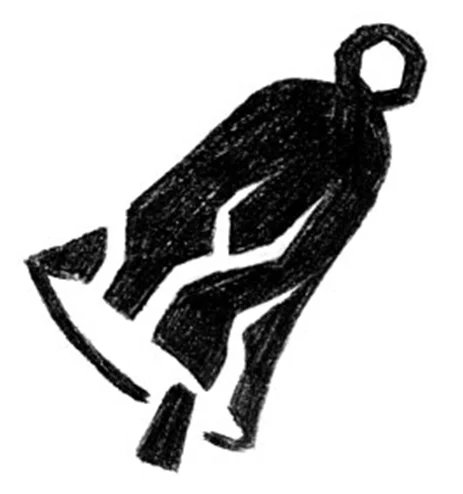
A new tabletop roleplaying game (TTRPG) adventure, "The Night of Dissolution," has emerged from the creative depths of the gaming community, promising to plunge players into a cosmic horror narrative of unprecedented scale. Drawing upon ancient, eldritch lore and the chilling prophecies of a fanatical cult, the module introduces a meticulously crafted vision of the apocalypse, spearheaded by the enigmatic Brotherhood of the Tolling Bell. This deep dive explores the core tenets of this impending doom, the malevolent entities behind it, and the profound implications for players brave enough to confront the end of days.
Main Facts: A Symphony of Chaos and Annihilation
"The Night of Dissolution," available now, presents players with a stark, terrifying premise: the world as they know it is poised on the brink of an irreversible collapse. At the heart of this impending cataclysm lies the Brotherhood of the Tolling Bell, a cult dedicated to ushering in the titular "Night of Dissolution." Their manifesto, penned by a figure known only as Wuntad, describes a cosmic ballet of destruction, an ancient prophecy foretelling the return of slumbering entities known as the Galchutt, or the Dukes of Chaos.
These Lesser Lords, bound by arcane ties to the banished Shadow King and his Demon Princes, seek to break free from their aeons-long slumber and walk the earth once more. Their awakening is contingent upon the widespread propagation of chaos, a task zealously undertaken by the Brotherhood. The module delves into a rich, terrifying mythology, detailing a primordial darkness, an ancient war that reshaped existence, and the enduring threat posed by these extra-dimensional horrors.
Central to the cult’s methods and the module’s gameplay is a new, potent spell: the "Mark of Chaos." This transmutation spell serves as both a narrative device and a mechanical tool, subtly (or overtly) compelling its victims towards chaotic acts, effectively sowing the seeds required for the Galchutt’s return. Derived from the venerable "Chaositech" sourcebook and adapted under the Open Gaming License, "The Night of Dissolution" promises a campaign of escalating dread, moral ambiguity, and existential threats that challenge the very fabric of reality.
Chronology: The Cosmic History of Dissolution
The lore underpinning "The Night of Dissolution" presents a chilling, cyclical history of cosmic conflict and primordial entities, meticulously detailed within the cult’s "Manifesto of the Tolling Bell." This chronology, as revealed by Wuntad, paints a picture of a universe perpetually threatened by an ancient, entropic force.
I. The Primordial Darkness and the Shadow King:
The narrative begins with a foundational myth: "In the beginning there was a darkness at the heart of the world, and it cloaked itself in the shape of Shadow King – He Who Was Banished and wrapped in the threads of the Demonweb." This foundational evil, an entity of pure shadow and cosmic malevolence, predates much of recorded history. The Shadow King is not merely a demon but a fundamental aspect of cosmic disorder, a primal force that sought to impose its will upon creation. His banishment was not an act of destruction but of containment, a flickering shadow lurking at the edges of reality, forever seeking a return. The "Demonweb" is described not just as a location, but as a metaphysical prison, a complex tapestry of dark energies and forgotten dimensions that holds the Shadow King and his most powerful servants captive.
II. The Rise of the Demon Court and the Galchutt:
From his abyssal prison, the Shadow King "reached out and reared up his Demon Court." These are the Demon Princes, powerful entities bound directly to the King. In turn, these Princes "did furnish forth their Dukes," a lesser but still formidable echelon of beings. These Dukes are known by various terrifying names across different cultures and languages, underscoring their ancient and pervasive influence. In the "Dark Tongue," they are the Galchutt – the Lesser Lords. Elven lore refers to them as the Natharl’nacna, a name whispered with dread, hinting at their insidious nature. To the races of men, they are simply the Dukes of Chaos, a title that succinctly encapsulates their destructive purpose. These entities represent the active agents of the Shadow King’s will, the architects of disorder in the material plane.
III. The Ancient War and Its Aftermath:
"War was fought. And lost." This terse statement encapsulates a cataclysmic conflict of immense proportions, a cosmic struggle between the forces of order and the burgeoning chaos unleashed by the Shadow King’s court. While the manifesto offers few specifics on the combatants or the precise nature of the war, its outcome was devastating. "The shape of the world was changed," implying not just political or geographical shifts, but a fundamental alteration of reality itself. The Demon Princes, the Shadow King’s direct lieutenants, were ultimately banished, forced to serve their master "in the webs that lie beyond the edge of time and space," imprisoned alongside him, their power curtailed but not extinguished.
IV. The Slumber of the Galchutt:
Unlike their masters, the Galchutt were not fully drawn into the Demonweb’s temptations or outright banished. Their power, however, remained intrinsically "bound to their masters." With the Princes imprisoned, the Galchutt lost a significant portion of their active agency and retreated. They sought refuge in their "Caverns of Slumber," deep within the fabric of existence, perhaps even within the very world they once sought to conquer. "And there they sleep. And they wait." This long slumber is not one of unconsciousness, but a dormant, malevolent vigilance, a patient anticipation of the conditions that will herald their return. Their presence, though suppressed, casts a long, unseen shadow over the world.
V. The Prophecy of Dissolution and the Brotherhood’s Rise:
The manifesto then details the conditions for the Galchutt’s awakening: "Those who would serve them must sow the seeds of chaos." This is the core directive. The prophesied "Night of Dissolution" will arrive when "the ties between the Dukes and the Princes shall be forever broken." This implies a breaking of the magical or metaphysical bonds that tether the Galchutt to their imprisoned masters, freeing them to act independently. When this occurs, "their sleep will end. And the Galchutt shall walk the earth and in their footsteps the seeds of chaos shall blossom into the end of days."
This apocalyptic vision is the driving force behind Wuntad and his Brotherhood of the Tolling Bell. Wuntad, an individual consumed by this dark prophecy, interprets it as a call to action. He believes that by actively promoting chaos, by undermining societal structures, morality, and order, he can hasten the breaking of these ancient bonds and usher in the era of the Galchutt’s reign. The cult’s name itself, "The Tolling Bell," is a chilling metaphor for the countdown to this ultimate dissolution, each "toll" bringing the world closer to its final, chaotic end. Their goal is not merely to worship the Galchutt, but to actively facilitate their return, believing themselves to be the harbingers of a necessary, albeit destructive, cosmic reset.
Supporting Data: The Tools of Annihilation
The "Night of Dissolution" module leverages specific mechanics and narrative elements to immerse players in its apocalyptic vision. The "Manifesto of the Tolling Bell" serves as a crucial in-game artifact, while the "Mark of Chaos" spell represents the tangible, insidious influence of the cult.
The Manifesto of the Tolling Bell: A Blueprint for Apocalypse
Wuntad’s manifesto is presented as more than just a piece of lore; it is a foundational text for the Brotherhood of the Tolling Bell. This document outlines not only the cosmic history of the Galchutt but also the cult’s philosophy and objectives. It functions as a rallying cry, urging "all the forces of chaos to join together" under the Brotherhood’s banner. The manifesto likely details recruitment strategies, methods for creating societal discord, and rituals aimed at weakening the cosmic barriers that bind the Galchutt. For players, discovering sections of this manifesto would be a chilling experience, slowly revealing the horrifying scope of the cult’s ambitions and the existential threat they pose. It’s a text designed to inspire dread and a sense of impending doom, painting a clear picture of an antagonist driven by profound, if misguided, cosmic purpose.
The "Mark of Chaos" Spell: Insidious Influence
One of the most potent and thematically resonant elements of the module is the "Mark of Chaos" spell. This 2nd-level Transmutation [Chaotic] spell, available to Clerics and Sorcerers/Wizards, perfectly encapsulates the cult’s mission to "sow the seeds of chaos."
-
Mechanics of Corruption: The spell’s effect is insidious. Upon successful casting, the target gains a prominent physical mark, one of the "many symbols of chaos or a chaos cult." This visible brand serves as a constant reminder of the spell’s influence. More importantly, it creates a powerful behavioral feedback loop:
- Penalty for Order: "Each time the target performs a non-chaotic act, she suffers a –2 penalty on any check or die roll (including attack rolls) involved with the act, if any." This discourages actions that align with law, order, or established norms.
- Bonus for Chaos: "Each time the target performs a chaotic act, she gains a +2 bonus on any check involved with the act, if any." This provides a tangible mechanical incentive to embrace disorder, destruction, and rebellion.
-
DM as Arbiter of Chaos: The spell wisely places the "DM as the final arbiter of what constitutes a chaotic or non-chaotic act." This flexibility is crucial for nuanced gameplay. While some acts are clear-cut (attacking a lawful creature, casting a chaotic spell), others are left to interpretation: "Destruction, in general, is chaotic, while building and repairing is not. Murder, defying authority, lying, and cheating all can be chaotic acts." This encourages DMs to engage with the ethical implications of chaos, forcing players and NPCs alike to grapple with the definition of their actions within the spell’s framework. The use of a "burning smokestick" as an arcane material component adds a subtle, sensory detail to the ritual of corruption.
-
Narrative and Ethical Implications: The "Mark of Chaos" is more than just a buff/debuff; it’s a narrative device that explores themes of free will, corruption, and the subtle erosion of morality. For a PC afflicted by this mark, it presents a compelling roleplaying challenge. How long can they resist the mechanical pull towards chaos? What sacrifices will they make to maintain their alignment or achieve their goals under its influence? For NPCs, it provides a plausible explanation for sudden shifts in behavior, turning allies into unpredictable agents of disorder. This spell is a direct manifestation of the Galchutt’s influence, turning individuals into unwitting or unwilling agents of the coming dissolution.
The "Chaositech" Legacy and Open Gaming License (OGL):
The design notes for "The Night of Dissolution" explicitly state that "Some material on this page is covered by the Open Gaming License." This is a significant detail. The reference to drawing "chunks out of the Chaositech sourcebook" indicates a deliberate decision to build upon established, albeit fictional, lore. Chaositech, a product known for its explorations of chaos-infused technology and magic, provides a rich, thematic foundation for the cosmic horrors introduced in "The Night of Dissolution."
This approach, parceling out "Chaositech" material through "lorebooks" (such as the cult’s manifesto or spellbooks), is a clever design choice. It allows the game master (GM) to gradually reveal layers of an ancient, terrifying cosmology to players. Instead of presenting all the lore upfront, the module encourages players to actively uncover the truth, piecing together fragments of information from various in-game sources. This enhances the sense of mystery, dread, and discovery, making the reveal of the Galchutt’s true nature and the Brotherhood’s ultimate goal all the more impactful. The use of the OGL ensures that this rich material can be legally integrated and expanded upon, fostering a wider ecosystem of compatible content.
Official Responses: Developer Insights and Community Reception
The release of "The Night of Dissolution" and its intricate lore has generated considerable buzz within the TTRPG community. Scott Alex, the primary developer behind the module and author of The Alexandrian blog where the lorebooks were first previewed, has offered insights into its design philosophy and intended impact.
"Our goal with ‘The Night of Dissolution’ was to craft an adventure that wasn’t just about fighting monsters, but about confronting an existential threat," Alex stated in a recent online interview. "We wanted to explore what it truly means for a world to unravel, not just from external forces, but from within, through the insidious spread of chaos. The Brotherhood of the Tolling Bell isn’t just another evil cult; they’re the active agents of a cosmic prophecy, believing themselves to be on the right side of an inevitable, horrifying truth."
Regarding the module’s deep dive into cosmic horror, Alex elaborated, "The Shadow King, the Galchutt – these aren’t just big bads with hit points. They represent an entropic principle, a gnawing despair that threatens to consume all order. We wanted to give GMs the tools to evoke that sense of vast, uncaring malevolence, where the heroes aren’t just saving a kingdom, but desperately trying to delay or avert a fundamental shift in reality itself."
The integration of material from the "Chaositech" sourcebook was a deliberate choice, according to Alex. "Drawing on ‘Chaositech’ allowed us to tap into an existing wellspring of dark, chaotic lore. It provides a deeper history and a sense of continuity for players familiar with that material, while also introducing it to new audiences in a fresh, compelling way. The lorebook format, slowly peeling back layers of the conspiracy and the ancient history, is key to building that sense of dread and discovery."
Community reactions have been largely enthusiastic, with many players and GMs praising the module’s ambitious scope and dark themes. Early reviews highlight the "Mark of Chaos" spell as a standout mechanic, lauded for its ability to create complex moral dilemmas and push characters to their limits. "It’s brilliant," commented one GM on a popular forum. "My players are already paranoid about who might be secretly marked, and the internal struggle for an afflicted PC is just fantastic roleplaying fuel."
However, some discussions have also touched upon the challenges inherent in running such a nihilistic campaign. "GM burnout is a real concern," noted another player. "The sheer scale of the threat and the potential for a truly bleak outcome means the GM needs to be prepared to manage player expectations and provide moments of hope, however fleeting, to keep the narrative engaging." Despite these considerations, the overwhelming sentiment points towards "The Night of Dissolution" being a significant and impactful addition to the cosmic horror subgenre within TTRPGs.
Implications: Reshaping the Narrative of the Apocalypse
"The Night of Dissolution" carries significant implications for TTRPG storytelling, player experience, and the broader landscape of tabletop gaming. Its focus on an ancient, cosmic, and almost inevitable apocalypse challenges traditional adventure paradigms.
I. Shifting the Stakes of Conflict:
Unlike many adventures where the goal is to defeat a singular villain or prevent a localized catastrophe, "The Night of Dissolution" elevates the stakes to a cosmic level. The objective is not merely to slay a demon lord but to prevent the very fabric of reality from unraveling. This shifts the narrative from heroic triumph to a desperate, perhaps even doomed, struggle against an entropic force. Players are forced to confront not just physical threats, but philosophical ones: the nature of chaos, the fragility of order, and the meaning of resistance in the face of overwhelming, ancient evil.
II. The Psychology of Dread and Moral Ambiguity:
The module excels in cultivating a pervasive sense of dread. The long slumber of the Galchutt, their ancient war, and the slow, deliberate work of the Brotherhood create an atmosphere of creeping horror rather than jump scares. The "Mark of Chaos" spell, in particular, introduces profound moral ambiguity. Players might find themselves forced to commit chaotic acts to survive or achieve their goals, blurring the lines between hero and villain. This psychological pressure can lead to incredibly rich roleplaying opportunities, but also demands a mature and thoughtful approach from both players and GM. It challenges players to consider their characters’ core values when those values are mechanically penalized.
III. Innovation in Lore Revelation:
The design philosophy of using "lorebooks" and gradually revealing the cosmic history through in-game artifacts is a significant implication. It moves away from exposition dumps and towards an emergent narrative, where players are actively engaged in uncovering the truth. This fosters a deeper sense of mystery, making discoveries more impactful and personal. It also empowers GMs to tailor the pacing of information, ensuring that the revelation of the Galchutt’s true nature and the Shadow King’s history is delivered at maximum narrative effect.
IV. A Catalyst for Cosmic Horror in TTRPGs:
"The Night of Dissolution" stands as a potent example of how to execute cosmic horror effectively in a TTRPG setting. By focusing on incomprehensible entities, ancient evils, and the slow erosion of reality, it provides a blueprint for other developers and GMs looking to explore similar themes. Its success could lead to a surge in modules and campaigns that prioritize existential dread, psychological horror, and profound philosophical questions over straightforward combat encounters.
V. Long-Term Campaign Potential and Replayability:
The open-ended nature of the "Night of Dissolution" – the fact that the Galchutt’s awakening is a process rather than a single event – offers immense long-term campaign potential. GMs can weave the cult’s activities and the spreading influence of chaos into extended narratives, allowing players to witness the world’s slow descent. The module’s framework also lends itself to high replayability, as different groups of players might approach the threat in wildly different ways, leading to varied outcomes and interpretations of what constitutes "saving the world."
In conclusion, "The Night of Dissolution" is not merely an adventure; it is a meticulously crafted descent into a meticulously crafted apocalypse. By blending ancient lore, insidious mechanics, and a profound sense of cosmic dread, it challenges players to confront the ultimate end, promising a gaming experience that is as terrifying as it is unforgettable. The Tolling Bell has begun its chime, and the world holds its breath for the coming Night of Dissolution.

Leave a Comment