The Unexpected Parallel: Why ‘Minions & Monsters’ is the Spiritual Successor to Hollywood’s Most Notorious Box Office Bomb
In the volatile landscape of modern cinema, where established intellectual properties (IP) are no longer guaranteed a golden ticket at the box office, the industry often looks for patterns in the wreckage of failures and the heights of successes. Recently, the discourse surrounding DC Studios’ Supergirl suggested that even the most iconic superhero mantles can falter if they fail to capture the zeitgeist. However, the same cannot be said for Illumination and Universal Pictures’ juggernaut, the Minions franchise. Their latest installment, Minions & Monsters, has not only proven to be a commercial powerhouse but has also revealed itself to be something far more complex: a secret, kid-friendly remake of Damien Chazelle’s 2022 maximalist epic, Babylon.
While one film is an R-rated, three-hour descent into the cocaine-fueled debauchery of the 1920s and the other is a slapstick-filled animated romp, the thematic DNA shared between the two is unmistakable. Minions & Monsters serves as a vibrant, albeit sanitized, love letter to the history of cinema, echoing the exact sentiments that made Babylon a darling for critics but a "bomb" at the box office.
Main Facts: A Tale of Two Tinseltowns
At first glance, the comparison between a film featuring "little yellow henchmen" and a movie featuring Tobey Maguire as a "coke gremlin" seems absurd. Yet, Minions & Monsters is fundamentally built on the same foundation as Chazelle’s Babylon. Both films are set during the transformative era of 1920s Hollywood—a period defined by lawless creativity, the transition from silence to sound, and the meteoric rise and fall of accidental icons.
The Plot Parallels
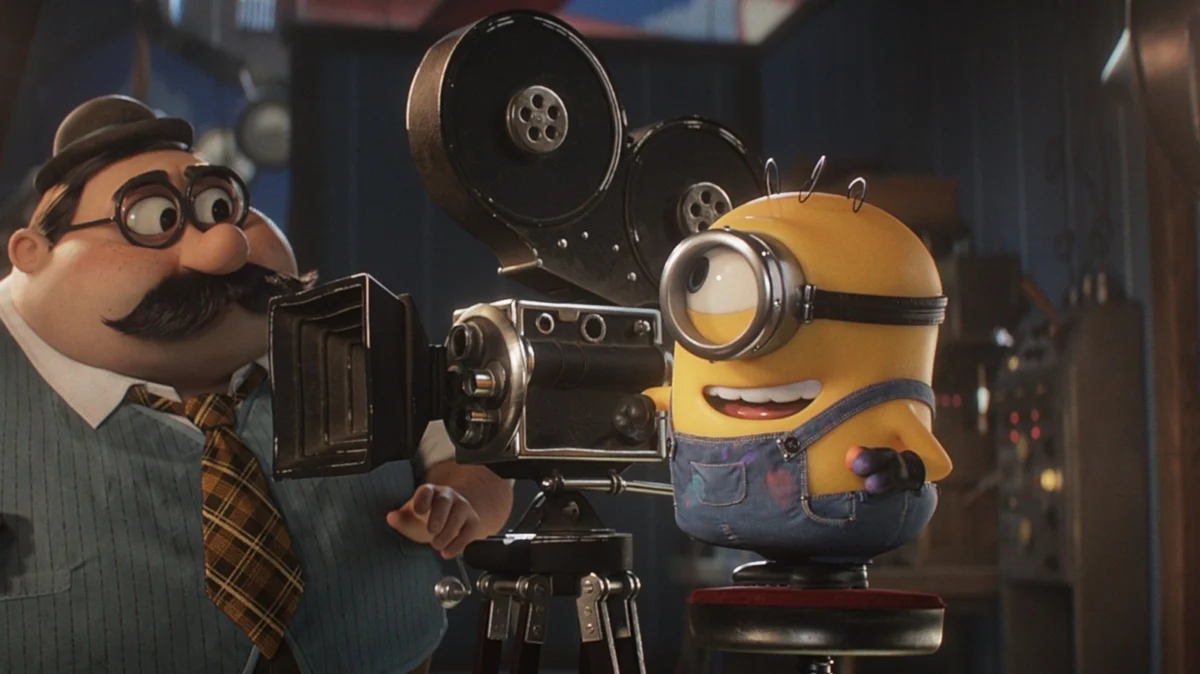
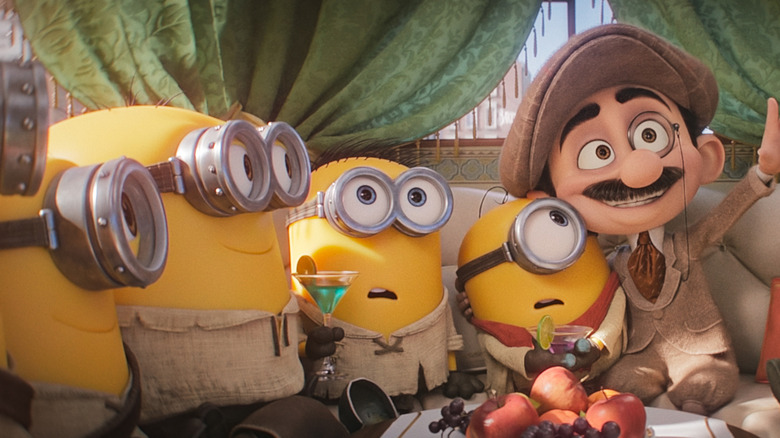
In Minions & Monsters, the narrative follows two primary Minions, Kevin and James (voiced by the franchise’s veteran director Pierre Coffin), as they arrive in 1920s Hollywood with dreams of celluloid glory. Their path to stardom mirrors the trajectory of Manny Torres and Nellie LaRoy in Babylon. Much like Nellie’s chaotic entrance onto a film set in Chazelle’s epic, Kevin and James inadvertently stumble onto a Western film shoot. Through a series of slapstick errors, they are mistaken for avant-garde geniuses and become the hottest commodities in Tinseltown.
Cinematic Maximalism
Both films utilize a "maximalist" approach. While Babylon used its R-rating to showcase the grotesque and the sublime of the early studio system, Minions & Monsters uses its animation medium to create a similarly raucous atmosphere. It portrays Hollywood as a place of wild parties, mansions funded by overnight success, and a desperate, frantic energy to capture "the next big thing."
Chronology: A Century of Minion-Led Innovation
One of the most surprising elements of Minions & Monsters is its commitment to historical accuracy regarding the evolution of the medium. The film posits a "secret history" where the Minions have been present at every major milestone of the seventh art. This chronological journey provides the film with a narrative weight that transcends its fart-joke exterior.
1895–1896: The Birth of Motion
The film’s opening sequence pays homage to the Lumière brothers. It depicts the Minions as disgruntled employees in the background of the 1895 classic Workers Leaving The Lumière Factory in Lyon. It further inserts them into the legendary 1896 screening of L’Arrivée d’un train en gare de La Ciotat, where, in a meta-joke, the Minions are the ones terrified that the train on the screen is actually entering the theater.
1902: The Méliès Connection
In a stunningly animated sequence, the film references Georges Méliès’ A Trip to the Moon. One of the Minions is revealed to be the actor inside the "Man in the Moon" prosthetic, providing a slapstick explanation for the iconic rocket-in-the-eye shot. This depth of reference indicates that the creators at Illumination were aiming for more than just child entertainment; they were crafting a tribute to the pioneers of visual effects.
1920–1929: The Golden Age and the Silent Clowns
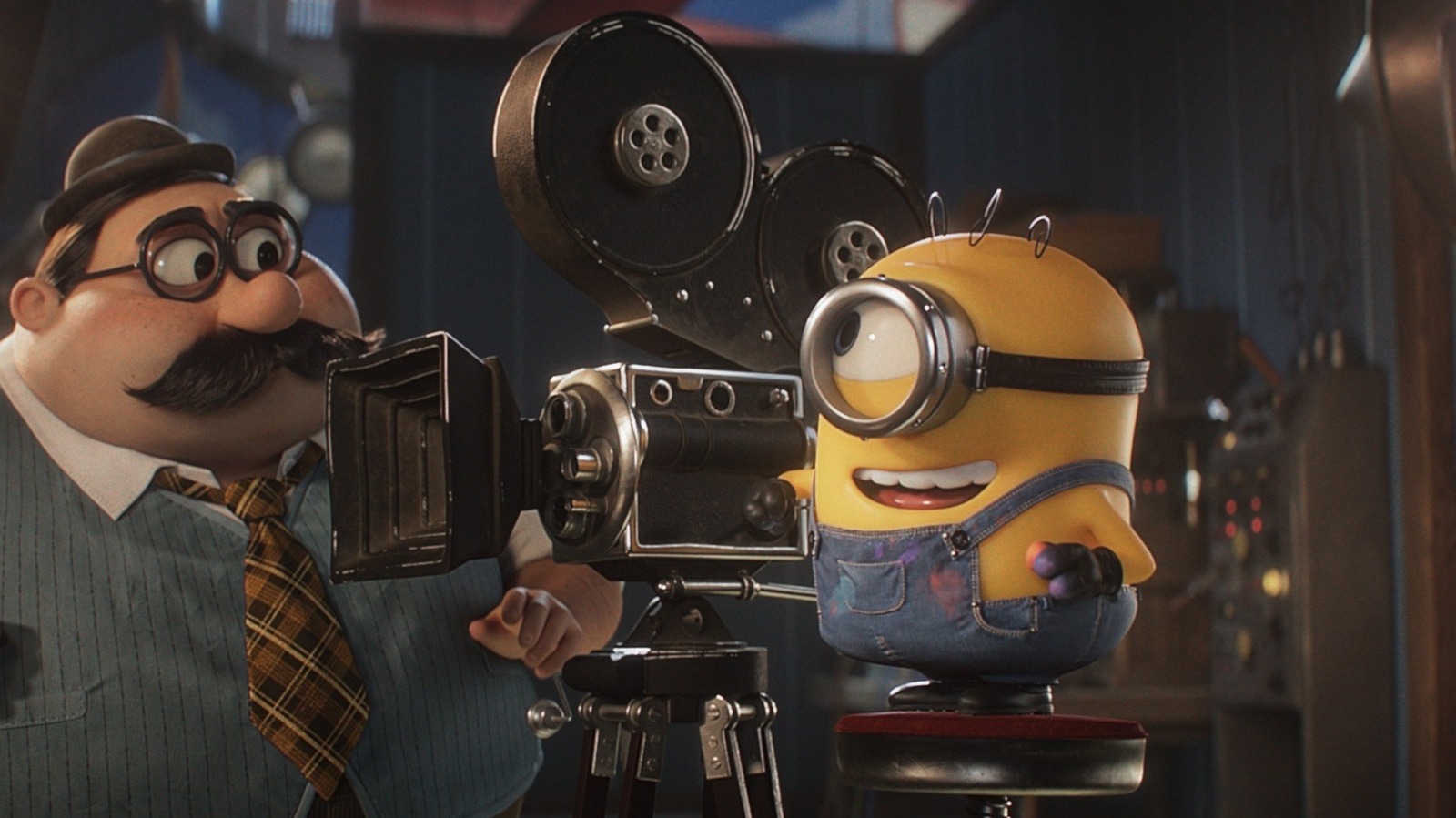
As the plot settles into the 1920s, the film shifts its focus to the "Silent Clowns." The slapstick sequences involving Kevin and James are direct allusions to Harold Lloyd’s Safety Last! (including a clock-tower stunt) and Charlie Chaplin’s Modern Times. By the time the film reaches its midpoint, it has effectively summarized the first thirty years of cinema history through a yellow, nonsensical lens.
Supporting Data: Cinephilia for the Next Generation
The production of Minions & Monsters involved a meticulous recreation of early 20th-century film aesthetics. According to production notes, the animation team studied the specific lighting techniques of German Expressionism and early Film Noir to give the "Old Hollywood" segments an authentic feel.
Technical Homages
- Lensing: The film utilizes "virtual lenses" that mimic the depth of field and grain of 1920s orthochromatic film stock.
- Genre Hopping: The movie seamlessly transitions between the wide, dusty vistas of the Western and the high-contrast, shadowed interiors of the biblical epics that dominated the pre-Code era.
- Easter Eggs: Beyond the obvious Chaplin nods, the film includes a "Citizen Kane" reference involving a sled and a fart joke that reportedly brought the house down at its world premiere at the 2026 Annecy Animation Film Festival.
Box Office Disparity
The irony of the "secret remake" lies in the financial data. Babylon, produced on an estimated $80 million budget, grossed only $63 million worldwide, becoming one of the most talked-about financial failures of its year. In contrast, Minions & Monsters is projected to clear $800 million, proving that the themes of Babylon—the beauty of film, the tragedy of the transition to sound, and the chaos of the industry—are commercially viable as long as they are delivered via a globally recognized, family-friendly IP.
Official Responses: From Margot Robbie to the Festival Circuit
The reception of Minions & Monsters has been a mixture of bewilderment and genuine praise from the industry’s elite.
The Annecy Premiere
At the 2026 Annecy Animation Film Festival, the film received a standing ovation. Critics noted that a scene parodying the finale of Casablanca—where the Minions deliver dramatic, emotional dialogue in their signature "Minionese"—was both a technical marvel and a surprisingly poignant moment. It captured the "despair of the transition to sound" in a way that resonated with adult cinephiles while keeping children entertained with the absurdity of the sounds.
The Babylon Connection
Even those associated with the original Babylon have weighed in. Margot Robbie, who played the chaotic Nellie LaRoy, has previously expressed her confusion over why Babylon failed to find an audience. In recent interviews, industry insiders have joked that Robbie’s "wild child" energy has finally found its match in the Minions. While Robbie herself has not commented on the "remake" theory, the parallels in the marketing—the focus on "the magic of the movies"—suggest that Universal learned from Paramount’s marketing struggles by centering the film on a "love letter to Hollywood" theme.
Implications: The Future of Film History in Popular Culture
The success of Minions & Monsters carries significant implications for the future of "edutainment" and the preservation of film history.
The "Trojan Horse" Strategy
By embedding deep-cut cinematic history into a franchise primarily aimed at children, Illumination has created a "Trojan Horse" for film literacy. A generation of children will now be familiar with the imagery of Georges Méliès and the Lumière brothers, even if they don’t yet know their names. This strategy suggests that "high art" themes can survive in the modern blockbuster era if they are attached to powerful, existing brands.
The Evolution of the "Talkie" Narrative
The film’s exploration of the transition to sound cinema serves as a meta-commentary on the current state of the industry. Just as the stars of the 1920s had to adapt to microphones, modern studios are having to adapt to streaming, AI, and shifting audience tastes. Minions & Monsters suggests that while the medium changes, the core appeal of "monsters, minions, and movies" remains constant.
Conclusion: A Grand Hollywood Tradition
In the end, Minions & Monsters stands as a testament to the "Grand Hollywood Tradition" of reinvention. It took the soul of a misunderstood, R-rated box office bomb and successfully transplanted it into the body of a billion-dollar animated franchise. While it may rely on fart jokes to keep the seats filled, its heart beats with the same reverence for cinema that Damien Chazelle poured into every frame of Babylon.
As Minions & Monsters continues its dominant run in theaters, it serves as a reminder that the story of Hollywood—its glitz, its grime, and its constant evolution—is a story that audiences will always want to hear, provided it’s told in a language they understand (even if that language is Minionese).