
The Vanishing Tower: Unpacking Michael Moorcock’s Complex Elric Saga and Its Place in Fantasy History
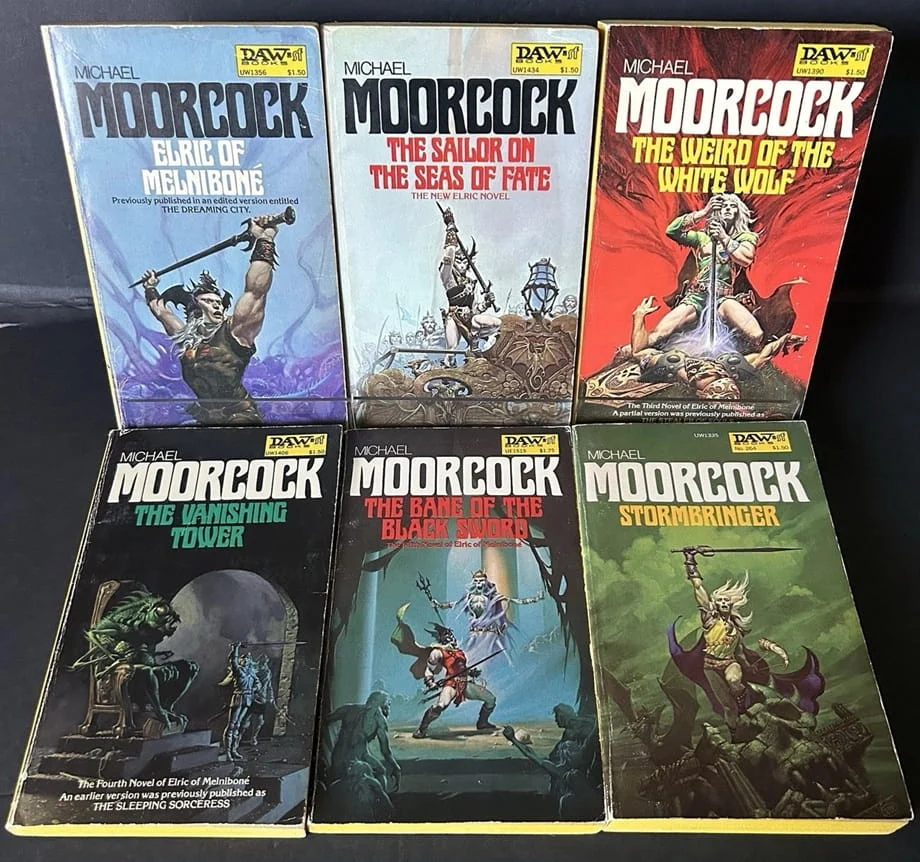
London, UK – Michael Moorcock’s The Vanishing Tower, published by DAW Books in June 1977 with an iconic cover by Michael Whelan, stands as a pivotal, albeit intricate, entry in one of fantasy literature’s most enduring sagas: The Elric Saga. While recently revisited by reviewer Rich Horton for Black Gate magazine, its assessment highlights the enduring challenge and unique appeal of Moorcock’s influential work. Far from "obscure," as some of Horton’s review series might imply, The Vanishing Tower is a key component of a series that redefined sword and sorcery and laid the groundwork for the modern multiverse concept in fiction.
Horton’s recent reading, over five decades after the novel’s initial appearance, offers a fresh lens on a work that is both celebrated for its imaginative scope and sometimes critiqued for its narrative execution. His review underscores the novel’s significance not just as an individual story, but as a critical node within Moorcock’s sprawling "Eternal Champion" mythos, connecting Elric of Melniboné to a grander cosmic tapestry.
Main Facts
The Vanishing Tower, originally titled The Sleeping Sorceress, is the fourth volume in the six-book DAW series of The Elric Saga published in the late 1970s, and currently positioned as the sixth in the internal chronology of the saga. It chronicles the further adventures of Elric, the albino emperor of Melniboné, and his companion Moonglum, as they relentlessly pursue the malevolent sorcerer Theleb K’aarna. This pursuit spans multiple realms and dimensions, weaving together elements of high fantasy, cosmic horror, and philosophical introspection.
The novel is structured into three closely linked "books," each detailing a stage of Elric’s quest and his encounters with various allies and adversaries, including the enigmatic Myshella and avatars of himself, directly linking the narrative to Moorcock’s overarching "Eternal Champion" concept. Despite its undeniable importance to the saga, Horton’s review suggests that The Vanishing Tower might not be the ideal entry point for new readers, citing aspects of its prose and action sequences as potentially "hurried" or "run of the mill" compared to Moorcock’s other works. Nevertheless, its place in fantasy history is secure, representing a crucial phase in the development of a seminal anti-hero and a groundbreaking multiverse.
Chronology: A Labyrinth of Publication
The publishing history of Michael Moorcock’s Elric saga is as complex and non-linear as the multiverse it describes, reflecting the author’s prolific output and experimental approach to narrative structure.
The Genesis of Elric
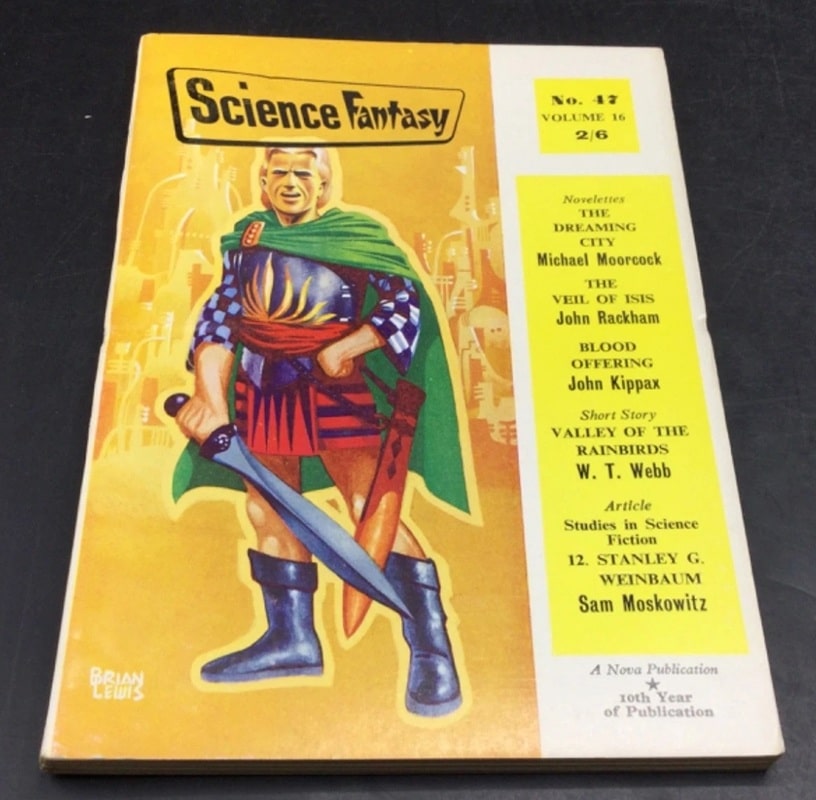
The journey of Elric of Melniboné began in the pages of the classic British magazine Science Fantasy. The very first Elric story, "The Dreaming City," captivated readers in the June 1961 issue, introducing the world to the decadent, drug-addicted, and melancholic albino emperor. This groundbreaking tale immediately signaled a departure from the heroic archetypes prevalent in fantasy at the time. Over the subsequent years, additional Elric stories, including "While the Gods Laugh" (1961), "The Gateway to Golden World" (1961), and "Old Man on the Road" (1962), appeared in Science Fantasy and later in Fantastic Stories, gradually building the foundation of the Young Kingdoms and Elric’s tortured existence. These early stories established the core elements of the saga: Elric’s reliance on his sentient, soul-devouring sword Stormbringer, his internal conflicts, and the looming cosmic struggle between Law and Chaos.
Early Collections and Disjointed Narratives
The first attempts to collect these burgeoning tales into novel-length works revealed the initial narrative chaos. The Stealer of Souls (1963) gathered several stories that were set relatively early in Elric’s internal chronology, while Stormbringer (1965) presented four of the chronologically latest stories, effectively detailing the saga’s apocalyptic conclusion. This early disjointedness meant that readers encountered Elric’s end before fully understanding his beginning or the intricate path that led him there. This publishing order, while perhaps accidental, paradoxically lent a certain mystique to the character, inviting readers to piece together his fragmented history, a thematic echo of Elric’s own fractured psyche. It also underscored Moorcock’s experimental approach, where traditional linear storytelling was often secondary to thematic resonance and character exploration.
Moorcock’s Reorganization Efforts
Recognizing the need for a more coherent presentation of his magnum opus, Moorcock embarked on a significant reorganization and expansion of the Elric sequence starting in 1970. This effort aimed to establish a more logical internal chronology and to flesh out the narrative gaps between the previously published stories. The Singing Citadel (1970) was an early collection that included four earlier stories, but the real thrust came with new material. Throughout the early 1970s, Moorcock penned new tales and expanded existing ones, filling in Elric’s past and detailing adventures that occurred at various points between the established works. This period of intense creative output was crucial in transforming a collection of acclaimed short stories into a comprehensive, multi-volume saga.
The Vanishing Tower’s Shifting Identity
The Vanishing Tower itself is a prime example of this complex publishing evolution. It first saw publication in the UK in 1971 under the title The Sleeping Sorceress by New English Library. Lancer Books followed with a US edition in 1972, also under The Sleeping Sorceress. However, it was the DAW edition in 1977 that introduced the title The Vanishing Tower, a title preferred by Moorcock himself and reflecting his evolving vision for the series. The novel is composed of three closely linked "books," one of which, "The Torment of the Last Lord" (or "The Sleeping Sorceress"), had already appeared separately in the UK anthology Warlocks and Warriors (1971) and in the February 1972 issue of Fantastic Stories in the US. This piecemeal publication of components of the novel further illustrates the intricate and often overlapping nature of Elric’s early publishing history.
The Definitive DAW Saga and Modern Revisions
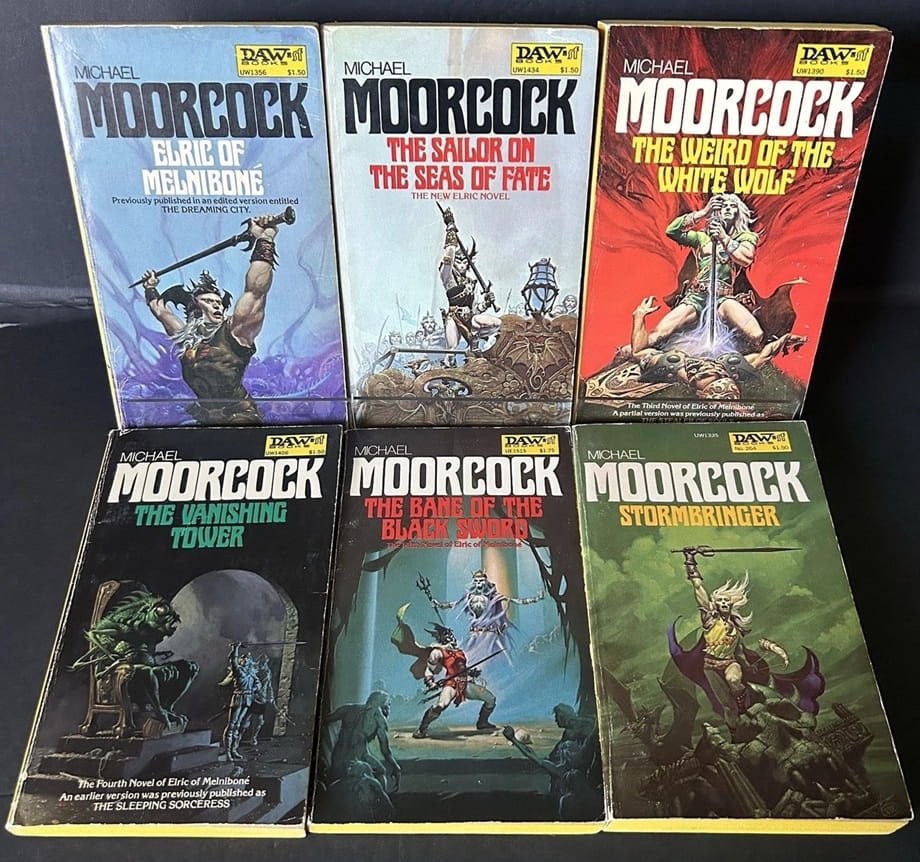
The culmination of Moorcock’s reorganization efforts arrived in 1976 and 1977 with the release of the six-volume Elric Saga by DAW Books. This set, featuring iconic covers by Michael Whelan, aimed to present the "complete official Elric series" in an internal chronological order, with restored texts and titles favored by the author. The Vanishing Tower was the fourth in this seminal DAW sequence, establishing its place within the intended narrative flow. Although Stormbringer (1965) remained the ultimate capstone, the DAW series provided a much-needed framework for readers to navigate Elric’s epic journey. In subsequent decades, the saga continued to grow, with three more books added, including The Citadel of Forgotten Myths in 2022, demonstrating the enduring life and expansion of Moorcock’s vision and the ongoing re-evaluation of the saga in modern omnibus editions like those from Saga Press (2022).
Supporting Data: The Thematic Core and Narrative Structure
Beyond its convoluted publishing history, The Vanishing Tower is rich with the thematic depth and narrative innovation characteristic of Moorcock’s work, particularly his groundbreaking contributions to the fantasy genre.
Elric: An Anti-Hero’s Journey
At the heart of The Vanishing Tower, and indeed the entire saga, is Elric of Melniboné, arguably one of fantasy’s earliest and most influential anti-heroes. Unlike the brawny, morally unambiguous heroes like Conan, Elric is frail, an albino dependent on potent elixirs and the life-force he drains through his sentient sword, Stormbringer. His existence is a perpetual torment, marked by nihilistic tendencies, a profound weariness with the world, and a tragic destiny. He is an emperor exiled from his own decadent realm, a sorcerer who despises magic, and a warrior who loathes violence. This inherent contradiction makes Elric a compelling figure, challenging readers to empathize with a protagonist who is often cruel, selfish, and driven by forces beyond his control. His journey is less about heroic triumph and more about a doomed struggle against fate, cosmic indifference, and the ever-present pull between Law and Chaos, themes deeply explored in The Vanishing Tower.
Theleb K’aarna: A Persistent Antagonist
The central conflict of The Vanishing Tower revolves around Elric’s relentless pursuit of Theleb K’aarna, an evil sorcerer whose malicious cunning makes him a particularly irritating and persistent adversary. K’aarna is not a grand, world-ending threat in the vein of a cosmic entity, but rather a more personal and insidious enemy, mirroring Elric’s own darker impulses and reliance on arcane powers. His repeated escapes, often through miraculous means, underscore the novel’s episodic structure and Elric’s seemingly unending torment. K’aarna’s alliance with figures like Prince Umbda and the Beggar King Urish highlights the pervasive corruption and moral decay within the Young Kingdoms, providing a grounded, if still fantastical, context for Elric’s cosmic struggles.
The Multiverse Unveiled
Perhaps the most significant contribution of The Vanishing Tower to the broader Moorcock mythos is its explicit unveiling of the "Eternal Champion" and the multiverse concept. Moorcock envisioned a vast tapestry of interconnected realities, where different heroes are merely incarnations or "avatars" of a single archetypal figure – the Eternal Champion. The Vanishing Tower directly features this concept, with Elric encountering other versions of himself and actively battling alongside fellow Champions such as Corum Jhaelen Irsei and Erekosë. The inclusion of characters with the initials "JC" and the enigmatic "Three Who Are One" further solidifies these connections, hinting at a grander cosmic order (or disorder) that transcends individual narratives. Journeys to "other Planes" and the recurring presence of the eternal city Tanelorn—a metaphysical refuge that exists simultaneously in all realities—are crucial elements that elevate the Elric saga beyond conventional sword and sorcery, positioning it as a foundational text for the modern multiverse in fiction.
The World of the Young Kingdoms
The setting for Elric’s adventures, the Young Kingdoms, is itself a character in Moorcock’s work. It is a dying world, populated by decadent empires, ancient sorceries, and forgotten gods. The landscapes are often bleak, filled with strange creatures, and imbued with a sense of impending doom. This dying world perfectly complements Elric’s own melancholic nature, creating an atmosphere of cosmic despair. The detailed descriptions of locales like Lormyr, Nadsokor (the City of Beggars), and the ever-elusive Tanelorn contribute to the saga’s unique flavor, providing a rich, if often grim, backdrop for Elric’s philosophical and physical battles.
Official Responses and Critical Reception
Michael Moorcock’s work, particularly the Elric saga, has elicited a range of critical responses, evolving from initial genre appreciation to a deeper academic recognition of its literary and philosophical merit.
Moorcock’s Vision and Control
Michael Moorcock has always been an author deeply invested in the presentation and artistic integrity of his work. His extensive reorganization and re-editing of the Elric saga in the 1970s, culminating in the DAW six-volume set, were not merely commercial maneuvers but deliberate attempts to align the published texts with his evolving artistic vision. The "restored texts and titles preferred by Moorcock" were a testament to his desire to establish a definitive version of the saga, one that reflected the internal chronology and thematic arcs he intended. This hands-on approach to his literary legacy underscores his role not just as a storyteller, but as a meticulous architect of a complex fictional universe. His willingness to constantly re-evaluate and reshape his own creations has often meant a fluid canon, but one always driven by a profound artistic purpose.
Historical Impact of Elric
Despite the specific criticisms leveled at The Vanishing Tower‘s execution by some reviewers, the overall Elric saga’s historical impact on fantasy literature is undeniable and monumental. Elric of Melniboné shattered the mold of the archetypal heroic fantasy protagonist, introducing complexity, moral ambiguity, and existential angst to a genre often characterized by clear-cut good and evil. His influence can be seen in countless subsequent fantasy characters and narratives, from the dark heroes of grimdark fantasy to the sprawling, interconnected universes explored by modern authors. Moorcock’s exploration of cosmic forces, the balance of Law and Chaos, and the multiverse concept laid foundational groundwork for contemporary speculative fiction, influencing not only literature but also role-playing games, comics, and other media. The Elric saga is a cornerstone of modern fantasy, essential reading for understanding the genre’s evolution.
The Reviewer’s Specific Critique
Rich Horton’s review, while acknowledging the saga’s overall importance, offers a nuanced critique of The Vanishing Tower specifically. He praises Moorcock’s "fecund imagination" and Elric’s role as a "worthwhile counter to traditional Sword and Sorcery heroes like Conan." However, he also points to specific weaknesses within this particular installment. Horton describes the writing as "hurried" and "a bit slapdash," suggesting that the prose, while not "terrible," lacks the polish found in some of Moorcock’s other works. The action scenes are characterized as "run of the mill S&S," lacking significant "suspense" and relying on "superhuman swordplay." This perspective suggests that while The Vanishing Tower is historically important and contributes vital thematic elements, its individual narrative execution might not represent Moorcock at his stylistic peak. Horton’s preference for works like The Dancers at the End of Time or Mother London highlights his appreciation for Moorcock’s broader stylistic range beyond the more conventional (even if subverted) S&S framework.
Implications: Legacy and Enduring Relevance
The Vanishing Tower, despite its identified narrative imperfections, remains a crucial text for understanding the full scope of Michael Moorcock’s creative genius and the enduring legacy of the Elric saga.
A Gateway to the Multiverse
For readers already familiar with Elric, The Vanishing Tower serves as a critical gateway, expanding the individual adventures of the albino emperor into the vast, interconnected tapestry of Moorcock’s multiverse. It is within these pages that the explicit links to the Eternal Champion concept become undeniable, transforming Elric’s personal tragedy into a cosmic struggle involving multiple incarnations of heroes across countless planes of existence. While perhaps not the ideal starting point for a newcomer due to its complex internal references and specific pacing, for those invested in Moorcock’s broader vision, it is an indispensable volume that bridges the gap between individual sagas and the grand unified theory of his literary universe.
The Enduring Appeal of Elric
Elric’s continued resonance with readers, even decades after his inception, speaks to the profound impact of Moorcock’s characterization. His anti-heroic nature, moral ambiguity, and the existential dread that permeates his every action offer a timeless appeal. In an age increasingly drawn to complex, flawed protagonists, Elric’s struggle with destiny, his reliance on the malevolent Stormbringer, and his ultimate, tragic purpose continue to captivate. He embodies the internal conflicts that resonate beyond the fantastical setting, making him a figure of enduring psychological depth and philosophical significance. The themes he explores – nihilism, the struggle against overwhelming cosmic forces, and the price of power – remain perpetually relevant.
Moorcock’s Ongoing Influence
Michael Moorcock’s status as a seminal figure in fantasy, science fiction, and even mainstream literature, remains unchallenged. His innovative narrative structures, philosophical depth, and willingness to subvert genre tropes have influenced generations of authors. The Elric saga, in particular, continues to be a subject of academic study and popular discussion, demonstrating its lasting cultural impact. The fact that Moorcock continues to revisit and expand the Elric canon, as evidenced by The Citadel of Forgotten Myths in 2022, underscores not only his own creative drive but also the enduring demand for new stories featuring his most iconic creation.
The Perpetual Quest for the Definitive Edition
The convoluted publishing history of Elric, from early magazine appearances to multiple collected editions and ongoing expansions, highlights the perpetual quest for a "definitive" edition. This ongoing re-packaging and re-issuing of the saga, including deluxe omnibus editions, reflects both the dedicated fan base’s desire for a complete and coherent collection and Moorcock’s own evolving perspective on his life’s work. Each new edition offers a chance for readers, both new and old, to engage with the material afresh, potentially uncovering new layers of meaning or appreciating the saga’s historical context.
In conclusion, The Vanishing Tower embodies the paradox of much of Michael Moorcock’s groundbreaking work. It may present stylistic or narrative challenges when viewed in isolation, yet it is undeniably a vital component of an iconic series. As a key juncture where Elric’s personal quest explicitly merges with the grand design of the Eternal Champion and the multiverse, it serves as a testament to Moorcock’s boundless imagination and his enduring legacy as a visionary architect of modern fantasy.



Leave a Comment