The Web 3.0 Conundrum: Untangling the Speculative Threads of Crypto, Blockchain, and NFTs
Main Facts: The Four Pillars of a Modern Financial Storm
The digital landscape is currently gripped by a fervor not seen since the dot-com boom of the late 1990s. At the center of this excitement—and skepticism—is "Web 3.0," a term that encompasses a suite of technologies including cryptocurrencies, the blockchain, Non-Fungible Tokens (NFTs), and the "Play-to-Earn" (P2E) gaming model. While promoters and venture capitalists often present these four elements as a unified, inevitable evolution of the internet, a closer inspection reveals them to be distinct growth areas often conflated to create a "perfect storm" of speculative investment.
The core argument emerging from industry analysts is that this conflation is not accidental but serves as a fertile ground for "shysters" and "shameless promoters." By blurring the lines between a technological ledger (blockchain) and a speculative asset (NFTs) or a labor model (P2E), proponents can mask the inherent risks of each. The current macroeconomic climate—characterized by low interest rates, a post-pandemic surge in investment wealth, and a desperate search for yield—has inflated this bubble at a rate that far outpaces the 2000 tech crash. To understand whether there is real value in the Web 3.0 movement, one must disentangle these four components and evaluate them on their individual merits and risks.
Chronology: From Digital Barter to Speculative Mania
The trajectory of the Web 3.0 movement can be traced through a series of technological and cultural shifts:
- The Genesis of Trust (2008–2010): Following the global financial crisis, Bitcoin was introduced as a decentralized alternative to fiat currency. It proposed a system where trust was placed in mathematics rather than central banks.
- The Rise of Smart Contracts (2014–2015): The launch of Ethereum expanded the utility of the blockchain beyond simple transactions, allowing for "smart contracts" that could execute automatically. This laid the groundwork for NFTs and complex decentralized applications.
- The Speculative Pivot (2017–2020): As Bitcoin and Ethereum prices skyrocketed, the narrative shifted from "currency" to "digital gold." Early anecdotes, such as a 2011 Starcraft 2 competition where 5th-8th place finishers received 25 Bitcoin (worth $25 then, and approximately $1.4 million a decade later), fueled the "get rich quick" mythology.
- The Pandemic Surge (2020–2021): Lockdowns created a captive audience with disposable time and, in many cases, government stimulus funds. This period saw the explosion of NFTs (like Bored Ape Yacht Club) and the rise of Play-to-Earn games like Axie Infinity, particularly in developing nations where digital earnings could exceed local wages.
- The Current Conflation (2021–Present): We have entered an era where these technologies are marketed as a singular, inseparable package. Critics argue this is the "Ponzi opportunity" phase, where the complexity of the tech is used to obscure the lack of underlying substance.
Supporting Data and Analysis: The Four Pillars Deconstructed
1. Cryptocurrencies: The Failure to Function as Money
A currency is essentially a "human agreement" that an inherently valueless item (paper or digital code) has value. As historian Yuval Noah Harari notes in Sapiens, the ability to believe in shared myths like "money" or "corporations" is what allows humans to cooperate on a massive scale.
However, cryptocurrencies currently suffer from a trilemma of contradictory goals. Promoters claim they are:
- A Means of Trade: To work as money, a currency must be stable. If a merchant accepts Bitcoin today, they must be certain it will buy the same amount of supplies tomorrow.
- An Appreciating Asset: If a currency is expected to "go to the moon," users will hoard it rather than spend it, defeating its purpose as a means of trade.
- A Store of Value: Unlike gold, which has millennia of history as a tangible asset, or the US Dollar, backed by the world’s largest economy, cryptocurrencies are highly volatile.
Basic economic theory dictates that risk has a cost. If an individual cannot predict if their salary in Bitcoin will cover their mortgage next month, Bitcoin is not a currency; it is a speculative commodity, akin to low-liquidity "meme stocks."

2. Blockchain: The Trust Paradox
The blockchain is a distributed ledger that is supposedly immutable. Enthusiasts argue it removes the need for "middlemen" like banks. However, security expert Bruce Schneier argues that blockchain simply shifts trust from people to technology.
The risk here is that technology can be a "single point of failure." If a digital wallet is hacked, a smart contract has a bug, or login credentials are lost, there is no regulatory body or "undo" button. In a traditional legal system, there is recourse; in the "Wild West" of the blockchain, code is law, and code is often flawed.
3. NFTs: The Illusion of Digital Ownership
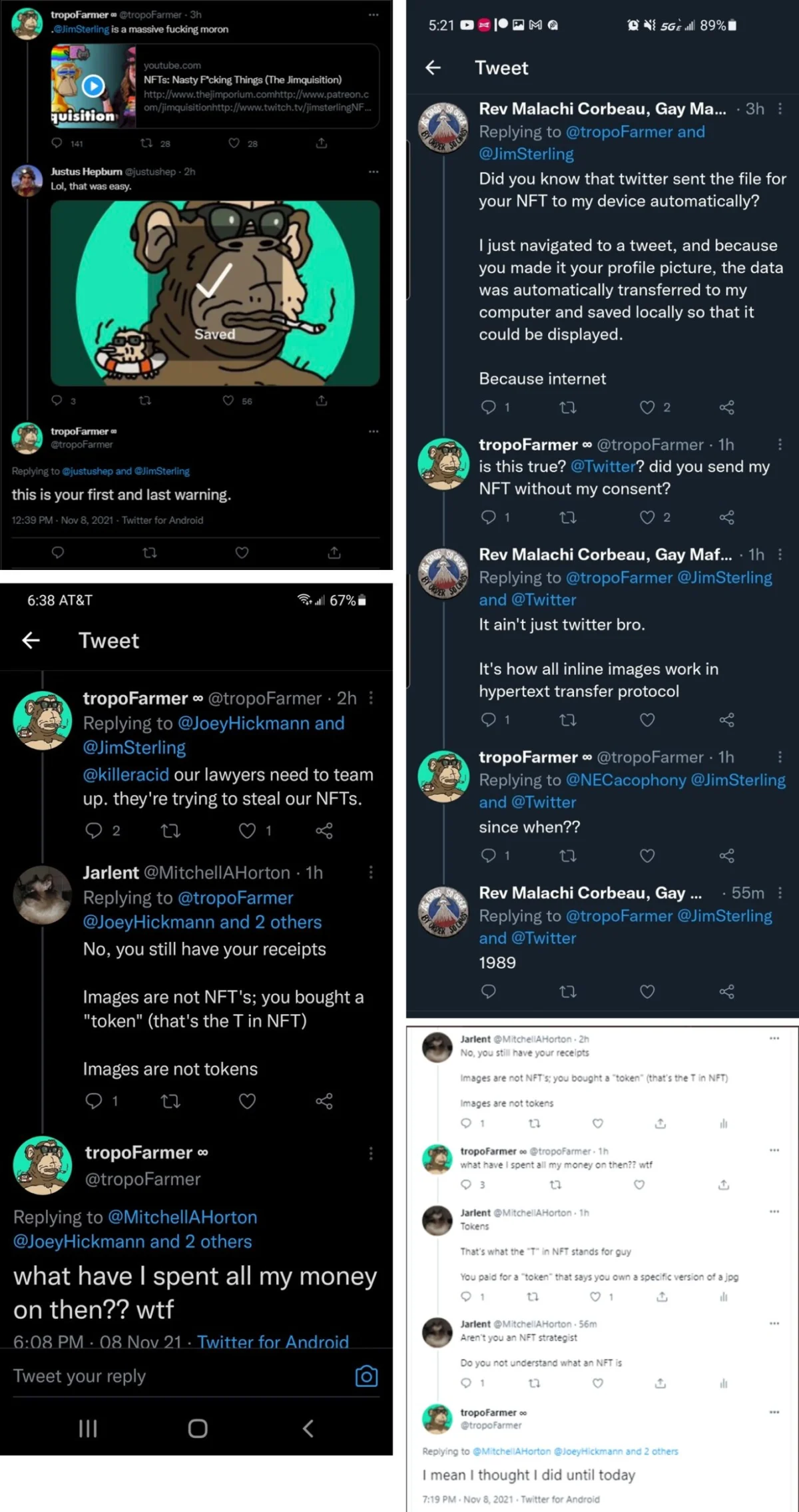
NFTs are marketed as a way to "own" digital assets, but the legal framework for this ownership is largely non-existent. In the gaming sector, a common pitch is "interoperability"—the idea that you could take a "purple lightsaber" NFT from Lego Star Wars and use it in World of Warcraft or Minecraft.
From a game development perspective, this is a fallacy for several reasons:
- Technical Hurdles: Every game has different art styles, animations, and engines. A voxel-based Minecraft item cannot simply "appear" in a high-fidelity FPS like Destiny without massive manual labor.
- Game Balance: A weapon that is balanced for one game might break the mechanics of another.
- Business Monopolies: Games are mini-monopolies. Developers have no financial incentive to allow players to use assets purchased from a competitor, which would bypass their own monetization systems.
4. Play-to-Earn: The Industrialization of Leisure
The "Play-to-Earn" model suggests that players should be compensated for the value they add to a game’s ecosystem. While this sounds like a win for "labor" over "capital," it ignores the "Overjustification Effect." Psychological studies show that when people are paid to do something they enjoy, their intrinsic motivation often vanishes. Play becomes work.
Furthermore, P2E models often mirror "gold farming" sweatshops, where the "earners" are low-wage workers in developing nations providing services for wealthy players in the West. This does not democratize gaming; it commodifies it.

Official Responses and Industry Sentiment
The response from the traditional tech and gaming sectors has been sharply divided.
- Platform Holders: Valve, the owner of the Steam platform, has banned games that utilize cryptocurrencies or NFTs, citing concerns over fraud and the lack of regulation. Conversely, Epic Games has stated it is open to such titles, provided they follow legal and age-rating guidelines.
- Traditional Developers: Companies like Ubisoft and Square Enix have faced massive player backlash after attempting to integrate NFTs into their titles. Players often view these additions as "microtransactions 2.0"—a new way to extract money without adding gameplay value.
- Regulatory Bodies: Central banks and governments (such as the SEC in the United States) are increasingly signaling that many Web 3.0 assets should be regulated as securities. This would impose strict transparency and anti-fraud requirements that many current "shysters" would be unable to meet.
Implications: The Path Forward
The fundamental question is whether Web 3.0 is a technological revolution or a sophisticated financial shell game.
If these technologies are to have a future, they must move beyond the "speculative asset" phase. The blockchain may indeed find utility as a more efficient way to track existing copyright and regulatory systems, but this would be a "boring" evolution rather than the radical, decentralized utopia currently being sold.
For the gaming industry, the implication is a potential crisis of identity. If games become platforms for labor rather than sites of play, the industry risks alienating its core audience. The "Etsy-fication" of digital content—where creators can earn from their hobbies—is a noble goal, but it does not require a volatile, energy-intensive blockchain to function.
As the bubble continues to inflate, the "music" may eventually stop. Those who have conflated these four distinct areas into a single "Web 3.0" narrative may find that while the technology remains, the trust—and the capital—has evaporated. The only way to navigate this landscape is to evaluate each project not on its proximity to "crypto," but on whether it provides genuine, tangible value to the end-user.