Truth Over Trophies: A24’s Theranos Documentary Topples DC’s ‘Clayface’ in Stunning Box Office Upset
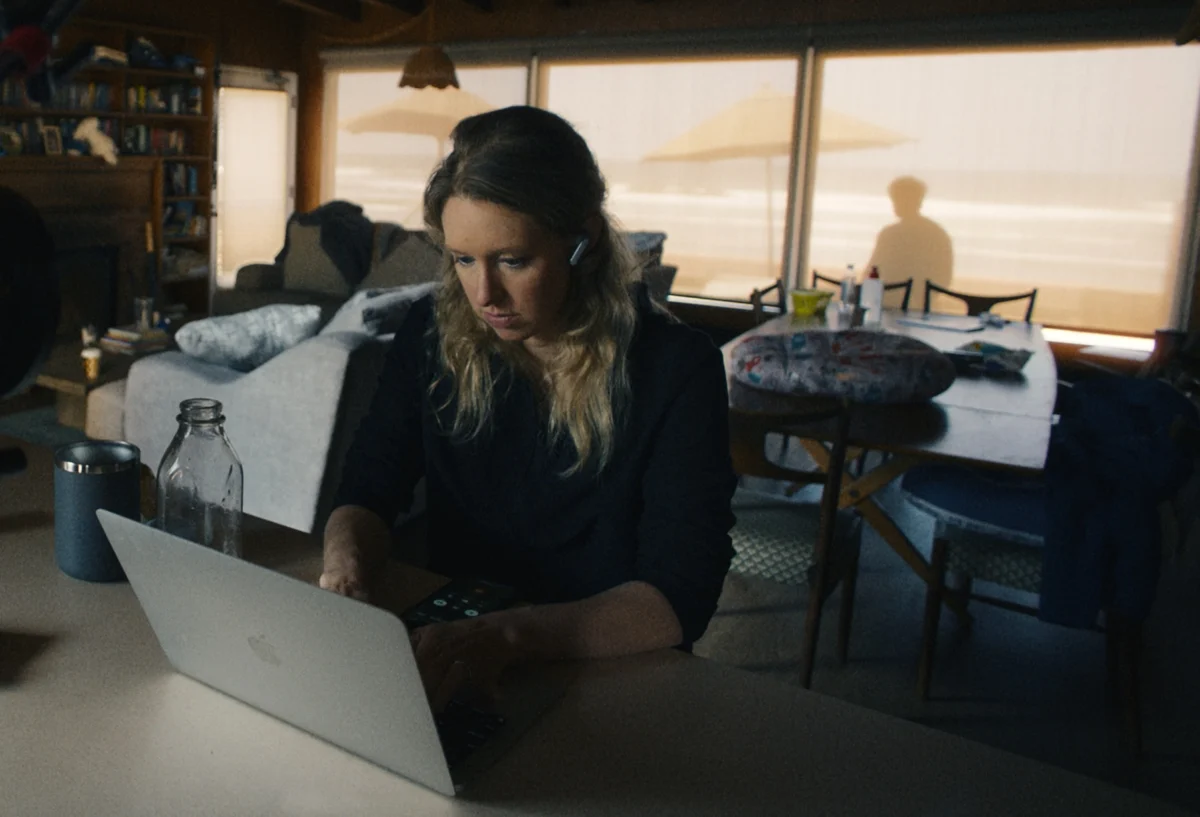
LOS ANGELES — In a cinematic landscape often dominated by capes and multiverses, the most compelling special effect of the weekend proved to be the unvarnished truth. A24’s You Can See Everything, a chilling and meticulously crafted documentary chronicling the rise and fall of Theranos founder Elizabeth Holmes, achieved the unthinkable this weekend: it claimed the domestic box office throne in its third week of release.
By earning $10.6 million over the three-day period, the documentary narrowly edged out Warner Bros. and DC Studios’ Clayface, a gritty body-horror reimagining of the classic Batman antagonist. The victory marks a significant milestone for non-fiction filmmaking, signaling a shift in audience appetite toward high-stakes prestige journalism on the big screen.
I. Main Facts: A Weekend of David vs. Goliath
The weekend’s figures tell a story of efficiency versus scale. You Can See Everything saw its domestic haul climb to $63.9 million. While a $10.6 million weekend might seem modest compared to summer blockbusters, the context of its performance is what has industry analysts buzzing. This is the first time the film has occupied the number-one spot, exhibiting the kind of "long-tail" endurance usually reserved for word-of-mouth sleeper hits.
In the runner-up slot, Clayface brought in $10.4 million. While the slim margin of $200,000 separates the two films, the narrative implications are vast. Clayface is a cornerstone of James Gunn and Peter Safran’s evolving DC Universe (DCU), designed as a mid-budget experiment in genre-bending. With a domestic total of $44.1 million and a global standing of $83 million, the film is technically in the black, given its $44 million production budget. However, losing the top spot to a documentary in its third week is a sobering development for a studio looking to regain undisputed box office dominance.
Beyond the top two, the weekend saw a mix of critical darlings and financial cautionary tales:
- Wildwood (Laika): $7.5 million weekend; $25 million domestic total.
- Wicker (Black Bear): $4.1 million weekend; $13.2 million domestic total.
- The Only Living Pickpocket in New York (Sony Pictures Classics): $1.9 million weekend; $2.1 million domestic total.
- Everest: The Other Side (National Geographic): $1 million in limited debut.
II. Chronology: The Slow Burn to the Summit
The trajectory of You Can See Everything has been anything but conventional. When it debuted three weeks ago, it opened to strong numbers but remained in the shadow of larger studio offerings. However, as the news cycle surrounding corporate accountability and the legacy of Silicon Valley "bluffing" culture resurfaced in the national conversation, the film’s relevance spiked.
Week 1: The film opened in limited release to rapturous reviews, capitalizing on the "A24 brand" that attracts younger, cinephile demographics.
Week 2: Word-of-mouth expanded the film’s reach into suburban multiplexes. It maintained a remarkably low "drop-off" rate, a rarity in an era where most films lose 50-60% of their audience in the second weekend.
Week 3: Supported by a lack of major new wide releases and a tepid response to recent superhero fare, the documentary surged. By Friday night, early tracking showed a neck-and-neck race with Clayface. Saturday matinees, bolstered by older audiences and true-crime enthusiasts, pushed the documentary ahead, a lead it maintained through Sunday evening.
Conversely, Clayface followed a more traditional path for a niche comic book film. After a respectable opening, the "body horror" elements—while praised by critics for their audacity—may have limited its "repeat viewing" potential compared to more family-friendly superhero entries.

III. Supporting Data: The Economics of Prestige
To understand the magnitude of this weekend’s results, one must look at the Return on Investment (ROI) and historical benchmarks.
The Documentary Powerhouse
Produced for a lean $7 million, You Can See Everything has already grossed nearly ten times its production cost. This weekend, it officially surpassed Michael Moore’s 2002 landmark Bowling for Columbine to become the 18th highest-grossing documentary of all time.
| Film | Domestic Gross (Total) | Production Budget |
|---|---|---|
| You Can See Everything | $63.9M | $7M |
| Clayface | $44.1M | $44M |
| Wildwood | $25.0M | $100M |
The DCU Paradox
Under James Gunn and Peter Safran, DC Studios has attempted a "quality over quantity" approach. Their 2025 Superman reboot was a global phenomenon, but the subsequent Supergirl release was a financial disaster, losing tens of millions. Clayface was intended to be a "base hit"—a low-risk, high-concept film that could expand the brand into horror. While its $83 million global take against a $44 million budget ensures it won’t lose money, it lacks the "breakout" velocity the studio needs to silence skeptics.
The Laika Struggle
The most concerning data point of the weekend belongs to Laika’s Wildwood. Despite a 90%+ Rotten Tomatoes score and the studio’s legendary status in stop-motion animation, the film’s $100 million price tag looms large. With only $35 million earned globally thus far, the film faces a steep uphill battle to reach the break-even point, once marketing costs (estimated at another $40-50 million) are factored in.
IV. Official Responses and Industry Sentiment
While official statements from A24 are typically reserved, insiders at the studio suggest they are "thrilled but not surprised" by the film’s performance. "There is a hunger for reality," said one anonymous distribution executive. "A24 treats documentaries like event cinema, and the audience is responding to that respect for the medium."
At Warner Bros. Discovery, the mood is more analytical. Sources close to DC Studios suggest that James Gunn remains committed to the "Elseworlds" style of filmmaking—allowing directors to take risks with characters like Clayface. However, the disappointing performance of Supergirl last summer has reportedly led to more stringent "greenlight" protocols for future spin-offs.
Meanwhile, the indie sector is celebrating the success of Wicker. Black Bear’s acquisition of the erotic dramedy at Sundance for $2.5 million has proven to be a masterstroke. "We saw a gap in the market for adult-oriented, provocative storytelling," a Black Bear representative stated. "The fact that we are sitting at $13.2 million in our second week validates our transition into direct distribution."
The weekend was also marked by a sobering update regarding legendary director Michael Mann. Reports confirmed that Mann was hospitalized after accidentally shooting himself in the leg. While the injury is not life-threatening, the news cast a shadow over the SCAD Savannah Film Festival, where industry leaders like Lauren Miller Rogen and Alison Owen were gathered to discuss the future of filmmaking. The incident served as a grim reminder of the physical risks sometimes present on high-intensity sets, even as the industry debates the ethics of firearm use in production.

V. Implications: A New Hierarchy in Hollywood?
The implications of this box office weekend extend far beyond a single Sunday report. We are witnessing three distinct shifts in the theatrical model:
1. The "A24 Effect" on Non-Fiction
A24 has successfully applied the "prestige horror" marketing playbook to the documentary genre. By framing the Elizabeth Holmes story not just as a news report, but as a psychological thriller, they have unlocked a demographic that usually waits for streaming. This success may lead to a "gold rush" for theatrical documentary rights, potentially crowding out smaller, more traditional educational films in favor of "personality-driven" narratives.
2. The Vulnerability of the Mid-Budget Superhero Film
Clayface was a test case: Can a superhero movie succeed if it’s "just" a movie and not an "event"? The answer is a tentative "yes," but with a caveat. In a crowded market, even a $44 million film needs a hook that transcends the genre. The fact that it was outpaced by a documentary suggests that the "DC" brand alone is no longer enough to guarantee a number-one spot; the content must compete with the sheer curiosity generated by real-world scandals.
3. The Awards Season Landscape
The success of The Only Living Pickpocket in New York and Everest: The Other Side in limited release points to a robust awards season. Sony Pictures Classics is reportedly pouring resources into a Best Actor campaign for John Turturro. His performance has been described as a "career-defining turn," and the film’s steady expansion—earning $1.9 million from 1,112 screens—suggests it has the legs to stay in the conversation through February.
Similarly, National Geographic’s Everest: The Other Side is already being positioned as the frontrunner for the Best Documentary Feature Oscar. By the same team that produced Free Solo, the film’s $1 million debut in only 515 locations indicates a massive per-screen average, often the best predictor of Academy Award success.
Conclusion
As the industry looks toward the holiday season, the lesson of this weekend is clear: the audience cannot be underestimated. Whether it is the tragic curiosity of the Theranos scandal or the meticulous artistry of a New York pickpocket, viewers are gravitating toward stories that feel essential. For the big studios, the message is equally stark: in the modern box office, no throne is safe—not even from the truth.