Human-Centric Innovation: Apple CEO John Ternus Defends AI Strategy in Landmark Interview
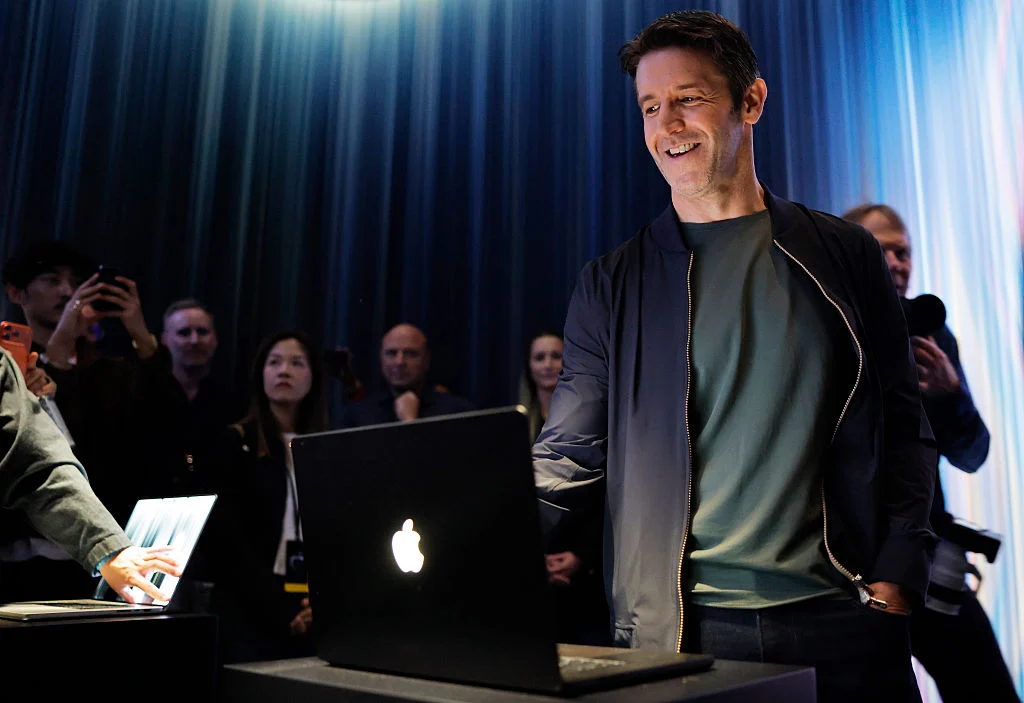
LOS ANGELES — In his first major long-form interview since ascending to the role of Chief Executive Officer, John Ternus has offered a robust defense of Apple’s "slow and steady" approach to artificial intelligence. Speaking with Wired’s Steven Levy following a high-profile product debut in Los Angeles, Ternus addressed long-standing criticisms regarding Apple’s perceived tardiness in the generative AI race, asserting that the company’s priority remains the seamless integration of technology into the human experience rather than the pursuit of technical novelty.
The interview, published on October 31, 2026, serves as a manifesto for the "Ternus Era" at Apple. As the successor to Tim Cook, Ternus is tasked with navigating the most significant technological pivot in the company’s history: the transition from a mobile-first world to one defined by ambient, agentic intelligence.
Main Facts: The Ternus Doctrine on Intelligence
The core of Ternus’s argument rests on a distinction between "AI as a product" and "AI as a feature of a product." While competitors like Google, Microsoft, and OpenAI have focused on standalone chatbots and sprawling LLM (Large Language Model) ecosystems, Ternus maintains that Apple’s strength lies in invisibility.
"We don’t want to ship AI for AI’s sake," Ternus told Levy. "When we’re doing it right, people won’t have to think about whether it was AI that made this happen or more traditional software. What matters is, did we build something that they really love?"
This philosophy underpins the recent launch of the overhauled Siri, which arrived in the summer of 2026 after years of developmental delays. The new Siri represents a fundamental shift in how Apple treats machine learning, moving away from rigid command-and-response structures toward a system that understands personal context across the entire OS.
Key takeaways from the interview include:
- A Commitment to "Leveraging AI": Ternus confirmed that every new product in Apple’s pipeline is being designed with AI at its core, though the branding may not always emphasize the "AI" label.
- The Survival of the App Ecosystem: Despite industry speculation that AI "agents" will render individual apps obsolete, Ternus remains a staunch believer in the App Store model, citing the "human and personal" nature of product creation.
- Operational Continuity: Ternus, a hardware engineer by trade, signaled that Apple will continue to lean on its vertical integration—designing its own silicon to run complex models locally on-device.
Chronology: Apple’s Path to the "New Siri"
To understand Ternus’s current confidence, one must look at the turbulent three-year period leading up to his appointment as CEO in September 2026.
2023–2024: The Quiet Years
While the tech world was set ablaze by the release of GPT-4 and the subsequent integration of "Copilots" into every conceivable software suite, Apple remained uncharacteristically quiet. During this period, the company faced significant pressure from Wall Street, with analysts suggesting that Apple had "missed the boat" on generative AI. Internal reports at the time suggested that Apple’s strict privacy requirements were slowing the training of its proprietary models.
2025: The Foundation of "Apple Intelligence"
In 2025, Apple began laying the technical groundwork for its AI resurgence. This included the introduction of "Private Cloud Compute," a server-side architecture designed to handle complex AI tasks that exceed on-device processing power without compromising user data. This was the year Apple stopped talking about "Machine Learning" and started using the term "Apple Intelligence."
Summer 2026: The Siri Reboot
The defining moment of the pre-Ternus transition was the August 2026 release of the "Fixed Siri." For years, the digital assistant had been a point of ridicule for its inability to handle multi-step requests or maintain conversational context. The 2026 update, powered by a localized version of Apple’s "Ajax" model, finally brought Siri to parity with—and in some contextual ways, ahead of—competitors.
September 2026: The Transition
John Ternus, formerly the Senior Vice President of Hardware Engineering, officially took the helm as CEO. His appointment was seen as a signal that Apple would prioritize the physical manifestation of AI—how it feels in the hand and fits into the home—over purely cloud-based services.

Supporting Data: The Economic and Technical Scale of the Pivot
Apple’s pivot toward a more aggressive AI stance is backed by staggering financial and technical investments. According to recent market analysis and Apple’s own fiscal reports leading into Q4 2026:
- R&D Spending: Apple’s Research and Development budget hit a record $32 billion in the last fiscal year, with a significant portion allocated to the "Silicon-to-Software" AI pipeline.
- Neural Engine Evolution: The A20 and M6 chips, released in late 2026, feature Neural Engines that are 400% faster than those found in the 2023 models. This hardware allows for "Large Language Models" with up to 10 billion parameters to run entirely on-device, ensuring zero-latency responses and total privacy.
- The "Super-Cycle" Effect: Consumer data indicates that the "New Siri" and AI-enhanced photo editing tools contributed to an 8% year-over-year increase in iPhone 18 Pro sales, suggesting that Apple’s "delayed" entry did not dampen consumer appetite.
- Privacy as a Moat: Internal surveys conducted by Apple (and echoed by third-party firms) show that 72% of Apple users cite "data privacy" as their primary reason for choosing Apple Intelligence over cloud-first alternatives like ChatGPT or Google Gemini.
Official Responses: Ternus on the "Human Element"
During the Wired interview, Steven Levy pushed Ternus on the existential threat AI poses to the traditional "app-based" economy. If a single AI agent can book a flight, order groceries, and edit a video, why would a user ever need to open an app?
Ternus’s response was a calculated defense of the creative spirit:
"That could make life really easy, I suppose," Ternus admitted, "but the creation of products is a deeply human and personal thing, something that we love to do. We don’t see AI as a replacement for the app; we see it as the connective tissue that makes those apps more powerful."
This sentiment was echoed by other Apple executives in the wake of the Los Angeles event. Craig Federighi, Apple’s Software Engineering chief, noted in a follow-up press briefing that Apple’s goal is "empowerment, not automation." The company’s official stance remains that AI should be a "bicycle for the mind," echoing Steve Jobs’ famous description of the personal computer.
Ternus also addressed the "behind on AI" narrative directly: "Everyone has an opinion on the timing. But our history is full of examples where we weren’t the first to a category, but we were the ones who made the category work for people. I really like where we’re at because we’re delivering utility, not just demos."
Implications: The Future of the Apple Ecosystem
The Ternus interview signals several long-term shifts for the tech industry at large:
1. The Rejection of "Agentic Nihilism"
By insisting that apps remain relevant, Apple is protecting its $80+ billion-a-year App Store business. If Apple can successfully position AI as a tool that lives within apps rather than a layer that replaces them, they maintain their role as the ultimate platform gatekeeper.
2. Privacy as a Premium Tier
As AI models become more intrusive, Apple’s "on-device" mandate will likely become its most significant competitive advantage. Ternus’s comments suggest that Apple will continue to market "Intelligence" as a premium, secure alternative to the data-hungry models of its rivals.
3. The Hardware-AI Convergence
As a hardware engineer, Ternus is uniquely positioned to oversee the development of new form factors. Rumors of Apple’s "AI Glasses" (a lighter, more consumer-friendly successor to the Vision Pro) have intensified following his comments about "ambient intelligence." If the goal is for people "not to have to think about whether it was AI," then wearable, eyes-up hardware is the logical conclusion.
4. A Shift in Leadership Style
Ternus’s interview reveals a leader who is perhaps more technically focused than Tim Cook but equally committed to the company’s "values-forward" marketing. His defense of AI is not rooted in the "Effective Accelerationism" (e/acc) found in some corners of Silicon Valley, but in a conservative, product-first philosophy that prioritizes the brand’s relationship with the consumer.
In conclusion, John Ternus is not just defending Apple’s current AI position; he is defining the company’s identity for the next decade. By framing AI as a "deeply human" endeavor and rejecting the hype of "AI for AI’s sake," Ternus is betting that consumers will ultimately choose the company that makes technology disappear into the background. As the "Ternus Era" begins, the message is clear: Apple may not have started the AI fire, but they intend to be the ones who harness it for the home.