Unearthing Ancient Wisdom: Amanda Edmiston’s "The Time Traveller’s Herbal" Invites a Journey Through Botanical History
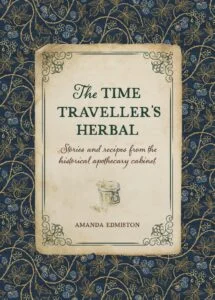
SCOTLAND – In an increasingly fast-paced world, where connection to nature often feels distant, a remarkable new book invites readers on an immersive journey back through time, revealing the profound and often overlooked history of humanity’s relationship with plants. Herbal storyteller Amanda Edmiston, through her evocative work "The Time Traveller’s Herbal," published by Botanica Fabula, challenges conventional narratives, positioning ancient herbalists not as mystical figures but as crucial pioneers of science and custodians of invaluable traditional knowledge.
The book, which has quickly garnered attention for its unique blend of history, folklore, and practical botany, serves as an invitation to "step into the spiral of history" and uncover the vital stories and herbal remedies that have woven their way through the fabric of human existence. Edmiston’s approach is deeply personal and experiential, rooted in her own extensive walks and observations of the natural world, particularly the ancient landscapes of Scotland.
"The herbalist has had many names throughout the ages – cunning woman, wise woman, witch?" Edmiston muses. "All hiding the truth of what they are: early pioneers of science, and fountains of traditional knowledge." This core philosophy underpins the entire narrative, offering a fresh perspective on figures historically marginalized or misunderstood. "The Time Traveller’s Herbal" seeks to reclaim their legacy, demonstrating how their empirical observations and deep understanding of the natural world laid foundations for much of what we now consider modern science.
The Genesis of a Time Slip: Inspiration and Methodology
Amanda Edmiston’s unique methodology for crafting "The Time Traveller’s Herbal" stems from a profound connection to the landscapes she traverses. Her work is not merely academic; it is deeply embodied, born from countless hours spent walking, observing, and contemplating the symbiotic relationship between plants, place, and human history. This approach forms the chronological backbone of her narrative, allowing readers to trace the genesis of her stories and remedies from their very roots.
"Many of my stories, the recipes and tastes that accompany them, originate in the places I walk," Edmiston explains. Her process involves a meditative engagement with her surroundings: "I stop, take a moment, sit and look around me, I start to notice the plants and the changes afforded by time, both seasonal change and historical." This meticulous observation extends beyond the immediate flora to encompass the broader historical tapestry of a location, including geological shifts, human settlements, and the rich tapestry of folklore associated with specific plants. This holistic perspective allows her to reconstruct the ecological and cultural past of a place, making history palpable and immediate.
A particularly significant wellspring for her narratives is a wild floodplain meadow in Scotland, a site she frequents near her home. This ecologically vital area, nestled behind a historic castle at the confluence of two rivers, serves as a recurring muse. "It is easy to be drawn into a spiral if you sit and think, feeling the ground beneath your feet, looking at the unchanging elements, the river and the geography," she notes. This geographical anchor allows for an imaginative leap across centuries, where the enduring features of the landscape provide a constant backdrop against which the ephemeral details of human history and vegetation changes can be explored.
Edmiston often envisions sharing these journeys with others, inviting "a small group of friendly folks to travel back into this meadow’s past with me and explore the plants it nurtures and the stories it tells." This communal spirit permeates "The Time Traveller’s Herbal," transforming a solitary contemplation into a shared expedition through time. The book, therefore, becomes a conduit for this unique form of historical and botanical exploration, guiding readers through the subtle shifts and enduring constants of the natural world.
A Journey to 200 AD: Pictish Lands and Meadow Phantoms
One vivid example of Edmiston’s "time slip" method transports readers to 200 AD, deep within the Scottish floodplain meadow. This era, preceding the familiar architectural constructs of castles and defined paths, presents a landscape both alien and strangely familiar. The tree line, for instance, is present but sculpted differently; where modern larches might dominate, ancient oaks rise, and familiar blackthorn tunnels stretch further, comprised of young saplings rather than the gnarled, ancient forms seen today. The absence of mechanical pruning allows for a wilder, untamed growth, painting a picture of a truly primeval woodland edge.
Despite these significant ecological transformations, certain elements remain steadfast. "The arc and curve of the rivers and the contours of the hills and mountains" endure, their glacial pace of change making them appear constant, offering a comforting geographical certainty. This blend of change and continuity is central to Edmiston’s narrative, emphasizing how landscapes evolve while retaining core identities.
As the journey unfolds, the scene becomes clearer: "We find ourselves on the rocky outcrop above the meeting of the two rivers, a confluence marking out the meadow." This strategic vantage point offers a panoramic view, with the shadow of where the castle will eventually stand behind, and, crucially, a bustling Pictish village thriving on the opposite bank. This detail grounds the botanical exploration within a vibrant human context, reminding readers that these landscapes were not merely wild, but home to complex societies.
Walking towards the "flower-strewn field," a distinctive scent permeates the air: "the scent of salicylates beckons. It has a faintly medicinal allure, partially sweet notes, partially antiseptic." This olfactory cue immediately connects the ancient landscape to a specific plant, meadowsweet, and its inherent medicinal properties.
Upon reaching the first dip towards the river, the visual spectacle is breathtaking: "the creamy clouds of flowers seem to be blurring the view of the bank, as if some ethereal queen was hiding behind them, not wanting anyone to catch her in her natural form." This initial perception of a "phantom" figure, blurred by the delicate blooms, sets the stage for a deeper mythological encounter. The gentle rustling of the river, the distant gaze of a bullock, and the shimmer of something unseen all contribute to an atmosphere charged with ancient possibility.
Edmiston’s initial thought, "My imagination has clearly been seduced by the Queen of the Meadows, flower-led into fantasising phantoms sitting on the shore, or maybe I’m running a temperature?" quickly gives way to a profound realization. As she instinctively adds meadowsweet (Filipendula ulmaria) to her flask of hot water, a story whispers in her ear, and "the penny drops, we are in the presence of the Morrigan, phantom queen, capable of transformation, shapeshifter, one of the ethereal, rarely acknowledged, middle feminine figures in Celtic mythology." This moment perfectly encapsulates the book’s essence: the seamless integration of botanical observation, personal experience, and deep mythological knowledge.
The Legend of Cu Chulainn and the Morrigan
The revelation of the Morrigan’s presence leads directly into one of Celtic mythology’s most compelling and intricate tales, a narrative that not only enriches the understanding of meadowsweet but also highlights the complex interplay between human heroes and powerful deities. This story, central to "The Time Traveller’s Herbal," illustrates how folklore serves as a repository for both cultural values and practical plant knowledge.
The legend begins with the famed warrior Cu Chulainn, sent to the Isle of Skye to master combat under the warrior maid Sgathaich. During his training, he falls in love with her daughter, Uathach, to whom he becomes betrothed. However, Cu Chulainn’s life is defined by violence and battle, and his heroic journeys, as Edmiston aptly notes, are "littered with dubious encounters with women." It is during one such battle that he encounters the mighty Morrigan, a powerful figure in Celtic mythology often associated with war, fate, and sovereignty.
In this encounter, the Morrigan appears as a beautiful young woman at a ford, offering Cu Chulainn her aid in battle in exchange for his love. Despite his existing betrothal, the warrior’s refusal sparks her wrath. Rebuffed, the Morrigan unleashes her shapeshifting powers, transforming into an eel and attempting to entwine around his ankles as he crosses the water. Cu Chulainn, in his characteristic ferocity, wrenches her off, inflicting an injury.
Undeterred, she transforms again, this time into a huge grey wolf, inciting a stampede of cattle towards the warrior. With his slingshot, he strikes her hard, severely wounding her leg. Her final transformation sees her as a white heifer, leading the charge directly at Cu Chulainn, who, with a spear, injures her one last time before she vanishes "haar-like into the river."
As the battle concludes, a weary, bruised, and cut Cu Chulainn makes his way along the riverbank, haunted by the specter of death omens – the Bean nighe washing his armor or the cry of the folkloric Caointeach predicting his demise. His journey leads him to an unexpected encounter: an old woman milking a deer. What strikes Cu Chulainn is not just her presence, but the familiar injuries marring her body – precisely those he inflicted upon the eel, the wolf, and the heifer.
Thirsty and sore, he asks her for a drink. Each time she offers him a cup, he blesses her, and with each blessing, her wounds visibly heal. As the third blessing leaves his lips, the realization dawns upon him: this is the Morrigan. In a gesture of reconciliation and perhaps a subtle lesson, she gifts him meadowsweet. While some versions suggest he regretted healing her, Edmiston asserts, "we are sure he carries it on his belt from that day forth," relying on its healing properties as she has taught him. He uses it to bathe his wounds, reduce fevers, and cool his temper, establishing meadowsweet as an essential component of his warrior’s toolkit. This narrative beautifully illustrates how ancient peoples understood and utilized the medicinal properties of plants, often embedding this knowledge within compelling mythological tales.
Meadowsweet: A Historical Apothecary’s Treasure
The story of Cu Chulainn and the Morrigan not only provides a captivating narrative but also highlights the profound historical and practical significance of meadowsweet (Filipendula ulmaria). This plant, known in Gaelic as crios Chu-chulainn (Cu Chulainn’s belt) in homage to the legend, boasts a rich history of medicinal and cultural uses, making it a true treasure in any historical apothecary’s cabinet.
Meadowsweet’s common name, "Queen of the Meadow," speaks to its regal appearance with creamy, cloud-like blossoms, while "bride-wort" reflects its historical popularity as a floral confetti, strewn at weddings for its beauty and sweet fragrance. However, its most enduring legacy lies in its medicinal properties, largely due to the presence of salicylates, compounds that are precursors to aspirin. This chemical composition underpins its traditional uses for pain relief, fever reduction, and anti-inflammatory effects.
Edmiston’s book delves into these practical applications, offering simple yet powerful remedies derived from meadowsweet.
Soothing Bath:
One of the easiest ways to harness meadowsweet’s calming properties is through a soothing bath.
- Method: "Meadowsweet blossoms can be added to a bath as the water runs, in a muslin (or similar) bag, to help reduce fevers," Edmiston advises. For added skin-soothing benefits, oats can also be included. "Just add three or four fresh or dried flowers to the bag and add to the bath as the water runs." This simple practice, reminiscent of Cu Chulainn’s own healing rituals, offers gentle relief for irritated skin and fevers.
Herbal Tisane (Tea):
Meadowsweet is also an excellent choice for a herbal tisane.
- Method: "As with many of the plants I mention meadowsweet can be put into a cup and steeped in freshly boiled water for three or four minutes to create a herbal tisane," she explains. Beyond its mild pain-relieving qualities, meadowsweet is "really good at soothing indigestion!" making it a versatile remedy for common ailments.
A Cordial for a Phantom Queen:
For a more elaborate and delicious preparation, Edmiston provides a recipe for a meadowsweet cordial, a beverage "fit for a queen" and capable of easing "tempers, fevers and heartburn."
- Ingredients:
- 30 heads of meadowsweet blossoms in full flower.
- Juice of one unwaxed, freshly squeezed lemon and a little grated rind.
- 300 grams of blossom honey (locally produced has additional benefits).
- 1 litre of filtered water.
- Method:
- Bring the water to the boil and then dissolve half the honey into it.
- Once the honey has dispersed, add the meadowsweet, lemon juice, and rind, allowing the mixture to simmer for a further three minutes.
- Remove from heat and let it rest overnight (or at least for an hour or two) to allow the meadowsweet to infuse fully.
- Strain the mixture, then add the remaining honey and return to the boil.
- Allow it to simmer for another five minutes or so to reduce, aiming for the consistency of a cordial. More honey can be added to taste.
- Bottle in sterile glass jars or Kilner-style bottles. If kept cool, it lasts for up to three months.
- Serving: "Mix with still or sparkling water or maybe a sparkling wine and feel the heat dissipate."
These recipes exemplify how "The Time Traveller’s Herbal" bridges the gap between ancient wisdom and modern application, transforming historical narratives into tangible, beneficial practices.
Amanda Edmiston’s Vision and "The Time Traveller’s Herbal"
Amanda Edmiston’s "The Time Traveller’s Herbal" is more than just a collection of stories and recipes; it is a deeply personal expression of her philosophy regarding the natural world and human history. Her vision is to make the intricate tapestry of botany, folklore, and historical medicine accessible and engaging, encouraging readers to see the world through a new, more enchanted, and informed lens.
Edmiston’s personal connection to the places and stories she shares is palpable throughout the book. Her walks are not merely physical acts but meditative journeys into the past, where every plant and landscape feature holds a memory, a legend, or a forgotten remedy. Her goal is to transmit this profound sense of wonder and discovery to her audience, fostering a deeper appreciation for the environment around them. She emphasizes experiential learning, inviting readers to engage their senses – the scent of salicylates, the sight of creamy blossoms, the taste of a cordial – making the historical journey a visceral one.
Implicitly, the book also highlights the publisher’s recognition of a growing appetite for works that blend diverse disciplines. "The Time Traveller’s Herbal" appeals to a broad audience, from history enthusiasts and amateur herbalists to nature lovers and folklore scholars. Its unique format, seamlessly weaving together narratives with practical applications, positions it as a significant contribution to the understanding of the intersection between human culture and the natural world. It underscores the enduring relevance of traditional knowledge in contemporary society, advocating for a return to observing, learning from, and respecting the botanical wisdom passed down through generations.
Implications: Reconnecting with Ancient Plant Wisdom
"The Time Traveller’s Herbal" carries significant implications for our modern world, offering a powerful antidote to the growing disconnect between humanity and nature. In an era dominated by technological advancements and synthetic solutions, Edmiston’s work serves as a vital reminder of the enduring value of traditional knowledge and the profound wisdom embedded within the natural world.
The book encourages a re-evaluation of our historical understanding, particularly concerning the figures often relegated to the realm of myth or superstition. By reframing herbalists as "early pioneers of science," Edmiston challenges us to acknowledge the empirical observations and sophisticated understanding that underpinned ancient healing practices. This perspective is crucial for appreciating the origins of medicine and recognizing the long lineage of human inquiry into the natural world.
Beyond historical revisionism, "The Time Traveller’s Herbal" fosters a deeper connection with local environments. It prompts readers to look at their surroundings with new eyes, to notice the plants that grow nearby, and to consider the stories and histories they might hold. This encouragement of "eco-literacy" is not merely academic; it is an invitation to engage actively with nature, to understand its rhythms, and to rediscover the practical benefits it offers.
Ultimately, Edmiston’s work is an empowering call to action. It inspires readers to become their own "historical apothecary’s cabinet," not by abandoning modern medicine, but by integrating a respectful understanding of traditional remedies into their lives. By providing accessible recipes and compelling narratives, the book demystifies herbalism and encourages a hands-on approach to wellness, rooted in a deep respect for natural wisdom. The "twist in time, the feeling of being pulled into a tide of years ebbing and flowing, the shift is visceral" that Edmiston describes is an invitation to embark on a personal journey of discovery, finding magic and meaning in the plants that surround us.
For those eager to continue this captivating journey with Amanda Edmiston, "The Time Traveller’s Herbal" is available in all good bookshops and directly through the Botanica Fabula website at botanicafabula.co.uk/time-travellers-herbal. It promises not just a book, but an experience – a spiraling descent into the past that illuminates the present and enriches the future.
Note: FolkloreThursday, Botanica Fabula, and Amanda Edmiston provide information for entertainment and educational purposes only. This article does not offer medical advice, and readers are strongly recommended to consult a qualified medical professional before trying any remedies or practices mentioned.