Unearthing the Horrors Within: A Deep Dive into Stephen Graham Jones’s The Buffalo Hunter Hunter, Chapters 21-22
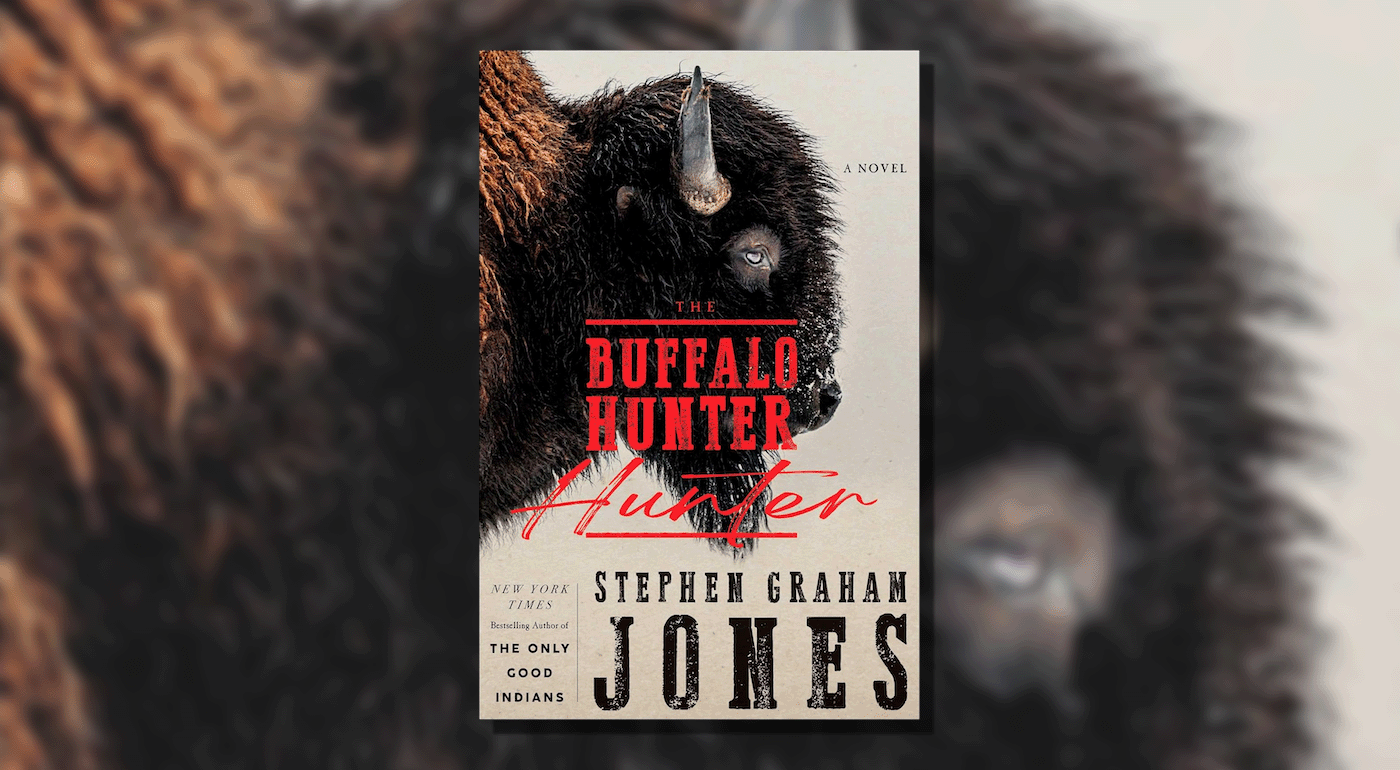
Welcome back to "Reading the Weird," our ongoing exploration into the labyrinthine depths of weird fiction, cosmic horror, and the intricate tapestry of Lovecraftiana, tracing its evolution from foundational roots to contemporary branches. This week, our focus narrows to a pivotal segment of Stephen Graham Jones’s highly acclaimed novel, The Buffalo Hunter Hunter. Winner of both the Nebula and Stoker awards, Jones’s work, first published in 2025, has swiftly cemented its place as a modern classic in the genre. This review delves into Chapters 21-22, titled "The Nachzehrer’s Dark Gospel, May 5, 1912" and "The Absolution of Three-Person, May 26, 1912," respectively. Be warned: profound spoilers for these chapters lie ahead.
Main Facts: A Descent into Vengeance and Moral Ambiguity
Stephen Graham Jones’s The Buffalo Hunter Hunter continues its relentless narrative in Chapters 21 and 22, presenting a harrowing chronicle of survival, vengeance, and a chilling exploration of monstrous identity. The central figure, Good Stab, a Pikuni man, finds himself ensnared in a brutal cycle of conflict with the ancient and malevolent entity known as Cat Man. This installment unpacks Good Stab’s torturous transformation, his desperate fight to preserve what remains of his humanity and cultural heritage, and the terrifying sacrifices he makes along the way. Simultaneously, the perspective of Arthur, a Christian minister serving as Good Stab’s unwilling confessor, offers a contrasting, albeit deeply flawed, lens through which to view the unfolding horrors, highlighting themes of colonial prejudice, spiritual corruption, and the insidious nature of denial. These chapters are not merely a recounting of fantastical events but a profound meditation on the erosion of identity, the burden of historical trauma, and the complex interplay between victim and perpetrator in a world where the lines between human and monster blur irrevocably.
Chronology: Good Stab’s Ordeal – A Narrative of Suffering and Twisted Salvation
The narrative arc spanning Chapters 21 and 22 is an odyssey of unimaginable suffering and a desperate quest for vengeance that ultimately leads to a profoundly ambiguous resolution.
The Nachzehrer’s Dark Gospel, May 5, 1912
The story opens with Good Stab in a desperate flight from the Fat Melters Camp, unjustly accused of the murders of Yellow Kidney and his sister. This immediate sense of wrongful blame sets a somber tone, as Good Stab faces not only the wrath of his own people, the Pikuni, but also the looming threat of the true culprit. His perilous journey culminates in a chilling confrontation with Cat Man, the ancient and grotesque entity responsible for the atrocities.
Cat Man, a being of terrifying power and malevolence, reveals himself to Good Stab. His physical description is unnerving: elongated limbs, antlers, and piercing yellow eyes, tell-tale signs of his unnatural diet of "long-legs." His age, a staggering 450 years, and his fluency in Pikuni, suggest a long, predatory history intertwined with the Indigenous communities of the land. Cat Man’s motive is clear: he desires Good Stab’s prolonged suffering, seeing him as a "disease" to his people, a tool for his own twisted designs.
The extent of Cat Man’s cruelty is immediately evident. Good Stab discovers his entire buffalo herd, the lifeblood of his people, slaughtered. Among the carnage lies Weasel Plume, a magnificent bull, semi-flayed and dying. In an act of profound mercy and despair, Good Stab euthanizes the bull by crushing its heart, a moment of visceral grief that evokes a mocking "Well, that was melodramatic" from the observing Cat Man. This cold disdain for suffering underscores Cat Man’s complete detachment from human—or even animal—life.
To demonstrate his terrifying power and dismiss Good Stab’s inquiries about his origins, Cat Man brutally tears off Weasel Plume’s massive head. He offers a chilling proposition: if Good Stab were more than a mere accident, he could be "educated," shown "the world in all its misery and grandeur." But sensing Good Stab’s desire for death, Cat Man suggests he won’t deny him. This interaction is not a negotiation but a cruel manipulation, forcing Good Stab into a desperate challenge. Both men take a goring from Weasel Plume’s horns. In a desperate gamble for strength, Good Stab drinks Cat Man’s blood, a forbidden act among their kind that instead plunges him into a deep coma.
He awakens to an unimaginable nightmare: trapped in a glacial cave, his hands and knees frozen solid into the icy floor. The struggle for freedom is agonizing, forcing him to break his own arm, then use the exposed bone as a tool to chip away at the ice, freeing his other arm and legs. This act of self-mutilation is a stark symbol of the sacrifices required for survival in Cat Man’s world. Good Stab navigates a treacherous maze of icy tunnels, littered with the skeletal remains of humans and animals, a testament to Cat Man’s long tenancy and horrific sustenance.
Over what stretches into years, Good Stab encounters living Pikuni, victims sustained by his captor as a twisted form of larder. By the third winter, Cat Man supplies only napikwans (white settlers), from whom Good Stab gleans devastating news: outside, the Pikuni face starvation, their buffalo herds decimated, and their ancestral territory rapidly shrinking. This realization ignites a new resolve in Good Stab. He discovers a flint arrowhead buried in one of the napikwan’s flesh, a grim tool he uses to craft a torch from scavenged clothing. Melting his way out of the icy tomb, he emerges into a transformed world. His first act of defiance and remembrance is to carry Weasel Plume’s skull to the sacred summit of Chief Mountain, establishing a shrine to what was lost before embarking on a desperate search for his people.
Good Stab eventually finds the Small Robes’ camp, but his prolonged ordeal and the consumption of napikwan flesh have physically altered him, making him appear napikwan himself. This forced assimilation is a bitter irony. He is brought before their new chief, "Walks Twice," who is, in fact, Cat Man in disguise. Cat Man maintains his deception by claiming his "medicine" requires him to avoid sunlight. Good Stab is bound to a post, observed by curious children. Among them, a girl named Kills-in-the-Water communicates with him through hand signs, displaying a precocious understanding and compassion by tying cloth over his eyes to shield him from the sun—a gesture of care that will later become tragically ironic. The grim reality of their existence is underscored when the hunting party returns with only two bulls and one hunter missing, a stark indicator of the dwindling resources and Cat Man’s hidden predation.
Cat Man, asserting his control, orchestrates an untimely Sun Dance, a sacred ritual twisted into a spectacle of dominance. Despite the camp’s unease, no one dares oppose him. Good Stab is forced to participate in place of a proper Pikuni initiate, with Kills-in-the-Water, now serving as medicine woman, pushing the impelling pegs into his chest. Her tears signal her profound distress "about the wrongness of this," a poignant recognition of the desecration unfolding. Once the horrific dance is complete, Cat Man seizes Good Stab and carries him off to the Backbone, a desolate mountain range.
There, Cat Man inflicts further torment, breaking Good Stab’s legs, spine, and one arm, leaving him for an agonizingly slow recovery. His revitalizing meals now consist of Blue Mud People, Indigenous individuals fleeing soldiers, whose flesh allows him to slowly shed his napikwan appearance and reclaim his Indian form. Upon recovering, he discovers that the Small Robes, too, have fled Cat Man’s insatiable hunger. He reunites with Kills-in-the-Water and her brother, who, despite their fear, accept his aid as he builds them a lean-to and provides food, a fragile semblance of family amidst the chaos.
The final, most agonizing part of Good Stab’s confession details his "worst sin." He returns to the Small Robes’ corpse-littered winter camp, a scene of absolute desolation. Setting Cat Man’s lodge ablaze, he waits. Cat Man appears, revealing the horrific truth: he slaughtered these people because they had hidden Kills-in-the-Water, even daubing themselves with her blood and scattering to protect her. Cat Man explains that once in a century, someone is born with blood so potent that his kind will do anything for it. Kills-in-the-Water’s blood is unique, destined to be only the third such draught Cat Man has consumed in his 450 years.
Good Stab proposes a terrible bargain: he will deliver Kills-in-the-Water to Cat Man if the monster promises to leave and spare the surviving Pikuni. In a moment of false hope and defiance, Good Stab returns with three hundred remaining buffalo, orchestrating a stampede that tramples Cat Man flat. Yet, the ancient evil endures; Cat Man recovers, throws Good Stab aside, and begins to rise. Desperate, Good Stab rushes back to Kills-in-the-Water. Her brother has succumbed to the cold, leaving her alone. She clings to Good Stab with the same desperate innocence his own daughter once displayed, as he carries her to an island below Face Mountain. Her embrace, filled with trust, makes his subsequent act his "worst sin": he holds her for Cat Man. In a final, twisted act of ritual, he bites blood from his own tongue, mixes it with blood he extracts from the girl’s shoulder, and injects the mixture back into her. This act of corrupting her unique blood is a profound violation.
Cat Man, consuming a full mouthful of Good Stab’s altered blood, is rendered "puppy-weak." The tables are turned. Good Stab, now the captor, spends four winters feeding Cat Man sturgeons, slowly weakening him further. Finally, he releases his enemy into the lake, a fish trapped forever in the water, a grotesque and permanent form of imprisonment.
The victory, however, is hollow. Good Stab searches tirelessly for Pikuni camps, finding none. It is Starvation Winter, a season of unimaginable hardship, with corpses frozen into the snow and the few remaining Pikuni wasting away at Old Agency, where promised rations never arrive. His long, harrowing confession concludes. He leaves Three-Persons (Arthur) in the church, surrounded by the echoes of his own dead.
The Absolution of Three-Person, May 26, 1912
Two weeks after Good Stab’s final, chilling confession, Arthur returns to his journal, attempting to process the horrific events. The mice, symbolic of lingering decay and chaos, have returned to his desecrated church, but Cordelia, a figure of innocence or hope, has not. Arthur, traumatized, no longer dares to steal her. The stench of lingering rot, emanating from the pews where Good Stab’s dead once rested, now removed by deputies sworn to secrecy, still permeates the space. Despite the official cover-up, news of the macabre spectacle has inevitably leaked, further eroding Arthur’s fragile world.
Arthur’s attempts at purification are futile. He has scrubbed relentlessly, but he cannot cleanse his memory of the horrors he witnessed. His once "voracious appetite" is spoiled, and he finds no comfort in the stream of victuals delivered by parishioners, which now largely go to feeding stray dogs—a bitter reflection on his own lost spiritual sustenance and the "gluttony" he attributes to others.
His paranoia manifests in a bizarre ritual: he keeps eggs on hand, not for consumption, but to detect "the proximity of servants of the Pit." Each Sunday, he publicly demonstrates the sanctity of his chapel by cracking an egg into a chalice, seeking the reassurance of a yellow yolk. A momentary shock when an Indian wearing dark spectacles appears turns out to be only Amos Short Ribs, highlighting Arthur’s underlying racial anxieties.
Arthur, in his prejudice, instructs Mose to supply Amos with bottles on his tab, believing the Blackfeet to be "a cursed people." His desire for them to become "tillers of the soil and tenders of cattle" is presented as beneficial for both Montana and his own "sanity and sanctity," revealing a deeply ingrained colonial mindset that equates "civilization" with agricultural subservience and the eradication of Indigenous culture. He is left to bear the psychological torture of waiting for Good Stab to choose the day of his own execution, a perverse form of power reversal.
Supporting Data: Thematic Intersections and Genre Deconstruction
Jones’s narrative, as highlighted by the "Reading the Weird" commentary, is rich with thematic layers that transcend simple horror, engaging in a sophisticated deconstruction of genre tropes and historical injustices.
Body Horror vs. Cosmic Terror: The Visceral and the Unknowable
Ruthanna’s commentary astutely identifies the novel’s masterful, albeit "squicky," use of body horror. She expresses a personal preference for "unnamable experiences with extradimensional incursions" over graphic corporeal damage, finding it easier to engage with "chewy thematic ideas" when not overwhelmed by visceral imagery. This distinction is crucial to understanding Jones’s craft. While many weird fiction authors lean into the abstract horrors of the cosmos, Jones grounds his narrative in the tangible, agonizing reality of physical mutilation and suffering. Good Stab’s frozen hand, the self-amputation with exposed bone, and Cat Man’s gruesome acts of dismemberment are not merely gratuitous; they serve to emphasize the brutal, inescapable reality of violence and survival in a world where ancient evils manifest in profoundly physical ways. The reference to Aron Ralston’s real-life ordeal anchors this fictional horror in a chillingly relatable human experience, making the fantastical feel uncomfortably real and profoundly unsettling. The novel argues that the most profound horrors are often those that assault the body, eroding the self from the inside out, rather than abstract threats from beyond the stars.
Identity, Transformation, and the Nachzehrer’s Legacy
A core thematic throughline is the exploration of what remains of an individual’s original life and self after becoming a "nachzehrer" – a vampiric entity. Cat Man, at 450 years old, represents the extreme end of this transformation. His ancient European origins, glimpsed through his cursory recall of language cognates like "nava" (Latin), French, Spanish, Slavic, Czech, and Russian, reveal a fragmented memory, devoid of genuine connection. He is a being utterly detached from his original culture, viewing mortals as mere resources. This mirrors a "supernatural whiteness" that erases Indigenous cultures, a monstrous parallel to colonial historical processes. The single ring he carries symbolizes a past "swallowed over and over," a constantly consumed and regurgitated identity that is never truly lost but never truly whole.
Good Stab’s journey reflects this terrifying potential. His forced napikwan appearance after consuming white settlers’ flesh, his slow reclamation of his Indigenous identity through the consumption of Blue Mud People, and his eventual transformation into a nachzehrer himself, all highlight the profound impact of forced assimilation and the battle to retain cultural selfhood. Good Stab, like Cat Man, is left with cruelty, vengeance, hunger, and a "hangry" urge to destroy. Jones posits that after centuries, Good Stab could easily become another Cat Man, a cycle of monstrous transformation perpetuated by trauma and the erosion of identity. The question of what truly remains of the self, beyond base instincts, is left chillingly open.
Colonialism, Erasure, and the Monster as Metaphor
The novel deftly employs the supernatural as a metaphor for the historical trauma of colonialism. Cat Man’s destruction of "whole peoples, lost to history," and his promise that the Pikuni will suffer the same fate, directly mirrors the devastating impact of European expansion on Indigenous populations. The shrinking Indian territory, the decimated buffalo herds, and the starvation at Old Agency are not just background elements but direct consequences of the "civilizing" agenda imposed by figures like Arthur. Cat Man, with his ancient European roots and his predatory view of Indigenous peoples, becomes a potent symbol of the colonizing force: an insatiable, ancient evil that consumes land, culture, and life, leaving only a wasteland in its wake. Arthur’s desire to see the Blackfeet become "tillers of the soil and tenders of cattle" for his own "sanity and sanctity" is the mundane, bureaucratic face of the same destructive impulse embodied by Cat Man.
Metatextual Commentary: Storytelling and Narrative Control
Jones also engages in metatextual commentary, as seen in the "Weirdbuilding" and "Libronomicon" sections. Cat Man’s taunt to Good Stab—that he will force him into a different kind of story, where Good Stab is the villain in a hero’s tale—speaks to the power dynamics of narrative. Who controls the story, and how are characters cast within it? This reflects the historical revisionism and demonization of Indigenous peoples within colonial narratives. The reference to Shelley’s Ozymandias, paired with the "new deep lore" that Ozymandias himself was torn apart by a vampire, is a brilliant piece of intertextual play. It suggests that even the grandest monuments and boasts of human power are ultimately vulnerable to the ancient, destructive forces of the "weird," and that even heroes can be undone and rewritten by a monstrous presence.
Sin, Absolution, and the Corrupted Confession
Arthur’s role as the unwilling recipient of Good Stab’s confession provides a corrupted lens through which to examine sin and absolution. His spoiled appetite, his blame of feral dogs for "gluttony" while his own spiritual sustenance wanes, highlights his hypocrisy and moral decay. The setting of the confession—a church filled with corpses, with Good Stab literally "hung from a cross"—is a grotesque parody of Christian ritual. Good Stab’s act of confessing "one death… stuck in his conscience" suggests a flicker of humanity, a desire for some form of release, even from an enemy. However, the "un-Pikuni" nature of this confession, as Ruthanna observes, leaves a profound ambiguity. Why confess to an enemy, to a Christian minister? Is it for absolution, for understanding, or a final, cruel act of psychological torment, forcing Arthur to confront the true cost of the "civilizing" mission he champions? The confession is less about Arthur’s absolution and more about his forced reckoning with the monstrous consequences of his world view.
Official Responses: The Reviewer’s Personal and Critical Engagement
Ruthanna’s commentary provides the direct critical and personal response to these chapters, offering invaluable insight into Jones’s impact. Her candid admission of being "easily squicked out" by corporeal damage, despite loving horror, underscores the effectiveness of Jones’s visceral writing. She champions the "chewy thematic ideas" of the novel, yet openly struggles with the graphic nature of scenes like the frozen hand or the brutal Sun Dance, highlighting the fine line Jones walks between thematic depth and sheer shock. This personal vulnerability lends authenticity to her critique, demonstrating how deeply the novel’s horror penetrates.
Her ongoing questions about Good Stab’s motivations—"Why confess to an enemy? To a Christian? Why beg for approval? The whole urge seems un-Pikuni"—reveal the profound moral ambiguities that Jones deliberately leaves unresolved. Ruthanna’s observation that "there’s something missing, still, from this picture" invites readers to grapple with the complex psychological landscape of a character pushed beyond human limits.
Furthermore, Ruthanna’s critique of Arthur’s perspective is particularly incisive. She notes his lingering prejudice, his inability to see Good Stab as anything more than a "representative ‘savage’" rather than a monster by both napikwan and Pikuni standards. Arthur’s ultimate wish for a world "divided into humans and resources to be exploited, with no space left for monsters," encapsulates the very colonial mindset that underpins much of the novel’s horror. Ruthanna highlights how Arthur, despite his horrifying experience, remains stubbornly entrenched in his denial, unable to fully grasp the true monstrosity of the systems he upholds. This is not a simple tale of good versus evil, but a complex tapestry of complicity, cultural collision, and the enduring nature of prejudice.
Implications: Legacy and Lingering Questions
Stephen Graham Jones’s The Buffalo Hunter Hunter, particularly through these harrowing chapters, solidifies its position as a significant contribution to weird fiction and contemporary horror. Its masterful blend of Indigenous storytelling, historical trauma, and visceral cosmic horror pushes the boundaries of the genre, challenging readers to confront not only external monsters but also the monstrous impulses within humanity and the systems it creates. The novel doesn’t offer easy answers or clean resolutions; instead, it leaves a lingering sense of unease, a deep resonance of unresolved suffering, and profound questions about identity, survival, and the cost of vengeance.
With two chapters remaining, the fate of Arthur and the full implications of Good Stab’s confession hang heavy in the air. Will Arthur truly face an "execution," or will Good Stab’s ultimate act be one of a different, more psychological, nature? The series "Reading the Weird" continues its vital work of dissecting such complex narratives, inviting readers to engage with the genre’s evolving landscape and its capacity for profound social and philosophical commentary.
As we await the conclusion of The Buffalo Hunter Hunter, the journey continues next week with a venture into an older story-confession: Marjorie Bowen’s "The Bishop of Hell." This classic tale, available on Project Gutenberg and in Mike Ashley’s Queens of the Abyss: Lost Stories From the Women of the Weird, promises another compelling exploration of dark secrets and the human psyche.