
Unlocking Deeper Narratives: New Story School Launches with Focus on Dual Character Arcs
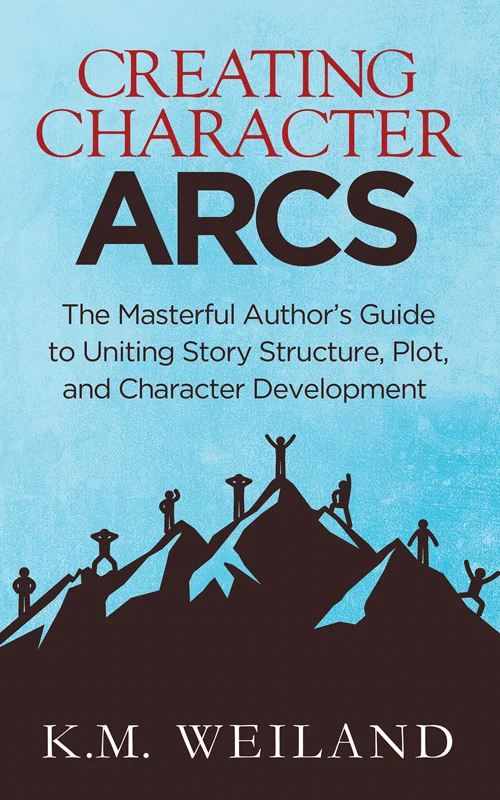
[City, State] – [Date] – In a significant development for aspiring and established writers alike, acclaimed author and storytelling expert K.M. Weiland has announced the launch of her innovative "Story School," a new educational initiative designed to delve into the nuanced craft of narrative. The inaugural course, "The Ego-Driven Character Arc vs. the Soul-Driven Character Arc," opens for registration today, promising to equip writers with a more profound understanding of character transformation and its impact on storytelling.
For years, Weiland has shared her insights through popular blog posts and best-selling books, including "Structuring Your Novel" and "Creating Character Arcs." However, she has identified a growing need for more focused, in-depth exploration of specific storytelling concepts that transcend the limitations of written mediums. The Story School aims to fill this void by offering a series of live classes throughout the year, each dedicated to unpacking complex and exciting ideas that Weiland has been eager to explore further.
The Genesis of a Deeper Understanding: From Formulaic to Profound
The impetus behind the Story School, and its inaugural class in particular, stems from Weiland’s observations about the common pitfalls writers encounter when developing character arcs. While foundational concepts like the "Positive Change Arc" and the "Lie the Character Believes" provide invaluable language and structure for understanding character transformation, Weiland notes that these principles can, if not approached with nuance, lead to formulaic storytelling.
"When we first learn about these fundamental arcs, it’s like discovering a master key," Weiland explains. "It gives us language for transformation, both in our characters and ourselves, and provides a recognizable pattern that resonates with life. But almost immediately, writers begin to ask the next logical question: ‘How can I make this feel fresh and unique?’"
Weiland’s recent work has increasingly focused on the cyclical, spiral-like nature of story structure. This perspective highlights that true growth, whether in life or in fiction, involves revisiting themes and challenges at progressively deeper levels of awareness. Just as individuals in real life don’t wish to learn the same lesson repeatedly without evolving, characters in compelling narratives need arcs that reflect a genuine progression rather than mere repetition. This realization has led Weiland to distinguish between two fundamental types of character transformation: ego-driven and soul-driven arcs.
Ego-Driven vs. Soul-Driven: Two Pillars of Character Transformation
The core of Weiland’s inaugural class lies in dissecting these two distinct yet equally valid approaches to character development.
Ego-Driven Arcs: These arcs are often characterized by resistance to change. The "Lie the Character Believes" is dismantled primarily through the pressure of plot events and external conflict. In these narratives, transformation can feel like a confrontation, a forceful shedding of old habits and beliefs in the face of overwhelming consequences. Weiland likens these to "karmic" arcs, where characters are compelled to evolve through the repercussions of their actions and choices, often learning through struggle and opposition.
Soul-Driven Arcs: In contrast, soul-driven arcs, which Weiland associates with "dharmic" journeys, involve a different kind of movement. Here, the character is not necessarily fighting against a fundamental thematic truth. Instead, the narrative’s progression is about conscious alignment and an internal desire to embrace change. These characters may already possess a nascent understanding of the truth but are motivated by a yearning for growth and a desire to step into a larger perspective. This transformation is often less dramatic and more internally motivated, driven by a humble recognition of incomplete understanding and a genuine aspiration for something more.

While both arc types can create powerful and profound stories, Weiland emphasizes that they are not structured identically. Understanding the nuances of each allows writers to select the most appropriate framework for their specific narrative and character.
A Journey of Discovery: From "Jane Eyre" to a New Paradigm
Weiland’s own journey to understanding these dual arc types is deeply rooted in her extensive work with classic literature and her own creative process. Her initial immersion into the mechanics of character arcs came during her work on an annotated edition of Charlotte Brontë’s "Jane Eyre" for Writer’s Digest. As an author of "Structuring Your Novel," her instinct was to meticulously analyze the plot structure, dividing the novel’s page count to map out structural beats.
However, as she delved deeper into "Jane Eyre," Weiland discovered that the character arc’s structure emerged with far greater clarity than she had anticipated. She began to clearly identify elements like the "Lie the Character Believes," the "Thematic Truth," the "Want and Need," and the "Ghost" – concepts that would later form the bedrock of her book, "Creating Character Arcs."
"That experience became the foundation for the next book I wrote," Weiland recalls. "Between the annotated version of ‘Jane Eyre’ and ‘Creating Character Arcs,’ something fundamental shifted in my perspective of life, humanity, and the nature of change itself. My eyes were opened to one of the most important thematic truths of my life. Suddenly, so many stories made sense, not to mention so much of human growth. I could see the pattern everywhere – in fiction and in my own life."
This foundational understanding, she explains, describes a critical stage of growth where individuals resist truth, cling to limitations, and require external consequences to spur change.
Beyond Problem-Solving: The Emergence of Mythic Storytelling
Over time, and through both her own life experiences and the stories she found herself drawn to, Weiland began to notice a different kind of transformation. She observed that not all meaningful shifts arose from dramatic ego-death scenarios. Her own evolving stance towards change, informed by maturity and experience, led her to recognize that some of the deepest personal growth comes not from being forced to change, but from a conscious desire to expand one’s perspective.
"This is a different posture toward change," Weiland notes. "It’s humbler. It’s less dramatic. In many ways, it’s harder to write about because it isn’t fueled by the same kind of obvious conflict. And yet, when I look at many of the stories that have deeply inspired me over the years – stories that feel mythic, spacious, archetypal – I see this second type of character arc everywhere."
These soul-driven arcs, Weiland posits, are not simply about characters learning to function better within their existing world. They are narratives about individuals orienting themselves towards something larger than their personal success. This realization has fundamentally altered her perception of storytelling, making her more attuned to the kind of transformation best suited for specific narratives and more interested in teaching stories that operate at this deeper, more mythic register.

Weiland believes this shift is particularly relevant in the current cultural climate, where many are questioning not just their desires but the very source of meaning. In an era that demands understanding how to align with a bigger perspective, stories that explore these profound questions become invaluable tools for personal and collective growth.
The Curriculum: Deep Dives into Character Arc and Conflict
The "Ego-Driven Character Arc vs. the Soul-Driven Character Arc" class will delve into several key areas:
- Understanding the Nuances: Exploring the distinct motivations, internal conflicts, and external pressures that shape each arc type.
- Identifying Core Differences: Learning to recognize the subtle yet crucial structural and thematic divergences between ego-driven and soul-driven transformations.
- Crafting Compelling Arcs: Providing practical tools and techniques for writers to effectively implement both arc types in their own stories, ensuring authenticity and emotional resonance.
- Leveraging Conflict: Examining how different types of conflict serve and amplify each specific arc.
- Exploring Archetypal Patterns: Connecting character arcs to broader mythological and psychological frameworks, enriching the narrative’s thematic depth.
A Bundled Opportunity for Deeper Exploration
In addition to the inaugural class, Weiland has announced a follow-up session, "The Villain as an Aspect of the Hero’s Psyche," scheduled to launch in two weeks. This complementary course will explore how conflict itself can be understood symbolically, moving beyond external antagonism to reveal internal psychological landscapes.
For writers seeking a comprehensive exploration of mythic storytelling, a special 15% bundle discount is available for both "The Ego-Driven Character Arc vs. the Soul-Driven Character Arc" and "The Villain as an Aspect of the Hero’s Psyche." This bundled offering presents a unique opportunity to deepen one’s understanding of character, conflict, and the archetypal dimensions of narrative.
Weiland invites writers to engage with this new approach to character development, encouraging them to consider which types of arcs they most frequently employ in their own work. The launch of Story School signifies a commitment to fostering a more sophisticated and profound understanding of the art of storytelling, equipping writers to craft narratives that resonate deeply with readers on both an intellectual and spiritual level.
Registration for "The Ego-Driven Character Arc vs. the Soul-Driven Character Arc" is now open at https://kmweilandstore.com/b/ego-vs-soul-arc-class. The bundled offer can be found at https://kmweilandstore.com/b/character-arcs-conflict-class-bundle.




Leave a Comment