
Unlocking Inner Peace: Why Nervous System Regulation is the Foundation of All Healing

In an era marked by pervasive stress and a relentless quest for meaning, many individuals find themselves grappling with a litany of debilitating symptoms: chronic anxiety, hypervigilance, sleep disturbances, persistent aches, bouts of depression, brain fog, emotional numbness, and a profound sense of disconnection from self and life. While the pursuit of healing often leads us to external solutions – self-help books, workshops, and innovative tools – a critical, foundational element is frequently overlooked: the human body itself.
As the celebrated author Hermann Hesse observed, "I have been and still am a seeker, but I have ceased to question stars and books; I have begun to listen to the teaching my blood whispers to me." This sentiment is echoed by somatic expert Ann Weiser Cornell, who urges us to "Come back to your body; that’s where the truth is." These profound insights underscore a growing understanding that our physical form is not merely a vessel, but a dynamic repository of our experiences, holding the keys to our mental, emotional, and spiritual well-being.
Main Facts: The Body as the Unacknowledged Healer
The modern human condition often involves a significant dissociation from our physical selves, leading us to believe that answers to our deepest struggles lie exclusively in the realm of the intellect or external acquisition. We consume information, seek new techniques, and strive for self-improvement, yet many find themselves returning to the same cycles of suffering. The root cause, according to an emerging consensus in psychology and neuroscience, is a fundamental disconnection from our bodies and, by extension, our nervous systems.
This article posits that true, lasting healing and transformative inner work cannot occur without first establishing a stable, regulated nervous system. It is the bedrock upon which genuine self-discovery, emotional resilience, and spiritual growth are built. Without addressing the chronic states of "fight, flight, freeze, or fawn" that many individuals inhabit, any attempts at deeper personal development are likely to be undermined and eventually fail. This foundational physiological work provides the essential grounding, embodiment, and sense of safety required for profound internal shifts.

Chronology: The Evolution of Embodied Understanding
For centuries, Western thought has often prioritized the mind over the body, viewing the latter as a mere biological machine separate from consciousness and spirit. However, a lineage of pioneering thinkers has steadily challenged this dualistic perspective, paving the way for our current understanding of embodied healing.
The early 20th century saw psychoanalyst Wilhelm Reich emerge as a critical figure, positing that the body acts as a direct reflection of the unconscious mind. Reich introduced the concept of "body armor," suggesting that chronic muscular tension, gestures, and postures are not arbitrary but rather physical manifestations of suppressed emotions, unresolved traumas, and psychological defenses. His work laid the groundwork for somatic psychology, emphasizing that psychological issues are not just abstract mental constructs but are deeply ingrained in our physical being.
Building on Reich’s insights, physician and psychotherapist Alexander Lowen further popularized the idea in the 1970s that "the body is the unconscious made visible." Through his development of Bioenergetic Analysis, Lowen demonstrated how energetic blockages and chronic muscular rigidities correspond to psychological conflicts, asserting that freeing the body from these restrictions was integral to mental and emotional liberation.
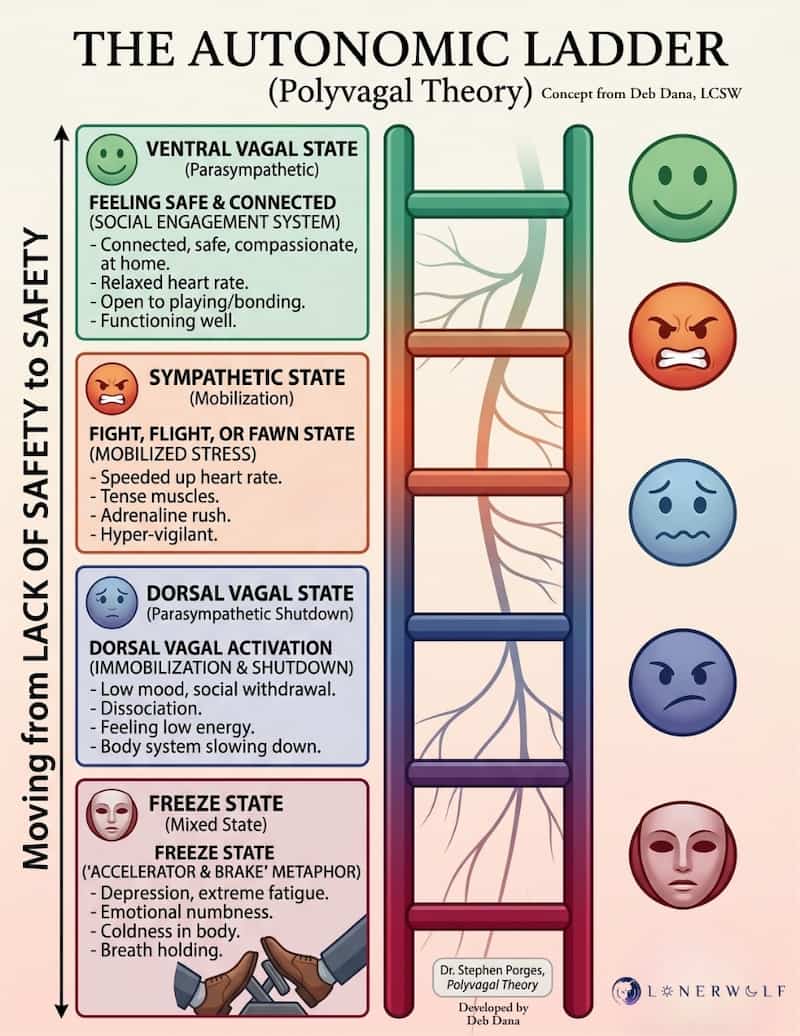
More recently, the landscape of nervous system understanding has been revolutionized by neuroscientist and psychologist Dr. Stephen Porges with his groundbreaking Polyvagal Theory in the early 1990s. Porges’ research, particularly on the vagus nerve, shifted the paradigm from a simple fight-or-flight model to a more nuanced view of the nervous system’s hierarchical responses to perceived safety and threat. His work has since been expanded upon by clinicians like Deb Dana, who developed the practical "Autonomic Ladder" model, making complex neurobiology accessible for therapeutic application. This chronological progression highlights a continuous movement towards recognizing the body’s central, irreducible role in human experience and healing.
Supporting Data: Deconstructing the Nervous System and Its Impact
To truly appreciate the significance of nervous system regulation, it’s essential to understand its intricate architecture and functions. Jennifer Mann and Karden Rabin, authors of "The Secret Language of the Body," aptly describe the nervous system as "our own inbuilt guard dog," constantly scanning the environment for signals of safety or threat, while simultaneously managing vital involuntary processes such as heart rate, digestion, and sleep.
Nervous System 101: An Overview
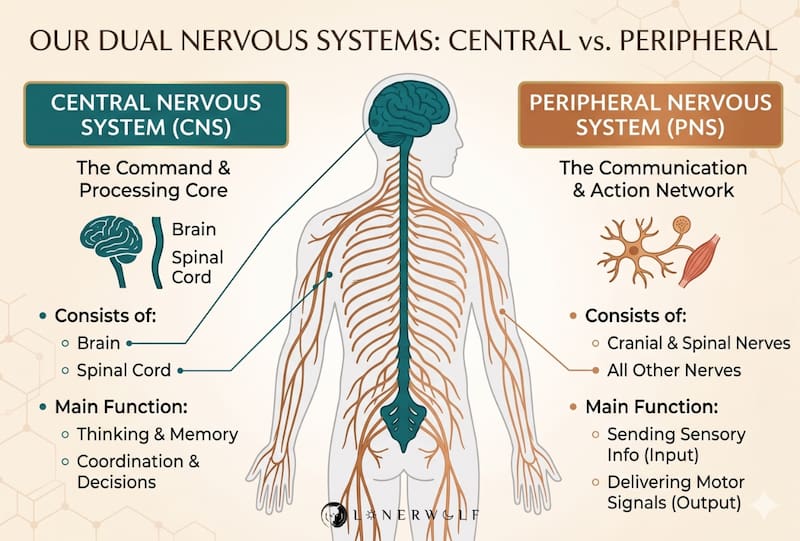
The human nervous system is broadly divided into two main components:
- Central Nervous System (CNS): Comprising the brain and spinal cord, the CNS is the command center, processing information and sending signals throughout the body.
- Peripheral Nervous System (PNS): This network of nerves extends outside the CNS, connecting it to the limbs and organs.
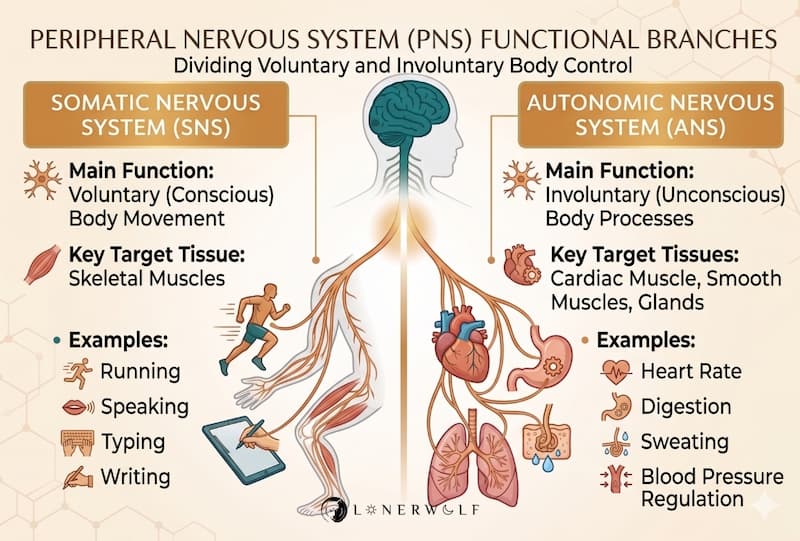
The PNS is further divided into two branches:
- Somatic Nervous System: Controls voluntary movements, such as typing, speaking, or running, by transmitting signals between the CNS and skeletal muscles.
- Autonomic Nervous System (ANS): Operates largely involuntarily, regulating essential bodily functions like breathing, heart rate, digestion, and stress responses.
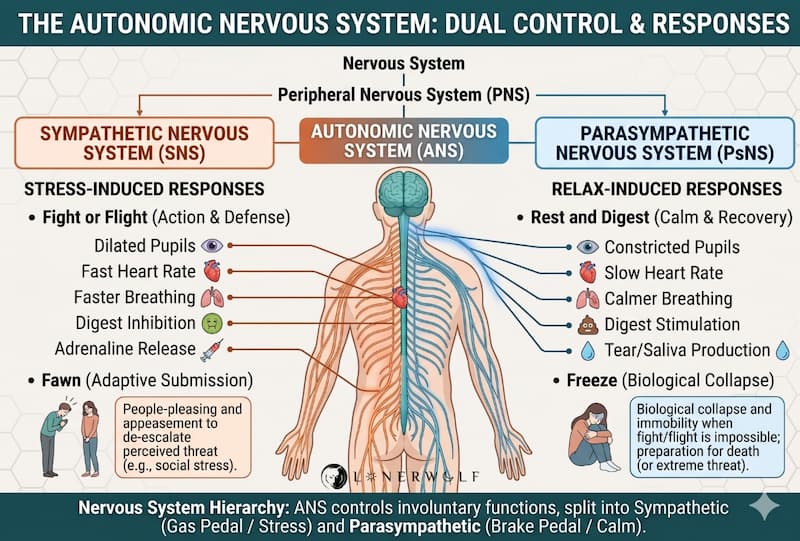
It is primarily within the Autonomic Nervous System that the concept of "nervous system regulation" finds its most critical application. The ANS itself has two primary, often opposing, branches:
- Sympathetic Nervous System (SNS): Often termed the "fight, flight, or freeze" system, the SNS activates the body’s stress response. It prepares the body for action by increasing heart rate, dilating pupils, diverting blood to muscles, and releasing stress hormones like adrenaline and cortisol.
- Parasympathetic Nervous System (PNS): Known as the "rest and digest" system, the PNS promotes relaxation, recovery, and social engagement. It slows the heart rate, stimulates digestion, and conserves energy, returning the body to a state of calm.
The Polyvagal Theory and the Autonomic Ladder
Dr. Stephen Porges’ Polyvagal Theory deepens our understanding of the ANS, particularly the vagus nerve, which plays a pivotal role in regulating parasympathetic activity. The theory proposes a hierarchical system of three neural circuits that respond to safety and threat, often visualized as an "Autonomic Ladder" by Deb Dana:
- Ventral Vagal State (The "Safe and Social" State): This is the highest rung of the ladder, associated with the myelinated ventral vagal complex. In this state, individuals feel safe, calm, connected, and capable of social engagement, empathy, and creative expression. The body is in a state of rest and optimal functioning.
- Sympathetic State (The "Mobilization" State): When a perceived threat arises, the nervous system mobilizes resources for defense. This state is characterized by increased heart rate, heightened arousal, anxiety, anger, and the urge to fight or flee. While adaptive in acute danger, chronic sympathetic activation leads to exhaustion and illness.
- Dorsal Vagal State (The "Immobilization" or "Freeze" State): If fight or flight is not possible or effective, the oldest part of the vagal system, the dorsal vagal complex, takes over. This state involves a profound shutdown, characterized by numbness, dissociation, collapse, hopelessness, and extreme fatigue. It’s a primitive survival response to overwhelming threat.
- Fawn Response: While not explicitly a separate rung on the ladder, the "fawn" response is an adaptive strategy, often associated with sympathetic activation, where an individual attempts to appease or people-please to avoid conflict or danger. It’s a survival mechanism common in relational trauma, leading to a loss of self and chronic stress.
Nervous system regulation, therefore, means cultivating the capacity to fluidly move between these states, spending more time in the ventral vagal state as a baseline, and effectively returning to calmness after experiencing sympathetic activation or dorsal vagal shutdown. It’s about developing internal resources to navigate life’s challenges without getting perpetually "stuck" in a state of alarm or collapse.
The Embodied Unconscious: Trauma in the Tissue
The profound connection between the body and our psychological states is further elucidated by the concept that "the issue is in the tissue." Unresolved traumas, suppressed emotions, and "shadow" aspects of ourselves are not merely abstract psychological concepts; they are embodied experiences stored within our cells, muscles, and fascia. Psychiatrist Bessel Van Der Kolk, in "The Body Keeps the Score," powerfully illustrates how trauma profoundly impacts the body, often leading individuals to feel "either some body else, or like no body." He emphasizes that healing requires reconnecting with "your body, with your Self."
Jennifer Mann and Karden Rabin highlight this by stating, "Oftentimes, nervous system dysregulation is the manifestation of wounds to our developmental self or inner child." Similarly, therapists Connie Zweig and Steve Wolf, in "Romancing the Shadow," underscore how "the shadow wears the camouflage of physical symptoms." They eloquently explain that while we may intellectually forget an abuse or defend against emotional pain, "the body does not." Over time, patterns of stress and trauma accumulate, and if left unaddressed, "our bodies take the heat… and inevitably… begin to tell their tales" through physical symptoms. This profound embodied memory makes nervous system healing not just a complementary practice, but the very foundation of inner work.
Official Responses: Practical Pathways to Regulation
Recognizing the body’s centrality, various therapeutic and self-care modalities offer concrete strategies for nervous system regulation. These "official responses" to the embodied crisis provide actionable steps for individuals seeking to reclaim their well-being.
1. Grounding: Anchoring in the Present
Buddha’s timeless wisdom, "The body is anchored in the here and now while the mind travels into the past and future," perfectly encapsulates the essence of grounding. It is the fundamental practice of bringing one’s awareness fully into the present moment and into the physical body, counteracting the dissociation often triggered by trauma and chronic stress.
- Physical Touch: Consciously feeling the contact of your feet on the ground, your hands on a surface, or clothes on your skin.
- Sensory Awareness: Tuning into the five senses – noticing sights, sounds, smells, tastes, and textures in your immediate environment.
- Mindful Movement: Engaging in activities like walking, stretching, or gentle yoga, paying close attention to bodily sensations.
- Connection with Nature: Spending time outdoors, feeling the sun, wind, or earth underfoot.
- Creative Visualization: Imagining roots extending from your feet into the earth, anchoring you firmly.
2. Breathwork: The Body’s Inbuilt Regulator
As Alexander Lowen noted in "Bioenergetics," "only through breathing deeply and fully can one summon the energy for a more spirited and spiritual life." The breath is a direct conduit to the autonomic nervous system. Shallow, chest breathing activates the sympathetic system, perpetuating tension. Deep, diaphragmatic breathing, conversely, stimulates the vagus nerve and activates the parasympathetic system, promoting calm. The most effective technique for nervous system regulation often involves lengthening the exhale.
- 4-7-8 Breathing: Inhale for 4 counts, hold for 7, exhale slowly for 8.
- Box Breathing (Square Breathing): Inhale for 4, hold for 4, exhale for 4, hold for 4.
- Alternate Nostril Breathing (Nadi Shodhana): A yogic technique that balances the hemispheres of the brain and calms the nervous system.
3. Vagus Nerve Stimulation: The Body’s Reset Button
The vagus nerve, extending from the brainstem to the abdomen, is a crucial component of the parasympathetic nervous system. Stimulating this nerve can effectively "reset" the body from stress, fostering a state of calm and connection.
- Humming or Chanting: Vibrations in the throat stimulate the vagus nerve.
- Gargling: The muscular contractions involved activate the vagus nerve.
- Cold Exposure: Splashing cold water on the face, taking a cold shower, or holding ice cubes can trigger the "diving reflex," activating the vagus nerve.
- Deep Breathing: As mentioned, slow, deep diaphragmatic breaths are powerful vagal stimulators.
- Massage: Gentle massage, particularly around the neck and feet, can stimulate vagal activity.
4. Releasing What the Body Holds: Somatic & Physical Approaches
Beyond basic self-regulation, specialized somatic and physical therapies address deeply embedded trauma. Clarissa Pinkola Estes, in "Women Who Run With the Wolves," reminds us that "The body remembers, the bones remember, the joints remember, even the little finger remembers."
- Somatic Experiencing (SE): Developed by Peter Levine, SE helps individuals gently release traumatic shock stored in the body by tracking bodily sensations and completing thwarted survival responses.
- Hakomi Method: A mindfulness-based, assisted self-discovery method that uses the body as a portal to unconscious material, allowing for compassionate exploration and healing.
- Myofascial Release: A hands-on therapy that targets restrictions in the fascia (connective tissue) to alleviate pain and release stored emotional tension.
- Yoga and Qigong: Practices that combine physical postures, breathwork, and meditation to enhance body awareness, flexibility, and energy flow, releasing tension.
- Therapeutic Screaming or Shaking: Sometimes, primal release of pent-up energy can be cathartic and regulatory, especially in a safe, guided environment.
- Acupuncture/Acupressure: Traditional Chinese Medicine techniques that stimulate specific points on the body to balance energy flow and alleviate physical and emotional symptoms.
Recognizing patterns of muscle tension (e.g., neck pain often linked to "pains in the neck," stomach issues to "not being able to stomach" something) can guide individuals toward appropriate release techniques.
5. Creative & Expressive Regulation
For sensitive and artistic individuals, creativity offers a potent avenue for processing trauma and regulating the nervous system. As D. H. Lawrence articulated, "My belief is in the blood and flesh as being wiser than the intellect. The body-unconscious is where life bubbles up in us."
- Drawing, Painting, Sculpting: Engaging in visual arts bypasses the analytical mind, allowing unconscious material and emotions to be expressed symbolically.
- Writing (Journaling, Poetry): Putting thoughts and feelings onto paper can be a powerful way to externalize internal states and gain perspective.
- Music and Dance: Both creating and experiencing music, or engaging in free-form movement, can release emotional blockages and bring the body into a state of flow and regulation.
- Crafting: Activities like knitting, pottery, or gardening involve repetitive, sensory-rich actions that can be deeply grounding and meditative.
These practices foster a vital mind-body connection, giving voice to the soul and aiding in the digestion of past experiences.
Implications: The Spiritual Path of Embodiment
Nervous system regulation is far more than a mere therapeutic technique; it is, in itself, a profound spiritual path. Zen master Thich Nhat Hanh, in "Awakening of the Heart," wisely stated, "You may think somehow that being aware of your body is not an important spiritual practice, but that is not correct. Any physiological, psychological, or physical phenomenon can be a door to full realization."
This perspective champions embodied spirituality – a form of spiritual practice deeply rooted in the "here-and-now" of our physical existence. It stands in contrast to dissociated spiritual ideas that float disconnected from lived experience. When practitioners speak of "integration" as a vital part of healing, they are speaking of embodiment: literally bringing insights, experiences, and healing "into the body."
The journey of nervous system regulation is thus the essential first step in "Soul recovery"—the process of reclaiming one’s wise, wild, warm, welcoming, and whole Self. By befriending the body and learning its language, we cultivate a deep inner wisdom that extends far beyond intellectual understanding.
Ann Weiser Cornell beautifully summarizes this wisdom in "The Power of Focusing": "The truth is that our bodies are wise in many ways hardly ever acknowledged by our culture. Our bodies carry knowledge about how we are living our lives, about what we need to be more fully ourselves, about what we value and believe, about what has hurt us emotionally and how to heal it."

Learning to regulate the nervous system is not just the optimal starting point for healing; it’s a gateway to profound self-knowledge, heightened presence, and an enriched experience of life. It allows us to become more embodied, more ensouled, and truly alive. This foundational work empowers us to move from chronic survival states to a state of thriving, where joy, connection, and meaning are not elusive ideals but tangible realities felt within the very core of our being.
Consider this: In what state—fight, flight, freeze, or fawn—do you predominantly find yourself? And among the pathways to nervous system healing described here, which one resonates most deeply as your potential starting point? The journey back to yourself begins with the wisdom whispered by your own blood.




Leave a Comment