Unlocking the Unseen: Navigating the Profound Depths of the Subconscious Mind

In the intricate tapestry of human experience, an unseen force profoundly shapes our realities, drives our behaviors, and holds the keys to our deepest wisdom and most profound healing. This is the subconscious mind – a realm so vast and influential that understanding and engaging with it is not merely a fascinating pursuit but an essential journey for personal growth and spiritual transformation.
As the father of psychoanalysis, Sigmund Freud, famously posited, "The mind is like an iceberg, it floats with one-seventh of its bulk above water." This powerful metaphor underscores the limited scope of our conscious awareness, hinting at the colossal reservoir of thoughts, memories, and desires lurking beneath the surface. Complementing this, Joseph Murphy, author of "The Power of Your Subconscious Mind," eloquently states, "Within your subconscious depths lie infinite wisdom, infinite power, and infinite supply of all that is necessary, which is waiting for development and expression." These insights highlight not just the magnitude but also the immense potential housed within our inner depths.
The Unseen Architect of Our Lives
The contemporary understanding of the subconscious mind reveals its staggering influence: it is responsible for over 90% of our mental life. This vast, submerged portion of our psyche dictates our habits, beliefs, values, and even our reactions to the world, often without our conscious consent. It is the silent programmer running the operating system of our existence, shaping everything from our daily decisions to our long-term destinies.

When we feel disconnected from our true selves, lost in life’s labyrinth, or caught in relentless cycles of self-sabotage, the root cause often lies in an unacknowledged or misunderstood subconscious. Our conscious efforts to cultivate confidence or empowerment can be thwarted by deeply ingrained "false identity scripts" or limiting beliefs buried within this unseen realm. Carl Jung, the pioneering depth psychologist, articulated this profound truth with chilling clarity: "Until you make the unconscious conscious, it will direct your life and you will call it fate." This statement serves as a potent reminder of the subconscious’s governing power over our perceived destinies.
A Gateway to Deeper Knowing and Soul Recovery
Beyond its role in habit formation and behavioral patterns, the subconscious mind serves as the crucial gateway to accessing our Soul’s wisdom, our "Deeper Self’s" inner knowing. Depth psychologist Bill Plotkin aptly noted that "Soul is encountered in the subconscious (i.e., that which lies below awareness)." This underscores the profound spiritual dimension of the subconscious, positioning it not just as a repository of past experiences but as a wellspring of innate wisdom and guidance.
Engaging with the subconscious is therefore fundamental to all forms of inner work, Soul recovery, healing, and psycho-spiritual transformation. It is the fertile ground where our deepest wounds are stored, our ingrained patterns run, and where we possess the power to reprogram the past and reshape our future. Healing practices like inner child work and shadow work are fundamentally rooted in this engagement, requiring us to delve into the subconscious to uncover and integrate fragmented aspects of ourselves.
The Language of the Deep Mind: Decoding the Subconscious
To effectively communicate with this profound inner realm, we must first learn its unique language. Unlike the logical, linear, and "black-and-white" conscious mind, the subconscious is "multicolored" and multidimensional. Steven Fulmer insightfully describes it: "The language of the subconscious is emotions and story. Which is to say the subconscious is not driven by rational argument, logic, facts, and words."
The concept of the "subconscious mind" first emerged in the 18th century with German philosopher Christopher Riegel, later gaining widespread recognition and development through Sigmund Freud’s psychoanalytic theories. In the 20th century, Carl Jung further expanded our understanding with his theories of the collective unconscious and archetypes, while later thinkers like Daniel Kahneman illuminated its role in cognitive biases.
Today, we understand that the subconscious primarily communicates through:

- Emotions and Feelings: Raw, unfiltered responses that provide immediate feedback.
- Imagery and Symbols: Visual representations, metaphors, and archetypal figures that convey complex ideas succinctly.
- Intuition and Gut Instincts: Spontaneous "knowing" or physical sensations that guide us.
- Dreams and Nighttime Narratives: Symbolic stories and scenarios crafted during sleep.
- Body Sensations: Physical manifestations of underlying emotional or psychological states.
- Synchronicities and Coincidences: Meaningful alignments of events that seem more than random.
These expressions are non-linear, abstract, and highly creative. We recognize the subconscious at work in moments of sudden intuition, the resonance of goosebumps, bursts of insight, vivid dreams, and meaningful coincidences. If the conscious mind is akin to the sun’s daytime clarity, the subconscious is like the moon’s nocturnal mystery – subliminal, subterranean, and a little strange. Artists like Salvador Dali and filmmakers like Alejandro Jodorowsky often embody this bizarre, rich nature, reflecting the depths of this inner realm. However, for a balanced exploration, the integrated approach of Carl Jung, who pioneered "active imagination" as a form of conscious dreaming, offers a more grounded model for engagement.
Practical Pathways to Inner Connection
Connecting with the subconscious is a journey of exploration and practice. Here are several well-established approaches:
1. The Dream World as a Subconscious Mirror
Dreams offer a direct portal into the subconscious, providing rich symbolic imagery that reflects our conscious fears, desires, and unmet needs. As Carl Jung wrote in "The Essential Jung," "…the dream describes the inner situation of the dreamer, but the conscious mind denies its truth and reality, or admits it only grudgingly."

How to Engage:
- Dream Journaling: Keep a journal by your bed and record dreams immediately upon waking, even fragments. Pay attention to recurring themes, emotions, and symbols.
- Dream Incubation: Before sleep, focus intently on a specific question or issue you seek guidance on. Meditate on it, visualize it, and repeat your question. This "seeds an idea" in the subconscious, inviting a dream to provide an answer.
- Lucid Dreaming: Learning to become consciously aware within a dream allows for direct interaction with the subconscious landscape, enabling active exploration and problem-solving. Practices like Yoga Nidra or certain herbs (e.g., Calea zacatechichi) can aid dream recall and vividness.
2. Liminal & Trance States: The Threshold Between Worlds
For those who find dream work challenging, liminal and trance states offer another potent entry point into the subconscious. These "threshold states" gently tip us beyond ordinary waking consciousness, softening the conscious mind’s filters and allowing deeper access.
How to Engage:

- Meditation and Mindfulness: Regular practice can quiet the conscious mind, making space for subconscious insights to emerge.
- Hypnosis and Guided Imagery: Under the guidance of a trained practitioner, these techniques can bypass the conscious mind to access and reprogram subconscious beliefs.
- Deep Breathwork: Techniques like holotropic breathwork can induce altered states, facilitating emotional release and subconscious exploration.
- Creative Flow States: Engaging deeply in art, music, writing, or any creative pursuit can lead to a "flow state" where the conscious mind recedes, and intuition and subconscious creativity take over.
- Sensory Deprivation/Immersion: Practices like floatation tanks or immersive nature experiences can reduce external stimuli, turning attention inward.
3. Automatic Writing & Pendulum Work: Bypassing the Conscious Editor
Sometimes, tactile or physical methods are more accessible, directly bypassing the conscious mind’s tendency to "edit," judge, or dismiss "illogical" insights. Joseph Murphy affirmed, "Your subconscious mind is all wise and knows the answers to all questions," making these methods valuable for direct inquiry.
How to Engage:
- Automatic Writing: Enter a meditative state and allow your hand to write freely, without conscious thought or judgment. The goal is a "stream of consciousness" from the subconscious. This is a powerful long-term practice for channeling inner wisdom.
- Dowsing Pendulum: For beginners, a pendulum can provide yes/no answers from the subconscious. After establishing how the pendulum indicates "yes" and "no" (e.g., clockwise for yes, counter-clockwise for no), you can ask simple questions. While useful initially, it’s advisable to transition to sensing your own inner wisdom directly over time to avoid externalizing your power.
4. Symbol, Sigil & the Language of the Deep Self
The subconscious communicates powerfully through symbols. As Jan Fries notes in "Visual Magick," "The subconscious self is not a dumb brute that can be ordered around, but a highly intelligent entity."

How to Engage:
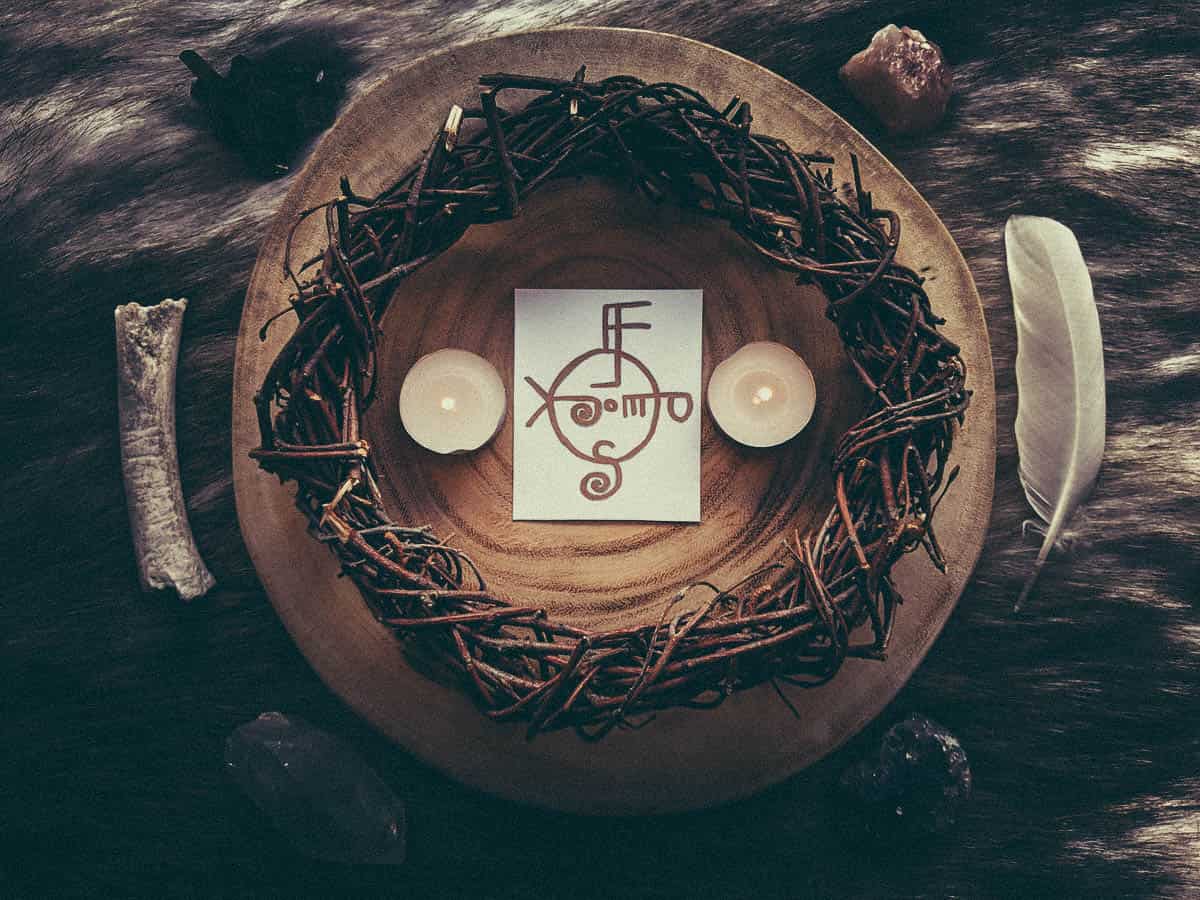
- Sigil Crafting: Create potent personal symbols based on specific intentions (e.g., self-love, inner peace, overcoming a limiting pattern). Florence Scovel Shinn, in "The Game of Life and How to Play It," explained that "The subconscious is simply power, without direction… it does what it is directed to do; it has no power of induction." Sigils act as a concentrated directive for this power.
- Tarot and Oracle Cards: These cards are rich in archetypal symbolism. Rather than fortune-telling, use them as mirrors of the psyche, revealing blind spots, hidden desires, and unfulfilled needs. Focus on one or two decks to begin, understanding they are tools for self-reflection, not external arbiters of fate.
- Personal Symbolism: Pay attention to recurring symbols in your dreams, daily life, or creative expressions. What meaning do they hold for you?
5. Intuition and the Subconscious: The Voice of the Soul
Perhaps the most direct and universally accessible approach is cultivating intuition, the spontaneous "whisper of the soul," as Jiddu Krishnamurti described it. Your intuition is your subconscious communicating directly in waking life.
How to Engage:
- Listen to Gut Instincts: These primal intuitions, sourced from the body’s intelligence, often manifest as physical sensations (e.g., a knot in the stomach, a feeling of lightness).
- Cultivate Intuitive Knowing: This "higher intelligence" is a sense of knowing without understanding why or how. Practice pausing before decisions and tuning into this inner sense.
- Mindfulness and Body Awareness: By becoming more present, you can better discern the subtle signals of your intuition.
- Journaling for Insight: Reflect on situations where your intuition guided you correctly or incorrectly, learning to distinguish it from fear or wishful thinking.
- As Gary Zukav beautifully put it, "Intuition is a walkie-talkie between the personality and the soul." Learning to trust this channel strengthens your connection to your deepest wisdom.
6. Plant Medicine & Psychedelics as Subconscious Catalysts
For some, plant medicines and psychedelics offer powerful, direct, and often profound pathways to the subconscious, capable of rapidly accelerating insight and transformation. Substances like psilocybin, ayahuasca, or mescaline can dissolve the ego’s usual defenses, allowing for vivid encounters with the subconscious landscape, often manifesting in deeply symbolic or archetypal experiences.
A Crucial Word of Warning: These substances are not to be approached lightly. While they can unlock incredible potential for healing and self-discovery, they are powerful catalysts that can also be overwhelming, disorienting, or even traumatizing, particularly for individuals with neurodiversity or pre-existing mental health conditions. Responsible engagement necessitates:
- Caution and Respect: Understand the substance, its effects, and potential risks.
- Safe Set and Setting: Ensure a physically and psychologically safe environment, ideally with a trusted guide or trained psychedelic therapist.
- Psychedelic Integration: This crucial post-experience process involves actively processing and integrating the insights gained into daily life, preventing experiences from remaining isolated or overwhelming.
- Legal and Ethical Considerations: Be aware of the legal status of substances in your region. Exploring "legal psychedelics" or gentler entheogenic herbs for dream enhancement can be a safer alternative for some.
Regardless of the chosen path, approaching these experiences with gentleness, slowness, and attunement to your inner self is paramount.

Conclusion: Making Friends With Your Depths
The journey into the subconscious is ultimately one of self-discovery, self-befriending, and Soul recovery. It is a profound process that moves beyond merely identifying "monsters" or bizarre aspects often depicted in popular culture. As Irish poet John O’Donohue eloquently expressed in "Anam Cara: Spiritual Wisdom from the Celtic World": "We falsely understand the subconscious as the cellar where all of our repression and self-damage is housed. We have imagined monsters down there out of our fear of ourselves… In actual fact these demons do not account for all the subconscious. The primal energy of our soul holds a wonderful warmth and welcome for us. One of the reasons we were sent onto the earth was to make this connection with ourselves, this inner friendship."
The subconscious mind is not merely a dark repository of repressed fears but a vibrant, intelligent entity – the doorway to the wise, wild, warm, welcoming, and whole Self within us. It is a powerful tool, one that "multiplies and magnifies whatever you deposit into it," as Joseph Murphy noted. By learning its language and exploring its depths, we transform this often-ignored aspect of ourselves into a trusted friend and an invaluable ally on our path to holistic healing and self-mastery. The journey to unlock the unseen is a journey back home to ourselves.