Unveiling the Blueprint: A Deep Dive into Dream Pod 9’s Enduring Legacy and the "Heavy Gear Blueprint File"
Originally Published: February 5th, 2002
Enriched and Rewritten: [Current Date]
Introduction:
In the competitive landscape of tabletop role-playing games (RPGs) and miniature wargaming, few companies have cultivated a reputation for visual excellence and intricate world-building as consistently as Dream Pod 9. Established as a titan of detailed design, the Canadian studio has, for decades, captivated audiences with its signature blend of mecha action, intricate political landscapes, and compelling narratives across its flagship titles. Among its innovative supplementary offerings, the "blueprint files" stand out as a testament to the company’s commitment to immersive detail, providing fans with a tangible connection to the futuristic machinery that defines their gaming experiences.
This retrospective analysis revisits the "Heavy Gear Blueprint File," a product first reviewed in early 2002, to explore its significance then and now. While initially praised for its stunning visuals, the product also sparked questions regarding its practical utility, a common dilemma for highly specialized collector’s items. Today, nearly two decades later, the "Blueprint File" serves as more than just a nostalgic artifact; it is a window into a specific era of tabletop gaming, Dream Pod 9’s strategic approach to fan engagement, and the evolving nature of supplementary game products.
Main Facts: The "Heavy Gear Blueprint File" in Context
Dream Pod 9, a name synonymous with high-quality science fiction gaming, carved out its niche with three cornerstone franchises: Heavy Gear, Jovian Chronicles, and Tribe 8. Each line is celebrated for its rich lore, distinctive art style, and robust game mechanics. Within this illustrious portfolio, the "blueprint files" emerged as a unique product designed to deepen player immersion and appeal to the ardent fan base. The "Heavy Gear Blueprint File," the subject of this review, perfectly embodies this innovative approach.
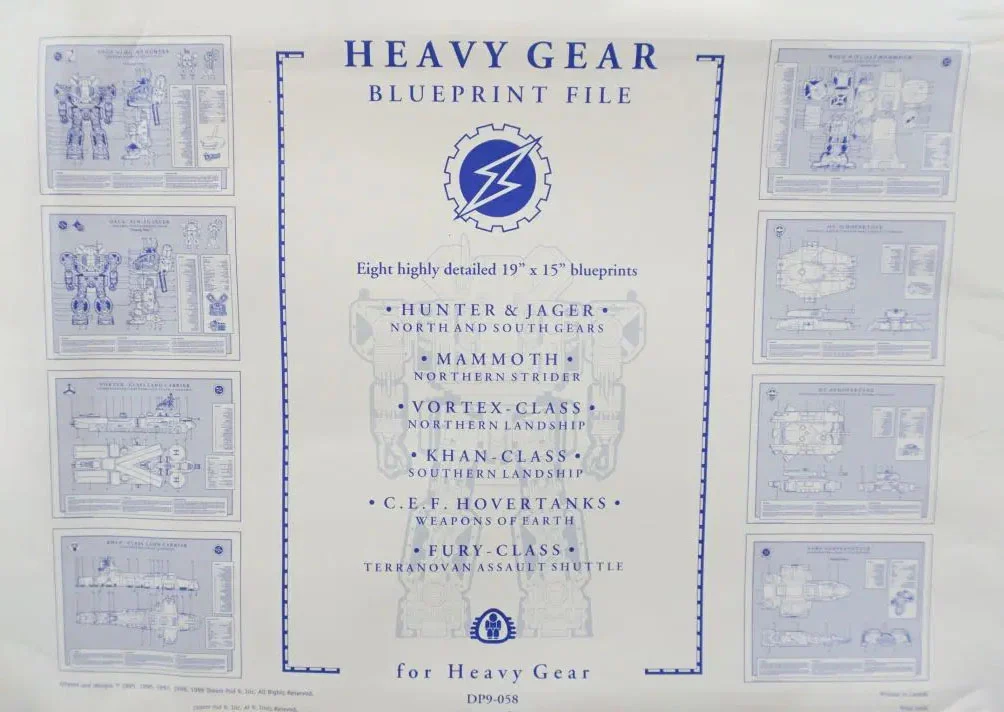
Released at a price point of $9.95 with the product code DP9-058, this supplementary offering was far from a conventional rulebook or adventure module. Instead, it presented itself as a curated collection of technical schematics, packaged in a modest 8.5" x 11" white envelope. What lay within, however, defied its unassuming exterior: eight meticulously detailed, poster-sized blueprints, each measuring a substantial 19" x 15". These large-format prints showcased iconic vehicles and mechs from the Heavy Gear universe, transforming abstract game statistics into tangible, intricate designs.
The collection featured a diverse array of military hardware, including the versatile Hunter gear, the robust Jager gear, the colossal Mammoth strider, the formidable Vortex landship, the powerful Khan landship, an advanced CEF hovertank, and the sleek Fury-class assault shuttle. Each blueprint was not merely an illustration but a technical drawing, complete with background text detailing the design philosophy, various specifications, and explanatory passages that brought these fictional machines to life. A thoughtful design choice was the inclusion of miniature versions of each blueprint on the envelope’s cover, allowing prospective buyers a clear preview of the product’s contents and visual style before purchase. This transparency underscored Dream Pod 9’s confidence in the aesthetic appeal of their work, emphasizing the visual excellence that had become a hallmark of their brand.
The product’s initial reception highlighted a core tension: while its "Style" rating soared to a perfect 5, its "Substance" was assessed at a respectable but lower 4. This disparity reflected the niche appeal of the blueprints – a product undeniably beautiful and rich in detail, yet one whose practical application in a live gaming session might not be immediately apparent to every player. Nevertheless, for enthusiasts of the Heavy Gear universe, these blueprints offered an unparalleled opportunity to engage with the game’s iconic machinery on a deeper, more visual level, serving as both a collector’s item and a potential aid for enhancing campaign immersion.
Chronology: Dream Pod 9’s Rise and the Blueprint Phenomenon
To fully appreciate the "Heavy Gear Blueprint File," it is essential to contextualize its release within Dream Pod 9’s operational history and the broader trends of the tabletop gaming industry in the late 1990s and early 2000s.
The Genesis of Dream Pod 9 (1995-1996): Dream Pod 9 (DP9) burst onto the scene in 1995, founded by a team of talented artists and designers in Montreal, Canada. Their initial foray into the market was with Heavy Gear, a tactical mecha miniatures game and accompanying role-playing game. From its inception, Heavy Gear distinguished itself with a highly detailed universe, intricate lore, and a unique visual aesthetic that blended realistic military design with futuristic technology. Unlike some competitors, DP9 invested heavily in original artwork and detailed technical schematics, establishing a visual identity that quickly garnered a dedicated following. The success of Heavy Gear led to the rapid expansion of their creative output, soon followed by the space opera Jovian Chronicles and the post-apocalyptic fantasy Tribe 8, each maintaining DP9’s high standards for visual and narrative depth.
The Golden Age of Supplements (Late 1990s – Early 2000s): The late 1990s and early 2000s represented a vibrant period for tabletop gaming, characterized by an explosion of core rulebooks and an equally prolific output of supplementary materials. Game publishers sought innovative ways to engage their player base beyond traditional adventure modules and sourcebooks. This era saw the rise of detailed maps, character folios, prop documents, and other immersive aids designed to enhance the gaming experience. DP9, with its emphasis on detailed settings and mechanical marvels, was perfectly positioned to capitalize on this trend. Their commitment to illustrating every vehicle, weapon, and character in meticulous detail made the concept of "blueprint files" a natural extension of their brand.
The Introduction of Blueprint Files (Late 1990s – Early 2000s): The "blueprint files" were not a standalone experiment but part of a broader strategy by Dream Pod 9 to provide fans with unique, high-quality collector’s items that also served to flesh out their game worlds. These files were conceived as a way for players to literally get "under the hood" of their favorite Gears and starships. By presenting them in a large, poster-sized format, DP9 elevated them beyond simple diagrams, transforming them into display pieces that could adorn a game room or office, further solidifying a player’s connection to the universe. The Heavy Gear Blueprint File reviewed in 2002 was one such offering, building upon the established success and visual language of the franchise.
Evolution and Digital Transition (Post-2000s): While the original review was published in 2002, the enduring appeal of these blueprints is evident in their continued availability, often in revitalized or digital formats, on platforms like DriveThruRPG. The reference to "Heavy Gear Revitalized: Heavy Gear Blueprints" suggests a modern re-packaging or digital release, adapting to the changing distribution landscape. This transition from physical, folded poster prints to easily downloadable digital files marks a significant shift in how supplementary content is consumed, yet the core desire for detailed world-building assets remains constant. The ability to print these files at home or through a print-on-demand service ensures that new generations of players can still access and appreciate the intricate designs that captivated fans two decades ago.
The chronological journey of the "Heavy Gear Blueprint File" thus mirrors the trajectory of the gaming industry itself – from physical artifacts to digital convenience, yet always centered on the power of visual storytelling and detailed world-building to create truly immersive experiences.
Supporting Data: The Art of Immersion and the Collector’s Conundrum
The "Heavy Gear Blueprint File" encapsulates several key aspects of Dream Pod 9’s design philosophy and the broader appeal of supplementary materials in tabletop gaming. The product’s strength lies in its exceptional visual quality, which has consistently been a cornerstone of DP9’s brand.
Visual Excellence and Technical Detail: Dream Pod 9’s reputation for "visual excellence" is not merely anecdotal; it is meticulously cultivated. The artists and designers at DP9 went to extraordinary lengths to create a cohesive and believable aesthetic for the Heavy Gear universe. The blueprints themselves are a prime example. They are not simply drawings but highly technical illustrations, complete with cross-sections, exploded views, dimensional callouts, and annotations. This level of detail extends beyond mere artistic flair; it serves to reinforce the verisimilitude of the game world. When a player sees a blueprint of a Hunter gear, they are not just looking at a cool robot; they are examining a plausible piece of future military hardware, understanding its internal components, armor plating, and weapon systems. The inclusion of "background text on the design, plus various specifications and explanatory passages" further enriches this experience, providing narrative context to the technical drawings. For a "gearhead" – a fan passionate about the intricate mechanics and designs of fictional vehicles – this level of detail is a profound source of enjoyment and immersion.
The Aesthetic vs. Utilitarian Debate: The core "drawback" identified in the original review – "What the heck do you do with it?" – highlights a perennial challenge for products that straddle the line between functional game aid and collector’s item. While the blueprints are undeniably beautiful and well-crafted, their direct, moment-to-moment utility during a typical gaming session might be limited. Unlike a rulebook, they don’t provide immediate mechanics; unlike an adventure, they don’t dictate plot.
However, this perspective overlooks several crucial functions:
- Atmosphere and Ambiance: As suggested in the original review, framing these blueprints and displaying them in a game room or office significantly enhances the atmosphere of a Heavy Gear campaign. They act as visual touchstones, constantly reminding players of the world they inhabit and the machinery they command. This passive immersion can be incredibly powerful in deepening engagement.
- Props and Hand-outs: For specific scenarios, the blueprints can transition from decorative items to active game props. A campaign focused on infiltrating a landship, for instance, could make the Vortex or Khan landship blueprints invaluable. Players could physically consult them to plan their assault, identify key areas, or understand the vessel’s layout. This transforms a static image into a dynamic tool, adding a layer of tactile interaction to the narrative.
- World-Building Reinforcement: For game masters (GMs), the blueprints offer a deep well of information to draw upon. The specifications and explanations can inspire adventure hooks, inform tactical decisions for non-player characters, or simply provide a rich backdrop for descriptive narration. Understanding the internal workings of a strider makes describing its damage or repair process far more compelling.
- Collector’s Value and Fan Identity: Beyond their direct gaming utility, these blueprints serve as prized collector’s items. For dedicated fans, owning such a tangible piece of the Heavy Gear universe is an affirmation of their passion and identity within the fandom. The reviewer’s admission of owning a "Heavy Gear keychain" underscores this emotional connection – these products foster a sense of belonging and pride in the shared universe. The "Revitalized" version on DriveThruRPG further supports this, demonstrating a sustained demand for these artifacts, even if in digital form, among a community eager to preserve and revisit the detailed lore.
Market Niche and Comparative Analysis: The "blueprint file" concept occupies a specific niche in the supplementary product market. It caters to players who value aesthetic immersion, lore depth, and physical representations of their game worlds. While not as universally applicable as a monster manual or a spellbook, its appeal to a dedicated segment of the player base is strong. Other companies have produced similar products – detailed maps, faction guides with elaborate insignia, or even fictional in-universe documents – but DP9’s blueprints distinguished themselves with their technical rigor and large-format presentation, truly making them feel like authentic schematics from the game’s universe. This commitment to verisimilitude is what elevated them from mere art prints to immersive world-building tools.
Official Responses: Dream Pod 9’s Strategic Vision
While the original review is a third-party assessment, we can infer Dream Pod 9’s strategic intent and "official response" to the market’s needs through their consistent product development philosophy. DP9’s approach to supplementary materials like the "Heavy Gear Blueprint File" was rooted in several core tenets:
Reinforcing Brand Identity Through Detail: Dream Pod 9 consistently understood that its brand appeal was intrinsically linked to its commitment to detail and visual quality. The "blueprint files" were a direct manifestation of this strategy. By offering highly detailed technical drawings, DP9 wasn’t just selling a product; it was reinforcing the credibility and depth of its fictional universes. Each line on a blueprint, every specification, validated the existence of the Gears, Striders, and Landships in the collective imagination of its player base. This level of intricate world-building set DP9 apart from many competitors who might have relied on simpler illustrations.
Cultivating a Dedicated Fan Base: DP9 recognized the power of catering to its most dedicated fans. Products like the "blueprint files" were clearly aimed at enthusiasts who wanted to delve deeper into the Heavy Gear universe than the core rulebooks allowed. These weren’t mass-market items designed to attract new players; they were specialized collector’s pieces for the existing, passionate community. By providing such unique and immersive products, DP9 fostered a strong sense of loyalty and appreciation among its fan base, transforming players into true aficionados of the setting. The "core memory" evoked by the Heavy Gear keychain, mentioned by the original reviewer, is a perfect illustration of this successful fan engagement strategy. DP9 wasn’t just selling games; it was selling an experience and a lifestyle.
Innovation in Supplementary Product Design: In an era when many publishers stuck to conventional supplementary formats, Dream Pod 9 consistently explored innovative ways to enhance the gaming experience. The "blueprint files" were an example of this forward-thinking approach. They represented a departure from purely textual lore dumps or simple combat maps, offering a unique visual and tactile experience. This willingness to experiment with different product types showcased DP9’s creative confidence and its desire to push the boundaries of what supplementary materials could be. They demonstrated that game aids could also be works of art, capable of captivating players outside the direct context of gameplay.
Providing Value Beyond the Tabletop: The question "What the heck do you do with it?" implicitly challenged the product’s value. DP9’s "response," embedded in the product’s design and marketing, was that value extends beyond immediate in-game utility. The blueprints provided aesthetic value for display, immersive value for ambiance, and collector’s value for personal satisfaction. They allowed players to extend their engagement with the Heavy Gear universe into their physical environment, making their passion a visible part of their lives. This broader definition of "value" resonated strongly with a segment of the gaming community who sought more than just rules and scenarios from their favorite franchises.
In essence, Dream Pod 9’s "official response" to the market was a consistent message: we are committed to unparalleled detail, we value our dedicated fans, and we will continue to innovate to provide the most immersive and aesthetically rich experiences possible. The "Heavy Gear Blueprint File" stands as a tangible artifact of this enduring philosophy.
Implications: The Lasting Impact of Immersive Design
The "Heavy Gear Blueprint File," and Dream Pod 9’s approach to supplementary products in general, carries several significant implications for the tabletop gaming industry, fan culture, and the evolution of content distribution.
Enduring Legacy of Visual Immersion: The most immediate implication is the reinforcement of Dream Pod 9’s legacy as a pioneer in visual world-building. Even two decades later, the quality of these blueprints holds up, testifying to the timeless appeal of detailed technical art. DP9 proved that investing heavily in unique and consistent aesthetics could create a brand identity strong enough to sustain multiple game lines and a loyal fan base. This commitment to visual immersion continues to influence game designers today, who strive to create visually rich universes that resonate deeply with players. The blueprints remain a benchmark for how to present fictional technology with compelling realism.
The Collector’s Market and Fan Engagement: The original review’s struggle with the product’s "utility" versus its "coolness" highlights a fundamental aspect of fan culture: the desire for artifacts that connect them to their beloved fictional worlds. The "Heavy Gear Blueprint File" perfectly tapped into the collector’s mentality, offering a tangible, display-worthy item that solidified a fan’s connection to the universe. This phenomenon has only grown in prominence, with publishers increasingly recognizing the value of limited editions, elaborate art books, and unique physical props as essential components of fan engagement. The blueprints paved the way for understanding that for many, the experience of owning a piece of the world is as valuable as the experience of playing the game.
Adaptation to Digital Distribution: The mention of "Heavy Gear Revitalized: Heavy Gear Blueprints" on DriveThruRPG points to a crucial implication: the successful adaptation of physical products to the digital age. While the original blueprints were large, folded paper posters, their current availability as digital files ensures their accessibility to a new generation of fans. This shift allows for print-on-demand flexibility, letting fans acquire and print these designs at their convenience, often in their preferred size. This digital transition ensures that Dream Pod 9’s extensive back catalog of visually rich content, including these iconic blueprints, remains a living archive for enthusiasts worldwide, transcending the limitations of physical print runs and distribution.
Influence on World-Building and Game Design: The blueprint files contributed to a broader understanding of how detailed technical specifications can enhance game narratives and player agency. GMs can use such details to craft more realistic scenarios, and players can make more informed tactical decisions if they truly understand the capabilities and vulnerabilities of their vehicles. This emphasis on intricate design details has permeated various genres, from other mecha games to sci-fi RPGs, where designers strive to create plausible and immersive technological ecosystems.
The Power of Nostalgia and Core Memories: Finally, the reviewer’s anecdote about the Heavy Gear keychain unlocking a "core memory" underscores a profound implication: these supplementary products often become more than just game aids; they become personal mementos. They evoke nostalgia, connecting players to specific periods of their lives, friendships forged over gaming tables, and moments of imaginative escape. The "Heavy Gear Blueprint File," like that simple keychain, represents a tangible link to a cherished past, demonstrating the lasting emotional resonance that well-crafted game products can have on individuals.
In conclusion, the "Heavy Gear Blueprint File" from Dream Pod 9, though reviewed over two decades ago, remains a fascinating case study in immersive design and fan engagement. It stands as a testament to Dream Pod 9’s enduring commitment to visual excellence and its innovative approach to enriching its game worlds. From its humble envelope to its expansive poster-sized schematics, this product continues to symbolize a pivotal era in tabletop gaming, reminding us of the powerful connection between art, detail, and the boundless imagination of a dedicated community.