
Unveiling the Midnight Mystery: Laura Sampson Breathes New Life into "The Twelve Dancing Princesses"
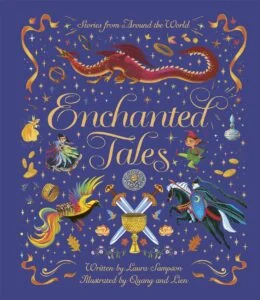
London, UK – In a literary landscape often dominated by new narratives, the enduring power of classic folklore continues to captivate, offering timeless wisdom and enchantment. Acclaimed author Laura Sampson masterfully reintroduces one such beloved tale in her latest collection, Enchanted Tales, published by Templar Books. Among its treasures is a vibrant retelling of "The Twelve Dancing Princesses," drawing specifically from the rich, regionally-infused version by the 19th-century French writer Charles Deulin. This particular rendition plunges readers into a world where mystery, magic, and a touch of grounded realism converge, inviting contemplation on themes of destiny, discovery, and the transformative power of true love.
Sampson’s Enchanted Tales, beautifully illustrated by Phung Nguyen Quang & Huynh Thi Kim Lien, promises an escape into secret worlds, a concept perfectly embodied by the nocturnal escapades of the princesses. The narrative of "The Twelve Dancing Princesses" itself is a testament to the universal human desire for freedom and adventure, making it a perennial favourite across Europe and beyond, appearing in countless variations. Sampson’s choice to focus on Deulin’s version provides a unique lens, distinguished by its meticulous details – from specific place names and local customs to descriptions of food and clothing – all meticulously inspired by his home region along the French-Belgian border. This grounding in specific geography lends an authentic flavour to the fantastical narrative, enriching the reader’s immersion into a world both magical and intimately observed.
The Enigma of Beloeil: A Chronological Unraveling
The heart of Sampson’s retelling lies in the chronological unfolding of a perplexing mystery, set against the backdrop of a picturesque, yet ordinary, existence.
The Humble Seeker and a Divine Whisper
Our story begins in the quaint village of Montignies-sur-Roc, a detail that immediately anchors the tale in a tangible European landscape. Here, we meet Michel, a young cowherd whose curly hair and striking blue eyes earned him the affectionate moniker "Stargazer." Michel was not content with the mundane; his gaze was perpetually fixed upwards, dreaming of a life beyond his pastoral duties, yearning for adventures yet unimagined. His quiet aspirations were suddenly given a clear direction one summer’s day when a radiant fairy, adorned in a dress of spun gold, appeared before him. Her ethereal song carried a profound prophecy: "Go to the Château of Beloeil, and you will marry a princess!" This divine instruction serves as the catalyst, propelling Michel from his humble village into a destiny far grander than his wildest dreams.
The Duke’s Desperate Decree and a Perilous Quest
Michel, imbued with newfound purpose and a hopeful heart, eagerly followed the fairy’s directive. Upon his arrival at the magnificent Château of Beloeil the following day, he found the entire court abuzz with a strange and unsettling enigma. Each night, the Duke’s twelve beautiful daughters would retire to their elaborately appointed suite of rooms, secured by no less than three formidable bolts. Yet, come morning, their exquisite satin shoes were invariably found to be utterly worn through, as if they had spent the entire night engaged in strenuous, ceaseless dancing. The Duke, exasperated and desperate for an explanation, had issued a solemn decree echoing through the land: "ANYONE WHO CAN SOLVE THE MYSTERY OF THE WORN-OUT SHOES MAY MARRY ONE OF MY DAUGHTERS!"
However, this tantalizing promise came with a grim shadow. Many princes, emboldened by ambition and the allure of royal marriage, had journeyed from across the land to attempt to unravel the mystery. Each, without exception, had vanished overnight, their fate a chilling testament to the dangers inherent in the quest. Michel, a simple cowherd, felt the weight of his station. "I am no prince," he mused, "the duke will laugh at me if I come forward." Prudence dictated a more subtle approach. He secured work within the château gardens, dedicating his days to cultivating and arranging daily bouquets for the princesses. Though they accepted his floral offerings, they rarely acknowledged his presence, let alone offered a word of thanks.
A Glimmer of Hope and Magical Intervention
This routine continued until one fateful day when the youngest princess, Lina, momentarily lifted her gaze and offered Michel a fleeting, gentle smile. In that instant, Michel’s heart, previously resigned to quiet admiration, leapt with renewed hope and determination. The desire to uncover the truth behind the worn-out shoes, now tinged with a personal connection, intensified within him.
That very night, the benevolent fairy reappeared, bringing with her an assortment of magical implements: two delicate baby laurel trees, one a rose and the other a cherry, along with a gleaming golden bucket and a golden rake. Her instructions were clear and melodic: "Plant these laurel trees, tend them with this rake, water them from this bucket and they will grant your wishes!" With another vanish, the fairy left Michel to ponder his extraordinary gifts. He diligently followed her instructions, nurturing the magical plants, unaware of the incredible power they held.
The Unveiling of Invisibility
The turning point arrived when the cherry laurel bloomed, bearing a single, pristine white flower. Michel, perhaps with a subconscious wish to elevate his appearance for the young princess, plucked the blossom and placed it in his shirt buttonhole. To his astonishment, the flower immediately rendered him completely invisible. The implication was instantaneous and exhilarating: "This is my chance to solve the princesses’ mystery!" he thought.
That evening, cloaked in his newfound invisibility, Michel secreted himself beneath a bed in the princesses’ lavish suite. As soon as the door was secured for the night, the silence was broken by the rustling of wardrobes, the soft swish of clothes, and the joyous sound of laughter. Then, a distinct sequence of sounds echoed through the room: "CLAP! CLAP! CLAP! CREAK!" A hidden trapdoor in the floor swung open, revealing a secret passage. Michel, seizing the moment, slipped out from his hiding place and silently followed the princesses. He moved so close that he accidentally brushed against Lina’s dress. Lina glanced behind her, sensing a disturbance, but saw nothing. "I must have tripped!" she murmured, dismissing the sensation.
A Journey to the Enchanted Underworld
Michel continued his unseen pursuit, following the twelve princesses down a winding staircase, along a mysterious corridor, and then into a series of increasingly fantastical woodlands. First, they traversed a forest of shimmering silver, then one of gleaming gold, and finally, a breathtaking woodland of sparkling diamonds. Each step deeper into this secret realm heightened the sense of wonder and otherworldliness.
Their journey culminated at the edge of a crystal-clear, glass-like lake. Here, twelve princes awaited them, each in a shining boat, ready to ferry a princess across the serene waters to a magnificent castle that glowed enchantingly in the twilight. Michel, still invisible, positioned himself beside Lina in her boat. Lina, feeling an inexplicable drag, wondered, "Why is my boat so slow and heavy?" But her musings were swiftly overtaken by the wild, intoxicating music emanating from the distant castle.
Upon docking, the entire party rushed towards the castle’s grand ballroom, a spectacle of opulence. It was adorned with countless mirrors, dazzling lights, and rich, flowing tapestries. From a discreet corner, Michel watched, mesmerized, as the princesses whirled across the jewelled dancefloor. Lina’s velvet-black eyes shone with pure joy as she danced. Michel felt a pang of envy for the princes who partnered them, unaware of their true plight. These princes were, in fact, the very suitors who had vanished from the world above, now trapped by an enchanted potion that had erased all memory of their former lives.
Proof and Confrontation
The princesses danced with an unbridled passion until their satin shoes were utterly worn through. When the music finally ceased, they partook in a celebratory feast of sugar cookies, waffles, and cakes. Michel then followed them silently on their return journey, retracing their steps back across the lake and through the diamond and gold woodlands. However, as they passed through the silver woodland, he impulsively broke off a tiny sprig from one of the trees. "CLANG!" The entire magical wood resonated with the sound. "What was that?" one princess inquired nervously. "Probably just a bird," another dismissed, eager to return to their rooms.
Michel, his heart pounding, raced ahead to the princesses’ suite. He ascended the stairs, slipped through the trapdoor, exited through an open window, and shimmied down a hanging vine, arriving back in the gardens just as the first rays of dawn touched the horizon. He removed the white invisibility flower and resumed his daily task of gathering bouquets. Later, when he presented the flowers to the princesses, Lina discovered the silver twig nestled within hers. "How can this be?" she thought, her suspicion growing, though she remained silent.
For the subsequent two nights, Michel repeated his clandestine observations. Each time, on the return journey, he plucked a sprig from the respective woodlands – first from the golden, then from the diamond – and secretly placed it in Lina’s bouquet. When Lina found the diamond sprig, her silence broke. She confronted Michel directly: "You must have followed us. How?" Michel, maintaining a cautious composure, simply replied, "I hid."
Lina, now understanding the full implication, pressed him further: "You know that telling our father this secret rewards you with a wedding to one of us. Will you tell him?" Michel’s response was unexpected: "I do not intend to." Puzzled, Lina asked, "But why stay silent?" Michel offered no verbal explanation, but his blue eyes met Lina’s, conveying a depth of feeling that transcended words. The other princesses, witnessing this exchange, immediately understood. "How ridiculous! Lina wants to be a gardener’s wife!" they taunted, their voices dripping with scorn. "Never!" Lina cried, her embarrassment and anger rising, and she dramatically threw her bouquet at Michel in a gesture of disdain.
The Final Test: True Love’s Triumph
Later that day, the sisters, fearing Michel would expose their secret and determined to prevent any alliance with a commoner, conspired to ensure he met the same fate as the previous suitors. They extended an invitation for Michel to join them in plain sight at their nightly dance. Michel accepted, but a new dilemma arose: he could not attend such a grand ball dressed in his simple gardener’s clothes. Remembering the rose laurel, he whispered a wish into its delicate petals. Instantly, he was transformed, dressed like a true prince in black velvet, a shade that perfectly matched Lina’s captivating eyes, and a sparkling diamond feather brooch adorning his cap.
Once more, they embarked on the clandestine journey: through the trapdoor, down the stairs, through the shimmering woodlands of silver, gold, and diamond, and towards the magnificent castle. Lina, seeing Michel in his princely attire, laughed, a mixture of amusement and genuine embarrassment. "Don’t you look princely!" she exclaimed. "Maybe," Michel replied, "But I’m still a gardener. Not good enough for you."
They danced throughout the night, their connection undeniable despite their words. When the ball concluded, the eldest princess, ever the strategist, extended a golden cup towards Michel. "Gardener, secret-revealer, let’s drink to you!" she declared, her voice laced with a deceptive sweetness. Michel, having overheard their earlier plotting, knew the cup contained the enchanted forgetting potion, designed to trap him forever in their dream world, devoid of his memories. Yet, with a longing gaze directed at Lina, he took the cup and raised it to his lips, seemingly resigned to his fate.
"NO!" Lina cried out, her heart breaking at the sight. She rushed forward, seizing the cup before he could drink. "Gardener or not," she declared, her voice filled with genuine emotion, "the thought of you trapped here forever breaks my heart!" In that powerful moment of selfless love, the enchantment that held everyone captive was shattered. True love had broken the spell.
Together, Michel and Lina, now joined by the other princesses and the freed princes, returned to the world above. As they passed through, the trapdoor, the gateway to the enchanted underworld, disappeared forever, its purpose fulfilled.
In the Duke of Beloeil’s private quarters, Michel recounted his extraordinary tale, revealing every detail of the princesses’ nightly escapades and the magic he had witnessed. He then boldly asked for Lina’s hand in marriage. The wedding that followed was celebrated as the biggest and happiest in the land, a testament to the power of love over class and convention. Michel, the humble cowherd, became a prince. He never again needed to wish upon the magical laurels, for he had found everything he could ever desire in Lina and their shared future.
Beyond the Veil: Supporting Data and Context
Laura Sampson’s retelling of "The Twelve Dancing Princesses" is not merely a narrative reproduction; it’s a careful curation that draws upon deep folkloric roots and a specific literary heritage.
Folklore Roots and Deulin’s Distinctive Voice
The tale of "The Twelve Dancing Princesses" is a widely recognized motif within global folklore, catalogued as ATU 306 in the Aarne-Thompson-Uther Index, which classifies folk narratives by plot elements. Its variations are found across numerous cultures, with some of the most famous versions attributed to the Brothers Grimm ("The Worn-Out Dancing Shoes") and earlier French versions like "Les Souliers usés" (The Worn-Out Shoes). What sets Charles Deulin’s version apart, and what Sampson so effectively highlights, is its grounding in specific regional details. Deulin (1827–1877), a French writer and folklorist, was celebrated for his efforts in collecting and retelling the traditional tales of his native Picardy and the French-Belgian border region.
His version, "Les Douze Princesses," published in Contes du Roi Cambrinus (1874), stands out for its rich local flavour. The mention of Montignies-sur-Roc and the Château of Beloeil are not arbitrary; Beloeil is a real, historic castle in Belgium, near the French border, serving as the ancestral seat of the Princes de Ligne. By integrating these verifiable geographical markers and weaving in elements of local customs, Deulin imbues the fantastical narrative with a sense of authenticity, making the magical journey feel more immediate and tangible. This approach contrasts with more generic fairy tale settings, offering readers a unique blend of fantasy and cultural specificity. Sampson’s decision to adapt this particular version pays homage to Deulin’s contribution to French folklore, bringing his nuanced narrative to a wider, contemporary audience.
Laura Sampson’s Craft and Thematic Depth
Laura Sampson’s Enchanted Tales positions itself as a collection that not only retells but also enriches these timeless stories. Her adaptation of Deulin’s "The Twelve Dancing Princesses" demonstrates a keen understanding of narrative flow and character development. She retains the core mystery and adventure while emphasizing the emotional journey of Michel and Lina. The transformation of Michel from a dreaming cowherd to a courageous prince, not through lineage but through integrity and love, is a powerful central theme.
The story explores several profound themes:
- Curiosity and Forbidden Knowledge: The princesses’ secret world is a realm of forbidden pleasure, and Michel’s quest is driven by an insatiable curiosity to uncover its mysteries.
- Class Struggle and Destiny: Michel’s initial self-doubt due to his humble origins highlights the societal barriers of the time. However, the tale ultimately champions individual merit and true love over aristocratic birthright, portraying destiny as something earned rather than solely inherited.
- The Power of True Love: Lina’s selfless act of preventing Michel from drinking the potion is the ultimate catalyst, breaking not only his potential enchantment but also the long-standing spell over the other princesses and princes. It underscores love’s capacity to heal, transform, and restore.
- The Lure of the Unknown and Escape: The secret world of dancing represents an escape for the princesses from the constraints of their royal lives, a common desire for freedom that resonates universally.
- Symbolism: The magical laurel trees (rose for transformation, cherry for invisibility) and the three distinct woodlands (silver, gold, diamond) are potent symbols of progressive enchantment and the increasing value of the proof Michel gathers. The worn-out shoes themselves are a stark, tangible manifestation of the secret world’s reality.
Sampson’s prose ensures that these themes are accessible and engaging, making the story resonate with both younger readers discovering the tale for the first time and adults revisiting its depths.
Reception and Enduring Legacy
The "official response" within the narrative, the Duke’s decree offering a princess’s hand to the mystery solver, is the initial driving force of the plot, setting the stakes high and drawing various suitors into the dangerous quest. It is a formal declaration that underscores the urgency and importance of resolving the royal enigma.
The Importance of Retellings like Enchanted Tales
While specific critical responses to Sampson’s Enchanted Tales are part of contemporary literary discourse, the broader implication of such collections is significant. They serve as vital conduits for cultural transmission, ensuring that rich folkloric traditions are not lost but continually reinterpreted and passed down through generations. In an increasingly digital world, these tangible connections to ancestral narratives help preserve collective memory and imagination.
Laura Sampson’s Enchanted Tales, with its focus on Charles Deulin’s version of "The Twelve Dancing Princesses," contributes to this legacy by presenting a story that is both familiar and refreshingly specific. It reminds us that fairy tales are not static relics but living narratives that evolve and gain new resonance with each retelling.
Contemporary Implications and Enduring Appeal
The enduring appeal of "The Twelve Dancing Princesses" lies in its timeless themes that continue to resonate in modern society:
- Freedom vs. Constraint: The princesses’ secret dances can be seen as a metaphor for youthful rebellion and the desire for personal freedom against parental or societal expectations.
- Authenticity and Identity: Michel’s journey emphasizes that true worth comes from character and actions, not birthright. His initial refusal to expose the princesses, even for his own gain, speaks to a deeper integrity.
- Breaking Enchantments: The story’s resolution, where true love breaks a powerful spell, offers a hopeful message that even the most ingrained or seemingly inescapable enchantments (be they societal, personal, or magical) can be overcome.
Laura Sampson’s Enchanted Tales serves as a poignant reminder of the power of storytelling to transport, to teach, and to inspire. By focusing on Deulin’s richly detailed version, she provides not just a magical escape, but also a deeper appreciation for the nuanced origins and cultural significance of these beloved narratives. The tale of Michel and Lina, the cowherd who became a prince through courage and love, continues to enchant, proving that some stories, like true love, are indeed timeless.




Leave a Comment