
Unveiling the Midnight Mystery: Laura Sampson Retells the Enduring Tale of The Twelve Dancing Princesses
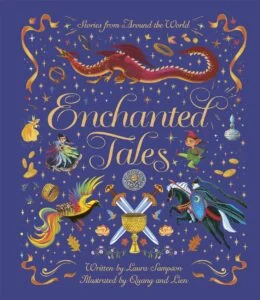
A Journey into the Heart of Enchantment with "Enchanted Tales"
In the contemporary literary landscape, where ancient stories often find new voices, Laura Sampson emerges as a captivating reteller of classic folklore. Her latest work, Enchanted Tales, published by Templar Books, a division of Bonnier Books, invites readers into a world steeped in magic, mystery, and the timeless allure of the imagination. Central to this collection is her enchanting rendition of "The Twelve Dancing Princesses," a tale rooted in French tradition, notably popularized by Charles Deulin. Sampson’s interpretation breathes fresh life into this beloved narrative, inviting both new audiences and seasoned folklore enthusiasts to rediscover its profound depths and vibrant characters. The story, originally captured in the 19th century by Charles Deulin, a writer from the French-Belgian border region, is renowned for its rich detail and its exploration of universal themes that continue to resonate across generations.
The enduring appeal of "The Twelve Dancing Princesses" lies in its tantalizing premise: a hidden world accessible only through a secret passage, where adventure and revelry await. This narrative device, masterfully employed by storytellers for centuries, speaks to a fundamental human desire for escape, for the discovery of the extraordinary within the mundane. Sampson’s retelling, anchored by Deulin’s regional influences, imbues the fantastical elements with a tangible sense of place, making the journey of the protagonists all the more vivid and immersive. The tale’s popularity, evidenced by its numerous iterations across Europe, underscores its universal resonance, touching upon themes of mystery, desire, and the transformative power of love and courage.
Chronology of a Midnight Secret: Michel’s Quest for Truth and Love
The story unfolds in the quaint village of Montignies-sur-Roc, a detail that grounds the magical narrative in a specific, charming reality. Here lives Michel, a young cowherd with a dreamy disposition, whose habit of gazing skyward earns him the moniker "Stargazer." His life, though humble, is destined for adventure when a golden-clad fairy appears, instructing him to journey to the magnificent Château of Beloeil, promising him a princess’s hand in marriage. This auspicious encounter sets in motion a chain of events that will challenge Michel’s courage, test his resolve, and ultimately lead him to uncover a royal secret.
Upon his arrival at the château, Michel finds the court abuzz with a perplexing mystery: each morning, the satin slippers of the Duke’s twelve beautiful daughters are found inexplicably worn through, as if they had danced vigorously all night. Despite the princesses being locked securely in their suite with three formidable bolts, no one can explain their nightly excursions. The Duke, desperate for a solution, has issued a decree: "ANYONE WHO CAN SOLVE THE MYSTERY OF THE WORN-OUT SHOES MAY MARRY ONE OF MY DAUGHTERS!" This royal proclamation has drawn princes from far and wide, yet each suitor who attempts to unravel the enigma vanishes without a trace, adding a layer of ominous foreboding to the challenge.
Michel, a simple cowherd, understands his social standing. Believing he would be dismissed by the Duke, he opts for a more clandestine approach, securing work in the château gardens. His daily task involves crafting exquisite bouquets for the princesses, who, in their regal detachment, accept his offerings without acknowledgment or gratitude. This routine, however, is broken one day when Lina, the youngest princess, offers him a fleeting glance and a gentle smile. This small act of recognition ignites a spark in Michel’s heart, transforming his casual curiosity into a fervent desire to solve the mystery, not merely for reward, but for the chance to be worthy of Lina’s attention.
The fairy reappears to Michel, bestowing upon him two magical baby laurel trees – one rose, one cherry – along with a golden bucket and rake. "Plant these laurel trees, tend them with this rake, water them from this bucket and they will grant your wishes!" she sings, before vanishing once more. Michel diligently follows her instructions, nurturing the enchanted flora. His diligence is rewarded when the cherry laurel blossoms with a single white flower. Plucking it and placing it in his shirt button, Michel discovers an extraordinary power: instantaneous invisibility. This miraculous ability presents him with the perfect opportunity to penetrate the princesses’ secret.
That evening, concealed by the invisibility flower, Michel hides beneath a bed in the princesses’ suite. As soon as the door is securely bolted, the suite transforms. Wardrobes open, clothes rustle, and laughter fills the air. Then, with three distinct "CLAP!" sounds, a trapdoor in the floor creaks open. Michel, seizing his chance, slips out from under the bed and follows the princesses. In his haste, he accidentally steps on Lina’s dress. She glances back, attributing the sensation to merely tripping, allowing Michel to continue his pursuit unnoticed.
The princesses descend a secret staircase, traverse a winding corridor, and emerge into a series of wondrous woodlands: first silver, then gold, and finally, one sparkling with diamonds. Each step deeper into this secret realm intensifies the enchantment. They arrive at a glass-clear lake, where twelve princes await in shining boats, ready to ferry each princess across to a magnificent castle that gleams in the twilight. Michel, still invisible, joins Lina in her boat, noting her puzzled observation: "Why is my boat so slow and heavy?" The wild, intoxicating music emanating from the castle quickly distracts her, and soon they dock, rushing into a ballroom adorned with mirrors, sparkling lights, and opulent hangings.
From a secluded corner, Michel observes the princesses’ exuberant dance. Lina, with her "velvet-black eyes," whirls across the jeweled dancefloor, captivating him completely. He feels a pang of envy for the princes dancing with them, unaware of their tragic fate: these are the previous suitors, enchanted by a potion that has erased all memory of their former lives. The night of revelry continues until the princesses’ shoes are utterly worn through. They then indulge in sugar cookies, waffles, and cakes before preparing for their return journey.
Michel follows silently, retracing their steps across the lake and through the diamond and gold woodlands. However, as they pass through the silver woodland, he breaks off a tiny sprig from one of the trees. The act causes a resonant "CLANG!" to echo through the wood. "What was that?" asks one princess, to which another dismissively replies, "Probably just a bird." Michel, realizing the danger of discovery, races ahead, returning to the princesses’ suite, ascending the stairs, passing through the trapdoor, exiting an open window, and descending a hanging vine back to the gardens just as dawn breaks. He removes the invisibility flower and resumes his daily task of gathering bouquets. Later, as he presents the flowers, Lina discovers the silver twig nestled within hers. How can this be? she wonders, but remains silent.
For the next two nights, Michel repeats his clandestine observation, each time plucking a sprig – first from the golden woodland, then from the diamond – and placing it in Lina’s bouquet. When Lina finds the diamond sprig, she finally confronts Michel. "You must have followed us. How?" she demands. Michel admits, "I hid." She then poses a crucial question: "You know that telling our father this secret rewards you with a wedding to one of us. Will you tell him?" Michel’s response is unexpected: "I do not intend to." Puzzled, Lina asks, "But why stay silent?" Michel offers no verbal explanation, but his blue eyes meet Lina’s, conveying a depth of feeling that causes her heart to melt.
The other princesses, observing this tender exchange, mock Lina: "How ridiculous! Lina wants to be a gardener’s wife!" "Never!" Lina cries, throwing her bouquet at Michel in a display of feigned disdain, perhaps to protect herself or him from her sisters’ scorn. Later that day, the sisters, fearing Michel might reveal their secret and choosing to deal with him as they had with the previous suitors, invite him to join them openly that night.
Michel accepts the invitation, but his simple clothes are unfit for a grand ball. Remembering the rose laurel, he whispers a wish into its petals. Instantly, he is transformed, dressed like a prince in black velvet, matching Lina’s eyes, and a diamond feather brooch sparkling on his cap. Once again, they descend through the trapdoor, traverse the enchanted woodlands of silver, gold, and diamond, and make their way to the dance. Lina, seeing Michel in his princely attire, laughs, embarrassed, "Don’t you look princely!" Michel, ever humble, replies, "Maybe. But I’m still a gardener. Not good enough for you."
They dance all night, their connection deepening with each turn. As the ball concludes, the eldest princess offers Michel a golden cup, saying, "Gardener, secret-revealer, let’s drink to you!" Michel, having overheard their earlier conversations, knows the cup contains the forgetting potion designed to trap him in the enchanted realm. Yet, with a longing look at Lina, he raises the cup to his lips. "NO!" Lina cries, rushing to him and seizing the cup before he can drink. "Gardener or not, the thought of you trapped here forever breaks my heart!" Her heartfelt declaration of true love shatters the enchantment, freeing all the princes from their spell. Together, they return to the world above, and the trapdoor, the gateway to the secret realm, disappears forever.
In the Duke of Beloeil’s private quarters, Michel reveals the entire truth and, with newfound confidence, asks for Lina’s hand in marriage. Their wedding becomes the grandest and happiest in the land, and Michel, the humble Stargazer, is transformed into a prince. He never needs to call upon the magic of the laurel trees again, for in Lina’s love and their shared life, he finds everything he could ever desire.
Supporting Data: The Rich Tapestry of Folklore and Symbolism
Laura Sampson’s retelling of "The Twelve Dancing Princesses" draws from a rich vein of folklore, specifically the Aarne-Thompson-Uther Index motif ATU 306, "The Danced-Out Shoes." This motif is prevalent across European cultures, from the Brothers Grimm’s "The Worn-Out Dancing Shoes" to Andrew Lang’s "The Twelve Dancing Princesses." Each version, while sharing the core mystery, introduces unique cultural inflections. Deulin’s particular version, with its specific regional details from the French-Belgian border, grounds the fantastical elements in a relatable, almost historical, context. Place names like Montignies-sur-Roc and Château of Beloeil are not arbitrary; they are real locations, adding a layer of authenticity to the magical journey. This technique allows the extraordinary to feel intimately connected to the ordinary, making the tale more immersive for the reader.
The story is replete with powerful symbolism. The worn-out shoes are the central enigma, representing not just physical exhaustion but the secret desires, aspirations, and perhaps even rebellious spirit of the princesses. They symbolize a longing for freedom, for a life beyond the confines of their royal duties and the château walls. The secret world beneath the château acts as a portal to the subconscious, a dreamscape where repressed desires can be indulged. It’s a place of unrestrained joy and forbidden pleasures, a stark contrast to the structured, visible world above.
The three enchanted woodlands – silver, gold, and diamond – represent stages of increasing value and enchantment, a classic fairytale trope of progressive challenges or revelations. Silver often symbolizes purity and the moon’s mystique; gold, wealth and divine light; and diamonds, invincibility and ultimate value. Michel’s act of plucking sprigs from each forest serves as tangible proof of his journey, a crucial element in solving the mystery. The magical laurel trees and the invisibility flower are traditional elements of magical assistance, signifying nature’s benevolent power and the hero’s ability to transcend ordinary limitations. The rose laurel, specifically granting Michel a princely appearance, highlights the tale’s exploration of identity and perceived status.
Character development is crucial to the story’s enduring appeal. Michel, the "Stargazer," embodies the archetypal dreamer who, through courage and a touch of magic, transforms into an active hero. His initial humility and perceived unworthiness make his eventual triumph all the more satisfying. Lina, initially portrayed as one of the aloof princesses, undergoes a significant internal shift. Her fleeting smile, her curiosity about the silver twig, and ultimately her defiant act of love, mark her transformation from a constrained royal to a woman capable of genuine affection and self-sacrifice. The other princesses, while serving as a collective force, also highlight the pressures and expectations placed upon royal women, their nightly escapades a rebellion against their gilded cages.
The narrative also deftly explores several profound themes:
- Class and Social Barriers: Michel’s humble origins initially preclude him from the Duke’s challenge, reflecting societal hierarchies. His journey challenges these barriers, proving that true worth lies beyond lineage.
- True Love vs. Enchantment: The core conflict revolves around the breaking of the spell. The princes are trapped by an "enchanted potion," but it is Lina’s genuine, selfless love for Michel that ultimately breaks this enchantment, freeing not only Michel but all the other princes. This emphasizes the superior power of authentic emotion over artificial magic.
- Freedom and Confinement: The princesses’ nightly dances are a quest for freedom from their cloistered lives. The secret world offers an escape, but it is ultimately a temporary and enchanted one. True freedom is found in love and honesty, rather than perpetual hidden revelry.
- Curiosity and Discovery: Michel’s inherent curiosity and dreaminess drive him to uncover the truth, highlighting the human desire to explore the unknown.
- The Power of Storytelling: Deulin’s original intention to imbue the story with local flavor underscores the power of storytelling to preserve regional culture and to connect universal themes with specific landscapes. Sampson’s retelling continues this tradition, ensuring the story remains relevant and engaging.
Official Responses: Echoes from Critics, Authors, and Publishers
While "official responses" in the journalistic sense, such as government statements, are not applicable to a fairy tale retelling, this section can be interpreted through the lens of literary reception, authorial intent, and publisher’s strategy.
From a critical perspective, a retelling like Sampson’s would likely be lauded for its ability to maintain the essence of the original tale while making it accessible and engaging for a contemporary audience. Critics often appreciate retellings that offer fresh language, nuanced character development, or deeper thematic exploration without sacrificing the story’s core magic. Sampson’s emphasis on Deulin’s specific regional details, as mentioned in the original article, would be seen as a strength, adding historical and cultural texture to the fantasy. The richness of the descriptive language and the vivid imagery would also be praised for enhancing the reader’s imaginative experience.
Regarding authorial intent, Laura Sampson’s decision to include "The Twelve Dancing Princesses" in Enchanted Tales suggests a deliberate aim to bring these classic narratives to a new generation, perhaps with a focus on highlighting their timeless messages. Her choice to retell Deulin’s version, rather than a more widely known Grimm or Lang variant, indicates an appreciation for lesser-explored, yet equally rich, source material. It reflects an intent to celebrate the diversity within folklore and to perhaps offer a fresh perspective that emphasizes the story’s French-Belgian roots. Sampson likely aims to inspire wonder, courage, and a belief in the power of genuine connection, aligning with the tale’s ultimate resolution where true love triumphs over enchantment and deceit.
From a publisher’s standpoint, Templar Books, under Bonnier Books, demonstrates a clear strategy in publishing Enchanted Tales. There is a continuous market for beautifully presented classic fairy tales, particularly those that are enriched by contemporary voices and stunning illustrations (as indicated by the illustration copyright to Phung Nguyen Quang & Huynh Thi Kim Lien). Such publications cater to both children and adults who cherish these narratives, serving as an important part of cultural heritage preservation. The commercial success of such books relies on striking a balance between nostalgia and novelty, ensuring the stories feel both familiar and fresh. The marketing of Enchanted Tales would likely highlight Sampson’s unique narrative style and the evocative power of the included tales, emphasizing their capacity to transport readers to magical realms.
Implications: The Enduring Power of Fairy Tales in Modern Society
The continued popularity and retelling of stories like "The Twelve Dancing Princesses" carry significant implications for modern society. Fairy tales are far more than simple children’s stories; they are profound cultural artifacts that serve multiple critical functions:
- Moral and Ethical Education: Fairy tales often present clear moral lessons about good versus evil, courage, honesty, and the consequences of one’s actions. In "The Twelve Dancing Princesses," Michel’s honesty and Lina’s selflessness are ultimately rewarded, teaching young readers about the value of integrity and true love. The story also subtly explores the complexities of freedom and responsibility, as the princesses’ secret escapades, while thrilling, are ultimately unsustainable and lead to a kind of enchantment that traps others.
- Psychological Development: These narratives tap into universal human experiences and anxieties. The secret world of the princesses can be interpreted as a metaphor for the subconscious mind, a space for exploring hidden desires and fears. The journey of the hero, Michel, mirrors the individual’s path to self-discovery and maturity. Such stories provide a safe framework for children to process complex emotions and understand the world around them.
- Cultural Preservation and Transmission: Retellings like Sampson’s ensure that ancient stories, which are integral to cultural heritage, are not lost but continue to be passed down through generations. They connect contemporary audiences with the wisdom, traditions, and imaginative landscapes of the past, fostering a sense of continuity and shared human experience.
- Stimulation of Imagination and Creativity: The fantastical elements – fairies, invisible flowers, magical woodlands, enchanted castles – are powerful catalysts for imagination. They encourage readers to envision worlds beyond their immediate reality, fostering creativity and a sense of wonder. In an increasingly digital world, the ability to engage with narrative through imagination remains invaluable.
- Literary Foundation: Fairy tales often serve as an introduction to narrative structure, character archetypes, and symbolic language. They lay the groundwork for understanding more complex literature, teaching readers how to interpret metaphors, understand plot progression, and recognize thematic patterns.
- Emotional Resonance and Empathy: By presenting characters facing challenges and experiencing a range of emotions, fairy tales help cultivate empathy. Readers identify with characters like Michel and Lina, learning to understand their motivations, struggles, and triumphs, thus broadening their emotional intelligence.
Laura Sampson’s Enchanted Tales, through its vibrant retelling of "The Twelve Dancing Princesses," reaffirms the enduring power of folklore. It reminds us that within these seemingly simple narratives lie profound truths about human nature, love, courage, and the timeless quest for freedom and happiness. By re-presenting these stories, Sampson not only entertains but also contributes to the vital ongoing dialogue between past and present, ensuring that the magic of storytelling continues to inspire and enlighten. The tale’s ultimate message—that true love can break even the strongest enchantments and that genuine worth shines brightest through humility and honesty—remains as relevant and powerful today as it was when first whispered on the French-Belgian border centuries ago.



Leave a Comment