The Architect of Virtual Worlds: Raph Koster Curates a Definitive Guide to Modern Game Design
By [Journalist Name]
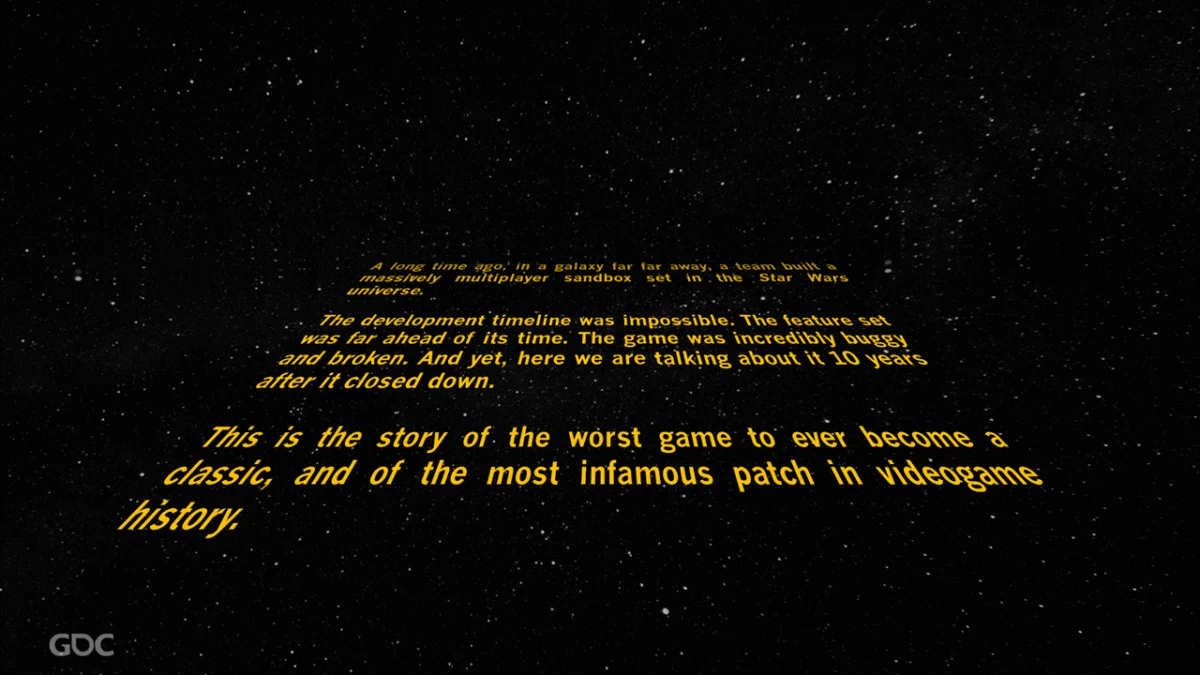
In the rapidly evolving landscape of digital entertainment, few figures command as much respect as Raph Koster. A veteran designer whose fingerprints are found on the foundational DNA of the Massive Multiplayer Online (MMO) genre—most notably through his work on Ultima Online and Star Wars Galaxies—Koster has long been more than just a developer. He is the industry’s unofficial philosopher-king, a theorist whose book A Theory of Fun for Game Design remains a staple on the desks of developers worldwide.
Recently, Koster took to his long-running digital archive to release a massive curation of his work from the last five years. This "Greatest Hits" collection is not merely a list of blog posts; it is a comprehensive map of the industry’s shifts from 2019 to 2024. Covering everything from the technical hurdles of the "Metaverse" to the intricate social engineering required to manage online communities, Koster’s latest update provides a masterclass in the state of the art.
Main Facts: A Five-Year Intellectual Compendium
The update marks the first time since 2018 that Koster has formally organized his output into a thematic menu for his readers. The collection is vast, spanning several high-level categories that define the current challenges of game development:
- General Game Design Overviews: Deep dives into the mechanics of play and the psychology of engagement.
- Multiplayer Dynamics: A specialized focus on the "social physics" of online worlds, tackling how players interact, form hierarchies, and occasionally descend into toxicity.
- The Games Business: An unvarnished look at the economics of development, from indie struggles to the pressures of venture capital.
- The Metaverse and Blockchain Critique: Perhaps the most vital section, where Koster deconstructs the hype cycles of the early 2020s with the clinical precision of a veteran who has seen "the next big thing" fail a dozen times before.
- Historical Postmortems: Reflections on the legacy of Ultima Online and the release of his massive 700-page historical volume, Postmortems.
- Playable Worlds and Stars Reach: A series of "manifesto" posts detailing the vision for his current venture, Playable Worlds, and their upcoming title Stars Reach.
Chronology: From Legacy to the Future (2019–2024)
To understand the weight of this curation, one must look at the timeline of its creation. The period between 2019 and 2024 was one of extreme volatility for the gaming industry.
2019–2020: The Foundation of Playable Worlds
As Koster began forming his new studio, Playable Worlds, his writing shifted toward the technical architecture of "cloud-native" MMOs. During this time, he released Postmortems, a book that consolidated decades of virtual world history. This era of his writing focused on learning from the past to avoid the "re-inventing the wheel" syndrome that plagues modern developers.
2021–2022: The Metaverse Hysteria
With the rebranding of Facebook to Meta and the explosion of NFT-based "Web3" gaming, Koster became a crucial voice of reason. While many newcomers claimed to be building the first "Metaverse," Koster pointed out that he and his peers had already built them in the 1990s. His posts from this era served as a technical and social reality check for investors and tech enthusiasts who underestimated the difficulty of world-building.
2023–2024: The Rise of Stars Reach
As the Metaverse hype cooled, Koster’s focus returned to the practical application of his theories. The most recent additions to his archive, which he calls "Riffs by Raph," serve as a public design document for Stars Reach. These posts argue for a return to "living worlds"—games where the environment is as reactive and complex as the players themselves.
Supporting Data: The Pillars of "Kosterian" Design
Koster’s curated archive rests on several data-driven and theoretical pillars that have come to define his legacy.
The Social Architecture of Multiplayer Games
Koster argues that multiplayer design is less about "mechanics" and more about "governance." One of the key themes in his recent work is the management of digital societies. He provides data-backed insights into why certain communities thrive while others collapse into harassment and griefing. His "Multiplayer Game Design" section emphasizes that social systems are not an "add-on" but the core engine of longevity in gaming.
The Technical Reality of the Metaverse
In his critique of the Metaverse, Koster breaks down the data points of "interoperability." He famously argued that the dream of "taking your sword from one game to another" is a technical and artistic nightmare that few proponents actually understand. His analysis of blockchain’s role in gaming concluded that while distributed ledgers have niche uses, they do not solve the fundamental problems of game design: fun, latency, and balance.
The Evolution of Emulation
A surprising but significant portion of Koster’s recent work involves game preservation. His work on emulators for older systems is not just an act of nostalgia; it is a laboratory for understanding how code survives the passage of time. This section of his archive serves as a resource for historians and engineers looking to bridge the gap between "legacy code" and modern hardware.
Official Responses: The "Riffs" and the Manifesto
While much of the archive is academic, the "Riffs by Raph" section serves as Koster’s direct response to the current state of the MMO industry. These posts function as a manifesto for his new game, Stars Reach.
In these "Riffs," Koster addresses the "stagnation" of the MMO genre. He argues that for twenty years, the industry has largely chased the World of Warcraft model—a "theme park" experience where players follow a set path. Koster’s response is a call for "sandbox" autonomy.
"These posts were basically written as marketing for Playable Worlds," Koster admits with characteristic transparency. "However, they also serve as a pretty good manifesto for what I think MMOs ought to be like."
His vision for Stars Reach involves "living trees" (as seen in the provided imagery) and ecosystems where fire spreads realistically, forests grow or die based on player interaction, and the economy is entirely player-driven. It is a response to the "static" worlds that have dominated the market for two decades.
Implications: Why This Archive Matters for the Next Generation
The release of this curated list has significant implications for the future of game design. We are currently seeing a massive influx of new developers into the "live service" space, many of whom are repeating the mistakes of the early 2000s.
Education and Mentorship
By organizing his thoughts into "Game Design Overviews" and "Multiplayer Dynamics," Koster has created a free, high-level curriculum for aspiring designers. In an era where game design degrees are expensive and often disconnected from industry realities, Koster’s archive provides a "from-the-trenches" perspective that is invaluable.
The Bursting of the "Tech-First" Bubble
Koster’s rigorous deconstruction of the Metaverse and Blockchain serves as a cautionary tale for the industry. It reminds developers and investors that "technology" (like AI or Blockchain) is a tool, not a game. The implication is clear: without a fundamental understanding of "Fun" (as defined in his earlier work), no amount of cutting-edge tech can sustain a virtual world.
The Shift Toward "Living" Systems
Perhaps the most exciting implication of Koster’s recent work is the shift toward systemic design. As hardware becomes more powerful, Koster suggests that the next leap in gaming won’t be in graphics, but in "world simulation." By sharing his theories on how to build these systems, he is inviting the rest of the industry to move away from scripted content and toward emergent gameplay.
Conclusion
Raph Koster’s five-year retrospective is more than a blog update; it is a status report on the soul of the gaming industry. As we move into an era defined by AI, cloud computing, and increasingly complex social networks, Koster remains a vital compass. His curated archive offers a path forward—one that respects the history of virtual worlds while aggressively pushing the boundaries of what they can become.
For the developer, the student, or the curious player, Koster’s menu is a feast of insight, reminding us that at the heart of every complex virtual world, there is a simple, human need for connection, agency, and, above all, fun.