
A Symphony of Sabers: Beat Saber Celebrates Eight Years of VR Dominance with Anniversary Content Drop
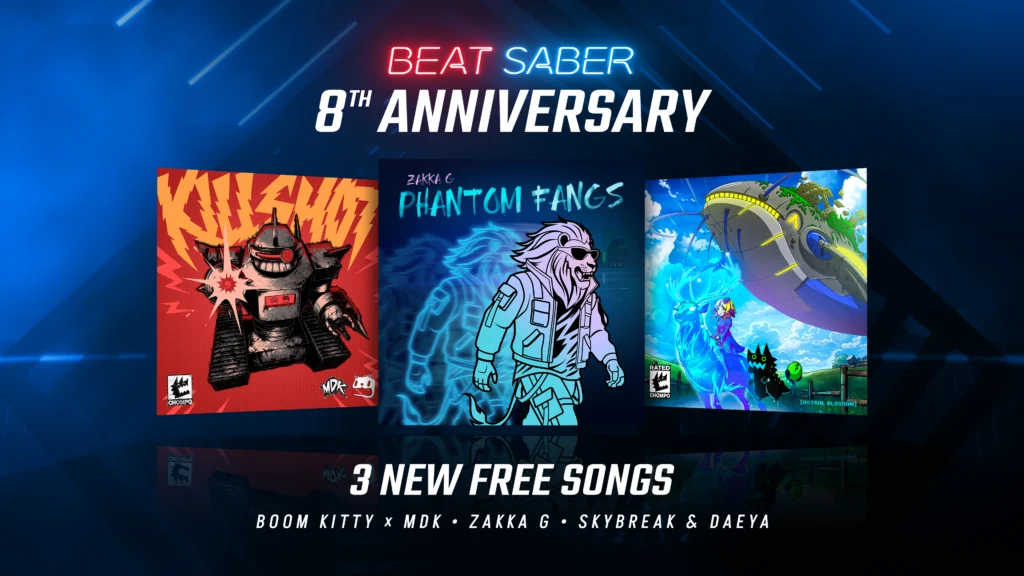
PRAGUE, Czech Republic — In the rapidly evolving landscape of virtual reality, where hardware cycles move at breakneck speeds and software titles often struggle for multi-year relevance, Beat Saber stands as an anomaly of enduring success. This week, developer Beat Games, a subsidiary of Meta Platforms Inc., officially marked the eighth anniversary of its flagship rhythm title. To celebrate nearly a decade at the summit of the VR charts, the studio has released a commemorative update featuring three new free tracks, including a landmark original composition that signals a new era for the game’s internal music production.
The update, which is now live across compatible platforms, represents more than just a content addition; it is a testament to the longevity of a title that arguably defined the medium for millions of users. As the VR industry looks toward the latter half of 2026, Beat Saber remains the "killer app" that bridges the gap between casual rhythm gaming and high-fidelity immersive technology.
Main Facts: The 8th Anniversary Content Drop
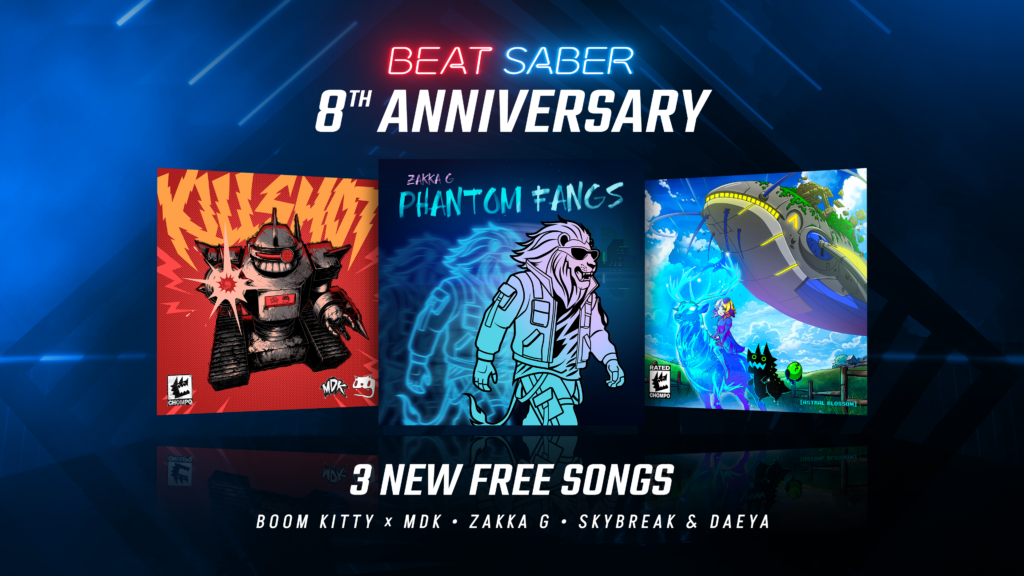
The centerpiece of the eighth-anniversary celebration is the release of three high-intensity tracks, added to the "Extras" collection at no additional cost to players. These tracks are designed to challenge veteran players while providing fresh content for the influx of new users who have joined the ecosystem via the Meta Quest 3 and the Horizon+ subscription service.
The three new additions are:
- "Phantom Fangs" by Zakka G: This track is of particular historical significance to the franchise. It marks the first "original in-house" track produced by Beat Games since the departure of Jaroslav Beck from his primary role as the studio’s lead composer. Beck’s signature electronic style defined the early "OST" (Original Soundtrack) volumes that launched the game into stardom.
- "Killshot" by Boom Kitty x MDK: A collaboration between two heavyweights of the rhythm gaming music scene. Boom Kitty has long been a fan favorite within the Beat Saber community, known for high-BPM (beats per minute) tracks that utilize the game’s 360-degree and "Expert+" mechanics to their fullest.
- "Astral Blossom" by Skybreak & Daeya: This track brings a melodic, "color bass" aesthetic to the game, diversifying the sonic palette of the anniversary update.
The update is delivered as a mandatory patch for PC VR (SteamVR and Oculus Rift store) and Meta Quest users. Notably, the tracks are available immediately upon installation, maintaining the studio’s tradition of "surprise drops" to keep the community engaged.
Chronology: Eight Years of Slicing Blocks
To understand the weight of this anniversary, one must look back at the trajectory of Beat Saber from a small indie project to a billion-dollar pillar of Meta’s "Reality Labs" division.
- 2018: The Birth of a Phenomenon – Originally released in Early Access by Hyperbolic Magnetism (later renamed Beat Games), the game featured a simple premise: slice neon blocks to the beat of electronic music using dual sabers. It became a viral sensation overnight, largely due to its "mixed reality" appeal on social media.
- 2019: The Meta Acquisition – Following its massive success on the original Oculus Rift and PlayStation VR, Facebook (now Meta) acquired Beat Games. This move ensured that Beat Saber would remain the flagship title for the then-upcoming standalone Quest headsets.
- 2020–2022: The Licensing Era – The game transitioned from purely electronic "in-house" music to massive commercial collaborations. During this period, Beat Games secured deals with Imagine Dragons, Linkin Park, BTS, and Lady Gaga, proving that VR could be a viable platform for major music industry revenue.
- 2023–2025: Technical Evolution – The studio introduced "Arc" and "Chain" notes, overhauled the lighting engine, and added support for high-refresh-rate displays (120Hz). The game also expanded its multiplayer capabilities, allowing for cross-platform competitive play.
- 2026: The Modern Standard – Entering its eighth year, Beat Saber has maintained a relentless release schedule. The 2026 calendar year has already seen the inclusion of global superstars like Bad Bunny and Twenty One Pilots, alongside the high-energy Prodigy Music Pack.
Supporting Data: The Economics of Rhythm
The sustained success of Beat Saber is backed by figures that are rarely seen in the VR space. While Meta does not frequently disclose specific per-title revenue, historical data and industry analysis provide a clear picture of its dominance.
As of early 2026, Beat Saber remains a top-five fixture on the Quest Store’s "Top Selling" and "Most Popular" charts. Estimates suggest the game has surpassed 10 million units sold across all platforms since its inception, with DLC (Downloadable Content) sales potentially doubling that revenue stream. The transition to a "Live Service" model—where free updates like the 8th-anniversary drop are interspersed with paid premium packs—has created a sustainable ecosystem.
Furthermore, the game’s inclusion in the Horizon+ games catalog earlier this year has shifted the demographic. Horizon+ (Meta’s answer to Xbox Game Pass) has allowed the game to reach a younger, more casual audience who may not have purchased the title individually but are now contributing to the daily active user (DAU) count. This move is seen by analysts as a strategy to maintain the game’s "social floor" as Meta prepares for future hardware iterations.
Official Responses and Platform Disparities
The anniversary update has been met with praise from the core community, particularly regarding the return to "in-house" original music. A spokesperson for Beat Games noted, "The 8th anniversary is a celebration of our roots. While we love bringing global icons like The Prodigy to the game, ‘Phantom Fangs’ represents our commitment to the unique sound that made Beat Saber a household name."
However, the update also brings a somber reminder of the shifting technical landscape. Beat Games reaffirmed that ongoing support for the original PlayStation VR2 (PSVR2) has faced limitations. While the game remains playable on Sony’s headset, the studio previously announced a cessation of "ongoing support" for certain new features on the platform.
As a result, while the three new tracks are available to PC and Quest players, the "cutting-edge" optimizations and certain social features integrated into the 2026 updates are primarily optimized for the Meta ecosystem. This has sparked a debate within the community regarding the "fragmentation" of VR gaming, where hardware-specific ecosystems are beginning to dictate content availability.
Implications: The Future of Virtual Reality Gaming
The eighth anniversary of Beat Saber carries several broader implications for the VR industry:
1. The Power of "In-House" IP
The release of "Phantom Fangs" by Zakka G suggests that Beat Games is looking to reclaim its musical identity. For years, the community has called for a return to the "OST" style that defined the early days. By proving they can produce high-quality, rhythm-synchronized music internally, Meta reduces its reliance on expensive third-party licensing fees, increasing the profit margins on the software.
2. Longevity in a "Disposable" Market
Most VR titles have a shelf life of six to eighteen months before being eclipsed by the next technical marvel. Beat Saber has defied this trend by focusing on "feel" over "fidelity." Its success implies that for VR to achieve mass-market penetration, developers must prioritize intuitive, repeatable gameplay loops over complex, one-off narrative experiences.
3. Subscription Models as the New Frontier
The integration of Beat Saber into the Horizon+ catalog is a pilot study for the future of VR monetization. If Meta can prove that a flagship title can drive subscription retention, we can expect future "Big Box" VR titles to launch directly into subscription tiers rather than as standalone $29.99 or $39.99 purchases.
4. The Hardware Gap
The exclusion or limited support for older or competing platforms (like the PSVR2) highlights a growing divide. As VR software becomes more sophisticated, the "lowest common denominator" hardware is being left behind. This forces consumers into specific ecosystems, mirroring the "console wars" of the 1990s and 2000s.
Conclusion
As players strap on their headsets today to slice through the neon corridors of "Killshot" or "Phantom Fangs," they are participating in a piece of digital history. Beat Saber at eight years old is not a legacy title in decline; it is a platform in its prime. By balancing free community-focused updates with massive commercial expansions, Beat Games has created a blueprint for how to survive and thrive in the virtual frontier. Whether it can maintain this momentum for another eight years will depend on its ability to continue innovating within the narrow, yet deep, confines of its rhythm-based world.


Leave a Comment