
From Video Calls to Agentic Orchestration: Zoom Launches ZoomMate to Redefine Enterprise Productivity
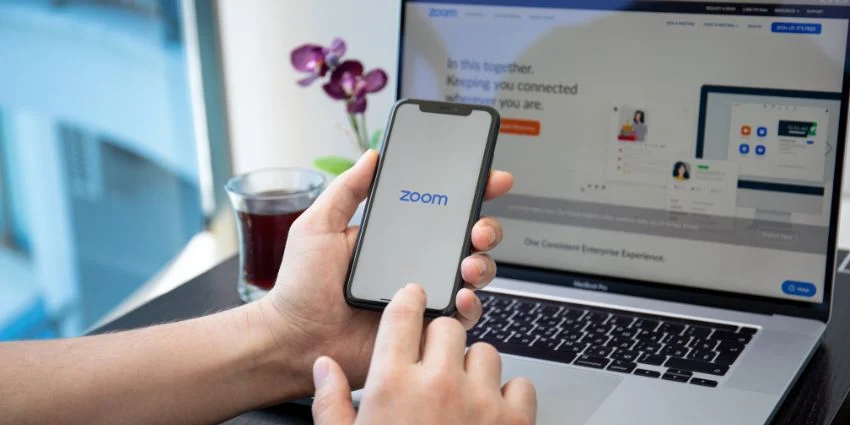
The landscape of digital collaboration underwent a seismic shift today as Zoom Video Communications, Inc. announced the general availability of ZoomMate, its new "agentic AI work surface." Designed to bridge the historical chasm between workplace conversations and the actual execution of work, ZoomMate represents Zoom’s most ambitious move yet to transition from a communication utility into a central operating system for the modern enterprise.
Available immediately for online and direct customers across North America, ZoomMate is positioned not merely as an add-on, but as an orchestration layer. It is built to sit at the intersection of meetings, messaging, and the myriad third-party business systems—such as Salesforce, Jira, and ServiceNow—that teams rely on to function. By integrating enterprise search, custom AI agents, and automated execution into a single interface, Zoom aims to capture the "decision-making context" that often evaporates the moment a meeting ends.
I. Main Facts: The Architecture of ZoomMate
ZoomMate is built on the premise that work doesn’t happen in a vacuum; it happens in the transition between a conversation and an action. To address this, the product is structured around three core capability pillars designed to streamline the "handoff" between human intent and digital execution.
1. Agentic Search Across the Ecosystem
Unlike traditional enterprise search tools that index static documents in isolation, ZoomMate’s agentic search queries across Zoom’s own data, the open web, and connected enterprise systems simultaneously. This allows a user to surface a specific customer record from Salesforce, an open ticket from Jira, and the specific transcript from a meeting three weeks ago where that customer was mentioned—all within one query. Crucially, ZoomMate is platform-agnostic in its reach, pulling context not just from Zoom Meetings, but also from Microsoft Teams and Google Meet conversations.
2. Intelligent Orchestration and Workflow Automation
The "agentic" nature of the tool refers to its ability to act on behalf of the user. Custom agents within ZoomMate monitor ongoing projects and detect "next steps" from live meeting context. For example, if a sales lead agrees to a follow-up in a meeting, ZoomMate can automatically update the Salesforce opportunity record, route a request to the legal department via ServiceNow, and schedule a follow-up call on a Google or Outlook calendar without the user ever leaving the Zoom interface.
3. Content Creation via the AI Productivity Suite
ZoomMate leverages Zoom’s recently expanded AI Productivity Suite—which includes Zoom Canvas, Zoom Slides, Zoom Sheets, and Zoom Paper. The system can ingest meeting transcripts and enterprise data to generate polished deliverables. A project kickoff meeting can be instantly transformed into a project plan in Zoom Paper or a budget spreadsheet in Zoom Sheets, with the AI ensuring that these documents remain updated in real-time as further decisions are made in subsequent chats or calls.
II. Chronology: Zoom’s Evolution into an AI Powerhouse
To understand the significance of ZoomMate, one must look at the trajectory of Zoom over the last five years.
- 2020–2021: The Pandemic Surge. Zoom became a household name and a verb, providing the essential infrastructure for remote work. However, the company faced the "commoditization trap," where video conferencing became a feature of larger suites like Microsoft 365.
- 2022–2023: Platform Expansion. Zoom began diversifying its portfolio, launching Zoom Phone, Zoom Contact Center, and Zoom IQ (later rebranded as Zoom AI Companion). The goal was to move from "the meeting app" to "the collaboration platform."
- Late 2023 – Early 2024: The AI Pivot. As generative AI took center stage, Zoom integrated its AI Companion across its suite for free, focusing on meeting summaries and chat composition. This built a massive user base for AI-assisted work.
- Today: The Agentic Era. The launch of ZoomMate marks the shift from Generative AI (which creates content) to Agentic AI (which performs tasks). By introducing a $20 per user per month price point, Zoom is moving from a "freemium AI" model to a high-value enterprise AI model.
III. Supporting Data: The Market Appetite for AI ROI
Zoom’s pivot is backed by significant market research indicating that while workers are enthusiastic about AI, enterprises are becoming more skeptical of its Return on Investment (ROI).
The "Time-Saving" Metric
According to survey data conducted by Zoom in partnership with Morning Consult, the demand for AI assistance is at an all-time high:
- 70% of American knowledge workers believe AI can help restore a healthy work-life balance.
- 43% of current AI users report saving an hour or more per day by using AI to automate routine tasks.
The Competitive Pricing Landscape
ZoomMate enters the market at $20 per user per month, a strategic price point. For comparison:
- Microsoft Copilot for Microsoft 365 is priced at approximately $30 per user per month.
- Google Gemini for Workspace follows a similar $20-$30 tiering.
- Salesforce Agentforce and ServiceNow AI tools often involve complex, consumption-based, or high-tier enterprise licensing.
By pricing ZoomMate competitively, Zoom is positioning itself as a more affordable "orchestration layer" that can sit on top of—and connect—the more expensive siloed AI tools from Microsoft, Google, and Salesforce.
IV. Official Responses: The Strategic Vision
The leadership at Zoom and industry analysts see ZoomMate as a play for the "center of the work universe."
Russell Dicker, Chief Product Officer at Zoom, emphasized the unique positioning of the company during the launch. "What drew me to Zoom was a simple truth: no other company sits where Zoom sits—at the center of every conversation where work decisions get made," Dicker stated. "ZoomMate is built on this insight. Before, during, and after the meeting, ZoomMate connects what was decided to what needs to happen next across every system where your work lives."
This sentiment is echoed by third-party observers who recognize the limitations of current AI offerings. Melody Brue, VP and Principal Analyst at Moor Insights & Strategy, noted that most AI tools currently operate on the "edges" of work.
"Many AI offerings have limited access to the real-time context affecting decisions," Brue explained. "ZoomMate approaches this differently because it sits inside the conversations where those decisions unfold. This can give it live business context and help make its recommendations more grounded in the work that teams are actually doing."
V. Implications: Challenges and the Path Forward
While the narrative of ZoomMate is compelling, its success depends on several critical factors that will test Zoom’s engineering and strategic mettle.
1. The Challenge of Heterogeneous IT Environments
The modern enterprise is rarely a "mono-stack" environment. A company might use Slack for chat, Zoom for video, Salesforce for CRM, and Microsoft for email. ZoomMate’s promise relies on its ability to integrate seamlessly across these rivals. While ZoomMate can pull context from Microsoft Teams and Google Meet, the depth of that integration will be under intense scrutiny. If the "agentic" actions are buggy or require constant manual intervention, the value proposition collapses.
2. Data Governance and Sovereignty
As AI agents gain the ability to move data between systems (e.g., taking a transcript from a Zoom meeting and updating a Salesforce record), security becomes the paramount concern. Zoom must navigate:
- Access Controls: Ensuring the AI doesn’t surface information to a user who doesn’t have permission to see it in the source system.
- Regional Compliance: Managing data residency requirements for global enterprises under GDPR and other frameworks.
- AI Ethics: Providing transparency into how the agent makes decisions to trigger specific workflows.
3. The "Meeting-Centric" Bet
Zoom is making a massive bet that the meeting is the primary source of truth in business. Microsoft and Google, conversely, bet that the document or the email is the source of truth. If the world continues to move toward asynchronous work and "fewer meetings," Zoom’s advantage of sitting "at the center of the conversation" may diminish. However, if meetings remain the definitive venue for decision-making, ZoomMate could become the most valuable tool in the enterprise stack.
4. The ROI Scrutiny
IT and procurement leaders are currently in a "rationalization phase." After a year of experimental AI spending, many are looking to consolidate. ZoomMate must prove that it doesn’t just add a new cost, but replaces the need for multiple disparate automation tools. The real test will not be the initial adoption, but the renewal cycle, where companies will look for hard evidence of time saved and errors reduced.
Conclusion: The "System of Action"
ZoomMate represents a bold attempt to redefine Zoom from a "System of Communication" to a "System of Action." By focusing on the "handoff gaps" that plague modern workflows, Zoom is addressing a genuine pain point in the enterprise.
If Zoom can deliver on the promise of an AI that truly understands the context of a conversation and can reliably execute tasks across a fragmented software ecosystem, it may successfully fend off the gravitational pull of Microsoft and Google. The launch marks the beginning of a new chapter for Zoom—one where the company is no longer just hosting the meeting, but is actively doing the work that follows.



Leave a Comment