
Seismic Shifts in the UK Electorate: Reform UK’s Ascent and Labour’s Historic Fall Signal a New Political Era
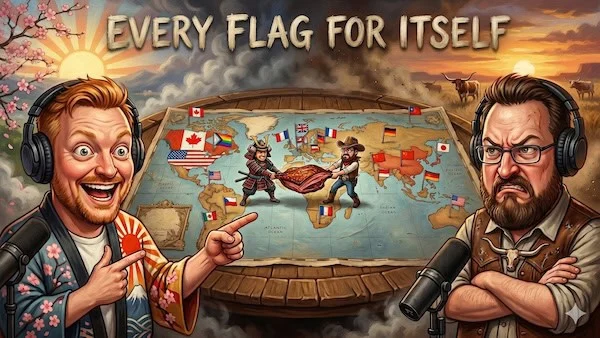
London, UK – May 8, 2026 – The political landscape of the United Kingdom was dramatically reshaped yesterday as voters in England, Scotland, and Wales delivered a stunning verdict in a trifecta of elections. Local council polls, alongside significant contests for the Scottish Parliament and the Welsh Senedd, witnessed a meteoric rise for the anti-establishment Reform UK party, while the long-dominant Labour Party suffered a catastrophic decline, losing hundreds of seats and crucial council control. The Conservative Party also endured substantial losses, signaling a profound realignment of British political forces.
The Day the Political Map Was Redrawn: Key Election Outcomes
The results of the May 7th elections have sent shockwaves through the nation’s political establishments. Reform UK, a party previously considered on the fringes, has emerged as a major political force. The party secured a staggering 873 net gains in council seats, bringing its total to 936, and crucially, clinched control of seven local authorities. These victories include significant wins in historically Labour-leaning heartlands, such as Sunderland, and key English councils like Havering, Essex, Suffolk, Thurrock, and Wakefield.
In stark contrast, the Labour Party endured a devastating blow, losing a net 595 council seats. This erosion of support has reduced their council control to a mere 22 authorities. The scale of Labour’s defeat is underscored by their surrender of traditional strongholds, including Tameside, Hartlepool, Wigan, Birmingham, and notably, Sunderland, a city that had previously been a bedrock of Labour support.
The incumbent Conservative Party, often referred to as the Tories, also faced significant setbacks, losing a net 303 council seats and relinquishing control of councils such as Essex, Suffolk, and Hampshire. While the Liberal Democrats and the Green Party managed to secure gains in targeted areas, their overall impact was overshadowed by the seismic shifts witnessed elsewhere.
National equivalent vote share figures, as analyzed by Sky News, paint a stark picture of the changing electorate: Reform UK commanded an impressive 27% of the vote, followed by the Conservatives at 20%, and Labour trailing at 15%. This dramatic reordering of electoral fortunes suggests a fundamental dissatisfaction with the established political order.
A Glimpse into the Future: International Parallels and Cultural Undercurrents
The political tremors felt across the UK are not isolated incidents but appear to be part of a broader global trend. A recent election in Japan on February 8, 2026, saw Prime Minister Sanae Takaichi and her Liberal Democratic Party (LDP) achieve a historic landslide victory. The LDP secured 316 out of 465 seats, a post-war first, granting them a two-thirds supermajority. Takaichi’s platform, rooted in national pride, constitutional revision for enhanced self-defense, a more assertive stance on China and immigration, and an "Japan First" economic policy, resonates with the sentiments fueling Reform UK’s rise.
This pattern of a cultural realignment is becoming increasingly evident worldwide. In the United Kingdom, Reform UK is positioning itself as the new champion of national sovereignty, supplanting the traditional Conservative platform. Simultaneously, the Labour Party’s traditional support base appears to be fragmenting, with gains for the Green Party and Muslim independent candidates in formerly Labour strongholds, indicating a rejection of the old consensus.
Germany has witnessed a similar phenomenon with the surge of the Alternative for Germany (AfD) party, which is challenging the Green Party, often perceived as the standard-bearer for globalist agendas on climate, migration, and supranational governance. The United States, too, is experiencing these divisions. Within the Democratic Party, figures like Zohran Mamdani, who recently secured the New York City mayoralty in a stunning upset, represent a more radical, internationalist wing, challenging established Democrats. On the Republican side, the MAGA movement has decisively overtaken the party’s traditional establishment, pushing an unapologetically "America First" agenda.
The Core Conflict: Economics vs. Culture and the Immigration Catalyst
At its heart, this burgeoning political and cultural shift is not primarily an economic contest, but a profound battle over cultural identity. The narrative of globalism posits a singular, borderless, homogenized, and progressive global monoculture, often achieved through the infusion of "diversity" which, in practice, can lead to the dilution of distinct regional and national cultures. Conversely, nationalists champion the preservation of distinct regional cultures, advocating for "Japanese culture for Japan," "Welsh culture for Wales," and "Texan culture for Texas."

The mechanism that ignites this cultural debate is immigration. While past debates often centered on economic impacts, the contemporary discourse is fundamentally cultural. Globalists often espouse the mantra that "diversity is our strength," while nationalists view unchecked immigration as a catalyst for cultural dilution and the erosion of national identity. This sentiment is particularly pronounced within the ranks of parties like the AfD and Reform UK, and the broader MAGA movement, which express opposition not only to illegal immigration but often to all forms of immigration, seeking to preserve what they perceive as their nation’s cultural integrity. More extreme factions within these movements even advocate for the repatriation of immigrants.
Decoding the Unexplained: A Cultural Lens on Contemporary Phenomena
This pervasive cultural war offers a framework for understanding phenomena that might otherwise appear perplexing. The emergence of movements like "Gays for Palestine," for instance, can be interpreted not as an embrace of Hamas’s rule, but as a strategic leveraging of non-Western groups as a counterpoint to prevailing Western cultural norms. Similarly, the recent convergence of Japanese and American nationalists on platforms like X (formerly Twitter) can be seen as a shared visceral rejection of what they term "gay communism" and the perceived deliberate dilution of their respective cultures.
Even the apparent alignment of self-described racists in America and Japan can be understood through this cultural lens. Historically, racism was often predicated on claims of racial superiority. The contemporary manifestation, however, is characterized by a preference for a specific culture over a homogenized global one. This explains the criticism of Hollywood’s casting practices, such as the absence of Greek actors in prominent roles in Christopher Nolan’s upcoming "The Odyssey," which some interpret as cultural erasure disguised as "inclusivity." From Tokyo to Cardiff, Berlin to New York, voters appear to be increasingly choosing the familiar symbols of their heritage over the ostensibly universal banner of the global village. The battle is cultural, immigration is a key catalyst, and the pattern is becoming undeniably clear.
Implications for Storytelling and Cultural Representation
This global cultural realignment carries significant implications for narrative and storytelling, particularly concerning the concept of "diversity." The traditional trope of a diverse group challenging a monolithic empire, once a resonant theme, may no longer hold the same sway with audiences. "Diversity," in this new context, is perceived by some as a tool wielded by a globalist establishment to dismantle distinct regional and national cultures. The narrative of diversity as the force that defeats the Death Star is being re-examined, with some now viewing it as the Death Star itself.
The emergence of parties like Reform UK, the AfD, and the MAGA movement signals a significant and, until recently, underserved audience. The demand for content that specifically represents these emerging cultural identities is substantial, presenting a lucrative opportunity for creators. A hypothetical influencer, drawing on themes of "God-and-country, guns-and-Bibles," has already demonstrated the potential for significant financial success by tapping into this demand. The message to creators is clear: expressing local culture boldly and in opposition to a homogenized global culture can elicit a powerful and positive response from readers and viewers who feel their identities are being overlooked.
This principle extends to specialized genres. For instance, the "hockey romance" genre has experienced a surge in popularity, driven by the strong tribal identity inherent in sports teams. These narratives often tap into a quasi-nationalistic or tribal strength, immersing readers in a distinct cultural milieu. This resonates with a deeper human longing for belonging and connection in an increasingly globalized and potentially isolating world. The formation of "tribes," whether through sports teams, book clubs, or other shared interests, fulfills this fundamental need for community and affirmation.
The Alberta Movement: A Canadian Separatist Undercurrent
The anti-globalist sentiment is manifesting in unique ways across North America. In Canada, the Alberta separatist movement has gained significant traction, with a referendum on secession from Canada now on the horizon. Alberta, culturally more aligned with American states like Texas than with the urban centers of Eastern Canada, feels a significant economic and cultural disconnect with Ottawa. The province contributes substantial revenue to the federal government without commensurate returns and desires stronger economic ties with the United States, particularly in the energy sector, while seeking to maintain its distinct identity. This movement views the prevailing Canadian culture, often associated with Toronto, as embodying the globalist tendencies they oppose.
Canada’s inherent cultural diversity, with distinct linguistic and cultural regions like Quebec, further complicates national unity. The observation that major Canadian cities often share closer cultural and economic ties with their American counterparts than with other Canadian cities underscores the challenges in forging a singular national identity. The perceived lack of a robust and distinct Canadian cuisine, beyond dishes like poutine, is cited as an indicator of a less developed national cultural identity compared to regions like Texas, which boasts a rich Tex-Mex culinary tradition born from its unique historical fusion of Mexican and German influences.
Conclusion: The Unmistakable Global Pattern
The recent electoral outcomes in the United Kingdom, coupled with international trends, paint a clear and compelling picture of a world undergoing a profound cultural realignment. The traditional political order is being challenged by movements that prioritize national identity, cultural preservation, and a rejection of what they perceive as globalist homogenization. The battleground is increasingly cultural, with immigration serving as a critical flashpoint. For storytellers and content creators, understanding these shifts is not merely an academic exercise; it is essential for connecting with a growing and vocal audience seeking authentic representation of their values and identities. As voters across the globe increasingly choose the familiar flags of their heritage, the era of the global village may be giving way to a renewed assertion of distinct cultural identities.




Leave a Comment