
Martin Scorsese: Unmasking the Director’s Unexpected Acting Persona
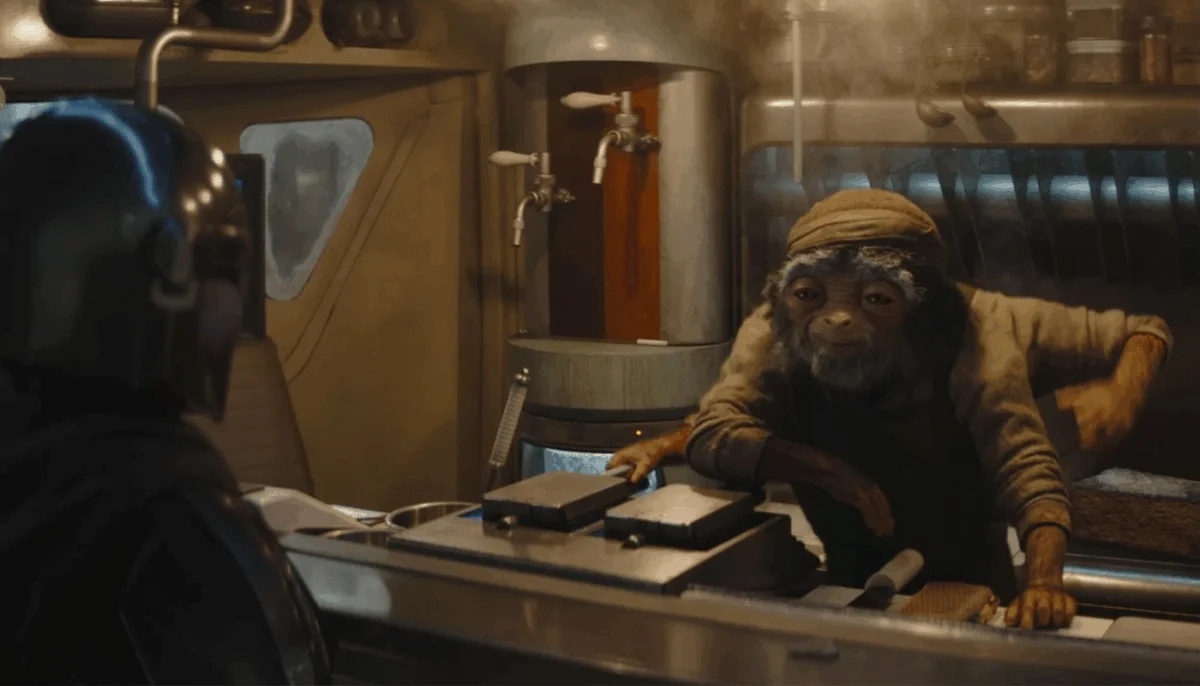
Hollywood, CA – The reveal of legendary filmmaker Martin Scorsese in the trailer for The Mandalorian and Grogu sent a ripple of surprise and delight through the cinematic community. Known almost exclusively as a towering figure behind the camera, Scorsese’s occasional forays into acting offer a unique lens through which to appreciate his profound understanding of character and narrative. While his self-directed cameos in his own masterpieces are iconic, this article delves into his less frequent, yet equally compelling, "true character" roles, analyzing their nuances and ranking them from least to most impactful.

This exploration aims to provide a professional journalistic assessment of Scorsese’s acting contributions, examining the thematic threads that connect his diverse portrayals and the distinct qualities he brings to each role, often leveraging his established directorial persona.

Thematic Undercurrents: Truth, Lies, and the Scorsese Archetype
A striking consistency emerges across Martin Scorsese’s acting roles, regardless of their brevity or the film’s genre: his characters frequently navigate a fraught landscape between honesty and deception. This recurring motif of "truth and lies" is often explored through the pressure on his characters to "talk" – to betray confidences, expose information, or conceal uncomfortable realities for self-preservation or gain.

Directors casting Scorsese often tap into the metafictional weight of his career, seeing him as a symbol of cinematic integrity or, ironically, as a master chronicler of moral compromise. His rapid-fire delivery, intense gaze, and inherent gravitas lend themselves perfectly to characters wrestling with ethical dilemmas, often under duress. Whether playing a harried accountant, a morally ambiguous club owner, or a passionate artist, Scorsese imbues these figures with an internal struggle that resonates deeply, often hinting at the complex human condition he so expertly dissects in his own films.

It is crucial to distinguish these character roles from his well-known, often self-referential cameos in his own directorial works. In films like Taxi Driver, his brief, unnerving appearance as Travis Bickle’s passenger offers a chilling glimpse into the protagonist’s disturbed psyche. In Mean Streets, he becomes a visceral embodiment of senseless violence, a silent, menacing presence. And in Killers of the Flower Moon, his poignant final appearance as a radio show host serves as a powerful commentary on the commodification of real-life tragedy. These self-directed moments are extensions of his authorial vision, whereas his acting roles for other directors represent a performer interpreting a character from an external perspective, albeit one often informed by his own cinematic sensibilities. This article focuses exclusively on the latter, where Scorsese steps fully into a defined role, bringing a unique blend of vulnerability and intensity.

The Performances Ranked: A Deep Dive
While every performance by a filmmaker of Scorsese’s caliber holds intrinsic interest, a critical assessment allows for an appreciation of the depth and range he brings to each character.

8. The Accountant – Search and Destroy (1995)
- Film Context: Directed by David Salle, Search and Destroy is a quintessential independent film from the mid-1990s, characterized by its quirky narrative and ensemble cast featuring the likes of Griffin Dunne and Christopher Walken. It embodies the era’s experimental spirit, often with mixed critical reception.
- Scorsese’s Role: Scorsese appears in a single scene as an exhausted IRS agent. His character is tasked with untangling the financial mess of the protagonist, providing a brief but memorable moment of bureaucratic exasperation.
- Performance Analysis: Despite its brevity, Scorsese’s portrayal of the accountant is a highlight in an otherwise uneven film. He embodies the archetypal harried public servant, overwhelmed by paperwork and the labyrinthine nature of tax law. His rapid-fire dialogue and visibly strained demeanor perfectly capture the frustration of an individual caught in a system, subtly touching on the theme of truth (financial records) versus the lies (creative accounting) he must navigate. It’s a performance built on recognizable exasperation, demonstrating Scorsese’s ability to create a fully formed, albeit fleeting, character.
7. Goodley – ‘Round Midnight (1986)
- Film Context: Bertrand Tavernier’s ‘Round Midnight is a poignant tribute to jazz legends, centering on the fictionalized life of troubled tenor saxophonist Dale Turner (played by real-life jazz giant Dexter Gordon, who received an Academy Award nomination for his performance). The film explores themes of artistic genius, addiction, and the often-exploitative world surrounding musical talent.
- Scorsese’s Role: Scorsese plays Goodley, a New York club owner and booker for Turner. Goodley’s character exists in a moral gray area, seemingly supporting Turner’s artistry while simultaneously leveraging his talent for commercial gain.
- Performance Analysis: Goodley is a complex character. Unlike some of Turner’s more altruistic colleagues, Goodley’s motivations are clearly intertwined with profit, subtly highlighting the commercial pressures artists face. Scorsese masterfully delivers a motor-mouthed scene where Goodley passionately, almost aggressively, champions New York over Paris, a moment that encapsulates the character’s hustler mentality and the cultural clashes within the jazz scene. His quick, assertive dialogue reflects the high-stakes world of club management. The underlying tension of whether Goodley genuinely cares for Turner or is simply using him for his own ends provides a clear link to the "truth and lies" theme, making his performance more than just a cameo but a critical piece of the film’s moral tapestry. The film’s acclaimed score by Herbie Hancock, which won an Oscar, further underscores the artistic environment Scorsese’s character inhabits.
6. Martin Scorsese – The Studio (2024)
- Film Context: Seth Rogen’s satirical Apple TV+ series, The Studio, is a sharp, often hilarious, examination of the modern Hollywood system, widely considered a spiritual successor to Robert Altman’s The Player. It lampoons the absurdities, power struggles, and creative compromises inherent in studio filmmaking.
- Scorsese’s Role: In a brilliant meta-performance, Scorsese portrays a heightened, comedic version of himself, a legendary director whose ambitious, niche projects clash with the commercial realities of contemporary studios.
- Performance Analysis: While technically playing "himself," Scorsese’s portrayal is so distinctively stylized and self-aware that it transcends a mere cameo. His breathless, passionate explanation of a hypothetical Jim Jones cult movie is a masterclass in comedic timing, blending his real-life intensity with a theatrical exaggeration. The subsequent scene, depicting his character’s utterly devastated, almost childlike breakdown upon learning his film has been canceled, is both uproariously funny and surprisingly poignant, playing on the fragility of artistic dreams in a corporate environment. This performance, though comedic, offers a satirical commentary on the industry’s often-stifling influence on genuine artistic vision, making it a powerful, albeit humorous, addition to his acting filmography. It cleverly uses the audience’s perception of the real Scorsese to enhance the comedic effect, adding another layer to the theme of public perception versus private reality.
5. Sykes – Shark Tale (2004)
- Film Context: DreamWorks Pictures’ Shark Tale is an animated comedy that attempted to transpose classic gangster film tropes into an underwater setting, featuring a star-studded voice cast including Will Smith, Robert De Niro, and Jack Black. Its premise, a fish claiming to be a "shark slayer," led to a narrative often seen as a parody of mob movies, albeit for a younger audience.
- Scorsese’s Role: Scorsese voices Sykes, a pufferfish who operates a "whale wash" (an underwater car wash) and acts as a reluctant middleman between the protagonist, Oscar, and Don Lino, the Great White shark mafia boss (voiced by Robert De Niro).
- Performance Analysis: Sykes is a character riddled with anxiety and moral conflict, making him a fascinating vehicle for Scorsese’s vocal talents. The film’s overt homage to gangster cinema, particularly Scorsese’s own works, makes his casting highly self-referential. Sykes’s constant panic attacks, particularly when dealing with the formidable Don Lino, are delivered with Scorsese’s signature rapid-fire, nervous energy. The character’s internal struggle — caught between fear of the mafia and attempts to leverage Oscar’s newfound fame — directly ties into the "truth and lies" theme. He initially benefits from Oscar’s deception, then becomes his manager, morphing into a dorky, self-important figure trying to appear cool. The vocal interplay between Scorsese and De Niro, echoing their legendary collaborations, is a definite highlight, showcasing their natural chemistry even in animated form. Despite the film’s mixed reception, Scorsese’s Sykes is a memorable, if sometimes baffling, creation that pushes the boundaries of his acting persona into unexpected comedic territory.
4. Hugo Durant – The Mandalorian and Grogu (2026)
- Film Context: The highly anticipated The Mandalorian and Grogu expands the beloved Star Wars universe, continuing the adventures of Din Djarin and his foundling, Grogu. Scorsese’s inclusion was a significant, unexpected casting choice that garnered immediate attention.
- Scorsese’s Role: Scorsese plays Hugo Durant, a four-armed Ardennian alien who runs a vibrant food truck, reminiscent of an intergalactic Airstream. His character is a minor but pivotal figure entangled in the underworld of a bustling city.
- Performance Analysis: Scorsese’s portrayal of Hugo Durant is a delightful extension of his "small-time guy in a big city" archetype, transported seamlessly into the sci-fi realm. Durant is a businessman trying to survive in a chaotic environment, forced to pay protection money to local syndicates. This instantly establishes his character within the "truth and lies" framework, as he is constantly balancing his desire to stay out of trouble with the necessity of navigating a corrupt system. Scorsese brings a familiar vibrancy to Durant, his characteristic high-speed, Lower East Side chatter adapted to an alien persona. The performance captures the essence of a man who talks a lot to say little, desperately trying not to implicate himself while inadvertently revealing the complexities of his situation. His two scenes inject a dose of grounded, street-level realism into the fantastical setting, demonstrating his ability to humanize even an alien character with genuine, relatable anxieties. The surprise of his appearance is amplified by the effectiveness of his nuanced, if brief, performance.
3. Vincent Van Gogh – "Crows", Akira Kurosawa’s Dreams (1990)
- Film Context: Akira Kurosawa’s Dreams is a critically acclaimed anthology film, a deeply personal project for the legendary Japanese director. Composed of eight vignettes based on Kurosawa’s actual dreams, the film is a visually stunning exploration of life, nature, and humanity’s impact on the planet.
- Scorsese’s Role: In the segment titled "Crows," Scorsese delivers a truly remarkable performance as the tormented Dutch painter Vincent Van Gogh. A Japanese artist visits a Van Gogh exhibit and finds himself transported into the vivid, swirling landscapes of the paintings, eventually encountering Van Gogh himself.
- Performance Analysis: The casting of Martin Scorsese as Vincent Van Gogh by Akira Kurosawa is a stroke of genius, a moment where the cinematic universe aligns perfectly. Kurosawa reportedly believed that only Scorsese could embody the "frenetic energy and drive" necessary to capture Van Gogh’s obsessive artistic spirit. Scorsese’s performance is startling and utterly captivating. His famous fast-talking delivery, usually associated with urban grit, is here channeled into the urgency of an artist desperate to capture light and life before it fades. Van Gogh’s curt command, "Why aren’t you painting?", delivered with an almost manic intensity, perfectly conveys the artist’s singular focus and boundless passion.
Beyond the performance itself, the behind-the-scenes context adds another layer of appreciation. Scorsese famously memorized his lines while rushing to complete Goodfellas, which had gone over schedule. This real-life pressure mirrors Van Gogh’s own relentless pursuit of his art, lending an authentic edge to the portrayal. Furthermore, it was during his bullet train journey to the set of Dreams that Scorsese read Shusaku Endo’s novel Silence, a book that would resonate with him for three decades before he finally adapted it into his own film. This confluence of events highlights the profound impact this acting role had on Scorsese’s own directorial path, solidifying its status as one of his most significant and artistically resonant performances.
2. Martin Rittenhome – Quiz Show (1994)
- Film Context: Directed by Robert Redford, Quiz Show is a meticulously crafted historical drama based on the real-life 1950s quiz show scandals, specifically the rigging of the popular program Twenty-One. The film explores themes of media manipulation, classism, anti-Semitism, and the erosion of public trust, with a subtle nod to the HUAC hearings through references to On the Waterfront.
- Scorsese’s Role: Scorsese portrays Martin Rittenhome, a high-ranking executive for Geritol, the show’s primary sponsor. Rittenhome is a powerful, cynical businessman deeply implicated in the scandal.
- Performance Analysis: In Quiz Show, Scorsese completely sheds any "motor-mouthed caricature" and delivers a chillingly assured performance as Martin Rittenhome. His character is a terrifying embodiment of corporate power and moral detachment. Rittenhome is called to testify before a Congressional hearing, where he publicly maintains a facade of ignorance and concern, uttering carefully crafted statements that reveal much without explicitly confessing anything. This public performance of feigned innocence stands in stark contrast to his private conversation with investigator Richard Goodwin (Rob Morrow). In this private moment, Rittenhome cheerfully dismisses the intellectual aspects of the quiz, cynically stating that Americans "just wanted to watch the money."
Scorsese’s Rittenhome is not overtly menacing; rather, his menace comes from his casual acceptance of corruption and his unshakable belief that he is above consequences. He exudes an almost aristocratic disdain for truth and ethics, reflecting a systemic failure. This portrayal is a masterclass in subtlety and quiet power, demonstrating Scorsese’s range beyond his more boisterous roles. He loses himself in the character, creating a figure who is deeply unsettling precisely because of his calm assurance in the face of profound dishonesty, making him a potent symbol within the film’s overarching exploration of moral decay.
1. Joe Lesser – Guilty by Suspicion (1991)
- Film Context: Irwin Winkler’s Guilty by Suspicion is a powerful drama that plunges into the dark era of the Hollywood Blacklist, orchestrated by the House Un-American Activities Committee (HUAC) in the late 1940s and 1950s. The film centers on director David Merrill (Robert De Niro), whose career is jeopardized by unsubstantiated accusations of communist sympathies. It’s a stark portrayal of the destructive impact of political paranoia on individual lives and artistic freedom.
- Scorsese’s Role: Martin Scorsese plays Joe Lesser, a seasoned, politically outspoken director facing imminent blacklisting. Lesser is a composite character, drawing inspiration from real-life blacklisted directors such as Jules Dassin, John Huston, and particularly John Berry, who chose exile over capitulation.
- Performance Analysis: Scorsese’s performance as Joe Lesser is arguably his finest and most impactful acting role. It is a nuanced, deeply authentic portrayal that stands out for its raw honesty and lack of affectation. Lesser is introduced as a man already dodging a subpoena, preparing to flee the country for London within hours rather than face the humiliation and moral compromise of testifying before HUAC.
What makes this performance so compelling is Lesser’s ebullient defiance and unwavering conviction. In a scene where his producer tries to deny his political leanings, Lesser bark-laughs, declaring, "Mike, I’m a Communist! I was a Communist 20 years ago and I’m a Communist now!" This declaration is delivered not with anger, but with a proud, almost liberating, sense of self. When David Merrill later attempts to persuade him to stay, Lesser’s breezy reply, "I’d have to stay out of rooms with mirrors for the rest of my life—but I like looking at myself too much," is a poignant and powerful statement of integrity.
Scorsese, himself a director with a profound understanding of Hollywood’s history and moral complexities, brings an undeniable authority and lived-in quality to Lesser. His performance is completely natural, devoid of any "schtickiness" often associated with his other roles. He embodies the intellectual and moral courage of those who refused to betray their principles, highlighting the film’s central "truth and lies" theme through his character’s steadfast commitment to his beliefs, even at immense personal cost. Lesser’s choice to preserve his dignity and truth by leaving the country makes his character a profound symbol of resistance and self-respect in a time of widespread fear and betrayal, cementing this as Scorsese’s most assured and resonant acting contribution.
Conclusion: The Actor’s Enduring Imprint
Martin Scorsese’s acting career, though secondary to his monumental achievements as a director, reveals a fascinating dimension of his artistic genius. From fleeting comedic turns to profound dramatic portrayals, his performances consistently underscore a thematic preoccupation with the intricate dance between truth and lies, integrity and compromise. Whether as a nervous pufferfish, a passionate painter, or a principled filmmaker, Scorsese infuses his characters with an unmistakable intensity and an acute awareness of human foibles.

These roles, often leveraging his established persona while simultaneously subverting it, demonstrate a profound understanding of storytelling from both sides of the camera. They serve not merely as celebrity cameos but as genuine contributions to the narratives they inhabit, enriching the films with his unique presence and adding another layer to the enduring legend of Martin Scorsese – a filmmaker who, it turns out, is also a surprisingly compelling actor.



Leave a Comment