
Beyond the Blockbuster: Reevaluating Five Overlooked Gems of the Alien Invasion Sub-genre

Humanity has long been obsessed with the concept of "the other." Since H.G. Wells first serialized The War of the Worlds in 1897, the alien invasion narrative has served as a versatile vessel for our collective anxieties—be they about technological inferiority, viral contagion, or the loss of our place at the top of the food chain. In the modern cinematic era, this fascination has translated into massive box-office returns. Films like Independence Day, Steven Spielberg’s War of the Worlds, and the Marvel Cinematic Universe’s The Avengers have cemented the "hostile extraterrestrial" as a cornerstone of the global blockbuster economy.
However, the shadow cast by these giants often obscures smaller, more experimental, or unfortunately timed projects that offer significant contributions to the genre. While the Academy of Motion Picture Arts and Sciences or the Criterion Collection may not always come calling for these titles, their enduring quality and unique perspectives on the "first contact" trope make them essential viewing for any science fiction aficionado.
This report examines five forgotten alien invasion films—ranging from big-budget comedic misfires to micro-budget independent triumphs—that have stood the test of time and deserve a place in the modern critical canon.

The Chronology of Disruption: From Early Aughts Comedy to Post-Pandemic Survival
The trajectory of the alien invasion film over the last quarter-century reflects broader shifts in the film industry itself. In the early 2000s, studios were still chasing the high-octane, star-driven spectacle defined by the 90s. By 2010, the "prosumer" digital revolution allowed independent filmmakers to create high-concept sci-fi on shoestring budgets. By the 2020s, the genre shifted toward intimate, character-driven survival stories, often influenced by the global isolation of the COVID-19 pandemic.
- 2001: Evolution attempts to blend big-budget VFX with the "horror-comedy" DNA of the 1980s.
- 2010: Monsters proves that world-building and scale can be achieved with digital ingenuity rather than massive capital.
- 2012: The Watch suffers from a tragic real-world marketing collision, overshadowing its ensemble chemistry.
- 2020: The Vast of Night utilizes minimalist sound design and dialogue to evoke 1950s paranoia.
- 2024: Arcadian offers a gritty, creature-feature spin on the "Quiet Place" survivalist sub-genre.
Supporting Data: Deep Dives into the Forgotten Five
1. Evolution (2001): The Spirit of Ghostbusters Reborn
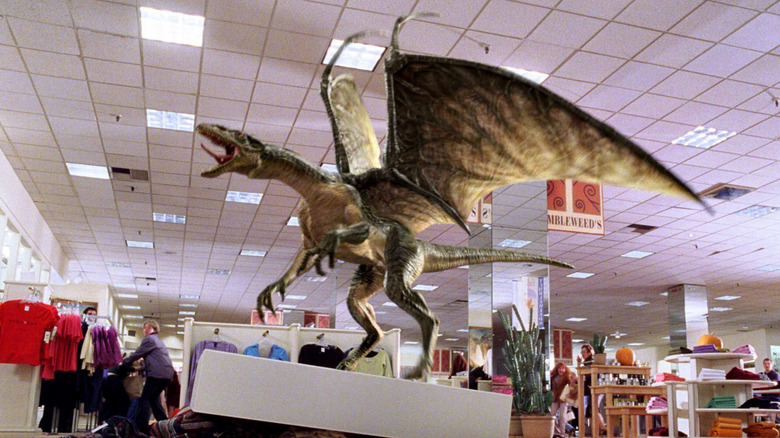
Director Ivan Reitman, the architect of the Ghostbusters franchise, returned to the genre in 2001 with Evolution. Starring David Duchovny (at the height of his X-Files fame), Orlando Jones, Seann William Scott, and Julianne Moore, the film posits a fascinating premise: a meteor brings rapidly evolving organisms to Earth that compress millions of years of biological development into a matter of days.
While critics at the time dismissed it as "Ghostbusters-lite," Evolution stands out today for its ambitious creature design. Reitman utilized a blend of sophisticated CGI and practical puppetry to create a menagerie of alien life that feels both alien and grounded in biological logic. The film’s "junk food cinema" appeal is bolstered by the genuine chemistry of its leads, particularly Orlando Jones and Seann William Scott, who provide a comedic levity that modern, often overly dour sci-fi lacks.

2. Monsters (2010): The Guerrilla Masterclass
Before Gareth Edwards was handed the keys to the Godzilla and Star Wars franchises, he shocked the industry with Monsters. Produced for less than $500,000, Edwards served as writer, director, cinematographer, and visual effects artist.
The film eschews the "global destruction" tropes of the genre for a "boots on the ground" perspective. Set six years after an alien crash landing has left the U.S.-Mexico border a quarantined "Infected Zone," the story follows a photojournalist (Scoot McNairy) and a tourist (Whitney Able) navigating the outskirts of this new world. Monsters is a masterclass in scale; Edwards uses the background of his frames to suggest a massive, terrifying ecosystem without the need for expensive action sequences. It remains a seminal example of how vision can supersede budget.
3. The Watch (2012): A Victim of Circumstance
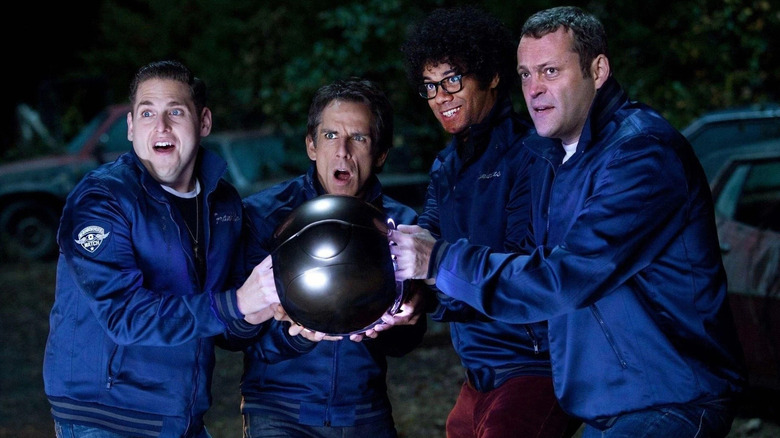
Originally titled Neighborhood Watch, this Akiva Schaffer-directed comedy featured a powerhouse cast including Ben Stiller, Vince Vaughn, Jonah Hill, and Richard Ayoade. The plot—about four suburbanites who stumble upon an alien scouting party—was designed to be a high-concept summer tentpole.
However, the film’s release coincided with the tragic shooting of Trayvon Martin by a neighborhood watch member in Florida. 20th Century Fox was forced to pivot the marketing, changing the title and pulling promotional materials that featured "neighborhood watch" branding. The resulting tonal confusion led to a critical panning and poor box office. Viewed today, detached from that historical context, The Watch is a sharp, R-rated sci-fi comedy with impressive VFX and a standout performance by Ayoade. It captures a specific era of ensemble comedy that has largely migrated to streaming platforms.
4. The Vast of Night (2020): The Power of the Unseen
Released at the onset of the pandemic, Andrew Patterson’s The Vast of Night is a love letter to the era of radio plays and The Twilight Zone. Set in 1950s New Mexico, the film follows a young switchboard operator and a radio DJ who track a mysterious audio frequency.
Patterson’s direction is remarkably confident for a debut, utilizing long, sweeping tracking shots and periods of complete darkness to force the audience to listen. By focusing on the investigation of the invasion rather than the spectacle of it, the film builds a sense of dread that is far more palpable than a thousand CGI explosions. It is a testament to the idea that the most terrifying thing in the universe is what we cannot see, but only hear.

5. Arcadian (2024): The Cage-aissance Meets the Apocalypse
Nicolas Cage has spent the last decade reinventing himself as a patron of high-concept genre cinema. In Arcadian, he plays Paul, a father raising two teenage sons in a post-apocalyptic world where light-sensitive aliens emerge at night to hunt.
While comparisons to A Quiet Place are inevitable, Arcadian distinguishes itself through its creature design—monstrosities that move with a jarring, "glitchy" physical speed that feels genuinely fresh. Director Benjamin Brewer crafts a tense, claustrophobic survival story that benefits from Cage’s more restrained, paternal performance. It is a gritty, effective monster movie that explores the psychological toll of raising children in a world where the sun setting is a death sentence.
Official Responses and Critical Reception
The reception of these films highlights the disconnect between immediate commercial performance and long-term cultural value.
- Evolution: While it only earned a 43% on Rotten Tomatoes upon release, its "popcorn" sensibility has made it a staple of cable syndication and a nostalgic favorite for Gen X and Millennial audiences.
- Monsters: Critics were nearly unanimous in their praise for Edwards’ technical achievement, with the film currently holding a 73% "Fresh" rating. It served as a definitive "calling card" film, leading directly to Edwards being hired for the 2014 Godzilla reboot.
- The Watch: Despite its 17% critical score, the film has found a second life on streaming services. Modern retrospectives often cite the chemistry of the four leads as being ahead of its time, noting that the "bad rep" was largely a result of external PR disasters.
- The Vast of Night: A critical darling (92% on Rotten Tomatoes), the film was unfortunately limited by its "straight to streaming" release on Amazon Prime during the pandemic, preventing it from becoming the theatrical sleeper hit it deserved to be.
- Arcadian: Released during a crowded window for horror, it maintains a strong 78% critical rating, with many praising it as one of Cage’s best recent "serious" genre turns.
Implications: The Future of the "Quiet" Invasion
The enduring relevance of these five films suggests a shift in what audiences value in the alien invasion sub-genre. While there will always be a place for the "Independence Day" style of global warfare, these forgotten gems prove that the genre’s true strength lies in its versatility.
The success of films like Monsters and The Vast of Night has paved the way for a new era of "lo-fi sci-fi," where the focus is on atmosphere, character, and the sociological impact of the extraterrestrial. Furthermore, the "rediscovery" of movies like Evolution and The Watch via streaming platforms indicates that the life cycle of a film no longer ends at the box office.
As we look toward the future of science fiction, these five titles serve as a reminder that the most interesting stories are often found in the shadows of the giants. Whether through comedic subversion, technical innovation, or psychological tension, these "forgotten" invasions continue to hold a mirror up to humanity, proving that our fascination with the stars is as much about ourselves as it is about the aliens.



Leave a Comment