
Unveiling the Rich Tapestry of the Islamic World: A Millennial Journey Through History and Transformation
Introduction: Beyond the Monolithic Perception
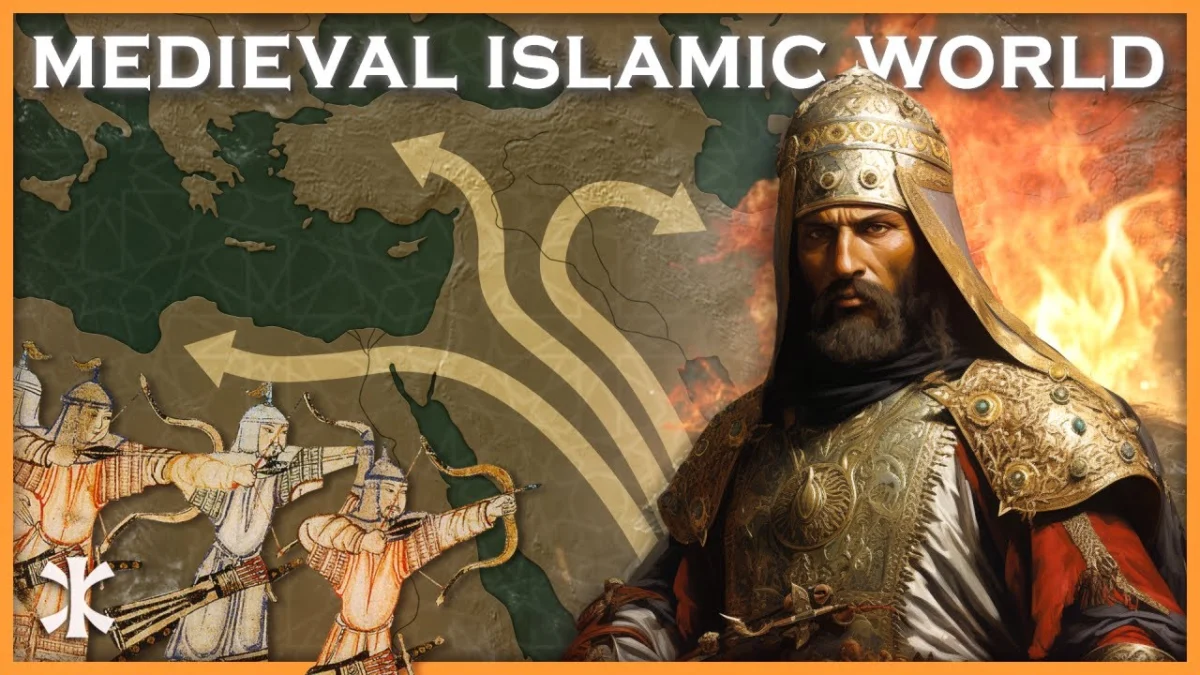
In an era often characterized by soundbites and sensationalism, the rich and complex history of the Islamic world can easily be reduced to a monolithic and static entity. However, a deeper exploration reveals a dynamic, evolving civilization that has undergone profound transformations over its fourteen-century existence. This article delves into the fascinating trajectory of the Islamic world, drawing insights from a compelling 19-minute video that encapsulates a millennium of its history, from its nascent beginnings to the rise of the formidable Ottoman Empire. While often perceived as ancient and unchanging, Islam, as a religion, traces its origins to the 7th century with the Prophet Muhammad. Its emergence as a significant force in shaping global civilization, however, was a more gradual process, marked by periods of expansion, division, decline, and vibrant rebirths. Understanding this intricate past is crucial for comprehending the diverse cultural, political, and social landscapes that characterize the modern Muslim world and its enduring impact on global history.
H2: The Genesis and Early Expansion: A Unifying Force and the Seeds of Division
The story of the Islamic world begins with the Prophet Muhammad, who, in the 7th century, unified the previously polytheistic Arab tribes under the banner of Islam. His passing in 632 CE marked a pivotal moment, signaling the end of an era where every believer was united under a single spiritual and temporal leader. This event necessitated the establishment of the title of caliph, or successor, to lead the nascent Muslim community. The first four caliphs, known as the Rashidun Caliphate, wielded power for thirty years, during which the first true Muslim state emerged.
This nascent state, the Caliphate, did not remain confined to the Arabian Peninsula. Fueled by a potent combination of faith and military prowess, it embarked on a rapid expansion, engulfing territories once held by the Byzantine and Sasanian empires. This initial surge of expansion laid the groundwork for a vast Islamic empire, stretching across North Africa, the Middle East, and into parts of Asia.
However, even in these formative years, the seeds of division were sown. The succession to leadership after the Prophet’s death became a point of contention. Supporters of Ali ibn Abi Talib, the Prophet’s cousin and son-in-law, argued for his rightful claim to leadership, citing his close familial ties and spiritual connection. Conversely, those who opposed him presented different interpretations of succession. This fundamental disagreement evolved into the enduring schism between the Shia and Sunni branches of Islam, a division that, though often oversimplified in contemporary discourse, has profoundly shaped the religious and political landscape of the Muslim world for centuries. The video effectively highlights these early years, illustrating how a unified faith quickly gave rise to distinct political and theological currents.
H3: The Dynastic Era: Umayyads, Abbasids, and the Golden Age of Islamic Civilization
Following the Rashidun Caliphate, a series of powerful dynasties rose to prominence, each leaving an indelible mark on the Islamic world. The Umayyad Caliphate, established in 661 CE, shifted the capital to Damascus and further expanded the empire’s reach. Their rule, though marked by significant territorial gains and the establishment of administrative structures, also faced internal challenges and growing dissent.
The Abbasid Caliphate, which overthrew the Umayyads in 750 CE, ushered in what is often referred to as the "Golden Age of Islam." Moving the capital to Baghdad, the Abbasids fostered an era of unprecedented intellectual, cultural, and scientific flourishing. This period witnessed remarkable advancements in mathematics, astronomy, medicine, philosophy, and literature. Scholars translated and preserved ancient Greek, Persian, and Indian texts, building upon and innovating from this knowledge. Great cities like Baghdad became centers of learning, attracting scholars from across the known world. The intricate artistry and architectural marvels of this era, though not always explicitly detailed in a brief overview, are testaments to the sophisticated civilization that flourished under Abbasid rule.
Beyond the dominant Umayyad and Abbasid dynasties, other significant powers emerged, including the Buyids and Fatimids, who controlled vast swathes of territory and contributed to the rich tapestry of Islamic history. These dynasties, while sometimes vying for power, also played crucial roles in disseminating Islamic culture and knowledge. The enduring legacy of this period is evident in the still-familiar place names of Damascus, Jerusalem, Baghdad, and Constantinople (modern-day Istanbul), cities that were not only centers of political power but also vibrant hubs of Islamic civilization. Understanding the contributions of these dynasties is crucial to appreciating the intellectual and cultural foundations upon which subsequent Islamic societies were built.
H2: The Caliphate’s Enduring Crisis and the Rise of New Powers
The concept of a unified Caliphate, while a powerful ideal, proved increasingly difficult to maintain in practice. The crisis of authority that began after the Prophet Muhammad’s death, stemming from disputes over succession, persisted in various forms for centuries. While the Abbasid Caliphate maintained nominal religious authority, political power fragmented, with regional dynasties and rulers asserting their independence.
This fragmentation, however, did not signify a decline in Islamic civilization itself. Instead, it led to the rise of new centers of power and innovation. The Seljuk Turks, for instance, gained considerable influence in the 11th century, eventually controlling much of the Abbasid territory and playing a significant role in the region. Their military prowess and administrative reforms helped to stabilize parts of the Islamic world, even as the Caliphate’s central authority waned.
The video culminates with the rise of the Ottoman Empire, a monumental force that would dominate Southeastern Europe, Western Asia, and North Africa for centuries. Emerging in the late 13th century, the Ottomans systematically conquered vast territories, building upon the foundations laid by earlier Islamic empires. Their administrative genius, military might, and patronage of the arts and sciences established a powerful and enduring empire that left an indelible mark on the geopolitical map. The Ottoman conquest of Constantinople in 1453, a symbolic turning point in world history, effectively marked the end of the Byzantine Empire and the ascendance of a new Islamic superpower. This final stage in the video’s narrative underscores the continuous evolution and adaptation of the Islamic world, demonstrating its capacity for renewal and the emergence of new centers of influence.
H3: Supporting Data and Evidence: Tracing the Milestones
The historical narrative presented in the video is supported by a wealth of evidence, though a short format can only offer glimpses. Key milestones that underscore the development of the Islamic world include:
- The Hijra (622 CE): The migration of Prophet Muhammad and his followers from Mecca to Medina, marking the beginning of the Islamic calendar and the establishment of the first Muslim community.
- The Rashidun Caliphate (632-661 CE): The period of the first four successors to the Prophet, characterized by rapid expansion and the formation of the initial Muslim state.
- The Umayyad Caliphate (661-750 CE): Expansion into North Africa and Iberia, establishment of Damascus as the capital, and early administrative codification.
- The Abbasid Caliphate (750-1258 CE): The Golden Age of Islam, with Baghdad as the capital, fostering immense intellectual and scientific progress. This era saw the development of advanced mathematics (algebra), astronomy, medicine, and the translation of classical works.
- The Fragmentation of Power: The rise of independent dynasties like the Fatimids in Egypt and the Buyids in Persia, showcasing the decentralization of political authority.
- The Seljuk Turks (11th-12th Centuries): Their rise to power, impacting the political landscape and influencing the Crusades.
- The Rise of the Ottoman Empire (late 13th Century onwards): The gradual conquest of Anatolia, the Balkans, and eventually Constantinople, culminating in a vast and enduring empire.
These chronological markers, supported by archaeological findings, historical texts, and scholarly analyses, paint a picture of a civilization that was not static but was in constant flux, adapting to new challenges and opportunities.
H2: Official Responses and Scholarly Interpretations
While the provided text doesn’t detail specific "official responses," it reflects the ongoing scholarly discourse surrounding the history of the Islamic world. The video’s producers, likely academics or educators, are offering their interpretation of this complex history. The emphasis on Islam being "younger and less unified than many of us imagine" directly challenges common misconceptions and encourages a more nuanced understanding.
The reference to a previous video on medieval European history by the same channel highlights a comparative approach to historical study, suggesting that understanding the development of one major civilization necessitates understanding others. This comparative perspective is crucial for dispelling ethnocentric biases and fostering a more holistic view of human history.
Scholarly interpretations often grapple with the persistent "crisis of authority" that has defined the Islamic world for centuries. This crisis, stemming from the initial succession disputes, has manifested in various forms, from theological debates to political fragmentation. Understanding this enduring challenge is key to comprehending the diverse political structures and societal organizations that have emerged within the Islamic world.
H3: Implications for Understanding the Modern World
The historical journey presented has profound implications for our understanding of the contemporary Islamic world.
- Diversity and Pluralism: The historical narrative clearly demonstrates that the Islamic world has never been a monolith. The enduring Shia-Sunni divide, the rise and fall of various dynasties, and the geographic spread of Islam have all contributed to a rich diversity of cultures, practices, and interpretations of the faith. This historical context is vital for appreciating the nuanced realities of Muslim societies today, countering simplistic stereotypes.
- The Legacy of Intellectual and Cultural Achievement: The Golden Age of Islam, fostered by the Abbasids and continued by subsequent empires, left an indelible mark on global intellectual history. The preservation and advancement of knowledge in fields like science, mathematics, and philosophy laid crucial groundwork for the European Renaissance. Recognizing this legacy enriches our understanding of global progress and the interconnectedness of civilizations.
- The Enduring Impact of Political Structures: The historical evolution of political authority within the Islamic world, from unified caliphates to fragmented empires and modern nation-states, continues to shape contemporary political landscapes. Understanding the historical roots of these structures provides valuable context for analyzing current geopolitical dynamics and the challenges of governance in many Muslim-majority countries.
- A Continuously Evolving Identity: The narrative of "divisions, transformations, declines, and rebirths" underscores that the Islamic world, like any major civilization, is not static. Its identity is fluid and continuously shaped by historical forces, internal developments, and external interactions. This perspective encourages a forward-looking view, recognizing the ongoing evolution of Muslim societies rather than viewing them through a purely historical lens.
In conclusion, the video offering a 19-minute journey through a millennium of Islamic history serves as a powerful reminder of the depth and complexity of this vibrant civilization. By moving beyond superficial perceptions and engaging with its rich historical tapestry, we can foster a more informed, nuanced, and respectful understanding of the Islamic world and its enduring impact on the global stage. The continuous evolution and adaptation witnessed throughout its history suggest that the Islamic world, far from being a relic of the past, remains a dynamic force shaping the future.




Leave a Comment