Unveiling the "Weird" World of 1923: A Deep Dive into Early 20th-Century Urbanism and Architecture
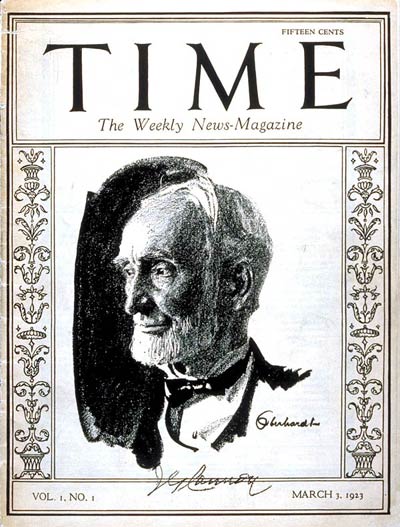
Chicago, IL – February 2023 – A century ago, in the late days of February 1923, a new publication destined to leave an indelible mark on the landscape of speculative fiction quietly arrived on newsstands. Weird Tales, cover-dated March, hit the market roughly a week before the inaugural issue of Time magazine, signaling the birth of a cultural phenomenon that would captivate readers with its blend of horror, fantasy, and the supernatural. As researchers delve into the foundational narratives of this pioneering pulp magazine, the importance of understanding the precise historical context of its genesis becomes increasingly clear.
This immersive journey into the early 1920s aims to illuminate the specific terms, references, and prevailing "habits of thought" that shaped both the creators and consumers of early Weird Tales and other contemporary fiction. Far from being a mere backdrop, the socio-economic and architectural transformations of the era imbued the daily lives of Americans with a unique sensibility—a blend of rapid modernization and lingering tradition that, upon closer inspection, reveals itself to be profoundly "weird" by modern standards. This exploration serves not only as a crucial lens for critical analysis but also as a rich reference point for anyone seeking to understand the foundational period of 20th-century American popular culture.
Stepping into 1923: A Glimpse of Urban America
Imagine yourself in a bustling American metropolis in late February 1923, preparing to embark on a walk to the local newsstand to procure the first issue of Weird Tales. The journey from your doorstep to the street reveals a dynamic urban environment undergoing profound change, particularly in its residential and commercial architecture.
The Evolving American Home
The concept of "home" in 1923 was remarkably diverse and rapidly evolving. While stand-alone houses remained common, the preceding decades had witnessed a significant rise in apartment buildings. Initially associated with housing for the very poor—often termed tenements—apartments had, in the fifty years prior, become increasingly attractive to the affluent. The key distinction often drawn was the inclusion of private kitchens and bathrooms in "apartments," differentiating them from the more basic tenements.
The end of the Great War catalyzed a notable shift among the wealthy towards apartment living. The introduction of income tax in 1913, coupled with the burgeoning "servant problem" (the increasing difficulty and cost of finding staff to maintain large estates), made expansive private houses economically burdensome. This prompted many to opt for city apartments, often complemented by country houses, leveraging the nascent ubiquity of motorcars for swift transit between urban and rural abodes. Consequently, by 1923, apartment buildings catering to a wide spectrum of income levels were being constructed with increasing frequency.
Variations on apartment life were also prevalent. Residential hotels, offering long-term tenancy, included boarding houses (where proprietors provided meals in addition to rooms) and rooming houses (room-only). These options, generally more affordable than private apartments, often came with the caveat of strict landlord oversight and a lack of individual washrooms or kitchens. Conversely, some establishments catered to specific demographics or communities, such as boarding houses for young women or those for adherents of particular diets, like vegetarians—an unusual but not unheard-of choice in 1923.
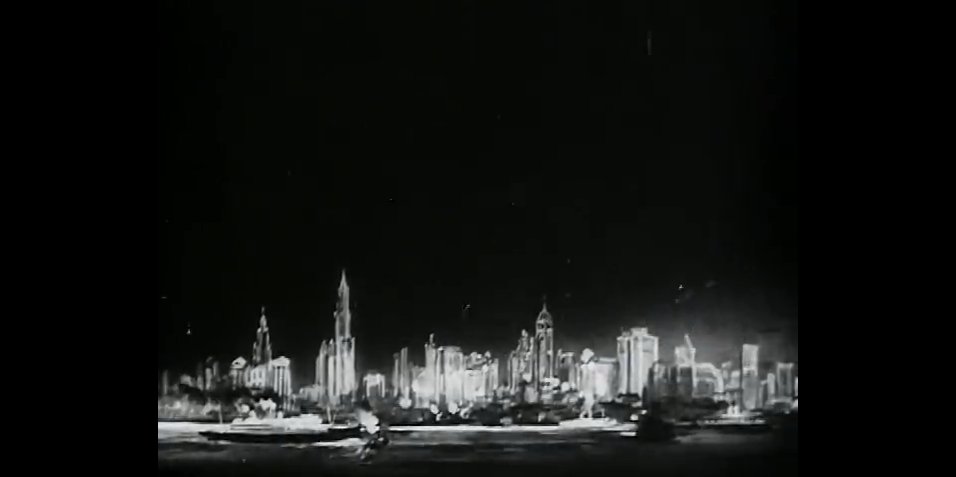
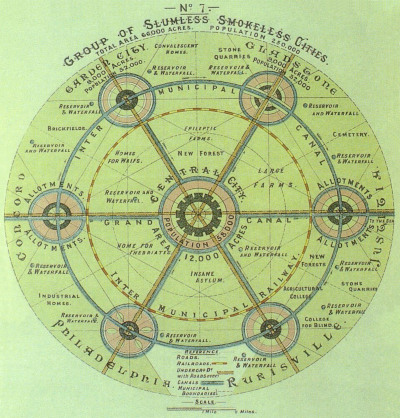
For many middle and lower-income families, taking in lodgers provided crucial supplementary income, though this practice was on the decline, dropping from 17 percent of urban households in 1910 to 11 percent by 1930. The mid-1920s would herald a significant construction boom, predominantly focused on single-family homes. The growing accessibility of automobiles facilitated the expansion of new suburbs and the development of "satellite cities"—pre-planned communities inspired by the Garden City movement. Bungalows, a popular choice for families, epitomized this trend; between 1910 and 1930, Chicago alone saw the construction of 80,000 bungalows, with an additional 20,000 in its surrounding suburbs. This era marked a general construction surge, with new homes boasting integrated water and electrical connections, fundamentally altering domestic living standards.
The Ascent of the Skyscraper
As you stepped out, a glance towards the city center would undoubtedly reveal a different architectural marvel: the towering skyscraper. Downtown, or the central business district, was universally regarded as the city’s heart, despite physically occupying a mere one or two percent of a city’s total land area. This disproportionate visual impact was due to the dramatic increase in building height, transforming downtowns into monumental symbols of urban ambition.
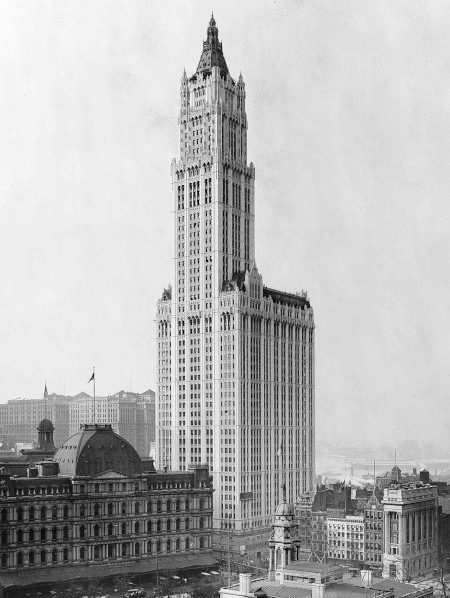
Skyscrapers had existed for decades, but the post-war economic prosperity fueled a rapid proliferation. In 1923, New York City’s Woolworth Building, a 53-story edifice reaching just under 800 feet, stood as the world’s tallest building. Skyscrapers were no longer exclusive to New York, appearing in every major American city. The vertical ascent of these structures necessitated the widespread adoption of elevators, which, despite the existence of automation technology, still required human operators. Public trust in "driverless" elevators remained low, highlighting a contemporary apprehension towards unchecked technological advancement.
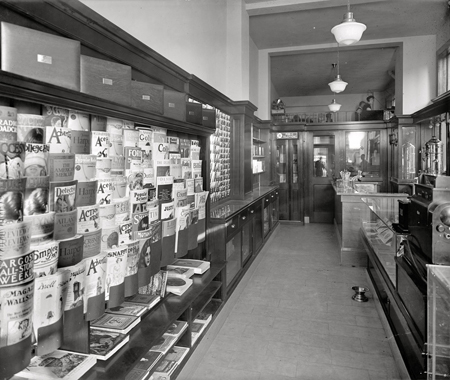
The sheer volume of skyscrapers under construction prompted significant urban planning initiatives. New York City, in response to growing concerns about unchecked development, enacted the nation’s first comprehensive zoning ordinance in 1916. This legislation had a profound and visible impact, leading to the distinctive "step pattern" of New York skyscrapers—resembling stretched-out ziggurats—as architects adapted designs to comply with new setback requirements at various levels. By 1923, heavy industry had largely relocated from downtown cores, yielding to more valuable real estate, while many cultural organizations were either pushed out by escalating costs or visually overshadowed by the towering new constructions. This era saw a burgeoning idea that cultural institutions should not merely house art but be works of art themselves, a concept difficult to realize in the shadow of multi-story giants.
Yet, these new skyscrapers were often visual standouts in their own right, not solely for their height. Eclectic designs, such as the neo-gothic exterior of the Woolworth Building, created striking facades. However, a new aesthetic was rapidly emerging, one that would fundamentally challenge the prevalent ornamental traditions.
Shifting Aesthetics: From Eclectic Grandeur to Modern Forms
The 1920s stood as a crucible of architectural innovation, witnessing the emergence of powerful new design philosophies that would redefine the built environment for decades to come.
The Rise of Modernism
While gothic and neo-gothic styles adorned many early skyscrapers, a significant ideological shift was underway in architecture. Modernism, with its stark rejection of superfluous ornamentation, began to gain traction. Influenced by Louis Sullivan’s dictum that "form follows function," architects like Adolf Loos prioritized the design of functional space over elaborate facades. This movement embraced materials developed in the 19th century—such as cast iron, reinforced concrete, and plate glass—finding new and expressive forms for buildings.
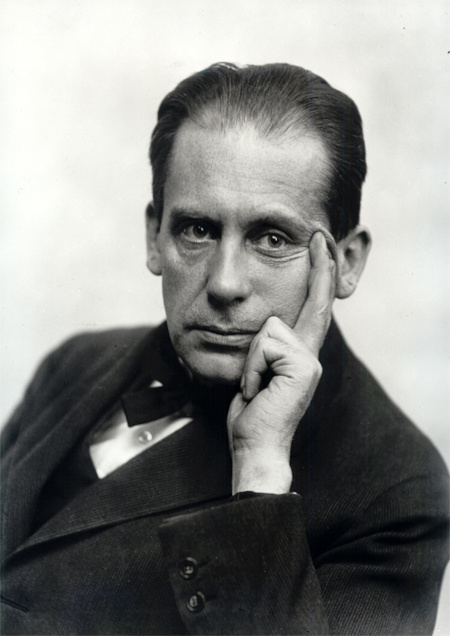
Europe was at the vanguard of this revolution. Post-war design had largely moved beyond the sinuous lines of Art Nouveau. In Germany, a pivotal moment occurred in 1919 with the merger of fine art and arts and crafts schools into the Staatliches Bauhaus under the direction of Walter Gropius. The Bauhaus style, emphasizing functionality and minimalist aesthetics, quickly became a dominant force in the European avant-garde, attracting luminaries like painters Wassily Kandinsky and Paul Klee to its faculty by 1923.
This period also saw the formal articulation of "industrial design" as a concept, spearheaded by figures like architect and designer Peter Behrens. Gropius himself, along with Ludwig Mies van der Rohe (known for his maxim "less is more") and Charles Jeanneret (who would adopt the moniker Le Corbusier in 1920), had honed their skills in Behrens’s studio. Le Corbusier’s seminal 1923 publication, Vers une architecture (Towards an Architecture), became one of the 20th century’s most influential architectural manifestos. A series of polemics on human interaction with living space, the book famously declared "a house is a machine for living in," advocating for a significant harmony between design and mechanization, illustrating his theories with a classically-influenced modernism throughout the decade.
Modernism would soon cross the Atlantic, profoundly shaping American architecture. Raymond Hood, a co-designer of the gothic Chicago Tribune Tower (completed 1925), later became a champion of restrained modernism, exemplified by his design for the McGraw Hill Building (completed 1931). By the 1930s, many of these design principles would coalesce into the "International Style," characterized by minimalism, open interiors, and functionalism, influencing architecture well into the 1970s.
Frank Lloyd Wright: An American Original
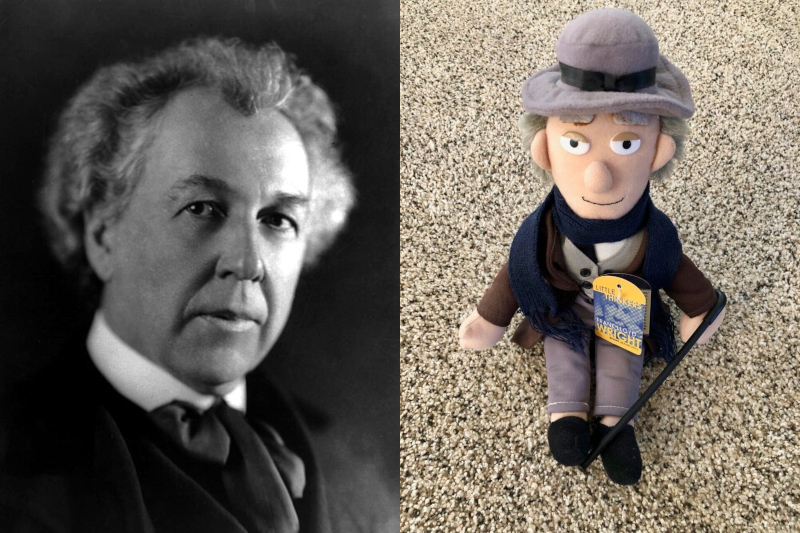
Amidst the currents of European modernism, Frank Lloyd Wright, aged 55 in 1923, presented a uniquely American vision. His philosophy of "organic architecture" insisted on integrating buildings with their natural environment, as seen in his Prairie Style homes around Chicago. Wright sought to unify the human and natural worlds, contrasting sharply with the austere anti-ornamentalism of figures like Loos, who famously declared "ornament is criminal." In 1923, Wright experimented with a "textile block" system of prefabricated concrete for his houses, incorporating Mayan-style facades—a testament to his distinctive aesthetic that fused innovation with historical reverence.
The Changing Face of Luxury
This period marked a significant shift in visual sensibility, particularly concerning the perception of luxury and power. The gothic or neo-gothic mansions that had long inspired the archetypal "haunted house" were giving way to new architectural styles, materials, and spatial concepts. The stark contrast between the perpetually expanding, labyrinthine Winchester House (rebuilt until around 1910) and the sleek, integrated designs of Frank Lloyd Wright’s Fallingwater (1934) or Richard Neutra’s Lovell House (1927-29) vividly illustrates this transformation.
Evelyn Waugh’s poignant reflection in Brideshead Revisited, where the narrator in the 1940s fondly recalls a 1920s mansion, encapsulates this shift:
"I was always given the room I had on my first visit; it was next to Sebastian’s, and we shared what had once been a dressing-room and had been changed to a bathroom twenty years back by the substitution for the bed of a deep, copper, mahogany-framed bath, that was filled by pulling a brass lever heavy as a piece of marine engineering; the rest of the room remained unchanged; a coal fire always burned there in winter. I often think of that bathroom—the water-colours dimmed by steam and the huge towel warming on the back of the chintz armchair—and contrast it with the uniform, clinical little chambers, glittering with chromium plate and looking-glass, which pass for luxury in the modern world."
Waugh’s observation on the changing definition of luxury, particularly in domestic spaces like bathrooms, highlights how new materials fostered new visual ideals, even as a nostalgic longing for older aesthetics persisted.
The Decorative Revolution: Art Deco Emerges
Parallel to, yet distinct from, modernism, another influential style was taking root, succeeding Art Nouveau in art, design, and architecture: Art Deco. More decorative and colorful than its modernist counterpart, Art Deco also embraced new materials and found prominent expression in skyscraper facades.
A Fusion of Influences
Art Deco, in its nascent stages in 1923, was a vibrant amalgamation of diverse influences: Cubism, the Fauves, Futurism, the Dutch De Stijl movement, Russian Constructivism, the abstract works of Kandinsky, the theatrical sets and costumes of Sergei Diaghilev’s Russian Ballet, and even the ancient architectures of the Mayans and Aztecs. This fascination with pre-Columbian civilizations, particularly their geometric patterns and monumental forms, perhaps echoed the era’s growing interest in tales of explorers discovering lost pyramids and hidden cities—themes that would resonate deeply with readers of Weird Tales. Characterized by geometric shapes, alternating thick and thin lines, rounded corners, and stylized human and natural forms, Art Deco was a dynamic aesthetic in search of its definitive expression.
The 1925 Paris Exposition and its Impact
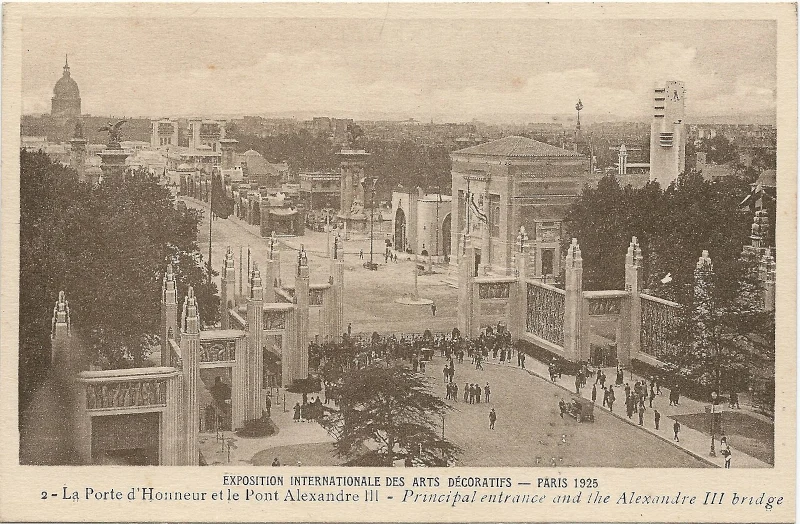
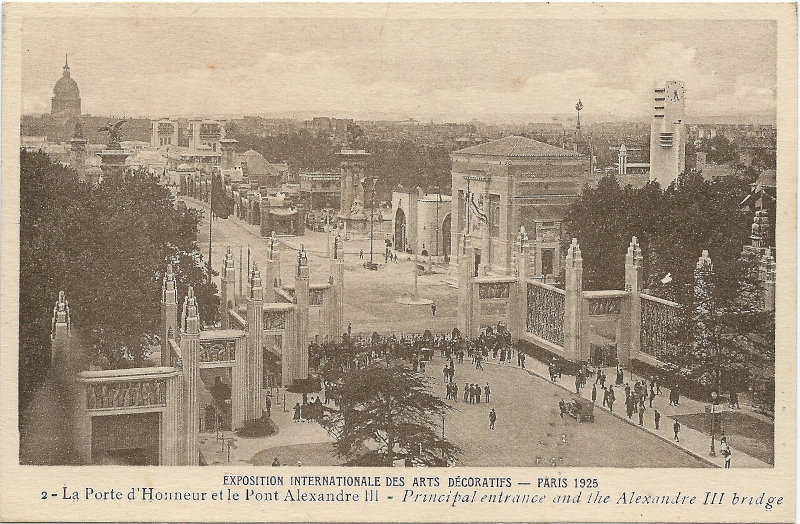
This crystallization occurred at the 1925 International Exhibition of Modern Decorative and Industrial Arts in Paris, from which the style would eventually derive its name in the 1960s. Twenty countries participated, showcasing new architectural ideas through pavilions filled with furniture and decorative items that embodied this nascent design philosophy.
Notably, Germany was not invited due to its role in World War I, thus largely excluding the stern, anti-ornamental modernism of Gropius and the Bauhaus from the exhibition. The United States also did not officially participate; Commerce Secretary Herbert Hoover deemed that American output lacked sufficiently original modern work, adhering to the exposition’s charter forbidding works that historicized the past. However, the U.S. sent a large delegation of 108 representatives from trade organizations and art guilds, alongside hundreds of private citizens. These attendees were exposed to the Deco style in pavilion architecture, jewelry, ceramics, furniture, and myriad daily objects, ensuring its rapid dissemination and adaptation in American design.
Deco’s Legacy in the Skyline
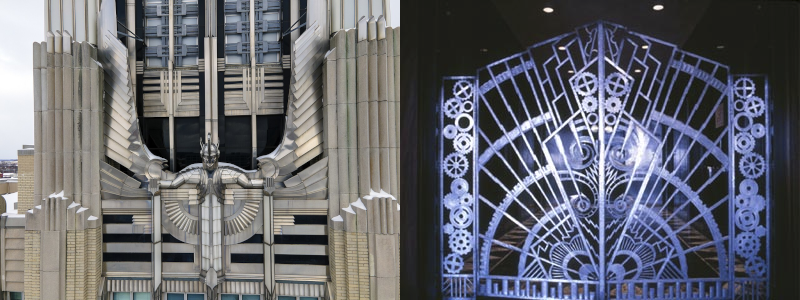
Unlike modernism, which championed mass production and functional beauty, Art Deco leaned towards the artisanal and fine craftsmanship. Its architecture frequently employed wrought iron for both structure and ornament, evoking a machine-age sheen while speaking a language of power and awe. In the later 1920s and well into the 1930s, Art Deco became the signature style for movie palaces and film sets, symbolizing glamour and futurism. Its monumental presence would soon grace the New York skyline, beginning with the 680-foot Chanin Building in 1929, followed by the 77-story, 1048-foot Chrysler Building in 1930, and culminating in the iconic 102-story, 1250-foot Empire State Building in 1931.
Implications: The 1920s as a "Weird" Foundation
The year 1923, though chronologically not far removed, was conceptually distinct from the decades that followed. The massive skyscrapers and Art Deco fantasies that would soon define American urban centers were still largely in their formative stages, perhaps even beyond the immediate conceptual grasp of the average city dweller.
The profound transformations in urban living and architectural sensibility—from the evolving concept of home to the competing aesthetics of modernism and Art Deco—were not merely superficial changes. They represented deeper shifts in how society perceived wealth, power, technology, and the future. The visual language of the urban environment was being rewritten, impacting everything from the mundane details of daily life to the grandest expressions of civic ambition.
Understanding this dynamic, "weird" historical context is paramount for anyone seeking to truly appreciate the fiction of the 1920s. The stories published in Weird Tales and other contemporary works were born from this very world, reflecting its anxieties, aspirations, and the strange juxtaposition of the old and the new. The decline of the gothic mansion as a symbol of luxury, for instance, altered the very landscape of imagined horror, paving the way for new settings and new fears.
As we conclude this initial exploration, the journey into 1923 has just begun. Our next installment will consider the bustling streets themselves, examining the modes of transportation and the daily rhythms of life in this fascinating and transformative year.
Matthew David Surridge is the author of “The Word of Azrael,” from Black Gate 14. You can buy collections of his essays on fantasy novels here and here. His Patreon, hosting a short fiction project based around the lore within a Victorian Book of Days, is here. You can find him on Facebook, or follow his Bluesky account, @bookofdays.