
Unveiling Ancient Israelite Faith: A Journey Beyond Traditional Narratives
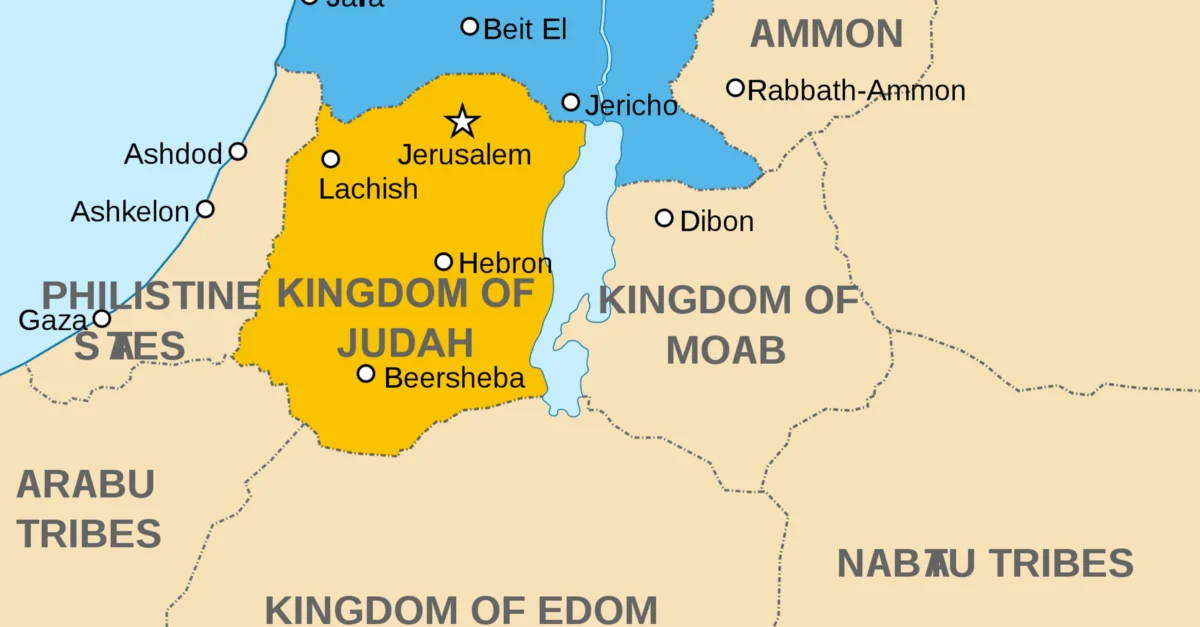
JERUSALEM – For centuries, the popular understanding of ancient Israelite and Judean religion has been largely shaped by the foundational narratives of the Hebrew Bible, portraying a singular devotion to Yahweh from early times. However, a growing body of archaeological, epigraphic, and textual evidence is challenging this long-held perception, revealing a more complex and nuanced religious landscape characterized by polytheism and, crucially, henotheism. Far from an immediate embrace of monotheism, early Israelite and Judean faith traditions, emerging as early as the 10th century BCE, were deeply interwoven with the broader West Semitic, or Canaanite, culture, often venerating multiple deities while dedicating primary worship to one, typically Yahweh.
This re-evaluation of ancient religious practices paints a vivid picture of a dynamic spiritual environment. Rituals centered around temple worship, elaborate sacrificial practices like Yom Kippur, New Moon festivals, and Pesach, alongside divination and prophecy, formed the bedrock of religious devotion. Ethical conduct, too, was not merely a moral code but an integral religious act, believed to influence the very presence and favor of the national deity.
Main Facts: A Rewritten History of Faith
The traditional view of ancient Israelite and Judean religion, heavily influenced by later biblical redactions, often suggests an unwavering monotheistic devotion to Yahweh from its inception. However, contemporary scholarship, fortified by archaeological discoveries and critical biblical analysis, reveals a more intricate reality.
Between the 10th and 7th centuries BCE, the religious practices of the nascent Israelite and Judean states were predominantly polytheistic, yet often tempered by henotheism. Henotheism, a distinctive religious practice, acknowledges the existence of multiple deities while primarily worshipping and dedicating devotion to a single, supreme god. In the case of ancient Israel and Judah, this primary devotion frequently centered on Yahweh. As these polities solidified their identities, Yahweh emerged as their national deity, a concept that finds its roots in the socio-religious structures of the preceding Bronze Age.
Core religious expressions included intricate temple rituals and a comprehensive system of sacrificial offerings. Festivals such as the Day of Atonement (Yom Kippur), New Moon celebrations, and Passover (Pesach) were central to communal life. Beyond these formal rites, practices like divination and prophecy were common avenues for seeking divine guidance. Crucially, ethical behavior was not a separate moral framework but an inseparable component of religious devotion, believed to directly impact the deity’s presence and favor within the community.

This evolving understanding necessitates a re-examination of sacred texts and archaeological findings, presenting a historical account that diverges significantly from the popular narrative of an unbroken monotheistic tradition.
Chronology: The Evolution of Israelite and Judean Religious Identity
The religious landscape of the Levant underwent significant transformations, paralleling the sociopolitical development of Israel and Judah.
Pre-State Formations (Before 10th Century BCE): The Era of Family Religion
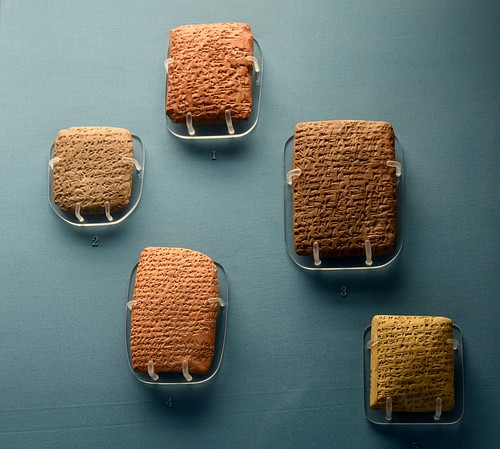
Prior to the emergence of centralized states around the 10th century BCE, the region of Canaan, which would later encompass Israel and Judah, was characterized by a form of "family religion." Evidence, though fragmentary, from literature like the 12th century BCE Amarna letters and various regional inscriptions, suggests a localized, household-centric faith. This era saw families honoring ancestors through verbal rites and offerings, with religious devotion focused on a "god of the father" or "god of the house." This practice, as scholar Karel van der Toorn suggests, anchored collective identity in lineage and place of origin.
These proto-Israelite communities likely engaged in clan or family rituals, possibly involving communal meals in honor of the deceased, as hinted by passages like 1 Samuel 20. The concept of the "house of Israel" or "house of Judah," which later became central to national identity, thus has deep roots in these earlier familial religious structures. As political alliances expanded, these localized family deities gradually transitioned into the deities of emerging states.
The Monarchic Period (10th to 7th Century BCE): Henotheism and State Religion
The period between the 10th and 7th centuries BCE marks the formal emergence of distinct Israelite and Judean religious practices within the broader West Semitic cultural milieu. During this time, Yahweh became the preeminent national deity. However, this did not equate to exclusive monotheism. Instead, the religion was largely henotheistic, recognizing a pantheon of gods but elevating Yahweh to a position of primary worship.
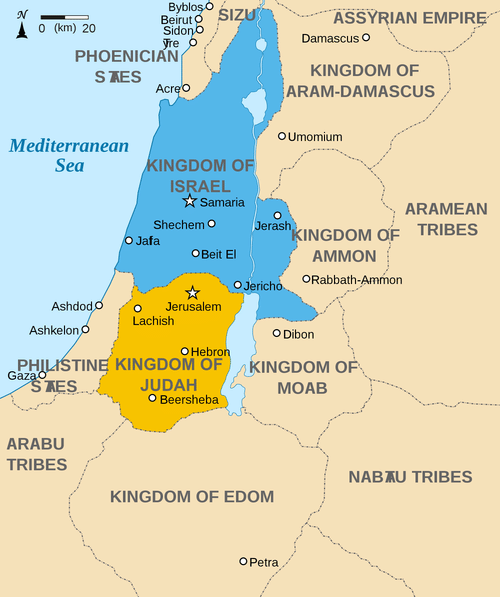
This era saw the development of sophisticated temple worship and state-sanctioned rituals designed to secure Yahweh’s presence and protection. The deity was understood as physically present within the temple, possessing a body, emotions, and willpower – characteristics shared with other West Semitic deities. Maintaining the temple’s holiness through sacrifices, offerings, and liturgy was paramount, ensuring the deity’s continued residence and advocacy for the people.
Post-Exilic Period and Beyond (7th to 3rd Century BCE): The Rise of Monotheism and Judaism
A significant shift occurred between the 7th and 3rd centuries BCE, largely influenced by the traumatic experiences of exile and subsequent returns. It was during this period that the Hebrew Bible, as we know it today, was likely edited and compiled. Scholars suggest that the theological and cultural positions of this later era, particularly a burgeoning monotheistic ideology, were retrospectively infused into historical narratives, often downplaying or omitting earlier polytheistic and henotheistic practices.
The emphasis on a singular Yahweh, the Mosaic Law, and the Davidic dynasty, while rooted in earlier traditions, became central to a new, unified theological construct. This period also saw the gradual differentiation of "Judaism" as a distinct religion from the earlier Israelite and Judean faiths, characterized by a stricter adherence to monotheism and the centrality of the Torah. Even as late as the 3rd century BCE, the Septuagint, the Greek translation of the Hebrew Bible, retained verses like Deuteronomy 32:8, which implicitly reflects an earlier henotheistic worldview where Yahweh was one of many "divine sons" assigned nations by the "Most High" (El).
Supporting Data: Archaeological and Textual Revelations
The evidence supporting a henotheistic and polytheistic phase in ancient Israelite and Judean religion is robust, drawing from a variety of sources that often stand in stark contrast to the later biblical narrative.
Archaeological and Epigraphic Discoveries
Crucial insights come from archaeological sites across the Levant. One of the most compelling examples is the site of Kuntillet ‘Ajrud, dating possibly as early as the 10th century BCE. Inscriptions found here explicitly invoke "YHWH of Samaria and to Asherata" and "To YHWH of Teman and to Asherata." These inscriptions are powerful counter-evidence to the notion of exclusive monotheism, demonstrating that Asherah, a prominent deity in the Ugaritic pantheon and frequently mentioned in the Hebrew Bible, was worshipped alongside Yahweh within Israelite and Judean communities. While Yahweh retained primary devotion, Asherah’s presence indicates a clear henotheistic or even polytheistic practice.
Further corroboration comes from Khirbet el-Qom, an 8th-century BCE site, where an inscription reads: "Blessed is Uriahu by YHWH for through Asherata He saved him from his enemy." This inscription strongly suggests Asherah acted as a mediator on behalf of an individual before Yahweh, mirroring the role of goddesses like Athirat (Asherah) for El, the chief god in Ugaritic literature. Such parallels underscore the deep cultural and religious connections between ancient Israel and the broader West Semitic world, even as Israel and Judah developed their unique tribal worship centered on Yahweh.
Internal Evidence from the Hebrew Bible
Surprisingly, the Hebrew Bible itself, when subjected to critical analysis, provides internal evidence that complicates the monotheistic narrative. Psalm 82, for instance, depicts Yahweh standing in the divine council of El, the high deity in West Semitic mythology. Here, Yahweh judges and condemns other deities for their failure to administer justice, ultimately taking on the role of ruling over all nations. This poetic portrayal showcases a pantheon where Yahweh holds a central, dominant position but is not the only deity.
Narrative passages also reflect this complex reality. 1 Kings 16:33 explicitly mentions King Ahab making a shrine for Asherah, while 2 Kings 17:16 references the worship of both Asherah and Baal by the Israelite population. The consistent mention of Baal worship throughout the Iron Age narrative further suggests his significant role in the beliefs of the populace, directly contradicting the idea of exclusive Yahwistic worship.
Moreover, the Septuagint, a 3rd-century BCE Greek translation of the Hebrew Bible, offers a crucial variant in Deuteronomy 32:8. While later Hebrew texts often obscure it, the Septuagint reads: "When the Most High was apportioning nations, as he scattered Adam’s sons, he fixed boundaries of nations according to the number of divine sons." Here, "Most High" refers to El, who assigns nations to various "divine sons" or deities, with Yahweh being specifically assigned to Israel. This verse explicitly frames Yahweh within a divine assembly, serving as Israel’s patron god among other divine patrons of other nations – a quintessential henotheistic concept.
Religious Practices and Rituals
Ancient Israelite and Judean religious life was rich in practice and ritual. The book of Leviticus, though likely codified later, preserves traditions of five main types of sacrifice, designed with three levels of material offerings to ensure accessibility for the poor. This tiered system, also seen in ritual texts from the Syrian city of Emar, allowed individuals to offer expensive (bull), medium-priced (sheep or goat), or inexpensive (turtledove or pigeon) sacrifices, demonstrating a concern for broad participation.
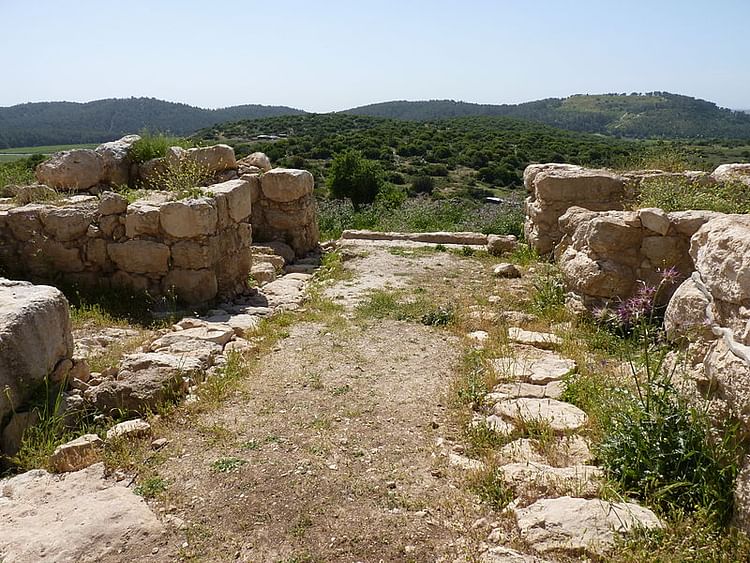
The Day of Atonement (Yom Kippur) stands out as a paramount annual ritual, aimed at purifying the sanctuary from sin to ensure Yahweh’s continued presence. The high priest’s elaborate ritual of sacrifice, blood sprinkling, and the transfer of impurities to a scapegoat not only atoned for the nation but also strengthened political and social unity. While sharing structural similarities with Ugaritic rituals (e.g., KTU 1.40), the Day of Atonement’s unique centralization to a single sanctuary in Jerusalem marked a distinct Israelite and Judean religious innovation.
Beyond formal sacrifices, divination, though often viewed as taboo in later traditions, played a practical role. The narrative of King Saul consulting a necromancer at En-dor (1 Samuel 28) illustrates its practice without immediate condemnation. Conversely, Deuteronomy 18:10-11 explicitly forbids various forms of divination, yet the very existence of such a prohibition indicates that these practices were prevalent among the populace.
Finally, ethical behavior was deeply intertwined with religious devotion. The Hebrew Bible repeatedly emphasizes that ethical conduct impacted Yahweh’s presence in the sanctuary and his provision of sustenance and protection. Instances like Amos 4:1, where Yahweh withdraws blessings due to the oppression of the poor, or 1 Samuel 4, where Yahweh’s glory departs the temple due to the corruption of Eli’s sons, highlight this direct correlation. The moral and ethical standards outlined in Leviticus 18-22, with consequences like being "cut off from the people," were not merely punitive but were essential for maintaining the community’s and the temple’s sanctity, thereby ensuring the deity’s enduring presence.
Official Responses: The Biblical Narrative vs. Historical Reality
The "official response" to these historical realities comes primarily from the Hebrew Bible itself, which, in its final redacted form, presents a largely unified and monotheistic narrative. This canonical account, compiled and edited between the 7th and 3rd centuries BCE, often reflects the theological and cultural positions of its later redactors. Figures like Moses and David, and concepts like the Law and a strict monotheistic covenant, are central to this narrative, shaping a specific ideological construct of Israel’s past.
However, this "official" biblical presentation frequently diverges from the historical and archaeological evidence. Scholars like Gilmour contend that "whatever the biblical authors may have tried to convey, may not have been… the primary form of belief or religious exercise." The editors of the Hebrew Bible, while preserving older traditions, likely reinterpreted them through a later monotheistic lens, projecting this ideal back onto earlier periods. Consequently, the biblical text, while invaluable, must be critically evaluated to distinguish between historical memory and later theological overlay. The discrepancy between the prescriptive monotheism of the redacted Bible and the descriptive henotheism found in archaeological inscriptions and earlier biblical passages underscores the complex relationship between sacred text and historical practice.
Implications: Reshaping Our Understanding of Ancient Faith
The re-evaluation of ancient Israelite and Judean religion, moving beyond a strictly monotheistic framework, carries profound implications for our understanding of religious history and the origins of major faiths.
A Gradual Evolution, Not Sudden Revelation
Firstly, it reframes the transition from polytheism to monotheism as a gradual, complex evolutionary process rather than an instantaneous divine revelation. This understanding acknowledges the long spiritual journey of these ancient peoples, influenced by their surrounding cultures, as they moved towards a unique monotheistic identity that would later become a cornerstone of Judaism, Christianity, and Islam.
Cultural Interconnectedness and Distinctiveness
Secondly, it highlights the deep cultural interconnectedness of ancient Israel and Judah with the broader West Semitic world. While developing a unique focus on Yahweh, their religious practices, deities, and conceptual frameworks shared significant commonalities with Canaanite traditions. This perspective allows for a richer appreciation of both their shared heritage and the distinct innovations that ultimately set them apart.
The Role of Archaeology and Critical Scholarship
Thirdly, these findings underscore the indispensable role of archaeology and critical biblical scholarship in reconstructing ancient history. Relying solely on the canonical biblical narrative, which is itself a product of historical development and theological intent, risks an incomplete or even distorted view of the past. Integrating material culture and comparative religious studies provides a more comprehensive and accurate picture.
Challenges and Ongoing Debates
Finally, the field of ancient Israelite history, particularly its religious dimension, remains one of the most challenging areas of study. The fragmentary nature of primary sources, coupled with the interpretive complexities of the Hebrew Bible, ensures ongoing scholarly debate. This necessitates continuous research and critical engagement to piece together the mosaic of ancient faith, allowing us to better appreciate how these ancient communities understood their place in a world populated by many gods, yet increasingly centered on one. This ongoing scholarly endeavor ultimately enriches our understanding of the foundational narratives that have shaped billions of lives.




Leave a Comment