
The Resurrectionist: Unearthing a Macabre Masterpiece of Fictional Non-Fiction
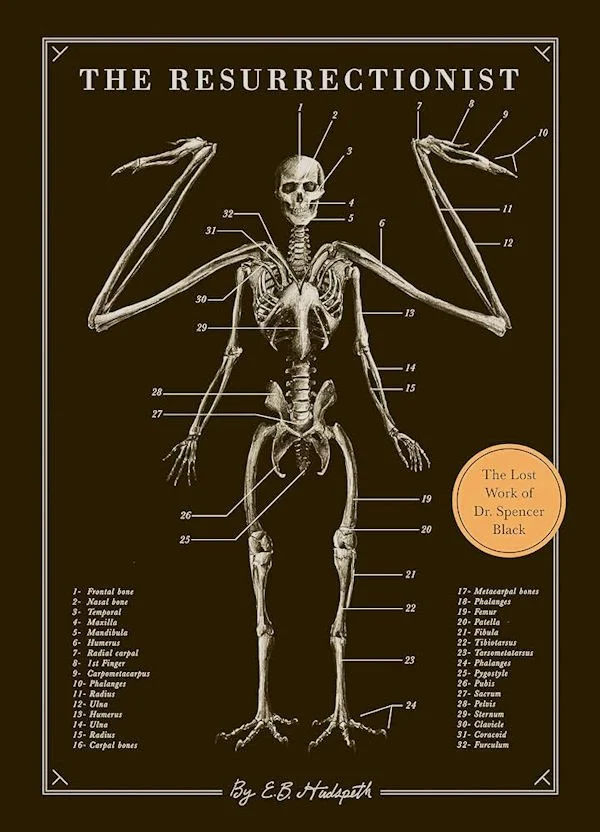
Philadelphia, PA – In the bustling, gaslit streets of late 1870s Philadelphia, a city grappling with rapid industrialization and burgeoning scientific inquiry, a controversial figure by the name of Dr. Spencer Black carved out a unique, and ultimately disturbing, legacy. His story, as meticulously documented in the acclaimed and utterly unique literary work The Resurrectionist by E. B. Hudspeth, presents a chilling exploration into the fringes of scientific thought, the allure of the mythological, and the perilous descent from genius into obsession. This peculiar volume, a triumph of the "fictional non-fiction" genre, has captivated readers with its audacious premise: what if the fantastical beasts of ancient lore were not mere figments of imagination, but rather the evolutionary precursors to humanity?
The Resurrectionist is not merely a novel; it is an meticulously crafted artifact, a literary chimera that fuses a fictional biography with a detailed, anatomically precise field guide to creatures long deemed mythical. It stands as a testament to the power of immersive storytelling, pushing the boundaries of traditional narrative to create an experience that is both intellectually stimulating and viscerally unsettling. The book invites its audience into a world where the line between scientific discovery and monstrous delusion blurs, leaving a permanent imprint on the mind of anyone who dares to delve into Dr. Black’s unconventional theories.
Main Facts: A Hybrid of Biography and Bestiary
At its core, The Resurrectionist presents itself as a rediscovered historical document, chronicling the life and work of Dr. Spencer Black, a brilliant but ultimately unhinged surgeon operating in the latter half of the 19th century. Born the son of a grave robber, Black’s early exposure to anatomy and the macabre laid the groundwork for his later, radical pursuits. He matriculated at Philadelphia’s esteemed Academy of Medicine, where his intellect shone, but where the seeds of his heterodox hypothesis began to sprout.
Dr. Black’s groundbreaking, and deeply unsettling, theory posited that creatures such as mermaids, minotaurs, satyrs, sphinxes, sirens, and centaurs were not mythological constructs, but genuine evolutionary ancestors of humankind. This audacious claim, set against the backdrop of an era both fascinated by scientific progress and entrenched in societal conservatism, forms the backbone of the book’s narrative. The first half of The Resurrectionist is dedicated to Black’s biography, detailing his intellectual journey, his burgeoning obsession, and his gradual unraveling from a respected surgeon to a figure of infamy, ultimately culminating in his transformation into a carnival showman.
The second, equally compelling half of the book is The Codex Extinct Animalia, a breathtaking collection of anatomical plates depicting these mythological creatures with the dry, clinical precision of a genuine medical textbook. These illustrations, meticulously detailed and rendered with a chilling commitment to scientific verisimilitude, are a stark testament to Dr. Black’s singular vision. They present a disturbing vision of biology, marrying the fantastical with the factual in a way that challenges conventional understanding of both. The brilliance of Hudspeth’s creation lies in the symbiotic relationship between these two halves: the biography lends profound meaning and a sense of tragic grandeur to the anatomical illustrations, transforming them from mere curiosities into documents of a brilliant mind’s horrifying disintegration.
Chronology: The Unraveling of Dr. Spencer Black
The narrative journey of Dr. Spencer Black, as meticulously constructed within The Resurrectionist, unfolds with a compelling, if tragic, chronology, illustrating a gradual descent from academic promise to utter madness.
Early Life and Influences (Pre-1870s): Spencer Black’s formative years were profoundly shaped by an unconventional upbringing. His father, a grave robber, provided young Spencer with an early, illicit education in human anatomy, a stark contrast to the formal medical training he would later pursue. This early exposure to the corporeal, often in its most morbid forms, undoubtedly fueled his morbid curiosity and laid the psychological groundwork for his later fixations. The late 19th century was an era of burgeoning scientific inquiry, particularly in biology and medicine, but also one deeply intertwined with spiritualism and a fascination with the macabre. Philadelphia, a hub of medical education, provided a fertile ground for both conventional and unconventional thought.
Academic Pursuit and Nascent Hypothesis (Late 1870s): Black’s academic career began with promise at Philadelphia’s esteemed Academy of Medicine. He was, by all accounts, a gifted student, possessing an intellect sharp enough to master the complexities of surgery and anatomy. It was during this period that his "unconventional hypothesis" began to take shape. Influenced perhaps by emerging evolutionary theories (Darwin’s On the Origin of Species having been published two decades prior) and a mind predisposed to questioning established norms, Black started to postulate a radical idea: that the creatures of myth were not symbolic, but tangible, biological entities, ancestors to humanity. This initial spark of genius, however, contained the dangerous potential for obsession.
Escalation of Research and Social Alienation (Late 1870s – Early 1880s): As Black delved deeper into his research, his methods and conclusions grew increasingly unorthodox. The book implies a period of intense, solitary study, likely involving anatomical dissection and comparative analysis that stretched the bounds of accepted medical practice. His theories, initially perhaps dismissed as eccentric, would have increasingly alienated him from the conservative medical establishment of Philadelphia. The rigid scientific community, while embracing progress, was not prepared for such a radical reinterpretation of human origins, especially one that conflated science with folklore. This ostracization likely fueled Black’s conviction, pushing him further into his isolated world of research.
The Genesis of The Codex Extinct Animalia (Mid-1880s): It is during this period of increasing isolation and deepening obsession that Black likely began the meticulous work of creating The Codex Extinct Animalia. Driven by a need to document his "discoveries," he translated his theoretical framework into tangible, anatomical representations. This artistic and scientific endeavor would have consumed him entirely, each stroke of the pen, each detailed organ, a further step into his self-constructed reality. The creation of the Codex serves as both a culmination of his research and a harrowing visual diary of his unraveling mind.
Descent into Carnival Showmanship and Final Years (Late 1880s – Beyond): As his professional reputation crumbled and his academic standing became untenable, Dr. Black’s desperation grew. The narrative traces his transition from a brilliant surgeon to a carnival showman, a poignant and tragic reflection of his fall from grace. This stage of his life, while providing a platform for his "discoveries," also marked a profound debasement of his intellect. The public display of his grotesque, yet scientifically rendered, creations would have been both a source of macabre fascination for the masses and a stark indicator of his intellectual and social exile. The book hints at an ambiguous and possibly tragic end for Black, leaving his ultimate fate shrouded in the same mystery that surrounds his extraordinary theories. His story is a poignant examination of the thin, often permeable, line between genius and madness.
Supporting Data: Genre, Artistic Merit, and Thematic Depth
The Resurrectionist‘s impact and unique appeal stem from several key elements, chief among them its masterful execution of a niche literary genre, its stunning artistic contributions, and its profound thematic resonance.
The "Fictional Non-Fiction" Genre: This genre, often termed "metafiction" or "mockumentary" in literary circles, thrives on blurring the lines between reality and fabrication. The Resurrectionist is a quintessential example, presenting itself as a genuine historical document rather than a work of imagination. Its success lies in its absolute commitment to the bit – from the meticulous prose of Dr. Black’s biography, which reads like a forgotten academic text, to the clinical precision of the anatomical drawings. This genre appeals to readers who relish intellectual puzzles, enjoy narratives that challenge their perceptions of truth, and appreciate the artistry of a meticulously constructed illusion. Other notable examples in this vein include Mark Z. Danielewski’s House of Leaves, which simulates a found manuscript with footnotes and labyrinthine formatting, or J.J. Abrams and Doug Dorst’s S. (also known as Ship of Theseus), which presents a novel with handwritten marginalia, postcards, and other ephemera. The Resurrectionist firmly establishes itself within this esteemed, albeit unconventional, literary tradition, offering a unique contribution by focusing on a pseudo-scientific historical narrative.
Artistic Merit of The Codex Extinct Animalia: The true visual and intellectual heart of The Resurrectionist lies within The Codex Extinct Animalia. These anatomical plates are not mere illustrations; they are integral components of the narrative, acting as primary source material for Dr. Black’s "discoveries." The artwork is stunning in its detail, rendering creatures like mermaids and centaurs with the internal organs, skeletal structures, and muscular systems one would expect from a legitimate medical textbook. Each drawing is a masterclass in biological illustration, executed with a dry, objective precision that belies the fantastical nature of its subject matter. The commitment to anatomical accuracy, even for mythical beings, imbues the Codex with a chilling verisimilitude. It is this meticulous attention to detail that elevates the book beyond a mere curiosity, transforming it into a powerful artistic statement that simultaneously fascinates and disturbs. The macabre beauty of these plates reinforces the central conceit, making Dr. Black’s "unhinged" theories feel almost plausible within the carefully constructed world of the book.
Thematic Depth: Genius, Madness, and Myth: Beyond its stylistic brilliance, The Resurrectionist delves into profound thematic territory. The most prominent theme is the blurred line between genius and madness. Dr. Black’s journey is a cautionary tale of intellectual ambition unchecked by conventional wisdom, where brilliant insight spirals into obsessive delusion. His initial hypothesis, while radical, showcases a mind capable of unconventional connections, but his subsequent actions illustrate the destructive potential when scientific rigor gives way to monomania.
Another significant theme is the evolution of myth. The book challenges the traditional understanding of mythological creatures, recontextualizing them not as cultural fables but as biological entities. This invites readers to reconsider the origins and purposes of myths in human society, perhaps suggesting that behind every legend lies a kernel of truth, however distorted by time and interpretation.
Furthermore, the book explores scientific hubris and the dangers of unchecked inquiry. Black’s relentless pursuit of his theory, even in the face of societal condemnation and personal ruin, reflects a darker side of scientific exploration – the temptation to push boundaries regardless of ethical implications or personal cost. The Victorian era’s scientific boom, marked by an insatiable curiosity about the natural world, provides a fitting backdrop for Black’s endeavors, highlighting the era’s blend of enlightenment and lingering superstition.
Official Responses: Critical Acclaim and Genre Redefinition
While The Resurrectionist is a work of fiction, its unique format and masterful execution have elicited a distinct form of "official response" within the literary community and among critics. Rather than direct governmental or institutional reactions, these responses manifest as critical acclaim, discussions regarding genre classification, and its impact on reader perception.
Critical Acclaim for Originality and Execution: The book has been widely lauded for its profound originality and the sheer audacity of its premise. Reviewers consistently highlight Hudspeth’s unwavering commitment to the book’s central conceit, praising the seamless integration of biographical narrative with the scientific illustrations. The journalistic tone often emphasizes the book’s immersive quality, with many critics noting how it successfully convinces the reader, if only momentarily, that they are indeed perusing a rediscovered historical document. This dedication to craft is frequently cited as the primary reason for its enduring appeal and its ability to leave a "permanent" impression on readers.
Redefining "Fictional Non-Fiction": The Resurrectionist has become a benchmark for the "fictional non-fiction" genre, showcasing its potential for intellectual engagement and artistic innovation. Literary scholars and reviewers often discuss how the book challenges traditional publishing categories, forcing a reconsideration of what constitutes a "novel" or a "non-fiction" work. It actively engages with the reader’s willingness to suspend disbelief, not just in terms of plot, but in the very format of the book itself. This makes it a significant work in discussions about metafiction and the evolving nature of storytelling in print. Its success has undoubtedly encouraged further exploration within this niche, demonstrating that audiences are eager for books that offer a multi-layered reading experience.
Impact on Reader Expectations and Engagement: The "official response" also includes the strong and often passionate reactions of its readership. Many readers describe the book as genuinely "unlike anything else on their shelf," a testament to its singular nature. The experience of reading The Resurrectionist is often described as transformative, prompting introspection on the nature of reality, science, and myth. Its capacity to provoke thought and discussion among book clubs and online communities underscores its significant cultural footprint, even within its specialized genre. The slight critique often leveled, as noted in the original review, about wanting "more depth" in Dr. Black’s biographical descent, paradoxically highlights the strength of the character’s creation and the desire for further immersion in his world, indicating a profound level of reader engagement.
Implications: Lasting Impact and Cultural Resonance
The enduring legacy of The Resurrectionist extends beyond its immediate critical reception, carrying significant implications for both the literary landscape and broader cultural discourse.
Shifting Perceptions of Myth and Science: One of the most profound implications of the book is its ability to reframe the relationship between myth and science. By presenting mythological creatures through a rigorous scientific lens, The Resurrectionist challenges readers to reconsider the simplistic categorization of stories as either "true" or "false." It suggests that myths, far from being mere fanciful tales, might contain echoes of forgotten biological realities or serve as cultural memory of evolutionary stages. This blending encourages a more nuanced understanding of how humanity interprets and records its history, both factual and folkloric. It prompts a fascinating intellectual exercise: what if our ancestors, lacking modern scientific frameworks, interpreted divergent evolutionary paths through the language of gods and monsters?
Influence on Creative Works: The Resurrectionist stands as a powerful example for aspiring authors and artists working within speculative fiction, horror, and even academic satire. Its innovative format and unwavering commitment to its premise serve as a blueprint for how to construct immersive, believable fictional worlds. It demonstrates that the physical presentation of a book can be as integral to the storytelling as the words themselves. This influence can be seen in a renewed interest in "found footage" narratives in literature, "mockumentary" approaches, and the creation of detailed fictional artifacts that enrich narrative depth. It fosters an environment where genre boundaries are increasingly fluid, leading to more experimental and multi-disciplinary artistic endeavors.
A Commentary on Obsession and the Human Psyche: On a deeper psychological level, the book offers a potent commentary on the nature of human obsession. Dr. Spencer Black’s journey is a stark reminder of how intellectual curiosity, when untethered from ethical considerations or objective reality, can lead to profound personal destruction. His story resonates with historical figures who pushed the boundaries of science to their own detriment, or who became consumed by a single, all-encompassing idea. In an age of rapid scientific advancement and increasingly specialized fields, Black’s narrative serves as a cautionary tale, prompting reflection on the responsibilities that accompany groundbreaking thought and the dangers of losing oneself entirely within a singular pursuit.
Ultimately, The Resurrectionist by E. B. Hudspeth is more than just a book; it is an experience. It is a meticulously crafted, thought-provoking journey into the darker corners of human imagination and scientific endeavor. Its lasting implication is its capacity to linger in the mind, challenging perceptions and inspiring a re-evaluation of the fantastical, the factual, and the fragile line that divides genius from madness. For those who seek literature that dares to be different, that combines intellectual rigor with macabre artistry, The Resurrectionist remains an unparalleled and essential read.




Leave a Comment