Thomas L. Sherred: A Brief but Brilliant Star in the Science Fiction Constellation
Main Facts
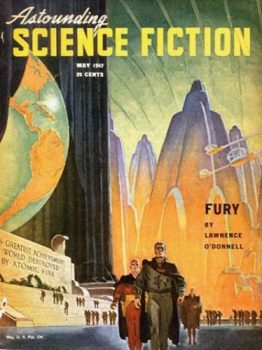
Thomas L. Sherred, known to the science fiction world by his distinctive pen name T.L. Sherred, carved a unique, albeit concise, niche in the annals of speculative fiction. Born on August 27, 1915, in Grand Rapids, Michigan, Sherred’s literary output was remarkably sparse, comprising just six short stories and one novel published over a career spanning nearly three decades. Yet, his debut work, the seminal "E for Effort," published in the May 1947 issue of Astounding Science Fiction, immediately stamped him as a writer of considerable talent and vision. This single story alone secured his legacy, earning frequent reprinting and inclusion in the prestigious Science Fiction Hall of Fame.
Beyond his infrequent forays into publishing, Sherred led a robust professional life in Detroit’s automotive industry, transitioning from hands-on tool room work to the nuanced fields of technical writing and public relations. This dual existence — the meticulous engineer by day, the imaginative storyteller by night — underscores a fascinating aspect of his creative process. His literary legacy is also marked by a distinctive stylistic quirk: a playful penchant for letter-based puns in his story titles, a convention that hinted at an intellectual curiosity and a subtle wit.
Sherred’s writing career was tragically cut short by a stroke in 1970, shortly after the publication of his only novel, Alien Island. The unfinished sequel, Alien Main, was posthumously completed by fellow author Lloyd Biggle, Jr., a testament to the respect and potential his work held within the science fiction community. His passing on April 16, 1985, marked the end of a life that, despite its limited literary output, left an indelible mark on the genre.
Chronology
Early Life and the Genesis of a Writer
Thomas L. Sherred’s journey began in Grand Rapids, Michigan, in the early 20th century. Born in 1915, his formative years unfolded against a backdrop of significant industrial and societal transformation in the United States. While specific details of his early life and education remain largely unrecorded, one can surmise that the burgeoning industrial landscape of Michigan, particularly the rise of the automotive industry, played a crucial role in shaping his professional trajectory. The era was one of innovation, rapid technological advancement, and a burgeoning sense of American progress, themes that would subtly echo in his later science fiction.
As a young man, Sherred gravitated towards Detroit, the epicenter of the American automobile industry. It was here that he immersed himself in the practicalities of manufacturing, beginning his career in tool rooms. This hands-on experience in precision engineering and mechanical intricacies undoubtedly honed a meticulous mind, capable of understanding complex systems – a skill set often valuable for crafting credible speculative fiction. This period of his life, deeply rooted in the tangible world of industry, stands in stark contrast to the fantastical realms he would later create, yet it provided a grounding in realism and problem-solving that would enrich his narratives.
The Unveiling of "E for Effort"
The year 1947 marked Sherred’s dramatic entry into the science fiction scene with "E for Effort," published in Astounding Science Fiction. This was a pivotal moment not just for Sherred, but for the genre itself. Astounding, under the legendary editorship of John W. Campbell Jr., was the premier magazine of the Golden Age of Science Fiction. Campbell was known for his demanding standards, seeking stories that blended rigorous scientific extrapolation with compelling human drama. To be published in Astounding was an immediate badge of honor, signifying a writer of serious intent and intellectual prowess.
"E for Effort" was an instant classic. It presented a thought-provoking premise involving a device capable of recording and replaying past events, including thoughts, leading to profound ethical and societal implications. The story explored themes of privacy, the nature of history, and the potential misuse of technology, all handled with a sophistication that belied it being a debut. Its brilliance was recognized almost immediately, leading to its frequent reprinting and, significantly, its inclusion in the Science Fiction Hall of Fame, Volume Two (1973), an anthology curated to represent the best short stories of the genre’s formative years. This inclusion cemented "E for Effort" as a cornerstone work, ensuring Sherred’s place in science fiction history, regardless of his subsequent limited output. The post-World War II landscape, marked by atomic fears and technological optimism, provided fertile ground for such speculative explorations, and Sherred’s story perfectly captured the era’s complex anxieties and hopes.
A Sporadic Literary Output
Following the success of "E for Effort," Sherred’s publishing career became notably sporadic. While his debut promised a prolific future, his subsequent stories appeared with significant gaps: 1953, 1954, and finally 1972. This irregular output, totaling only six short stories over a 25-year period, is a subject of much speculation among fans and critics. It’s plausible that the demands of his career in the automotive industry, which eventually saw him rise to roles in technical writing and public relations, left him with limited time and energy for creative writing. The meticulous nature of his craft, evident in "E for Effort," also suggests a writer who prioritized quality and conceptual depth over sheer quantity, perhaps taking considerable time to refine each piece.
Despite the scarcity, his stories maintained a high standard, showcasing his unique voice and thematic interests. Four of these stories were eventually collected in his only anthology, First Person, Peculiar, published in 1972. This collection served as a retrospective, bringing together his scattered works and offering readers a chance to appreciate the breadth of his short fiction. The long gap between his 1950s stories and the 1972 collection, coinciding with the publication of his novel, suggests a renewed burst of creative energy later in his life, tragically cut short.
The Novel and its Aftermath
In 1970, T.L. Sherred released his only full-length novel, Alien Island. The book represented a significant expansion of his narrative scope, moving beyond the compact form of short fiction. However, this period of creative flourishing was tragically brief. Shortly after Alien Island was published, Sherred suffered a debilitating stroke. This catastrophic event effectively brought an abrupt and premature end to his writing career, silencing a distinctive voice just as it seemed to be gaining momentum. The stroke left him unable to continue writing, a profound loss for both Sherred personally and for the science fiction genre.
The impact of the stroke extended to an unfinished project: a sequel to Alien Island. In a poignant testament to the literary camaraderie within the science fiction community, fellow author Lloyd Biggle, Jr. took on the task of completing Sherred’s unfinished manuscript after his death. The sequel, titled Alien Main, was eventually published in 1985, a posthumous collaboration that ensured Sherred’s vision could reach its intended conclusion. This act highlights the respect Biggle held for Sherred’s work and the importance of preserving an author’s legacy. Interestingly, early attempts to complete the novel involved Laurence M. Janifer, but their collaborative version was reportedly rejected by Ballantine Books, indicating the complex challenges of finishing another author’s work while maintaining editorial standards and the original voice.
Final Years and Legacy
T.L. Sherred passed away on April 16, 1985. His death closed the chapter on a life marked by a fascinating interplay between the practicalities of industrial engineering and the boundless imagination of science fiction. Despite a bibliography that could fit comfortably on a single bookshelf, Sherred’s impact far exceeded the volume of his work. His legacy is one of quality over quantity, of a singular talent who, even with limited output, managed to contribute a foundational story to the genre’s canon. His life story, intertwined with the golden age of Detroit’s automotive industry and the burgeoning era of speculative fiction, offers a compelling narrative of an individual navigating diverse worlds with remarkable skill.
Supporting Data
The Automotive Man: A Parallel Life
Thomas L. Sherred’s professional life outside of writing offers a compelling counterpoint to his literary pursuits. His career in Detroit’s automotive industry was not merely a means to an end but a significant, multi-faceted journey that likely informed his perspective and writing style. Starting in tool rooms, Sherred was immersed in the fundamental mechanics and precision engineering that underpinned the industry. This environment demanded exacting standards, problem-solving acumen, and a deep understanding of how complex systems function – skills that translate remarkably well into crafting believable science fiction worlds and intricate plots. The transition from tool rooms to technical writing and public relations within the same industry is particularly telling. It signifies an evolution from hands-on mechanical expertise to a mastery of clear, concise communication and strategic messaging. Technical writing requires precision, logical structure, and the ability to convey complex information accessibly, while public relations demands an understanding of human perception and persuasion. These roles, far from being a distraction, could have sharpened his narrative voice, making his prose efficient, impactful, and capable of conveying profound ideas with clarity. One could argue that his experience in public relations, understanding how to shape public narratives, might have subtly influenced the societal critiques and explorations of human behavior found in his science fiction. Sherred was, in essence, a systems thinker, whether dealing with engine components or fictional societies.
A Penchant for Puns: The Alphabetical Allure
One of the most distinctive and charming aspects of T.L. Sherred’s literary style was his playful, almost formulaic, approach to titling his short stories. Following the groundbreaking "E for Effort," he continued this unique convention with titles like "Cue for Quiet," "Eye for Iniquity," and "See for Yourself." This pattern, based on phonetic interpretations of letters, reveals a hidden layer of intellectual wit and a deliberate, almost academic, approach to his craft. The idea that he might have been working towards an "abecedary of short fiction," a collection where each story title begins with a different letter of the alphabet, is a delightful speculation. The mention of a possible unpublished story, "X for Breakfast," further reinforces this theory.
This titling strategy is more than a mere quirk; it suggests a writer who engaged deeply with language and its nuances. It demonstrates a desire for internal consistency and a subtle invitation for the reader to participate in the intellectual game. In a genre often focused on grand narratives and scientific wonders, Sherred injected a touch of literary playfulness, hinting at a mind that appreciated both the profound and the whimsical. This unique signature made his limited body of work even more memorable and distinctive, distinguishing him from his contemporaries. It speaks to a controlled creativity, where even the paratextual elements like titles were crafted with intention.
Fandom’s Embrace: Mary Lu Sherred and SFOHA
While T.L. Sherred himself maintained a somewhat private existence regarding his writing, his connection to the science fiction community was significantly strengthened through his wife, Mary Lu Sherred. Mary Lu was an active and respected figure in Michigan fandom during the 1970s and 1980s. Her involvement highlights the vibrant social and communal aspects of science fiction, where enthusiasts, writers, and academics converge. Fandom, particularly in that era, was a crucial support system for many authors, providing feedback, community, and a sense of belonging.
Mary Lu’s dedication extended to volunteering for the Science Fiction Oral History Association (SFOHA). Founded in 1975 by Lloyd Biggle, Jr. (the same author who would later complete Sherred’s novel), SFOHA had a vital mission: to preserve the spoken histories of science fiction’s pioneers and significant figures. In an era before widespread digital archives, oral histories were invaluable for capturing the nuances, anecdotes, and personal perspectives that written records often missed. SFOHA existed until 2021, performing critical work in documenting the genre’s evolution. Its library and extensive holdings have since been acquired by FANAC (Fandom Archiving, Inc.), a non-profit organization dedicated to preserving the history of science fiction fandom. FANAC’s ongoing efforts to digitize these holdings ensure that the collective memory of the genre, including contributions from figures like Mary Lu Sherred and the voices she helped preserve, will be accessible to future generations. This familial connection underscores the deep roots Sherred had, indirectly, within the very community that celebrated his work.
Official Responses
Critical Acclaim and Enduring Recognition
The most significant "official response" to T.L. Sherred’s work, particularly "E for Effort," lies in its consistent critical acclaim and enduring recognition within the science fiction community. Its inclusion in the Science Fiction Hall of Fame is not merely an accolade; it is a profound declaration of its foundational importance to the genre. The Hall of Fame anthologies, compiled by leading figures in science fiction, are curated to showcase stories that have fundamentally shaped the genre, demonstrated exceptional literary merit, or introduced groundbreaking concepts. For a debut story to achieve such status speaks volumes about its immediate impact and long-term resonance.
Beyond this prestigious honor, the frequent reprinting of "E for Effort" across various anthologies and collections over decades further testifies to its sustained appeal and perceived quality. This consistent re-publication indicates that critics, editors, and readers alike continued to find the story relevant, thought-provoking, and well-crafted. It served as a benchmark for intelligent speculative fiction, exploring complex philosophical and ethical dilemmas through a compelling narrative. While direct critical reviews from 1947 are harder to unearth, the collective decision by subsequent generations of genre historians and anthologists to repeatedly feature "E for Effort" acts as a powerful retrospective endorsement.
More contemporary "official responses" include scholarly discussions and analyses, such as those by Rich Horton, whose blog post referenced in the original article delves into Sherred’s stories and novels. Horton’s detailed commentary, along with similar critical engagements, ensures that Sherred’s work continues to be examined, debated, and appreciated by serious readers and scholars of science fiction. Such ongoing academic and fan interest demonstrates that even a small body of work, when of exceptional quality, can maintain a prominent place in the critical discourse of a literary genre. These discussions often highlight Sherred’s unique blend of intellectual rigor, narrative precision, and thematic depth, underscoring why "E for Effort" continues to be studied as a prime example of Golden Age science fiction.
Implications
The "What If": A Career Interrupted
The premature end of T.L. Sherred’s writing career due to his stroke in 1970 presents a poignant "what if" scenario for the science fiction genre. What other masterpieces might he have penned had his health permitted? The potential loss is immeasurable. Alien Island had just been published, suggesting a renewed creative drive, possibly signaling the beginning of a more prolific period for the author. The fact that he was already working on a sequel, Alien Main, further supports this notion. An author of Sherred’s caliber, with his unique blend of intellectual rigor and narrative wit, could have contributed significantly more to the evolving landscape of science fiction in the 1970s and beyond, a decade known for its New Wave experiments and increasing thematic complexity.
His career serves as a stark reminder of how fragile creative output can be, susceptible to the whims of health and circumstance. It underscores the preciousness of each story and novel, particularly from those whose voices are silenced too soon. The collaborative completion of Alien Main by Lloyd Biggle, Jr., while a noble effort to honor Sherred’s legacy, can only offer a glimpse of what might have been. The definitive Sherred touch, his singular perspective, remains forever incomplete, leaving readers to ponder the untold stories and unwritten chapters from a writer who promised so much with so little.
A Model of Dual Passions
Thomas L. Sherred stands as an exemplary figure for aspiring writers who grapple with balancing a demanding professional career with their creative aspirations. His success in the automotive industry, evolving from tool rooms to public relations, demonstrates that a full-time, practical career need not be an impediment to literary achievement. On the contrary, his experiences in a highly technical and communicative field likely provided him with a unique perspective, a grounding in realism, and a disciplined approach to problem-solving that enriched his fantastical narratives.
Sherred embodies the notion that creativity can thrive alongside professional responsibility. He was not a full-time professional writer, yet he produced work that is celebrated alongside those who dedicated their lives solely to the craft. This dual life suggests a profound passion for writing, pursued not out of financial necessity but out of an inherent drive to tell stories and explore ideas. His story offers encouragement that deep engagement with the world, rather than isolation, can be a wellspring of inspiration, and that the skills honed in one domain can powerfully translate to another.
Legacy of Quality, Not Quantity
Ultimately, T.L. Sherred’s most profound implication for the science fiction genre is the enduring power of quality over quantity. In a field often characterized by prolific authors, Sherred’s limited output serves as a powerful testament that a single, exceptionally well-crafted story can secure an author’s place in history. "E for Effort" alone, with its sophisticated premise, ethical depth, and lasting influence, established him as a significant voice.
His distinctive titling convention, his ability to blend technical precision with philosophical inquiry, and the enduring relevance of his themes underscore a unique literary footprint. Sherred proved that impact is not measured by the length of a bibliography but by the depth of thought, the originality of vision, and the lasting resonance of the stories told. He remains a quiet but powerful presence in science fiction, a writer whose brief career illuminated the genre with brilliance, leaving behind a small but perfectly formed legacy that continues to captivate and challenge readers. His contribution reminds us that sometimes, the most resonant echoes come from the fewest, most carefully chosen words.