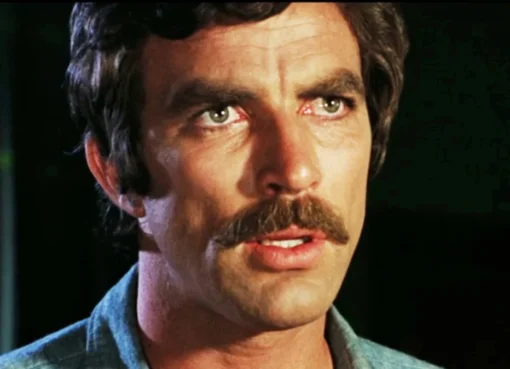
The Revelation of First Contact: How Steven Spielberg’s ‘Disclosure Day’ Resurrects the Spirit of James Cameron’s ‘The Abyss’

The history of cinema is inextricably linked with the stars, yet few filmmakers have gazed upward with as much persistence and wonder as Steven Spielberg. From his 1964 amateur feature Firelight to the cultural phenomenon of E.T. the Extra-Terrestrial, Spielberg has spent six decades defining the "First Contact" subgenre. However, with his latest release, Disclosure Day, Spielberg—reunited with veteran screenwriter David Koepp—has pivoted away from the suburban wonder of his youth. Instead, the film strikes a resonant, haunting chord that many cinephiles recognize not from Spielberg’s own catalog, but from James Cameron’s 1989 underwater epic, The Abyss.
Disclosure Day is more than a sci-fi thriller; it is a meditation on human self-destruction and the potential for extraterrestrial intervention as a moral mirror. By examining the film’s narrative structure, its character-driven stakes, and its geopolitical backdrop, it becomes clear that Spielberg has crafted a spiritual successor to Cameron’s most underrated masterpiece.
Main Facts: The Anatomy of ‘Disclosure Day’
Released by Universal Pictures, Disclosure Day arrives at a time of heightened global anxiety, mirroring the very tensions it portrays on screen. Directed by Steven Spielberg and written by David Koepp (marking another collaboration after Jurassic Park and War of the Worlds), the film explores the concept of "The Revelation"—the moment humanity is forced to acknowledge a non-human intelligence.
Plot and Setting
Set in the near future of 2026, the film follows a disparate group of individuals as they navigate a world on the brink of collapse. While the United States and North Korea teeter on the edge of a conflict that threatens to go nuclear, a series of anomalous events begins to unfold. Unlike the overt invasions seen in Independence Day, the alien presence in Disclosure Day is subtle, operating in the periphery of human perception until the titular event occurs.
The Ensemble Cast
The film relies on a powerhouse ensemble to ground its high-concept sci-fi:
- Emily Blunt as Margaret: A woman struggling with a fractured past who finds herself at the center of the mysterious occurrences.
- Josh O’Connor as Daniel: A man obsessed with proving the existence of the "others," driven by a mix of paranoia and hope.
- Eve Hewson as Jane: Daniel’s skeptical girlfriend who serves as the audience’s surrogate for grounded reality.
- Colin Firth as Noah: A high-level operative whose motivations remain ambiguous until the final act.
- Wyatt Russell as Jackson: A character representing the everyday panic of a citizenry caught between two world-ending threats.
Chronology: From ‘Firelight’ to the Depths of ‘The Abyss’
To understand why Disclosure Day feels like a departure for Spielberg, one must look at the chronology of his relationship with the extraterrestrial.

In 1977, Close Encounters of the Third Kind presented aliens as a source of obsession and sublime musical communication. In 1982, E.T. gave us the alien as a vulnerable friend. By 2005, War of the Worlds transformed the visitor into a terrifying, unknowable predator. Disclosure Day represents a synthesis of these eras, but its DNA is most closely shared with James Cameron’s The Abyss.
In 1989, Cameron released a film that was notoriously difficult to produce, involving grueling underwater shoots that nearly cost him his life. The Abyss was set against the backdrop of the Cold War, where an American nuclear submarine crash leads to a standoff with Soviet forces. Amidst this tension, a crew of deep-sea oil drillers discovers "Non-Terrestrial Intelligences" (NTIs).
The structural parallels are striking:
- Geopolitical Pre-climax: Just as The Abyss used the US-Soviet tension to raise the stakes, Disclosure Day uses the US-North Korean standoff.
- The Hidden Witness: In both films, the aliens are present and watching long before they choose to intervene.
- The Moral Ultimatum: Both films culminate in a moment where the aliens reveal themselves not to conquer, but to prevent humanity from extinguishing itself.
Supporting Data: Character Intimacy vs. Spectacle
A critical point of comparison between Disclosure Day and Spielberg’s earlier works like Close Encounters is the depth of characterization. While Close Encounters focused on the singular, destructive obsession of Roy Neary, the supporting government characters were often "obfuscated archetypes"—anonymous men in suits.
In contrast, Disclosure Day adopts the character-first approach found in The Abyss. In Cameron’s film, the relationship between Bud (Ed Harris) and Lindsey (Mary Elizabeth Mastrantonio) is the emotional anchor. Their personal reconciliation is what ultimately proves to the NTIs that humanity is worth saving.
Disclosure Day mirrors this by focusing on the micro-stories. The tension between Daniel (O’Connor) and Jane (Hewson) provides a domestic lens through which to view a global crisis. Margaret’s (Blunt) journey is not just about alien discovery, but about personal "disclosure"—unlocking secrets of her own history that run parallel to the cosmic revelation. By making the characters "well-drawn" and "dimensional," Spielberg ensures that when the "Revelation" finally happens, it feels like a personal catharsis for the protagonists rather than just a visual effects showcase.

Technical Parallels
Spielberg and Koepp utilize news broadcasts as a narrative device, a technique used effectively in the Special Edition of The Abyss. These broadcasts serve two purposes:
- World-Building: They provide a sense of a world in motion without requiring expensive action set-pieces for every escalation.
- Thematic Contrast: The chaos of human news (war, hoarding, panic) contrasts sharply with the serene, advanced nature of the alien presence.
Official Responses and Industry Reception
While Universal Pictures has kept a tight lid on the film’s post-release marketing to avoid spoilers, the industry response has been one of fascination. Early critical reviews have noted that Spielberg seems to be in a "reflective" phase of his career.
Film Critic Helena Vance of The Cinema Review writes:
"Spielberg has stopped looking at the sky with the eyes of a child and has started looking at it with the eyes of a statesman. Disclosure Day is a sobering, yet ultimately hopeful, plea for communication. It’s the first time since Cameron’s The Abyss that a filmmaker has successfully used the ‘Alien Savior’ trope without it feeling like a cop-out."
Industry Analysts have pointed to the film’s timing as a masterstroke. With real-world Congressional hearings regarding Unidentified Aerial Phenomena (UAP) becoming more frequent, the term "Disclosure" has moved from the fringes of conspiracy theory into the mainstream lexicon. Spielberg’s film taps into this zeitgeist, treating the "Day of Disclosure" as an inevitable historical event rather than a fantasy.
Implications: Can Disclosure Inspire Love?
The most profound connection between Disclosure Day and The Abyss lies in their shared philosophy: the "Deus Ex Machina" as a moral catalyst.
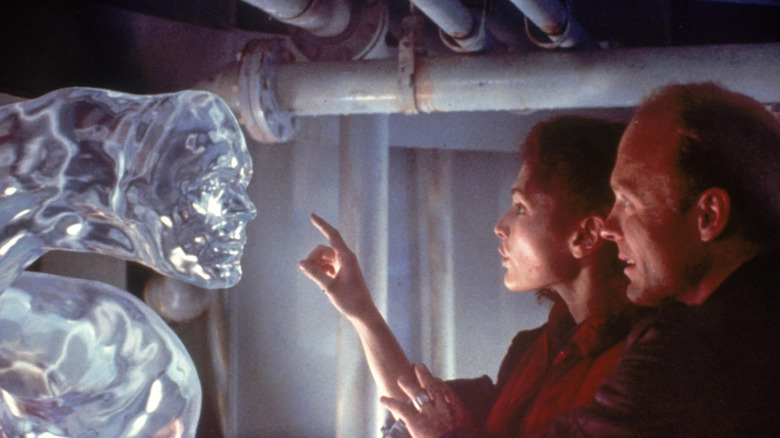
In the Special Edition of The Abyss, the NTIs show Bud images of human cruelty—war, famine, and environmental destruction—before threatening the world with a massive, globe-spanning tidal wave. They only stop the wave when they witness Bud’s willingness to sacrifice himself for Lindsey. The implication is that we are a violent species that needs a "parental" hand to stay our own.
Disclosure Day evolves this concept for the 21st century. The aliens in Spielberg’s film do not use the threat of a giant wave; they use the power of information. The "Disclosure" is an act of forced honesty. By revealing their presence, they strip away the petty geopolitical secrets that drive nations to war.
The Shift from Fear to Empathy
The film suggests that the "unknown" is the primary fuel for hate. Once the unknown becomes known—once the aliens are "disclosed"—the human race is forced into a perspective shift. If we are not the only ones in the universe, our internal borders and ancient animosities begin to look absurdly small.
As the article concludes, "If the unknown inspires fear and hate, perhaps disclosure can inspire love." This is the ultimate legacy of both James Cameron’s 1989 effort and Spielberg’s 2026 vision. They are films that ask humanity to look at the stars not to see what we can conquer, but to see who we can become.
Disclosure Day stands as a testament to the enduring power of science fiction to act as a social conscience. In the hands of Spielberg and Koepp, the alien is no longer a monster or a pet; they are the witnesses to our history, waiting for the day we finally grow up.
Disclosure Day is currently playing in theaters worldwide. Distributed by Universal Pictures. Rated PG-13 for sequences of sci-fi action and brief strong language.