The Unraveling Thread: Why Gen Z Men Feel Betrayed and the Looming Societal Reckoning
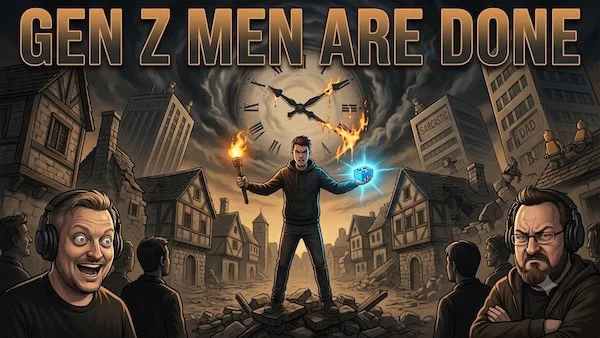
Two seemingly disparate incidents, one in the United Kingdom and another in Oregon, have brought to the forefront a growing and potentially dangerous sentiment among young men of Generation Z. On the surface, these events involve a tragic death and a contentious business dispute. However, beneath the surface lies a shared narrative of profound distrust and alienation directed at the very institutions meant to serve and protect: schools, law enforcement, corporations, universities, and the media. This article delves into the roots of this disaffection, examines the alarming consequences, and explores potential pathways toward societal reconciliation before simmering resentment boils over into widespread conflict.
The Genesis of Discontent: A Generation Under Siege
The core of this emerging crisis, according to commentators Thomas and Jonathan, lies in the formative experiences of Gen Z men, roughly aged 18 to 29. They contend that these young men have been systematically subjected to narratives and policies that implicitly or explicitly position them as adversaries. Their education, they argue, was dominated by "social justice warrior teachers" who weaponized terms like "privileged" and "endemic racism" against them. This, coupled with a perceived overemphasis on empowering girls and minorities through initiatives like "Girls in Math Clubs" without equivalent support for boys, has fostered a deep-seated belief that the system is inherently unfair and designed to exclude them.
"The message they internalized was, ‘We want everyone to succeed except for you,’" Thomas observes, painting a stark picture of a generation feeling deliberately marginalized. This perception is further fueled by what they interpret as anti-male bias in higher education and the job market. Statistics cited suggest a significant gender disparity in recent job growth, with a disproportionate number of new positions going to women. The authors argue that traditional advice from older generations, such as "work hard and have a firm handshake," becomes hollow when faced with policies explicitly designed to meet diversity quotas, which are perceived by young men as "anything but a young man."
Jonathan likens this phenomenon to silent crop growth, suggesting that the seeds of resentment sown over years are now bearing fruit. "We’re now getting the fruit of that," he states, implying that the current unrest is a direct consequence of past policies and societal messaging. The rise of DEI (Diversity, Equity, and Inclusion) initiatives, while ostensibly aimed at fairness, is seen by this demographic as a mechanism for discrimination, fostering an environment where "racism is huge because of DEI hiring practices." This perceived injustice, they believe, has pushed them to a breaking point, where the only recourse is radical defiance.
Case Study 1: The Tragic Demise of Henry Nowick in the UK
The death of Henry Nowick in the UK serves as a visceral illustration of these deeply ingrained grievances. According to the report, Nowick, a young Gen Z man, was fatally stabbed while walking home from school. The critical element that ignited public outrage and highlighted systemic failures was the alleged response of the police. Reports indicate that the assailant, Vikram Singh Diguwa, falsely accused Nowick of making a racist statement. Despite Nowick’s protestations and the fact that he had not even spoken to his attacker, the police reportedly handcuffed him while he was bleeding and struggling to breathe.
Thomas criticizes the UK’s policing system, suggesting a "two-tiered police system" where certain groups, particularly white men, are not afforded the same level of protection or belief. He points to a disturbing anecdote where a woman received a harsher sentence than her rapist because she used a racial slur against him. This, he argues, exemplifies a societal prioritization of "hateful words" over severe physical violence.
The narrative surrounding Nowick’s death, according to the authors, was largely ignored by mainstream media until intervention from prominent figures like Elon Musk. Even then, coverage was often framed in a way that obscured Nowick’s victimhood, forcing readers to delve deep into articles to understand the truth. This perceived media complicity further solidifies the belief among Gen Z men that their plight is not only ignored but actively suppressed. The authors suggest this has fueled unrest, with reports of Gen Z men in Britain clashing with police, a potential precursor to broader societal conflict.
Case Study 2: The Lego Dispute and the "Burn it Down" Mentality in Oregon
In Oregon, a dispute over a valuable Lego collection at a resale shop named Bricks & Minifigs offers another lens through which to view this generational tension. An 84-year-old man contracted with a local franchise to sell his collection, estimated to be worth up to $200,000. The situation devolved when new owners allegedly reneged on the contract, refused to return the Legos, and continued to sell them, effectively stealing the collection from a dying man.
The victim’s grandson, a Gen Z man, reportedly explored legal avenues but deemed them too slow and costly to provide timely relief for his ailing grandfather. This pragmatic assessment, rooted in a perception of institutional inefficiency and bias, led him to seek alternative solutions. He reportedly contacted a YouTuber known for "infiltrating cults and dismantling institutions through asymmetric warfare." The subsequent video, described as exceptional storytelling, documented this YouTuber’s methods, including allegedly "brainwashing" an employee to reveal internal information.
The Bricks & Minifigs franchise repeatedly involved law enforcement, leading to the YouTuber’s arrest and threats of civil liability. However, Thomas posits a critical insight: "you cannot threaten someone who already thinks you want them dead." For individuals burdened by overwhelming debt, particularly student loans that cannot be discharged through bankruptcy, the threat of financial ruin holds little sway. Gen Z, as a generation, holds a meager 2% of assets in the US, with student loan debt acting as a perpetual anchor. This financial precarity, coupled with the perceived institutional betrayal, cultivates a nihilistic "burn it all down" mentality.
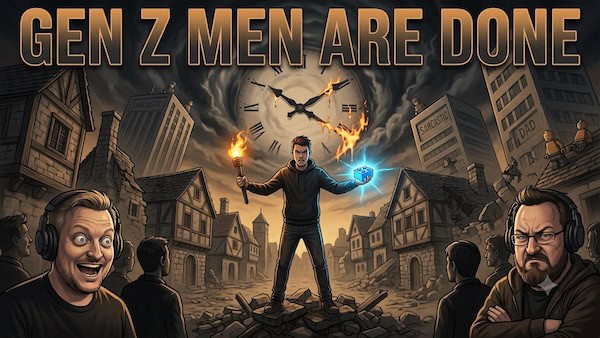
The Bricks & Minifigs incident became a symbol for this generation’s broader disillusionment, evolving into a complex saga involving alleged connections to a "Mormon Mafia" and a potentially compromised police department. The narrative has become a proxy for a perceived "mafia war" between online influencers and established power structures. Notably, cultural figures across the political spectrum within the Gen Z "manosphere," such as Hasan Piker and Asmon, despite their ideological differences, echo the sentiment of wanting to "burn it down." This shared sentiment, the authors suggest, aligns with the African proverb: "The boy who is not embraced by the village will burn it down to feel its warmth."
The Looming Storm: Societal Implications and Historical Parallels
The confluence of these events and sentiments points to a broader societal crisis, characterized by a profound disconnect between generations and institutions. Thomas and Jonathan frame this within the context of "Fourth Turnings," cyclical periods in history that are inherently volatile and often marked by significant conflict, including world wars and civil wars. They draw parallels to historical Fourth Turnings such as World War II and the American Revolutionary War, suggesting that the current era is similarly primed for upheaval.
The authors contend that the Baby Boomer generation, currently in positions of power, has been "poking Gen Z men for their entire lifetime" without fully grasping the consequences. Many millennials, they note, are already preparing for potential conflict, sensing the same destructive energy emanating from Gen Z. The inability to effectively threaten or coerce individuals who feel they have "nothing left to lose" is a critical factor. As Jonathan explains, this is akin to fighting someone who is drunk or on drugs – the usual levers of pain and consequence are rendered ineffective, requiring "serious technique and a whole lot of force."
The Role of Culture and the Erosion of Traditional Structures
The article delves into the cultural underpinnings of this disaffection, highlighting the impact of societal shifts and the role of cultural influencers. The decline of traditional institutions and the rise of online subcultures have created new arenas for identity formation and grievance. The concept of "hypergamy" is introduced as a significant factor contributing to male restlessness. This describes the tendency for women to gravitate towards high-status men, leading to a situation where a small percentage of men monopolize a disproportionate number of women. This leaves a large cohort of men feeling excluded and resentful, further fueling their desire to disrupt the existing order.
The authors argue that the rejection of monogamy during the 1960s sexual revolution by the Baby Boomer generation has had long-term repercussions. Historically, monogamy was a cornerstone of Western civilization, fostering social stability and a sense of collective responsibility. The erosion of this norm has, in their view, contributed to the current environment of hypergamy and male alienation.
Navigating the Precipice: Potential Off-Ramps and the Need for Grace
Despite the grim prognosis, the authors propose two potential "off-ramps" to avert widespread societal breakdown. The first, drawing from historical precedent, is the concept of "expeditionary wars" or westward expansion – a means of channeling restless young men’s energy into external endeavors. However, they acknowledge the obsolescence of this approach in the age of drone warfare, which diminishes the need for large numbers of young men on the front lines. Russia’s current strategy of deploying young men into the Ukraine conflict is cited as a modern, albeit grim, example.
The second, and more promising, off-ramp is marriage. The authors advocate for lowering the marriage age to around 20, arguing that early marriage can provide stability and purpose for young men. They criticize the current cultural narrative, perpetuated by media and older generations, that discourages early marriage. They also highlight the detrimental impact of a culture that, in their view, encourages female hypergamy and criticizes men for their perceived sins while overlooking female transgressions.
Crucially, the article emphasizes the need for grace and understanding across generations. While acknowledging the validity of Gen Z men’s grievances, the authors caution against a purely destructive "ruthlessness." They argue that true strength lies in offering mercy and forgiveness, a concept deeply rooted in Christian teachings. Jonathan states, "When you choose ruthlessness as your modus operandi because mercy is a mistake, you are not making a better world. You are trading long-term sustainability for very short-term gains."
The authors urge for a re-evaluation of how cultural narratives are constructed. They advocate for writers and storytellers to resist the urge to dismiss or demonize young men, and instead, to offer hope, purpose, and a vision for a better future. This involves recognizing the internal struggles of this demographic, the burden of debt, and the pervasive sense of being unwanted. As Thomas concludes, "They need hope. They need a path to survival. They need to know they’re loved and that there’s actually a place in the village for them."
The article also touches upon the importance of mentorship and community, emphasizing that older men should guide younger men, and older women should support younger women, as exemplified by the movie "Sergeant York." Ultimately, the message is one of urgent need for a cultural reset, a willingness to acknowledge past mistakes, and a commitment to rebuilding trust and fostering a sense of belonging before the simmering resentments of a disenfranchised generation ignite a societal conflagration. The window for intervention is narrowing, and the call for repentance and transformation is more critical than ever.