A World Cup of Discovery: Foreigners Uncover the Rich Tapestry of American Culture and Cuisine
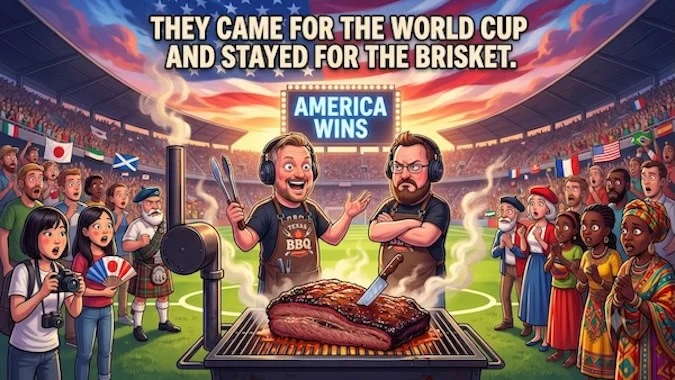
The global spotlight of the FIFA World Cup has illuminated more than just the athletic prowess of nations; it has inadvertently become a catalyst for a profound cultural awakening for many international visitors to the United States. While Hollywood often paints a narrow, coastal-centric portrait of American life, the reality unfolding in the heartland is proving to be a revelation, particularly when it comes to the nation’s diverse and often underappreciated culinary landscape. From the smoky depths of barbecue pits to the monumental scale of college football stadiums, foreign visitors are discovering an America far richer and more nuanced than their preconceptions allowed.
The Unveiling of an American Identity
For many international travelers, particularly those from Europe, their understanding of the United States has been largely shaped by the glossy, often idealized narratives presented by Hollywood. These cinematic portrayals tend to focus on the iconic skylines of New York City and the sun-drenched boulevards of Los Angeles, leaving a significant portion of the country’s diverse cultural identity largely unexplored. However, with the World Cup bringing a surge of global visitors to American soil, a palpable shift is occurring.
"When Europeans visit the heartland in real life, they’re realizing it’s amazing," observes Thomas, a contributor to this report. "They’re falling in love with everything, particularly our barbecue." This sentiment is echoed by Jonathan, another contributor, who notes the growing trend of individuals from the UK, Europe, and even South Korea venturing to the U.S. with a nascent curiosity about American cuisine, only to be captivated by their initial encounters with dishes like barbecue and classic breakfast fare.
A Culinary Odyssey: The Allure of American Flavors
The discovery of American food is proving to be a powerful gateway to understanding the nation’s multifaceted culture. This newfound appreciation is particularly evident in the realm of barbecue, a culinary art form deeply rooted in regional traditions and techniques.
The Diverse Spectrum of American Barbecue
Thomas breaks down the intricate world of American barbecue into three primary categories, each offering a distinct flavor profile:
- Texas Barbecue: Often characterized by its robust beef focus, with slow-smoked brisket being a hallmark. The emphasis is on the quality of the meat and a masterful command of smoke and heat.
- Kansas City Barbecue: Known for its liberal use of dry rubs and a signature sweet, tomato-based sauce. This style typically features a variety of meats, including beef, chicken, and pork.
- Carolina Barbecue: Defined by its distinctive vinegar-based sauce. This region is a hotbed of debate regarding which Carolina reigns supreme in barbecue, a testament to the passion it ignites. While Carolina barbecue can be incredibly diverse, it also presents the highest risk for culinary disappointment due to the skill required to execute it perfectly. When done right, however, it is described as "unbelievable."
The significance of barbecue in the American culinary landscape is further underscored by its recognition on a global stage. Thomas points out that "Of the four Michelin-star barbecue restaurants in the United States, three are in Austin, Texas," highlighting the region’s dedication to culinary excellence in this domain.
Beyond Barbecue: The Hearty Embrace of Breakfast
While barbecue commands significant attention, the American breakfast experience is also emerging as a surprising delight for international palates. Jonathan describes the offerings in cities like Tucson, Arizona, where breakfast restaurants specialize in "massive spreads." These establishments, often operating only from early morning to mid-afternoon, serve up dishes such as "pancakes the size of a baby and chicken fried steaks that are enormous, all covered in gravy."
The transformative power of these seemingly simple dishes is vividly illustrated by Jonathan’s anecdote about UK schoolchildren trying biscuits and gravy for the first time. Initial reactions of skepticism, particularly regarding the definition of a "biscuit," quickly give way to astonishment and delight upon tasting. The experience is so impactful that it prompts profound questions: "Whoa, this is so good… How do I get a visa?" This highlights how deeply ingrained cultural experiences, like a familiar breakfast, can foster a desire for deeper connection and understanding.
The "Bigger is Better" Phenomenon
A recurring observation from foreign visitors is the sheer scale of American consumption and infrastructure. "When foreigners come to the United States, the primary thought is, ‘Everything is bigger than it has any right to be,’" Jonathan remarks. This sentiment is widely discussed on platforms like X (formerly Twitter), where AI-generated stories detail experiences with "free refills and supersizing."
Thomas attributes this to a cultural divergence from moderation: "Moderation is not an American value. Benjamin Franklin tried to make it one, but it didn’t stick." This cultural trait manifests in various aspects of American life, from the generous portion sizes at restaurants to the colossal scale of sporting venues.
Jonathan elaborates on this, citing examples from Tucson, including "state fairs, monster trucks, professional wrestling," and the immense size of even college football stadiums. Thomas further quantifies this phenomenon by noting that "Of the 10 largest stadiums in the world, two are in North Korea and one is a soccer stadium in India. The next eight largest are all American college football stadiums, bigger than our NFL stadiums." The sheer magnitude of these arenas leaves international observers in awe, prompting questions like, "Why is the TV an acre large? Why does it make the seats shake?"
A Shift from Politics to Palate
Interestingly, the initial expectations of many foreign visitors, often primed by news and entertainment media to anticipate political discourse and potential conflict, are often superseded by the profound impact of their culinary and experiential discoveries. Jonathan observes that visitors, "expecting politics… braced for conflict," ultimately leave "talking about the food, the Grand Canyon, and Yellowstone. America is a beautiful place and the food is incredible."
This sentiment is reinforced by Thomas’s recollection of an experience with a large Asian student population in college. The stark contrast in portion sizes, from the "sample size" of ice cream in Asia to the generous American servings, often elicited a humorous, yet telling, reaction: "How are you ever supposed to eat all of that?" This illustrates how everyday American abundance, particularly in food, can be a disarming and delightful surprise.
Global Fun Factors: A Tapestry of Cultural Richness
Beyond the American experience, the article delves into the unique cultural offerings of various nations, highlighting what makes each distinct and appealing to global explorers.
Japan: A Universe of Craftsmanship and Precision
Jonathan paints a vivid picture of Japan as a country where "every hobby in Japan can be an entire universe." This is evident in the ubiquitous vending machines, capsule toy machines, themed cafés, and meticulously punctual train systems. The Japanese dedication to "craftsmanship" is a recurring theme, from the precise execution of tea ceremonies within martial arts tournaments to the ritualized movements of a grandmaster.
Thomas connects this Japanese appreciation for meticulous execution to the American culinary world, particularly in barbecue. He notes that "people are realizing that Americans really do protein well. This goes back to the very founding of the country." The historical availability of protein in the New World was a significant draw for early settlers, a stark contrast to the protein scarcity in the Old World where meat was often a luxury. This historical context helps explain the deep-seated American tradition of meat consumption and its regional variations.
The shared value of devotion to excellence, whether termed "making it with love" in the U.S. or "precision and care" in Japan, creates a profound connection. "What we call passion, they call craft," Jonathan concludes, emphasizing the beautiful overlaps between these two distinct cultures.
South Korea: Efficiency, Style, and Vibrant Nightlife
South Korea is portrayed as a nation that embodies efficiency, style, and a vibrant 24-hour culture. Jonathan highlights the appeal of "Korean barbecue is fantastic," alongside the allure of "karaoke rooms, 24-hour culture, PC gaming cafés, anything delivered anywhere, and street food markets." The enthusiasm of U.S. Marines stationed in South Korea further validates the country’s captivating and enjoyable atmosphere.

Thomas underscores the importance of preserving such unique cultures, warning against the homogenizing effects of globalization that lead to "generic LA" experiences. He asserts, "The weirder it is, the more authentic it is to the original."
India: A Symphony of Senses and Bollywood Spectacle
India offers a "maximum sensory input," characterized by "extremely spicy cuisine." Jonathan posits that the UK’s fondness for Indian food stems from the contrast with its own "famously unspiced" culinary traditions.
Thomas provides a scientific explanation for the prevalence of spice in warmer climates, linking it to "food preservation." The closer a region is to the equator, the more spices are needed to keep food from spoiling due to longer summers and shorter winters. This phenomenon is observed globally, from China to the American South.
Beyond its cuisine, India’s contribution to the global entertainment landscape is celebrated through Bollywood. Jonathan describes Bollywood films as "gloriously ridiculous, it’s designed to be fun, and nobody is taking it seriously. It’s entertainment and not a sermon." The imaginative and lighthearted nature of these films offers a distinct contrast to the often more serious tone of Hollywood productions.
Mexico: A Love Language of Food and Fierce Patriotism
Jonathan’s personal experience living in Mexico from age 13 to college provides an intimate perspective on the country’s culture. He describes food as a "love language" and highlights the "patriotic people" who express their national pride with fervor, particularly during World Cup matches against the United States. The vibrant atmosphere during these games, with passionate shouts of "Mexico!" and "USA! USA!", underscores the deep cultural connection to the sport and national identity.
The authentic street taco experience in Mexico is lauded as vastly superior to chain restaurant offerings, with Jonathan lamenting the price and quality disparity upon returning to the U.S. Thomas unequivocally agrees, stating, "I have tasted the real thing, and Taco Bell is not the real thing."
Italy: The Artistry of Everyday Life
Italy is presented as a country where "everything… can be an art form." From its "coffee culture, pizza and pasta traditions, to Renaissance architecture, fashion, and the tiny countryside villages," Italy embodies a deep appreciation for aesthetics and tradition. The reverence for culinary practices, such as the strict adherence to not breaking spaghetti noodles before boiling, exemplifies this dedication.
Jonathan emphasizes the importance of exploring Italy’s countryside to truly grasp its essence, advocating for immersion within Italian families for an authentic experience. Thomas contrasts the homogenization of global cities with the enduring local cultures found in more remote areas, noting how "the more you get away from the city, the more the local culture expresses itself."
How Authors Can Embrace Cultural Specificity
The discussion naturally transitions to how authors can leverage this understanding of cultural specificity to enrich their fiction.
The Power of Place and Local Flavor
Thomas advises authors to "Get out of the big city" when setting their stories. He suggests that instead of solely focusing on major metropolises like London, authors should "Send them to one of the smaller towns that has 2,000 years of history that’s different from the next small town." The key, he stresses, is thorough research and "talking to locals" to imbue the narrative with "local flavor." This approach, he believes, makes a book "so much more appealing" and allows readers to experience a sense of "vacation." The World Cup’s revelation that the "countryside and the heartland can be genuinely delightful and uniquely fun to visit" serves as a powerful endorsement of this strategy.
Exploring Microcultures and Unique Experiences
Jonathan broadens this concept beyond national borders, suggesting that authors can also find rich storytelling potential in "microcultures." He shares his success in writing about the "Marine microculture," allowing readers to "experience what it’s like to be a Marine." This approach resonates with audiences who are drawn to distinct ways of thinking and living. The phrase "that dog," used to describe a tenacious spirit, exemplifies the unique vernacular and ethos that can captivate readers.
The Audience for Authenticity
An interesting dynamic emerges when discussing the target audience for culturally specific fiction. Thomas observes that while one might assume books set in Italy would sell best in Italy, the reality is often the opposite. "Locals read it with a critical eye, catching every minor thing you get wrong. Everyone else enjoys it far more." This is in contrast to writing about a microculture like the Marines, where members of that group often express gratitude for accurate representation: "Yes, finally someone who gets us."
The strategic implication for authors is clear: setting a book in a desirable location like Italy isn’t necessarily about appealing to Italians, but rather to "everyone who wishes they could afford to visit Italy and can’t." Similarly, Jonathan notes that his "non-Marine audience is much bigger than my Marine audience, because so many people wish they were Marines."
Preserving Heritage: A Story of Connection and Identity
The discussion takes a poignant turn with Thomas’s personal anecdote about visiting Dunnottar Castle in Scotland. His illicit adventure highlights a stark contrast in perspective: his romanticized view of a historic ruin versus the pragmatic, almost dismissive, sentiment of the groundskeepers who saw it simply as "a ruin." This difference, Thomas suggests, stems from a "shame-oriented view of his own history" instilled by the educational system.
This contrasts sharply with the connection felt by a Scottish man in a small-town Southern restaurant who declared, "I feel at home here." Thomas elaborates on the idea that English culture was perhaps better preserved in the American South than in England itself, with the Southern accent retaining older linguistic patterns. This preservation of cultural enclaves allows for a deeper, almost ancestral connection.
However, the nature of this connection differs greatly from that experienced by Japanese tourists. For them, the connection is not ethnic but "spiritual," based on a shared "passion for excellence" in their respective crafts, whether it’s barbecue or sushi. This appreciation for dedication and meticulousness transcends cultural boundaries.
The article concludes by emphasizing the enduring appeal of distinct cultures and the importance of celebrating their unique qualities. As global homogenization threatens to erode these irreplaceable cultural gems, the World Cup and the subsequent influx of visitors serve as a powerful reminder of the richness and diversity that make our world so fascinating. For authors and travelers alike, the exploration and appreciation of these distinct cultural landscapes offer endless opportunities for discovery, connection, and inspiration.