The Prototype Paradox: Indie Devs Navigate Publisher Demands in a Risk-Averse Industry
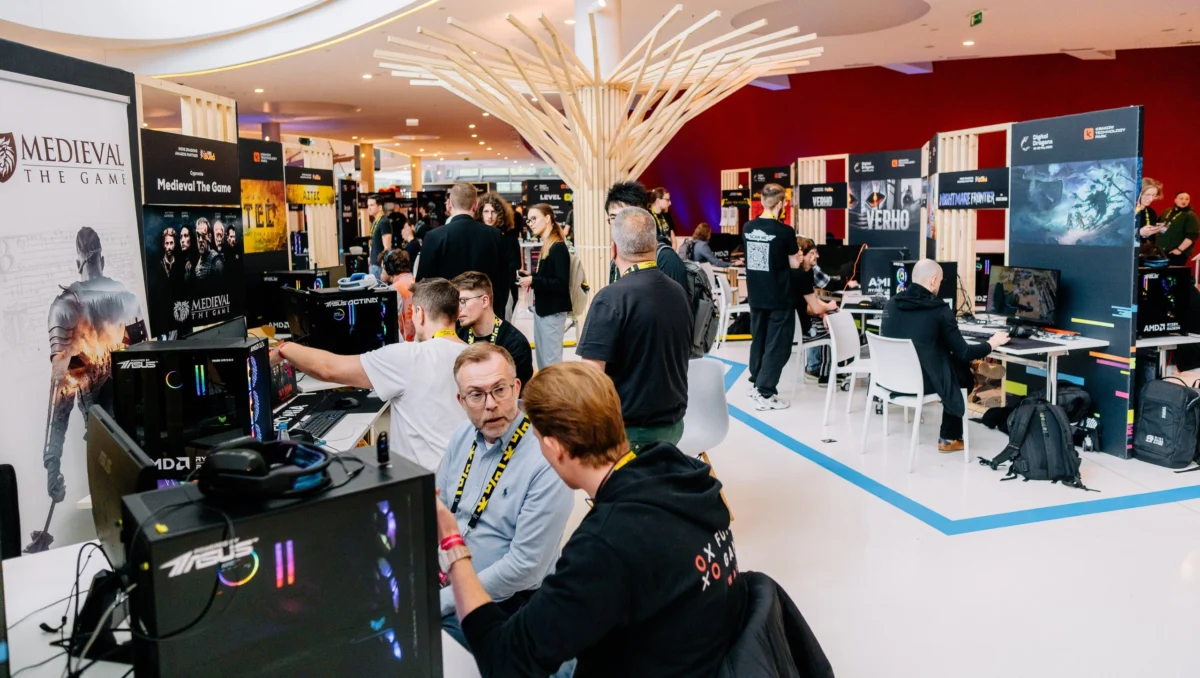
The journey of an independent game developer from a nascent idea to a polished product is often fraught with peril. Among the most significant hurdles is the elusive "prototype"—a playable build that serves as a crucial proof of concept, demonstrating a game’s core appeal. As Tom Francis, head of Suspicious Developments, succinctly puts it, a prototypable project is one where the time invested can be afforded to be lost. This stark reality casts a long shadow over independent developers, many of whom operate with limited resources and no guarantee of reward. Yet, the modern publishing landscape increasingly demands this tangible evidence of a game’s potential, forcing developers to confront the daunting task of creating these crucial early-stage builds.
This necessity has led to a growing temptation for some to leverage generative artificial intelligence (AI) in the prototyping process. This article delves into the challenges and evolving strategies surrounding game prototypes, exploring the perspectives of publishers and developers alike, and examining the burgeoning role of AI in this critical phase of game development.
The Evolving Landscape of Game Publishing: A Demand for Tangible Proof
The contemporary game industry, particularly the independent sector, is characterized by a palpable shift in how publishers evaluate potential projects. Gone are the days when a compelling pitch deck and a visionary concept were sufficient to secure a publishing deal. Today, publishers are increasingly demanding a playable prototype, a tangible demonstration of the game’s mechanics, artistic vision, and overall viability. This demand, while understandable from a risk-mitigation standpoint, presents a significant obstacle for many indie studios.
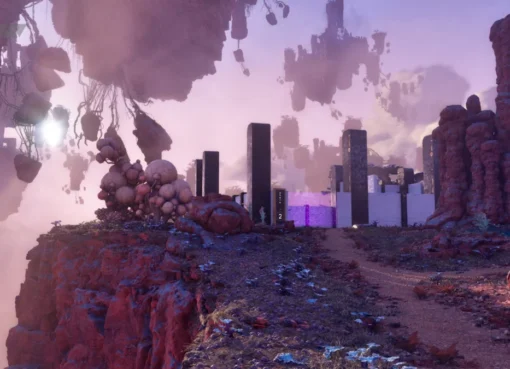
Hubert Popławski, lead developer at Maverick Souls Studio, a team comprised of veterans from titles like Dying Light 2 and Frostpunk 2, experienced this firsthand. His studio’s debut game, Before Darkness Falls, a 3D survival tactics simulator set on a hostile alien planet, required a functional prototype to attract attention. "It truly depends on the experience of the team," Popławski explained. "I think juniors have a very hard time to deliver something that looks good enough to feel safe for investors and publishers… For teams like us, for example, composed of veterans with more than five, ten years of experience, it’s much easier."
This disparity highlights a critical issue: the prototype requirement disproportionately affects less experienced or smaller teams. They often lack the financial runway and established expertise to dedicate significant time and resources to building a polished prototype before securing funding.
Publishers’ Perspective: Mitigating Risk in a Competitive Market
From the publisher’s vantage point, the insistence on prototypes is a pragmatic response to an increasingly competitive and costly development environment. Rufus Kubica, external development director at 11 bit studios, known for titles like Frostpunk and Indika, articulated this challenge. "For us, I think the biggest challenge is the ever-present problem of indie developers not having budgets for prototypes, while we usually like to sign projects that have prototypes," he stated.

Kubica elaborated on the industry’s reliance on demonstrable mechanics. "For us, because we are so code-driven, and we need to have proof of the key features, the USPs and everything, we cannot work with a paper pitch," he said. "Unless it’s a very well-known developer approaching us, and we know the track record so we can talk about the project. But usually when you’re working with indies, it’s quite a new team, so if they don’t have a playable proof, it’s a really big problem for us."
This risk-averse sentiment is echoed across the publishing landscape. Micha? Gembicki, head of publishing at Bloober Team, emphasized the "absolutely crucial" nature of a playable prototype. "Securing a deal otherwise is close to impossible, unless you are, of course, a recognised studio. [Or if] there is an IP you have, or you have a huge line-up, and you can say this is going to be like something you did in the past. Then yeah, of course, you can try, but still, [the publishers] will probably hold off until you at least deliver a video of something playable."
Anna Mostyn-Williams, senior director of business development and partnerships at Jagex, developers of RuneScape, echoed this sentiment. "The overall point is that it’s a more risk averse backdrop," she noted. "Anything you can do to help show de-risking is going to help. So of course, the prototype is going to help."

While some publishers may offer funding for prototype creation, particularly for promising concepts or established relationships, these opportunities are rare. For most, the onus remains on the developer to present a working demo, a significant investment of time and resources before any formal commitment is made.
The Rise of Generative AI: A Double-Edged Sword for Prototyping
In response to the escalating costs and time demands of traditional prototyping, generative AI has emerged as a potential solution for independent developers. Tools like Amazon Web Services’ "Agentic Arcade" and Unity’s Unity Muse promise to accelerate the creation of playable prototypes, even for those with limited technical expertise. Large studios, such as Crystal Dynamics, have also integrated AI-assisted tools into their development workflows.
Micha? Staniszewski, studio director for Plastic, a veteran Polish demoscene outfit with a history of collaboration with Sony Santa Monica, believes AI can significantly boost productivity for smaller teams. "I think that like, generating whole games is like, [an idea for the] distant future," he stated. "But automatic code generation for simple stuff like UI – if you are a good programmer with 10 years of experience, you will get a 10 times boost of your productivity. So I believe that the indies who consist of one person or two people will get really much more productive in a year, maybe, because it’s going so fast."

However, the enthusiasm for AI in prototyping is tempered by significant publisher apprehension. The core concern is that AI-generated prototypes offer little insight into a team’s actual capabilities. "How can I be sure that this developer can make the quality they’re promising?" questioned 11 bit’s Rufus Kubica. "If everything is done with AI, how do you know they have the artists to make it happen?" He further warned that AI can make it "kind of easier to overpromise quality early."
Bloober Team’s Micha? Gembicki expressed an even stronger aversion. "There’s nothing worse than an AI generated pitch," he declared. "I would [prefer] to see a sketch or something work in progress, but done by hand, by that team, showcasing this art, they want to achieve – usually it’s about art, right? Rather than this AI content." While acknowledging AI’s utility for market research, Gembicki stressed its unsuitability for artistic and narrative elements.
Jagex’s Anna Mostyn-Williams echoed this caution, advising developers to be "really, really mindful" of AI use in pitches. "And if you are going to use it, make sure that you go through it afterwards and ‘de-AI’ it."

The Human Element: The Value of Craftsmanship and Transparency
Beyond publisher skepticism, the ethical and public relations implications of AI in game development loom large. Maverick Souls Studio’s Hubert Popławski highlighted the potential for a "PR disaster." "The backlash from using AI is so scary," he admitted. "People still don’t like the idea that you’re using AI. If you do, it will be ‘Oh, that’s an AI. No, thank you.’" The prevalent concerns surrounding AI’s "culturally cannibalistic" nature, energy consumption, and potential for workforce reduction create a significant public relations hurdle.
The author’s personal sentiment aligns with this caution, viewing generative AI as part of a broader socio-economic trend that warrants careful consideration. While acknowledging the potential for responsible and transparent applications, particularly with proprietary models that respect intellectual property, the preference remains for human-crafted experiences.
The very essence of prototyping, the joyous act of bringing ideas to life and shaping them into tangible forms, feels antithetical to the notion of handing it over to automation. Popławski, when pressed on the inherent enjoyment of prototyping, offered a more pragmatic, and perhaps more realistic, perspective. "Creating a prototype is first and foremost stressful," he revealed. "In some ways, it’s a kind of ‘First Judgement Day’ for the project. It can be fun when you have the funds and the team’s ambitions are aligned with the project’s scope, but if you’re starting from scratch and still need to prove yourself, there’s a lot of pressure, and that can take the fun out of it."

This pressure, the constant need to demonstrate value and potential, can indeed overshadow the creative spark. The reliance on prototypes can transform discussions with potential backers into arbitrary hurdles, as Popławski recounted. "We had a situation in a B2B meeting where someone didn’t take us seriously regarding scope and funding until we showed them our gameplay reveal trailer," he shared. "Once they saw what we had actually built, they relaxed and nodded along, as if the claims that had sounded ambitious a moment earlier suddenly became completely reasonable."
The Path Forward: Balancing Innovation with Integrity
The current industry climate, marked by a pronounced risk aversion among publishers, places an immense burden on independent developers to showcase their game’s potential through functional prototypes. While generative AI offers a tantalizing prospect for accelerating this process, its adoption is met with significant skepticism from publishers who prioritize demonstrable human craftsmanship and the true capabilities of a development team.
The challenge for indie developers lies in navigating this complex landscape. It requires a strategic approach to prototyping, one that balances the need for tangible proof with the preservation of creative integrity and transparency. As the industry continues to evolve, the dialogue surrounding prototypes, AI, and the fundamental value of human artistry will remain central to the success and sustainability of independent game development. Ultimately, the goal must be to find a path that allows innovation to flourish without compromising the dedication, skill, and unique vision that define truly compelling video games.