Nvidia’s DLSS 5: A Refined Approach to AI-Powered Graphics, But Developer Control Remains Key

Nvidia’s latest iteration of its Deep Learning Super Sampling (DLSS) technology, DLSS 5, has ignited a firestorm of discussion within the gaming and tech communities since its initial announcement. While promising significant advancements in real-time graphics rendering, the technology has faced a mixed reception, with initial demonstrations drawing comparisons to an "AI filter" or "yassifying" effect. This has led to concerns about its potential to homogenize artistic vision and deviate from the intended aesthetic of game developers.
However, a recent presentation at SIGGRAPH 2026 has shed further light on the intricacies of DLSS 5, revealing a more nuanced approach than initially perceived. Nvidia has detailed the control mechanisms available to developers, aiming to assuage fears and clarify the technology’s capabilities. This article delves into the specifics of DLSS 5, examining its technical underpinnings, the control developers will wield, and the broader implications for the future of gaming graphics.
The Genesis of DLSS 5 and Initial Apprehensions
Nvidia first unveiled DLSS 5 in March, and the technology was met with a spectrum of reactions. The core of the apprehension stemmed from early demonstrations that, to many observers, appeared to apply an AI-driven enhancement that altered the visual fidelity of game scenes in a way that felt superficial. Critics voiced concerns that this approach might be overly reliant on an AI "filter" rather than a more sophisticated enhancement of the underlying rendering pipeline.
Further fueling these discussions, Nvidia itself confirmed that the AI models powering DLSS 5 operate primarily on traditional 2D frames and motion vectors. This technical detail reinforced the perception that the technology might be akin to an intelligent post-processing effect, prompting widespread debate. Many anticipated that developers would have limited control over this AI enhancement, potentially leading to a loss of artistic control and a homogenization of visual styles across different games. The prospect of a single, powerful AI model dictating the visual output of diverse game worlds raised significant questions about the integrity of artistic intent in game development.

Unpacking the Control: Two Sliders, Deeper Meaning
At SIGGRAPH 2026, Nvidia sought to address these concerns by elaborating on the control developers will have over DLSS 5. The company revealed that developers will be provided with two primary sliders: one for "structural intensity" and another for "tone intensity."
While the term "structure" might initially suggest geometric alterations, Nvidia has been quick to clarify that DLSS 5 "is not changing the geometry in any way, and it is uplifting the image." Instead, the structural intensity slider is designed to modulate the high-frequency details within a frame. This encompasses a range of visual elements, including ambient occlusion, subsurface scattering, and reflections. By adjusting this slider, developers can fine-tune the level of intricate detail that DLSS 5 enhances, adding depth and realism without altering the fundamental scene geometry.
The tone intensity slider, conversely, focuses on the "low frequency detail of the frame." This pertains to more expressive aspects of a scene, such as lighting and the overall tonal balance. This control allows developers to adjust how DLSS 5 influences the mood and atmosphere of a game, ensuring that the AI’s enhancements align with the intended emotional impact and visual storytelling.
Beyond the Surface: The Philosophy Behind Limited Controls
The initial reaction to having "two whole sliders" might be one of underwhelmed skepticism. It’s a seemingly modest set of controls, especially when compared to the vast array of parameters often available in traditional graphics settings. However, a more charitable interpretation suggests that this simplicity might be a testament to the sophisticated tailoring of the DLSS 5 model.

Nvidia’s rationale appears to be rooted in the idea that the model is so well-optimized and attuned to preserving artistic intent that extensive granular control might be unnecessary and potentially counterproductive. The company emphasizes that DLSS 5 preserves artistic intent through "internal buffers," suggesting a carefully curated process. By limiting the direct manipulation of certain parameters, Nvidia may be aiming to safeguard the integrity of these internal buffers, ensuring that the AI’s enhancements remain within the bounds of the developer’s creative vision.
This approach could be seen as a deliberate strategy to avoid the pitfalls of over-manipulation, where excessive tweaking by developers might inadvertently degrade the quality of the AI’s output or introduce unintended visual artifacts. The focus, therefore, shifts from granular control to intelligent modulation, trusting the AI’s ability to intelligently enhance based on the provided stylistic guidance.
Demonstrating the Impact: Visualizing the Controls
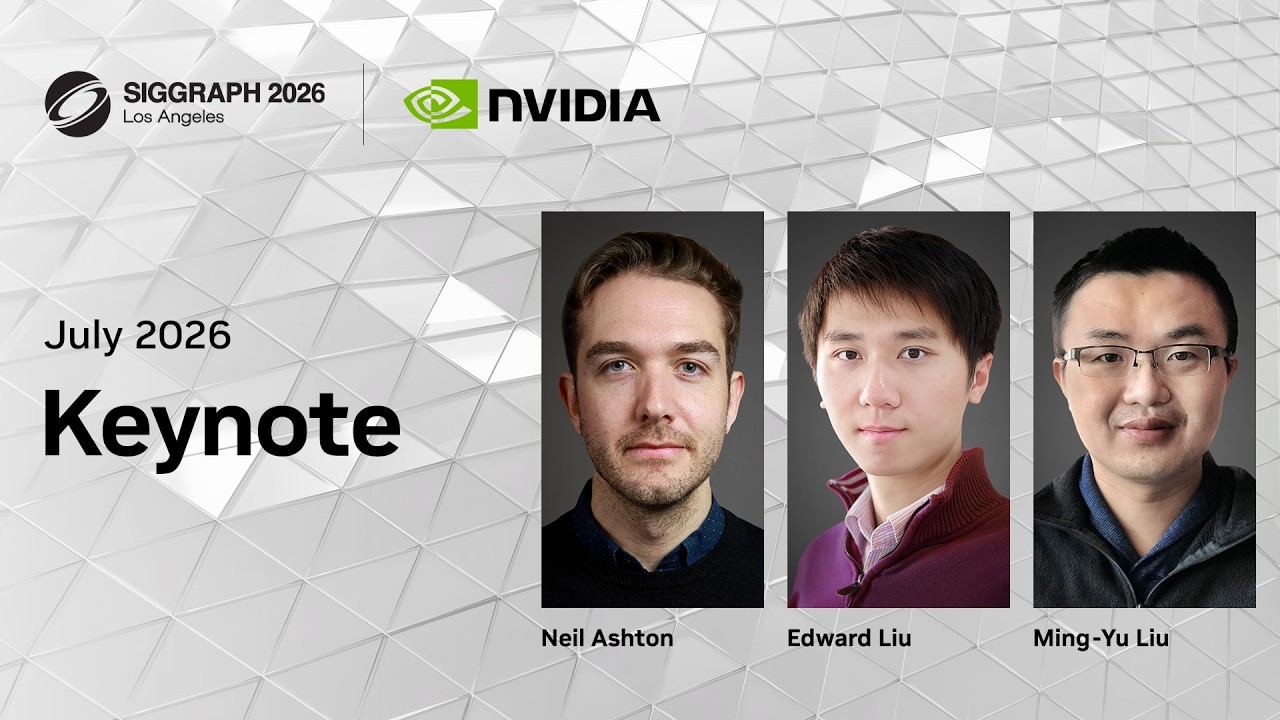
To illustrate the practical application of these controls, Nvidia showcased demonstrations during their SIGGRAPH 2026 keynote. These presentations provided a tangible understanding of how adjusting the structural and tone intensity sliders affects game visuals. While specific details from these demos are not fully transcribed here, the visual evidence is crucial in assessing the technology’s potential.
(Embedded YouTube video or relevant visual elements would be inserted here, with a descriptive caption highlighting the demonstration of DLSS 5 controls and their impact on visual fidelity.)
These demonstrations offered a glimpse into how developers might leverage DLSS 5 to subtly enhance realism. For instance, an increase in structural intensity could imbue a scene with more convincing ambient occlusion or subsurface scattering, elements that are notoriously computationally expensive to render traditionally. The ability to achieve these visual improvements with minimal performance overhead is a significant draw for game developers.
The Developer’s Perspective: Masking and Granular Control
Crucially, Nvidia has also indicated that game developers will have the capability to implement "masking" within DLSS 5. This feature allows for selective application of the AI enhancements to different elements within a game scene. For example, developers could choose to apply a more intensive DLSS 5 treatment to background environments to boost their visual fidelity, while applying a more subtle or even no enhancement to foreground characters to preserve their intended appearance.
This masking capability is a vital concession to developer control. It acknowledges that a one-size-fits-all approach is not viable for the diverse artistic visions prevalent in the gaming industry. By enabling developers to isolate and modify specific objects or areas of a scene, Nvidia provides a crucial layer of customization that can prevent the technology from feeling like a blunt instrument. This granular control over different scene elements is paramount for maintaining artistic integrity and achieving a bespoke visual style for each game.
Official Responses and Future Development
Nvidia has reiterated its commitment to working closely with game developers to refine DLSS 5. The company stated that it is actively building more controls for developers and is "working with our partners to incorporate their feedback." This suggests an ongoing dialogue and a willingness to adapt the technology based on real-world implementation challenges and creative demands.

The company also emphasized that DLSS 5 is designed to be an additive technology, not a replacement for existing rendering techniques. It "extends the existing pipeline. It does not replace them." This means that DLSS 5 will function alongside other rendering technologies and established workflows, offering an additional layer of enhancement rather than a fundamental shift in how games are built. This additive nature is likely to facilitate its integration into existing development pipelines and reduce the barrier to adoption for studios.
Implications for the Future of Gaming Graphics
The introduction of DLSS 5, despite its initial controversies, signals a significant step in Nvidia’s ongoing pursuit of AI-powered graphics. The technology’s ability to enhance visual fidelity through intelligent upscaling and detail generation holds immense promise for delivering more immersive and visually stunning gaming experiences.
However, the success of DLSS 5 will ultimately hinge on the level of control afforded to developers and their willingness to integrate it thoughtfully. The current offering of two primary sliders, augmented by masking capabilities, appears to be a balanced approach. It attempts to harness the power of AI while respecting the artistic vision of game creators.
The future of DLSS 5 will likely see the introduction of further controls, as alluded to by Nvidia. The ongoing collaboration with developers and the iterative development process suggest that the technology will evolve to meet the diverse needs of the gaming industry. As DLSS 5 rolls out more broadly, the true impact of its AI enhancements and the extent of developer control will become clearer. The ultimate goal remains to push the boundaries of visual realism in gaming, without sacrificing the creativity and artistic intent that define the medium. Whether DLSS 5 achieves this delicate balance will be a story that unfolds throughout its lifecycle.