Clarkesworld Magazine Unveils "The Potential Side Effects of Roleplay Stimulation Therapy": A Deep Dive into Future Ethics and Technology
FOR IMMEDIATE RELEASE
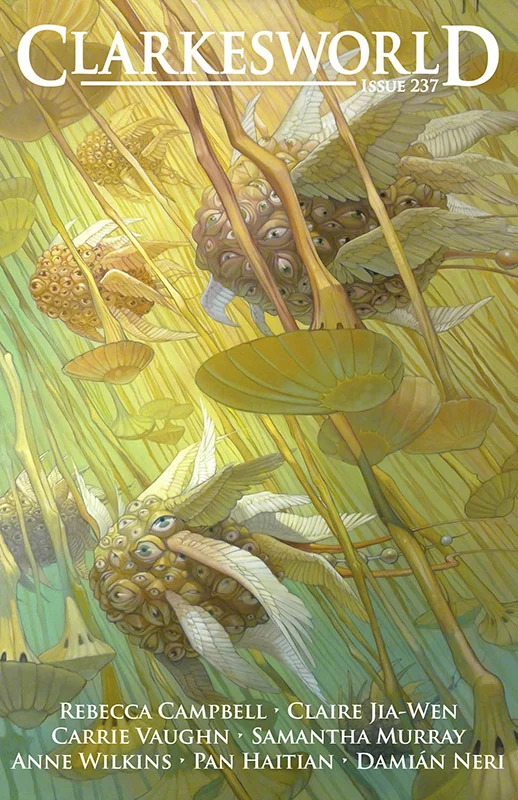
June 2026 – Clarkesworld Magazine, a leading voice in science fiction and fantasy, has announced the release of its second podcast for Issue 237, a thought-provoking original fiction piece titled "The Potential Side Effects of Roleplay Stimulation Therapy." Authored by the critically acclaimed speculative fiction writer Claire Jia-Wen and masterfully narrated by veteran voice artist Kate Baker, this story promises to delve into the complex ethical and societal ramifications of advanced therapeutic technologies. Available now in both text and audio formats, the piece is poised to ignite discussions among readers and listeners about the evolving relationship between humanity, technology, and mental well-being.
The story’s intriguing title alone suggests a narrative rich with speculative possibilities, exploring a future where immersive roleplay is harnessed for therapeutic ends, yet not without its unforeseen consequences. Claire Jia-Wen, known for her incisive explorations of human-computer interaction, brings her unique blend of academic insight and narrative flair to this subject. Kate Baker’s experienced narration, a staple of many genre podcasts, ensures that the audio experience is as compelling as the written word, inviting audiences to fully immerse themselves in Jia-Wen’s meticulously crafted world.
Clarkesworld Magazine has made "The Potential Side Effects of Roleplay Stimulation Therapy" accessible across a multitude of platforms. Readers can engage with the story in its original text version directly on the magazine’s website. For audio enthusiasts, the podcast is available for immediate streaming or download, with a runtime of 35 minutes and 51 seconds and a file size of 49.2MB. Subscribers can find the episode on popular podcast services including Apple Podcasts, Spotify, Pandora, iHeartRadio, Podchaser, TuneIn, Deezer, and via RSS feeds, reflecting Clarkesworld’s commitment to broad accessibility for its global audience. This release underscores the magazine’s ongoing dedication to presenting cutting-edge speculative fiction that not only entertains but also challenges and informs its readership about the potential trajectories of human progress.
Main Facts: Unveiling a Futuristic Therapeutic Dilemma
Clarkesworld Magazine’s Issue 237 for June 2026 marks a significant contribution to the speculative fiction landscape with the debut of "The Potential Side Effects of Roleplay Stimulation Therapy." This original fiction piece, penned by the rising star Claire Jia-Wen, explores a concept that lies at the heart of modern technological discourse: the intricate and often unpredictable impact of advanced therapies on the human psyche. The story is presented as the second podcast offering for the current issue, highlighting its importance within the magazine’s curated selection.
The central premise, as suggested by its title, revolves around a futuristic therapeutic modality known as "Roleplay Stimulation Therapy" (RST). While the specifics of this therapy within Jia-Wen’s narrative are yet to be fully uncovered by the audience, the implication is clear: a highly advanced, immersive, and perhaps even AI-driven system designed to simulate scenarios for psychological or emotional benefit. The "potential side effects," however, suggest a cautionary tale, pushing readers and listeners to consider the ethical boundaries and unforeseen consequences inherent in manipulating human experience through technology.
Claire Jia-Wen, a speculative fiction writer with a burgeoning reputation, is uniquely positioned to explore such themes. Her academic pursuits as a PhD student in human-computer interaction (HCI) provide a robust theoretical framework for her narrative explorations. This background allows her to craft stories that are not only imaginative but also grounded in a deep understanding of the complex interplay between humans and digital systems. Her previous publications in khōrē and Clarkesworld itself attest to her growing influence within the genre.
Complementing Jia-Wen’s compelling narrative is the voice talent of Kate Baker. As a highly respected and prolific narrator in the science fiction and fantasy audio sphere, Baker brings a professional polish and emotional depth to the story. Her ability to convey nuance and character ensures that the immersive quality of the podcast version is maximized, drawing listeners into the intricate world and moral quandaries presented by Jia-Wen. The availability of the story across numerous podcast platforms, alongside its traditional text format, underscores Clarkesworld’s multi-faceted approach to delivering premium speculative content to a diverse and technologically savvy audience. This strategic release not only caters to varying consumption preferences but also amplifies the reach and potential impact of this thought-provoking work.
Chronology: A Trajectory of Innovation and Storytelling
The release of "The Potential Side Effects of Roleplay Stimulation Therapy" in Clarkesworld Magazine’s June 2026 issue is not an isolated event but rather a continuation of a long-standing tradition of excellence and innovation within the science fiction and fantasy genre. Clarkesworld, established as an award-winning digital magazine, has consistently delivered high-quality speculative fiction since its inception. Its monthly publication schedule, meticulously curated by editor Neil Clarke, ensures a steady stream of original stories that push the boundaries of imagination and social commentary. This particular story, as the second podcast for Issue 237, slots into a carefully planned editorial calendar that highlights diverse voices and compelling narratives.
The magazine’s commitment to audio fiction has also evolved significantly over time. Recognizing the growing popularity of podcasts and audiobooks, Clarkesworld has invested in producing professional audio versions of many of its stories, transforming the reading experience into a listening journey. This strategic embrace of multimedia presentation reflects a broader trend in publishing to adapt to modern consumption habits, making speculative fiction more accessible to a wider audience, including commuters, visual impairment communities, and those who simply prefer auditory storytelling. The partnership with seasoned narrators like Kate Baker is a testament to this commitment, ensuring that the audio quality matches the literary standard of the written work.
Claire Jia-Wen’s journey as a speculative fiction writer also forms part of this chronology. Her prior publications, including a previous appearance in Clarkesworld and in khōrē, demonstrate a consistent trajectory of growth and recognition. Being a Viable Paradise alum—a highly respected workshop for aspiring science fiction and fantasy writers—further solidifies her credentials and highlights her dedication to honing her craft. Her academic pursuit of a PhD in human-computer interaction, which informs the thematic core of her latest work, places her at the vanguard of writers who are not only imagining future technologies but also critically engaging with their theoretical underpinnings. This blend of creative writing and academic rigor positions her as a significant voice exploring the near-future implications of technological advancement.
Historically, science fiction has served as a crucial platform for exploring the societal implications of emerging technologies. From Mary Shelley’s Frankenstein to modern cyberpunk narratives, the genre has consistently anticipated and critiqued scientific progress. "Roleplay Stimulation Therapy" fits squarely into this rich tradition, echoing earlier works that questioned the boundaries of artificial intelligence, virtual reality, and psychological manipulation. By presenting such a story in 2026, Clarkesworld continues to uphold this legacy, offering timely narratives that prompt contemplation on the ethical frameworks required for a rapidly advancing technological society. The ongoing debate around virtual reality’s impact on mental health and social interaction, for instance, provides a contemporary backdrop against which Jia-Wen’s fictional exploration gains profound relevance, illustrating the genre’s enduring power to forecast and reflect societal anxieties.
Supporting Data: Deconstructing Roleplay Stimulation Therapy
To fully appreciate the narrative depth of "The Potential Side Effects of Roleplay Stimulation Therapy," it is crucial to consider the implied nature of the therapy itself and the scientific and ethical data that might underpin such a concept. "Roleplay Stimulation Therapy" (RST) can be envisioned as an advanced, highly immersive psychological intervention, likely leveraging sophisticated virtual reality (VR), augmented reality (AR), and artificial intelligence (AI) technologies. Unlike conventional role-playing exercises, RST would transcend mere simulation, offering environments so realistic and responsive that they blur the lines between the digital and the tangible.
The intended benefits of such a therapy could be vast. Imagine a patient suffering from severe social anxiety, able to practice interactions in a controlled, consequence-free virtual environment, gradually building confidence. Consider trauma survivors reliving difficult memories in a therapeutic context, re-processing events with professional guidance and perhaps even altering the narrative within the simulation to foster healing. RST could also be invaluable for skill development, allowing professionals to rehearse high-stakes scenarios, from surgical procedures to complex negotiations, without real-world risk. Furthermore, it might serve as a potent tool for empathy training, enabling individuals to experience situations from another person’s perspective, fostering greater understanding and compassion. The very term "stimulation" suggests a direct engagement with neural pathways, perhaps through neuro-feedback or direct neural interfaces, enhancing the immersive and therapeutic effect.
Claire Jia-Wen’s background as a PhD student in human-computer interaction (HCI) lends immense credibility and depth to her exploration of RST. HCI is a multidisciplinary field focused on the design of computer technology and, particularly, the interaction between humans and computers. Her studies would encompass understanding user experience, the psychological impact of digital interfaces, ethical considerations in technology design, and the long-term effects of human engagement with artificial environments. This academic foundation provides her with a unique lens through which to examine the intricacies of RST, moving beyond superficial sci-fi tropes to explore the genuine psychological and societal challenges such advanced systems might pose.
The "side effects" aspect of the story’s title is where Jia-Wen’s speculative prowess truly comes to the fore. Drawing on her HCI expertise, she is likely to delve into plausible negative consequences. These could range from psychological detachment, where individuals find the simulated world more appealing than reality, leading to social withdrawal and impaired real-world coping mechanisms. Blurred identity might emerge as users struggle to differentiate their real self from their simulated persona. Ethical dilemmas could involve the manipulation of therapeutic narratives, data privacy within highly personal simulations, or the potential for dependency and addiction. Societally, widespread adoption of RST might lead to a devaluation of authentic human interaction, creating a generation more comfortable in controlled digital spaces than in the messy unpredictability of real life. Jia-Wen’s work serves as a crucial thought experiment, using fiction to probe the potential futures that our technological advancements are rapidly bringing into existence, urging us to consider the full spectrum of outcomes before they become reality.
Official Responses: Editorial Vision and Anticipated Impact
While "The Potential Side Effects of Roleplay Stimulation Therapy" is a work of fiction, its publication by Clarkesworld Magazine carries an implicit "official response" from the genre’s editorial gatekeepers regarding its perceived quality, relevance, and potential impact. Clarkesworld, under the stewardship of Neil Clarke, has cultivated a reputation for publishing speculative fiction that is not only imaginative but also intellectually rigorous and socially conscious. The inclusion of Jia-Wen’s story in Issue 237 signals the magazine’s endorsement of its thematic depth and narrative excellence.
Clarkesworld’s editorial philosophy often leans towards stories that explore near-future scenarios, ethical dilemmas posed by scientific advancement, and the nuanced complexities of the human condition in a technologically evolving world. "The Potential Side Effects of Roleplay Stimulation Therapy" aligns perfectly with this mission. By choosing to feature a story that directly questions the benefits versus the unforeseen detriments of an advanced therapeutic technology, the magazine officially positions itself as a platform for critical discourse on the future of human interaction with AI and immersive environments. This selection suggests a belief that the story will resonate deeply with a readership grappling with similar questions in their own lives, albeit in nascent forms.
From an anticipated critical reception standpoint, a story like Jia-Wen’s is likely to provoke significant discussion within the speculative fiction community. Critics and readers alike will likely praise its timely relevance, its nuanced exploration of mental health and technology, and its potential to spark broader conversations about ethical technology development. The story’s title alone acts as a prompt for engagement, inviting readers to consider their own anxieties and hopes regarding immersive digital experiences. The professional narration by Kate Baker further elevates the anticipated reception of the podcast version, as her presence often guarantees a high-quality auditory experience, ensuring the story reaches its full emotional and intellectual potential.
Furthermore, Claire Jia-Wen’s academic background in Human-Computer Interaction acts as an "official statement" of her expertise and lends a unique authoritative voice to her fiction. Her work can be seen as an extension of her academic inquiry, using the narrative form to explore hypotheses and implications that might be too abstract for purely scientific papers. This blend of scientific understanding and creative storytelling provides a powerful, multi-faceted response to the challenges of technological progress, allowing her to contribute to the official discourse on future tech ethics in a way that is both accessible and deeply engaging. By publishing authors like Jia-Wen, Clarkesworld reinforces its role not just as a purveyor of entertainment, but as an intellectual forum for envisioning and critiquing possible futures. The magazine’s commitment to offering content across diverse platforms, including a robust podcast presence, also serves as an official response to the evolving media landscape, ensuring that vital speculative narratives continue to reach and influence a broad global audience.
Implications: Navigating the Future of Human Experience
The implications arising from "The Potential Side Effects of Roleplay Stimulation Therapy" extend far beyond the pages and audio waves of Clarkesworld Magazine, touching upon profound societal, technological, and ethical considerations. Claire Jia-Wen’s story serves as a potent harbinger, prompting us to critically examine the trajectory of human progress and the unforeseen consequences that often accompany groundbreaking innovations.
Societal Implications: If Roleplay Stimulation Therapy (RST) were to become a widespread reality, its impact on society could be transformative, for better or worse. On one hand, it could revolutionize mental health treatment, offering personalized, immersive solutions for a myriad of psychological conditions, potentially reducing suffering and enhancing social integration. On the other hand, the "side effects" explored in Jia-Wen’s narrative could point to a future where individuals become overly reliant on simulated realities for emotional regulation or social interaction, leading to a decline in genuine human connection. The boundaries between self and avatar, reality and simulation, could become irrevocably blurred, posing challenges to identity formation and authentic living. Society might have to contend with a generation that prefers the controlled, predictable nature of simulated environments to the messy, unpredictable richness of real-world relationships. This could lead to new forms of social stratification, where access to "optimal" therapeutic realities becomes a privilege, exacerbating existing inequalities.
Technological Implications: The existence of RST implies a monumental leap in several technological domains. This includes hyper-realistic virtual and augmented reality systems, potentially involving direct neural interfaces that allow for seamless integration of the user’s consciousness into the simulated world. Advanced AI would be crucial for generating responsive, adaptive, and therapeutically relevant scenarios, capable of dynamically adjusting to a user’s emotional state and progress. Biofeedback mechanisms would likely monitor physiological responses, providing real-time data to therapists and the AI itself. Such technologies raise questions about their inherent robustness, susceptibility to glitches, and the potential for malicious exploitation. The story thus compels us to consider the rigorous safety protocols and ethical guidelines that would be necessary before deploying such powerful and intimate technologies on a mass scale. The development of such technology also implies a significant investment in neuroscience and cognitive science, further blurring the lines between digital engineering and biological manipulation.
Ethical Implications: The ethical quandaries presented by RST are perhaps the most compelling. Questions of consent in a deeply immersive therapeutic environment become paramount: can a patient truly give informed consent if their perceptions are being fundamentally altered by the therapy? The potential for manipulation, even with benevolent intent, is immense. Who controls the narratives within these simulations, and what biases might they inadvertently embed? Data privacy and security become critical concerns, as RST would necessarily collect vast amounts of highly sensitive psychological and emotional data. Furthermore, the very definition of "healing" might be challenged. Is it true healing if an individual can only function effectively within a simulated environment, or if their trauma is merely "simulated away" rather than genuinely processed in the real world? Jia-Wen’s story invites a vital ethical pre-mortem, urging humanity to establish robust ethical frameworks and regulatory bodies before such powerful therapeutic tools become commonplace.
Implications for Speculative Fiction and Authorship: "The Potential Side Effects of Roleplay Stimulation Therapy" also has significant implications for the genre of speculative fiction itself. It reaffirms sci-fi’s role not just as entertainment, but as a crucial cultural tool for exploring nascent technologies and their human impact. Stories like this push the boundaries of imaginative possibility while grounding them in plausible scientific and psychological principles, acting as a "fiction of ideas" that stimulates intellectual discourse. For Claire Jia-Wen, this story solidifies her position as a thoughtful and influential voice in contemporary speculative fiction, particularly at the intersection of technology and human experience. Her academic background enhances the perceived authority and depth of her fictional worlds, demonstrating how interdisciplinary approaches can enrich storytelling. As technology continues its relentless march forward, authors like Jia-Wen, and platforms like Clarkesworld, become indispensable guides, helping us navigate the complex and often bewildering landscape of our shared future. The success of such a story highlights the enduring appetite for narratives that grapple with complex questions, ensuring the continued relevance and vitality of speculative fiction as a genre.