Angela Liu’s “Magical Girl Eater” Explores the Dark Underbelly of Nostalgia and Corporate Fandom
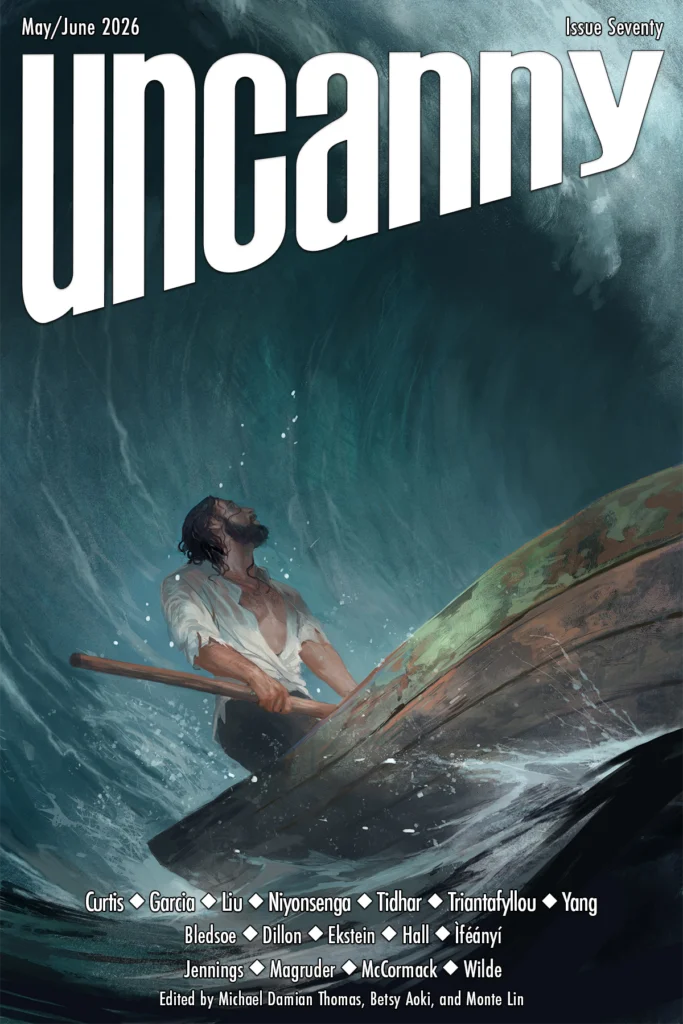
NEW YORK/TOKYO – Award-winning Chinese-American writer Angela Liu has once again captivated readers with her latest short story, “Magical Girl Eater,” published in the esteemed Uncanny Magazine. The narrative, a sharp and grim deconstruction of the beloved magical girl genre, delves into the complex intersection of corporate interests, commodified nostalgia, and the intense pressures faced by public figures in an oversaturated media landscape. Liu, a three-time Nebula Award finalist and a 2025 Astounding Award finalist, continues to solidify her reputation as a formidable voice in speculative fiction, using her unique perspective to critique contemporary societal phenomena.
“Magical Girl Eater” marks Liu’s sixth appearance in Uncanny Magazine, a testament to her consistent quality and the resonance of her thematic explorations. Her work, which frequently touches upon intergenerational trauma and "weird things," has garnered widespread acclaim, earning nominations for prestigious accolades including the Hugo, Locus, Ignyte, and Rhysling Awards. Based between New York City and Tokyo, Liu brings a bicultural lens to her storytelling, often drawing from her background in mixed reality research at Japan’s Keio University, where she focused on new narrative platforms. Her previous publications in Clarkesworld, Strange Horizons, and Lightspeed further underscore her significant contributions to the genre.
The Genesis of a Grim Fairy Tale: Main Facts
Angela Liu’s "Magical Girl Eater" is a provocative and fast-paced story that scrutinizes the hidden costs of fame and the relentless scrutiny of the public eye. At its core, the narrative is a stark examination of how capitalism infiltrates and transforms even the most innocent and cherished cultural phenomena, specifically the magical girl archetype. Liu’s decision to tackle this genre, often associated with innocence, empowerment, and vibrant aesthetics, through such a cynical lens is a deliberate choice designed to expose the often-unseen exploitation inherent in mass-market nostalgia.
The story’s conceptual framework emerged from Liu’s personal observations of the aggressive re-merchandising of classic Japanese anime properties, most notably Sailor Moon. What began as a personal reflection on the overwhelming influx of high-priced Sailor Moon goods—ranging from luxury handbags to meticulously crafted replicas of childhood toys—morphed into a critical inquiry into the commoditization of sentiment. The narrative posits a world where beloved heroes become intellectual property, their very existence dictated by market forces and consumer demand. This grim take on a typically bright genre is a signature of Liu’s storytelling, inviting readers to question the idyllic façades presented by popular culture.
A Chronological Unpacking of Inspiration and Development
The journey of "Magical Girl Eater" from nascent idea to published story offers a fascinating glimpse into Liu’s creative process, rooted deeply in personal experience and critical observation.
The Spark of Commodification: Sailor Moon and the Nostalgia Economy
Liu traces the story’s origins back to a period when she began noticing a surge in new Sailor Moon merchandise. This was not merely a trickle of new products, but a deluge of high-end collaborations and premium-priced items: luxury bags, makeup compacts meticulously designed to mimic iconic transformation items, and "repackaged" replicas of toys from her own childhood, now marketed as exclusive, premium collectibles.
"I found myself feeling a strange kind of nostalgia," Liu recounted in an interview with Uncanny Magazine. This sentiment was a double-edged sword. On one hand, she recognized the inherent irrationality of paying exorbitant prices for items that, in her youth, were affordable novelties. On the other hand, a powerful, almost primal desire to acquire these goods tugged at her, appealing to deep-seated childhood aspirations—the dream of embodying a Sailor Scout, complete with planetary designation and magical paraphernalia. As a working adult, Liu found herself in a position to afford the very items that were out of reach during her formative years, a realization that crystallized the story’s central theme: the commoditization of nostalgia.
Interrogating Magical Girl Tropes Through a Capitalist Lens
This personal epiphany swiftly translated into a broader creative mission. Liu decided to write a story that would systematically dissect typical magical girl tropes—the heroic transformation, the fight for justice, the iconic costumes and weapons, the devoted fanbase—but filtered through an uncompromising capitalist perspective. This framework led to a series of provocative questions: Who would emerge as the "villain mastermind" in such a system? What would their "costumes" and "weapons" look like? How would the loyal fanbase react, and how would the very concept of "justice" be redefined when intertwined with financial imperatives?
Liu’s background in fanfiction, a genre built on exploring "what happens after the original story ends," further fueled her inquiry. She mused on the hypothetical scenario of Sailor Moon characters existing in the real world, grappling with their immense popularity, the relentless merchandising, and the corporate partnerships that would inevitably follow. "How would we have perceived them then?" she wondered, acknowledging that "in real life, there is no such thing as a happy ending because life keeps going." The introduction of corporate stakeholders, Liu discovered, effortlessly plunged even the most innocent scenarios into unexpected darkness, forming the grim backbone of her narrative.
Supporting Data: Research, Industry Trends, and Recurring Themes
Liu’s creative process is not merely introspective; it is deeply informed by extensive research into contemporary media trends, consumer culture, and the evolution of fandom. Her findings not only shaped "Magical Girl Eater" but also reflect broader discussions within the entertainment industry and academia.
The Price of Pedigree: Luxury and Mass-Market Cosplay
Her research into current products, collaborations, and remakes of beloved ’90s and early ’00s series revealed a significant shift in target demographics. While magical girl merchandise traditionally catered to children, modern iterations are explicitly aimed at older, affluent generations. Liu cited striking examples: Sailor Moon x Jimmy Choo shoes, a Luna-P bag exceeding $10,000, Sailor Moon-themed bedroom furniture sets priced over $3,000, and even wedding rings from renowned brands. This extreme luxury branding underscored the profound financial investment that nostalgia commands in today’s market.
Furthermore, Liu observed the rise of "casual cosplay" and its capitalist transformation. What was once a labor-intensive hobby, requiring hours of meticulous crafting, has become a readily accessible consumer experience. Mass-produced costumes, delivered within days, have replaced bespoke creations. Fashion brands now offer cosplay-inspired clothing collaborations, allowing fans to purchase a "$200 uniform jacket." This phenomenon directly inspired a poignant line in her story: "anyone can be a magical girl!"—a statement laden with both aspiration and the implicit critique of commodified identity.
The Haunting Specter of "Replaceability" and Whitewashing
Liu’s research also brought into sharp focus the contentious issue of "whitewashing" in live-action adaptations of popular anime and cartoons. She highlighted "egregious examples" like the Death Note and Ghost in the Shell live-action films, where original characters of Asian descent were recast with white actors. This trend led her to ponder the concept of "replaceability"—what elements are considered vital to a franchise versus those deemed interchangeable.
"How superheroes are regularly replaced when a series is rebooted, how the person inside the costume matters less than the costume itself. How sometimes people are replaced just to inject some new life into a franchise," Liu explained. This idea, that the individual behind the iconic persona could be effortlessly swapped out for commercial viability or perceived broader appeal, became the profound "emotional backbone" of "Magical Girl Eater." It speaks to a deeper dehumanization, where characters, much like products, can be repackaged and re-marketed, often at the expense of their original cultural context and identity.
Enduring Themes: Memory, Transformation, and Food
Beyond the specific critique of "Magical Girl Eater," Liu’s broader body of work is characterized by several recurring thematic preoccupations, which serve as foundational elements of her distinctive artistic voice.
- Memory: "Memory is probably the most common theme in all my stories," Liu affirmed. She explores how memories fundamentally shape individuals, offering solace, acting as traps, or serving as catalysts for salvation. More unsettlingly, she examines how memories can be manipulated by others, or even by oneself, to alter identity. The idea that "if you can change someone’s memories, you can change who they are" is a concept that both fascinates and terrifies her, forming a rich vein of psychological exploration across her narratives.
- Transformation: Liu is drawn to stories of metamorphosis, particularly those involving monsters. She frequently delves into "the different ways people can become one (or save one!)." Her debut published story, "Ppaka," features a man who believes he is a frog, while "Another Girl Under the Iron Bell" explores a demon with a potentially human past. This format of "starting off with the monster and working your way backward to understand how they got there" is a favorite, allowing her to explore the complexities of identity, otherness, and redemption.
- Food: A more intimate, yet equally significant, motif in Liu’s stories is the presence of food. "All my stories have food in them too," she noted. Beyond mere sustenance, food scenes serve as narrative anchors and emotional conduits, often appearing when she encounters a writing block. This reflects a deeply personal and cultural tradition: "That’s how we solve problems in my family—talking about it over food." Food, in her narratives, becomes a symbol of comfort, connection, and the quiet spaces where profound human interactions unfold.
Official Responses and Artistic Stances
While "Official Responses" in a traditional news sense might refer to corporate statements, in the context of this literary article, it refers to Angela Liu’s artistic "response" to the cultural phenomena she observes, and Uncanny Magazine‘s "response" in championing her work.
Liu’s work, particularly "Magical Girl Eater," stands as a powerful artistic response to the relentless commercialization of culture. It is a nuanced critique delivered not through polemic, but through compelling narrative. Her choice to foreground the darker implications of unchecked capitalism and exploited nostalgia serves as a counter-narrative to the often-glossy presentations of brand extensions and remakes. By asking "what happens after the original story ends," she challenges audiences to look beyond the surface enchantment and consider the ethical and psychological costs.
Uncanny Magazine‘s consistent publication of Liu’s work, including "Magical Girl Eater," signifies its commitment to publishing speculative fiction that is both imaginative and critically engaged with contemporary issues. As a leading voice in the SFF (Science Fiction and Fantasy) community, Uncanny‘s platform amplifies Liu’s voice, validating her artistic explorations of complex themes like memory, transformation, and the cultural impact of commercialism. The magazine’s editorial choice implicitly endorses the necessity of such critical narratives in a landscape increasingly dominated by franchise media.
Liu’s personal "official response" to the whimsical question of her own magical girl name – "Angela the Ultimate Hair" – offers a poignant insight into her identity and connection to her heritage. Derived from her childhood nickname "Maomao" (literally "hair" in Chinese), a common term of endearment for babies, it reflects her parents’ Americanized experience and the subtle complexities of bicultural identity. Despite initial awkwardness, she recognizes the name as a "gift" that fostered connection and eased social interactions, embodying a unique form of gentle power.
Her enthusiastic advocacy for flash fiction also highlights her artistic flexibility and appreciation for concise, impactful storytelling. Liu extols flash fiction as "a great form for experimenting, a real sandbox for playing with ideas, language, and format where every line matters." For a busy mother and caretaker, its brevity makes it "perfect," offering rich literary experiences in small, digestible packets of time. This appreciation underscores her understanding of narrative efficiency and the power of concentrated prose, qualities evident in her own shorter works. She cited a diverse array of favorites, including "We Never Went Away, We Just Hid Better" by Sam Rebelein, "Piano Lesson" by Richard Siken (which she reads as flash prose poetry), "Five Views of the Planet Tartarus" by Rachael K. Jones, and "Quantum Eurydice" by Avi Burton, among others, demonstrating a broad engagement with the form. She actively seeks out flash fiction in prominent SFF magazines like Lightspeed, Nightmare, and Uncanny, as well as dedicated flash-fiction journals like Small Wonders and hex.
Implications for Fandom, Industry, and Future Narratives
Angela Liu’s "Magical Girl Eater" and her broader body of work carry significant implications for how we perceive and engage with popular culture, the entertainment industry, and the role of speculative fiction in dissecting complex societal issues.
A Mirror to Fandom and Consumerism
The story serves as a critical mirror, reflecting the evolving nature of fandom from grassroots passion to a meticulously managed consumer segment. It prompts readers to consider their own participation in the "nostalgia economy" and the ethical dimensions of consuming mass-produced versions of cherished childhood memories. By exposing the corporate machinations behind beloved franchises, Liu encourages a more critical, discerning approach to media consumption, challenging the passive acceptance of whatever new product or remake is offered. This is particularly relevant in an era where intellectual property is rigorously protected and endlessly monetized.
Challenging Industry Practices
Liu’s exploration of "replaceability" and whitewashing is a direct challenge to prevailing industry practices that prioritize market reach over authenticity and representation. Her narrative implicitly argues for the intrinsic value of original character identities and the cultural narratives they represent. This stance aligns with a growing movement among creators and audiences demanding greater diversity, equity, and inclusion in media, pushing back against decisions that erase or diminish marginalized voices for commercial gain. Her work suggests that true innovation and longevity for franchises might lie not in endless reboots and superficial changes, but in respecting and evolving their core, authentic identities.
The Power of Speculative Fiction as Social Commentary
Angela Liu’s ability to blend fantastical elements with sharp social commentary reinforces the enduring power of speculative fiction as a tool for cultural critique. By transplanting real-world corporate greed and media pressures into a magical girl universe, she creates a safe yet thought-provoking distance for readers to examine uncomfortable truths about consumer culture and exploitation. Her work demonstrates that the fantastical can be an incisive lens through which to understand the mundane, the political, and the deeply human.
A Writer’s Evolving Journey
Looking ahead, Angela Liu is embarking on a significant new chapter: completing her first novel. Her participation in the prestigious Clarion West Novel Writing cohort signifies a dedication to expanding her narrative scope and tackling longer-form storytelling. This transition suggests an exciting future for her readers, promising even deeper dives into the themes of memory, transformation, and the intricate, often "weird," aspects of human experience that define her distinctive voice. Her ongoing journey reinforces the dynamic and evolving nature of a prolific writer committed to exploring the profound questions of our time through imaginative and compelling narratives.
Angela Liu’s work, exemplified by "Magical Girl Eater," continues to push the boundaries of speculative fiction, offering not just escapism, but a vital and unflinching commentary on the world we inhabit. Her unique blend of bicultural insight, academic rigor, and profound storytelling ensures her place as an essential voice in contemporary literature.
© 2026 Uncanny Magazine