The Living Canvas: How Infinidream.ai is Reclaiming the Digital Void
Main Facts: The End of the "Dead Screen"
In the modern era, the average person spends between seven and eleven hours a day staring at digital displays. Yet, there is a recurring, silent interval in our daily lives—the moment we step away from our desks, the pause during a phone call, or the transition between tasks—when these high-resolution portals to the world go dark. Historically, this "dead screen" has been a void: a black rectangle that serves as a reminder of our reliance on technology. At best, it displays a utilitarian clock or a generic, static photograph of a mountain range.
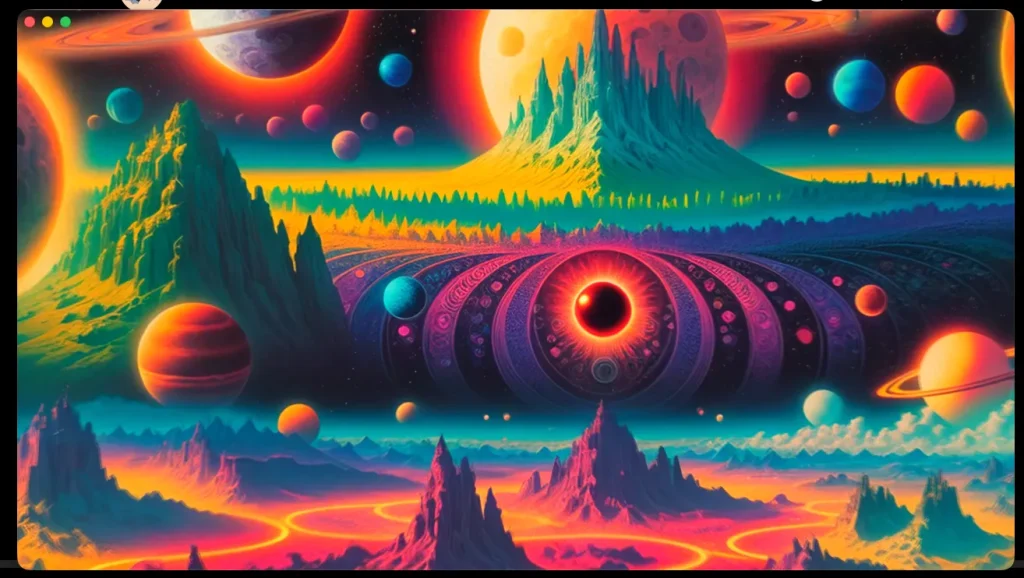
Scott Draves, a pioneer in the world of algorithmic art, believes this is a missed opportunity for human enrichment. His latest venture, Infinidream.ai, seeks to transform these idle moments into a continuous stream of living, breathing art. Available for both Mac and Windows, Infinidream.ai is a desktop application that replaces the traditional screensaver with generative AI paintings that evolve in real-time.
Unlike standard screensavers that rely on looping video files or slideshows, Infinidream.ai utilizes sophisticated generative models to ensure that the art is never the same twice. The software curates works from dozens of prominent AI artists, blending their styles into a seamless, ambient experience. Users can set the "mood" and "tempo" of the visuals, allowing the screen to act more like a kinetic sculpture—similar to a Calder mobile—than a piece of hardware. The application is currently free to try, requiring only an account at the company’s website to begin turning monitors into dynamic canvases.
Chronology: From Distributed Fractals to Neural Networks
To understand the significance of Infinidream.ai, one must look back at the career of its creator, Scott Draves. Draves is not a newcomer to the intersection of code and aesthetics; he has spent over three decades exploring how machines can generate beauty.
1999: The Birth of Electric Sheep
The lineage of Infinidream.ai begins in 1999 with the launch of Electric Sheep. Named after Philip K. Dick’s novel Do Androids Dream of Electric Sheep?, the project was a landmark in distributed computing and generative art. It turned the idle computers of 450,000 users worldwide into a giant networked supercomputer. While the users slept, their machines rendered "sheep"—complex, evolving fractal animations.
These "sheep" were then shared across the network. Users could vote on the animations they liked best, and the "genetic" code of the most popular sheep would be used to "breed" the next generation. This created a form of digital evolution that ran for over twenty years, eventually being exhibited in prestigious institutions like the Museum of Modern Art (MoMA) and the Los Angeles County Museum of Art (LACMA).
2010s: The Rise of Algorithmic Maturity
Throughout the 2010s, as processing power increased and GPU technology became more accessible, Draves continued to refine the concept of "living art." While the art world began to grapple with the commercialization of digital files via NFTs and digital frames, Draves remained focused on the experience of the art—the way it occupies a physical room and influences the psychological state of the viewer.
2023–2024: The AI Revolution and Infinidream
The explosion of Large Language Models (LLMs) and Diffusion Models (like Midjourney and Stable Diffusion) provided the final piece of the puzzle. Draves realized that the "Sheep" model of the 90s could be supercharged by contemporary AI. By collaborating with a new generation of AI artists, Draves developed Infinidream.ai to move beyond fractals into the realm of complex, representative, and abstract paintings that could morph with the fluidity of a dream. The app was launched to provide a bridge between high-concept generative art and the everyday consumer’s workspace.
Supporting Data: The Science of Ambient Environments
The move toward "ambient computing" and "living art" is supported by a growing body of research regarding workplace psychology and the impact of visual environments on mental health.
1. The "Restorative" Power of Generative Art:
Studies in environmental psychology, such as the Attention Restoration Theory (ART), suggest that looking at nature or complex, non-demanding visual patterns can help the brain recover from the fatigue of "directed attention" (the kind of focus required for spreadsheets or coding). Infinidream’s slow-morphing AI paintings provide what researchers call "soft fascination," which allows the mind to wander and reset without being overwhelmed by information.
2. The Screen Real Estate Market:
As of 2024, the global monitor market continues to grow, with a shift toward 4K and OLED displays. These high-end screens are capable of producing deep blacks and vibrant colors that make digital art indistinguishable from physical media in certain lighting. However, many users are hesitant to leave screens on due to "burn-in" fears or energy consumption. Infinidream addresses this by ensuring constant pixel movement (preventing burn-in) and optimizing the software to run efficiently in the background without taxing the CPU to the levels seen in 3D gaming.
3. The Proliferation of AI Artists:
The "creator economy" for AI art has expanded exponentially. According to industry reports, there are now millions of unique users engaging with generative art tools daily. Infinidream.ai taps into this by acting as a curated gallery, selecting "dozens of artists" to ensure high-quality output rather than the chaotic, often low-quality results found in uncurated AI repositories.
Official Responses: The Vision of Scott Draves
In discussing the launch of the platform, Scott Draves emphasizes that the goal is not to demand more of the user’s attention, but to reward the attention they do give.
"There’s a moment every few hours when your computer just sits there," Draves notes. "Screen dark, or worse: showing the time in giant white numerals against a black void, quietly announcing that nothing interesting is happening. That moment is wasted."
Draves describes the software as an antidote to the "dead screen problem." His philosophy revolves around the idea that art should have duration as well as form. In his view, a painting that stays the same for 100 years is a static object, but a painting that shifts according to an algorithm is a partner in the room’s atmosphere.
"Think of a Calder mobile, or a kinetic sculpture that shifts with the air in the room," Draves explains. "Art that is never quite the same twice. Each piece slowly drifts, morphs, and cycles through states that feel deliberate but never repeat exactly."
Early adopters and artists involved in the project have echoed this sentiment, noting that the "slow-motion" or "burning fire" tempo settings allow the app to function as much as a lighting fixture as a piece of software. It changes the "mood" of a room by altering the light and color cast by the monitor, effectively turning a home office into a temporary gallery.
Implications: The Future of Domestic and Professional Spaces
The introduction of Infinidream.ai carries significant implications for the future of how we interact with our living and working environments.
The Democratization of Art Curation
Historically, owning "living art" required expensive, specialized hardware or custom commissions from digital artists. By making Infinidream.ai a software-based solution for standard Mac and Windows machines, Draves is democratizing the experience. Any student with a laptop or any office worker with a second monitor can now host an evolving exhibition of high-end AI art.
The Shift from "Utility" to "Atmosphere"
We are entering an era where our devices are expected to do more than just "work." As remote work becomes a permanent fixture of the global economy, the "home office" is being scrutinized for its aesthetic and psychological impact. Tools like Infinidream.ai suggest a future where our hardware transitions seamlessly between a tool for productivity and a tool for wellness.
Ethical and Aesthetic Evolution
As AI art continues to be a subject of intense debate regarding copyright and the "human touch," Infinidream.ai takes a curated approach. By specifically involving AI artists and giving them a platform, the project moves the conversation away from "AI vs. Artist" and toward "AI as a Medium." It positions the computer not as a replacement for the painter, but as a new kind of canvas that requires human curation to remain meaningful.
The "Always-On" Culture
There is a potential critique regarding the "always-on" nature of such technology. In an age of climate change, the energy consumption of leaving screens active is a valid concern. However, proponents argue that the shift toward energy-efficient LED and OLED technology makes the "ambient energy" of a living painting a low-cost trade-off for the mental health benefits it provides.
Conclusion: Reclaiming the Void
Infinidream.ai represents a synthesis of twenty-five years of artistic experimentation and the cutting edge of artificial intelligence. It challenges the user to rethink their relationship with the devices that dominate their lives. Instead of a tool that is either "on" (and demanding work) or "off" (and effectively dead), the computer becomes a source of quiet inspiration.
As Draves concludes, "Your screen is on anyway. It might as well be beautiful." In the transition from the chaotic fractals of the 90s to the sophisticated neural dreams of today, Infinidream.ai offers a glimpse into a future where our digital spaces are as vibrant and ever-changing as the physical world around us.