
The Silicon Valley Solution to the World’s Deadliest Animal: Alphabet’s "Debug" Project
Introduction: The Tiny Predator and the Tech Giant
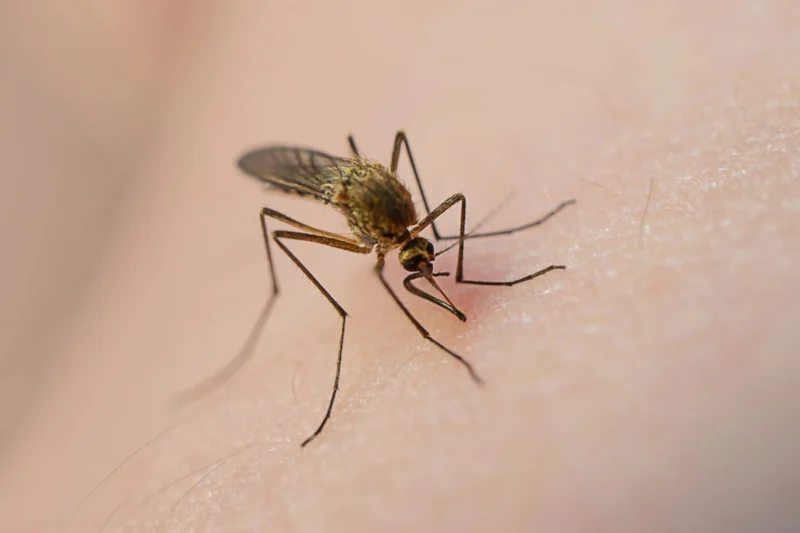
While the public often perceives apex predators like sharks, lions, or venomous snakes as the primary threats to human safety, the reality of global mortality tells a different story. According to the Centers for Disease Control and Prevention (CDC) and the World Health Organization (WHO), the most lethal creature on Earth is the mosquito. Responsible for hundreds of thousands of deaths annually and millions of debilitating illnesses, these insects serve as the primary vectors for a host of devastating diseases, including malaria, dengue fever, Zika virus, West Nile virus, and yellow fever.
In response to this global health crisis, Alphabet Inc.—the parent company of Google—has pivoted its technological prowess toward the biological sciences. Through its life sciences subsidiary, Verily, the company has launched "Debug," an ambitious initiative designed to collapse mosquito populations using high-tech automation and biological engineering. The project’s latest milestone involves a massive expansion into the United States, with a proposal to release 32 million sterile mosquitoes across California and Florida. This move represents a significant shift in how humanity battles infectious diseases, moving away from chemical pesticides and toward targeted biological intervention.
The Science of Suppression: How "Good Bugs" Stop "Bad Ones"
The Debug project operates on a simple but profound motto: "Bad mosquitoes spread disease. Good mosquitoes can stop them." To understand the methodology, one must first understand the biology of the mosquito. In species like Aedes aegypti—the primary target of the Debug project—only the females bite. They require the protein in blood to produce eggs. Male mosquitoes, conversely, feed exclusively on nectar and do not transmit diseases to humans.
The Debug team, composed of an interdisciplinary group of molecular biologists, automated systems engineers, and data scientists, utilizes a technique known as the Sterile Insect Technique (SIT). Specifically, they employ a variation called the Incompatible Insect Technique (IIT). This process relies on a naturally occurring bacterium called Wolbachia.
Wolbachia is found in nearly 60% of all insect species, but it is not naturally present in Aedes aegypti. When male mosquitoes are infected with a specific strain of Wolbachia in a laboratory setting and subsequently released into the wild to mate with wild females (which do not carry the bacteria), a biological incompatibility occurs. The resulting eggs fail to hatch, effectively acting as a form of birth control for the species. Because the males do not bite, their release poses no direct nuisance or health risk to the human population. Over successive generations, the total population of the targeted mosquito species collapses, drastically reducing the transmission of the diseases they carry.
Chronology: From the 1950s to the Digital Age
The concept of using sterile insects to control populations is not a modern invention. The history of SIT dates back to the 1950s, when American entomologists Edward F. Knipling and Raymond C. Bushland developed the method to eradicate the screwworm fly, a parasite that devastated livestock. Their success led to the technique being used globally to manage agricultural pests like fruit flies and codling moths.
However, applying SIT to mosquitoes proved historically difficult due to the sheer scale required. Mosquitoes are fragile, have short lifespans, and must be released in massive numbers to compete with wild populations. Until recently, the process of sorting male mosquitoes from females was a manual, labor-intensive task prone to human error—a critical flaw, as releasing too many females would inadvertently increase the biting population.
Timeline of the Debug Initiative:
- Early 2010s: Alphabet (via Verily) begins exploring the intersection of robotics and biology to solve the "scaling problem" of mosquito rearing.
- 2017: Debug begins its first field studies in Fresno County, California, testing the efficacy of its automated sorting and release systems.
- 2020-2023: The project expands internationally, focusing heavily on Singapore, a region plagued by endemic dengue fever.
- 2024: Results from the Singapore trials demonstrate unprecedented success, with a nearly 90% reduction in mosquito populations in target zones.
- Current Phase: Debug submits formal requests to the U.S. Environmental Protection Agency (EPA) to scale operations in Florida and California, seeking to release 16 million mosquitoes annually in each state over a two-year period.
Supporting Data: Evidence from the Field
The effectiveness of the Debug initiative is best illustrated by its performance in Singapore. As of 2024, the project has achieved a 80-90% suppression of the Aedes aegypti mosquito population in areas where releases were consistent. More importantly, these biological results translated directly into public health victories: there was a reported 70% reduction in dengue fever incidents within six to 12 months of the initial release.
Currently, the Singapore facility is a marvel of automation, releasing over 10 million sterile male mosquitoes every week. The technology that makes this possible involves:
- Automated Rearing: Climate-controlled environments where larvae are grown under optimal conditions to ensure the sterile males are as healthy and "competitive" as wild males.
- AI-Driven Sorting: Using advanced computer vision and proprietary algorithms, the system identifies and separates males from females with near-perfect accuracy, a task previously thought impossible at this scale.
- GPS-Guided Release: Specialized vans and drones equipped with release mechanisms ensure that the mosquitoes are distributed evenly across targeted neighborhoods, maximizing the chances of mating with wild females.
Unlike traditional pesticides, which often kill non-target insects like bees and butterflies and lead to chemical resistance in mosquitoes, the Wolbachia method is highly specific. It only affects the Aedes aegypti species, leaving the broader ecosystem intact.
Official Responses and Regulatory Landscape
The expansion of Debug into the United States has necessitated a complex regulatory dance. The project is currently under the oversight of the Environmental Protection Agency (EPA), which classifies the Wolbachia-carrying mosquitoes as a "biopesticide."
Alphabet has requested an Experimental Use Permit (EUP) to facilitate the release of 32 million mosquitoes across California and Florida. These states were chosen for specific reasons: Florida has long struggled with mosquito-borne illnesses due to its subtropical climate, while California has seen a recent and alarming invasion of Aedes aegypti, a species not native to the state but now thriving in its urban centers.
Public and Official Sentiment:
- Health Departments: Many local health officials in Florida and California have expressed cautious optimism. With climate change expanding the range of tropical mosquitoes, traditional abatement methods (like truck-mounted spraying) are becoming less effective and more expensive.
- Environmental Advocates: While some groups have raised concerns about the long-term impact of suppressing a species, most entomologists point out that Aedes aegypti is an invasive species in the Americas. Removing it, they argue, restores ecological balance rather than disrupting it.
- The EPA’s Stance: The EPA is currently in a public comment period, allowing citizens and scientists to voice concerns or support. The agency’s primary focus is ensuring that the release does not harm endangered species or human health, though the non-GMO, non-toxic nature of the Wolbachia method typically meets these safety standards more easily than chemical alternatives.
Implications: The Future of Public Health
The implications of the Debug project extend far beyond the borders of California and Florida. If successful at scale in the United States, this technology could be the blueprint for eradicating mosquito-borne diseases globally.
1. A Shift in Disease Management
For decades, the fight against malaria and dengue has been a war of attrition involving bed nets and chemical sprays. Alphabet’s approach represents a shift toward "precision biology." By utilizing data and robotics, we are moving toward a world where disease vectors can be managed with surgical precision, minimizing collateral damage to the environment.
2. Economic Impact
Mosquito-borne illnesses cost the global economy billions of dollars annually in healthcare costs and lost productivity. In Florida alone, mosquito control districts spend millions of taxpayer dollars every year on traditional spraying. A self-sustaining biological solution could eventually prove far more cost-effective than the perpetual cycle of chemical intervention.
3. Ethical and Technological Precedent
The Debug project also sets a precedent for how big tech companies interact with public health. While Google is primarily known for search engines and advertising, its venture into "biological software"—using bacteria to program the reproductive habits of insects—shows the diversifying power of Silicon Valley. It raises important questions about the role of private corporations in managing public ecosystems, necessitating robust transparency and ethical oversight.
Conclusion
The Debug project stands at the intersection of ancient biology and futuristic technology. By repurposing a 1950s technique with 21st-century automation, Alphabet is taking aim at a predator that has plagued humanity for millennia. As the EPA reviews the proposal for the California and Florida releases, the world watches to see if 32 million "good" mosquitoes can truly solve the problem of the "bad" ones. If the success in Singapore is any indication, the hum of a mosquito may one day no longer be a sound of danger, but a reminder of a problem solved by science.




Leave a Comment