The Dignity Gap: How ‘Dying Reviews’ is Forcing a Corporate Reckoning on End-of-Life Care
In a world obsessed with the "user experience" of growth, achievement, and consumption, one critical phase of the human journey has remained remarkably underserved by the corporate world: the end of life. While businesses invest billions into optimizing the journeys of students, newlyweds, and new parents, the terminally ill often find themselves navigating a bureaucratic labyrinth of inflexible policies and indifferent systems.
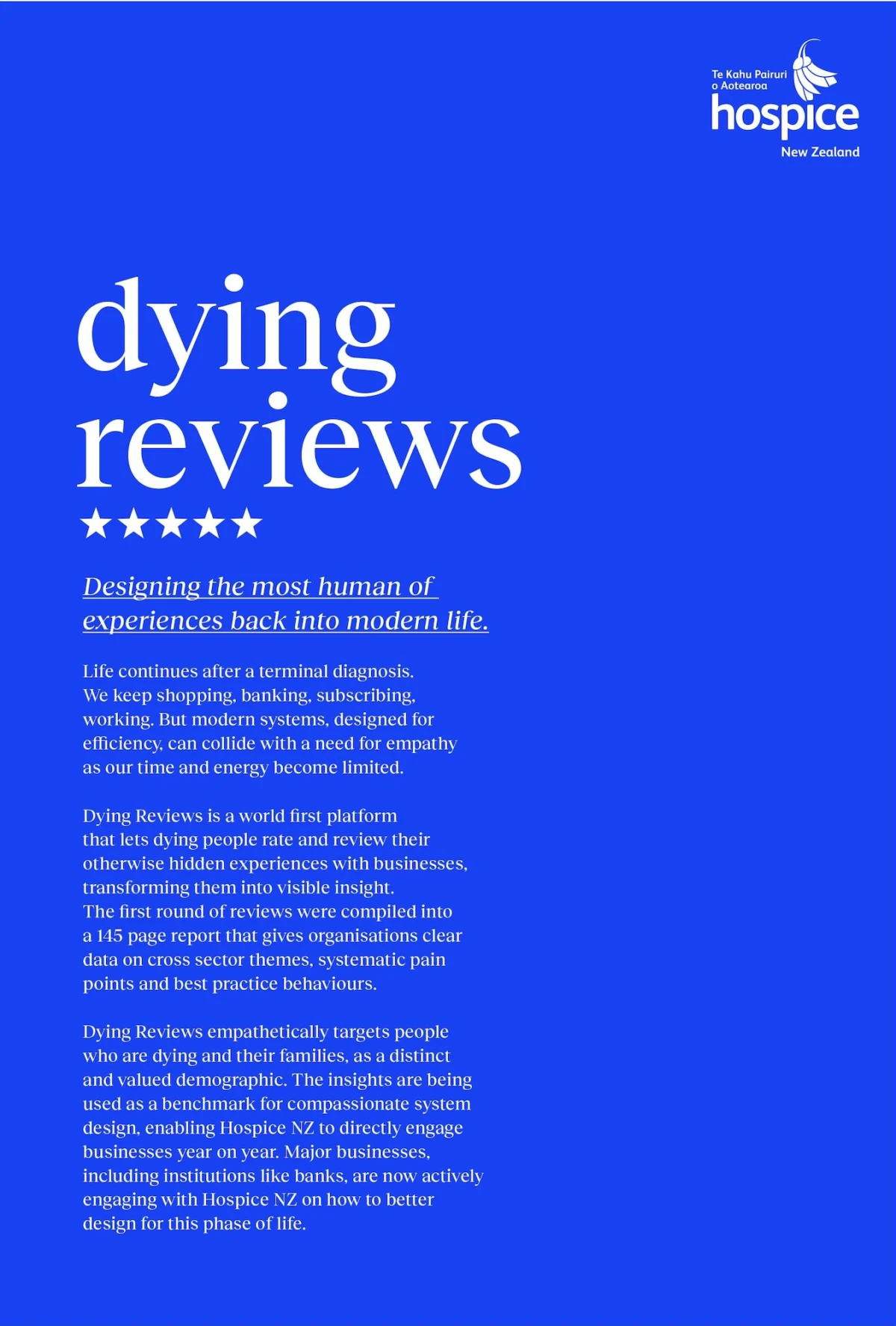
To bridge this gap, Hospice New Zealand, in collaboration with the creative agency McCann Wellington, has launched Dying Reviews. This innovative online platform provides a space for New Zealanders to rate and review how businesses and organizations treat them during their final stages of life. By turning the "dying experience" into a measurable data point, the initiative aims to force a shift in how society—and specifically the private sector—approaches the concept of dignity at the end of life.
Main Facts: A New Metric for Human Dignity
The "Dying Reviews" platform was born from a stark realization: while death is a universal certainty, the infrastructure of modern commerce is largely designed for the living and the healthy. For those facing a terminal diagnosis, the physical and emotional toll of their illness is frequently compounded by "administrative trauma"—the struggle to cancel a phone contract, adjust a mortgage, or navigate an airline’s medical clearance protocols.
The campaign has already garnered international acclaim, recently being shortlisted for a Cannes Lions Glass Award. This category recognizes creative work that addresses issues of inequality and prejudice, highlighting the fact that the terminally ill are often a marginalized demographic in the eyes of corporate designers.
To date, the platform has collected over 500 detailed responses from terminally ill individuals and their caregivers. These reviews serve a dual purpose: they provide a cathartic outlet for those experiencing hardship, and they offer a roadmap for organizations willing to evolve. The feedback spans a wide array of sectors, including banking, telecommunications, insurance, aviation, and even public institutions like schools and churches.
Chronology: From Creative Spark to Systemic Change
The journey of Dying Reviews began with a strategic partnership between Hospice New Zealand and McCann Wellington (formerly known as Clemenger NZ). The agency recognized that traditional "charity" advertising—which often relies on pity or emotional appeals for donations—was not enough to address the systemic hurdles faced by hospice patients.
Phase 1: Identifying the Design Deficit
The creative team observed that while "Customer Experience" (CX) is a buzzword in every boardroom, it rarely accounts for the "Final Experience." Organizations spend years perfecting the onboarding process for new customers but offer little more than a convoluted "bereavement department" phone tree for those departing.
Phase 2: Launching the Platform
The website, dyingreviews.org, was launched as a public forum. Unlike traditional review sites like Yelp or TripAdvisor, which focus on service quality in a leisure context, Dying Reviews focuses on empathy, flexibility, and dignity. The launch was met with immediate engagement from the New Zealand public, revealing a deep-seated well of frustration regarding how the terminally ill are treated by large institutions.
Phase 3: Recognition and Expansion
As the volume of data grew, the campaign’s impact was recognized on the global stage at the Cannes Lions International Festival of Creativity. This helped transition the project from a local advocacy tool to a global case study in "inclusive design."
Phase 4: Corporate Engagement and Future Reporting
The project is currently entering its most impactful phase. Major corporations, particularly in the financial sector, have begun reaching out to Hospice NZ to discuss the findings. Later this year, the organization plans to release the first comprehensive "Dying Reviews Report," which will offer deeper, data-driven insights into corporate performance regarding end-of-life care.
Supporting Data: Mapping the Challenges of the Terminally Ill
The 500+ reviews collected thus far provide a sobering look at the "inflexible practices" that exist across society. The data identifies several recurring pain points where corporate policy clashes with human reality:
1. Financial Services and Banking
Banks are frequently cited for their inability to adjust loan terms or provide compassionate relief for those who can no longer work due to illness. The process of transferring power of attorney or accessing funds for palliative care is often described as "cold" and "excessively bureaucratic."
2. Telecommunications and Subscriptions
Telecom companies are among the most criticized for their complicated cancellation processes. Carers have reported being forced to wait on hold for hours or being told that a dying relative must "personally authorize" a contract termination, despite being physically unable to speak.

3. The Aviation Industry
Airlines are noted for their lack of accommodation for medical needs. From the difficulty of transporting oxygen to the refusal to refund non-refundable tickets for those too ill to travel, the travel sector is highlighted as a major source of stress for families trying to make final memories.
4. Community and Public Institutions
The reviews are not limited to the private sector. Schools, churches, and pharmacies have also been scrutinized. These reviews often highlight a lack of "death literacy"—a general discomfort or lack of protocol when dealing with students losing a parent or congregants facing their final days.
Official Responses: Leading with Empathy and Data
The leaders behind the initiative emphasize that this is not merely a "shaming" exercise, but a call for innovation.
Wayne Naylor, CEO of Hospice New Zealand, views the platform as a tool for societal evolution. "Dying Reviews has the potential to drive innovation for a phase of life we are all likely to go through," Naylor stated. "It is about designing with empathy and ensuring we are treated with dignity—not just at the end, but throughout the entire process of decline and care."
Naylor’s perspective is rooted in the philosophy of hospice care, which seeks to maximize quality of life. By extending this philosophy to the commercial world, he argues that businesses can play a vital role in reducing the "unnecessary anguish" that currently accompanies terminal illness.
Brigid Alkema, Chief Creative Officer at McCann Wellington, highlights the strategic brilliance of using a review-based model. "For businesses, Dying Reviews speaks in a language they understand: data," Alkema explained. "They can now see how they’re performing at a human level, track it over time, and make informed decisions about where empathy and better design can improve customer experience."
Alkema is quick to point out that this isn’t just a moral argument; it’s a business one. "This isn’t about charity—it’s about smart businesses recognizing an opportunity to lead on something that matters. Companies that prioritize dignity for the dying are often the ones that build the deepest trust with the living."
Implications: A New Standard for Corporate Social Responsibility
The long-term implications of Dying Reviews extend far beyond the borders of New Zealand. The project suggests a fundamental shift in how we define "inclusive design" and "Corporate Social Responsibility" (CSR).
The Monetization of Insights
One of the most innovative aspects of the project’s next phase is the decision to place the upcoming "Dying Reviews Report" behind a paywall for businesses. This creates a sustainable income stream for Hospice NZ, allowing the data generated by the community to directly fund the care of those in need. For corporations, paying for these insights is an investment in "Empathy Research," providing them with the specific guidelines needed to overhaul their end-of-life protocols.
Driving Legislative and Policy Change
As the dataset grows, it provides a powerful evidence base for advocates to lobby for legislative changes. This could include "Compassionate Cancellation" laws that mandate simple, one-click terminations of contracts for the terminally ill, or banking regulations that require specialized training for staff handling end-of-life accounts.
Normalizing Death in the Public Square
Perhaps the most profound implication is the normalization of death as a topic of conversation. By placing "Dying Reviews" alongside restaurant and hotel reviews, the campaign strips away some of the taboo surrounding terminal illness. It acknowledges that the dying are still active participants in society—consumers, citizens, and family members—who deserve the same level of design consideration as any other demographic.
A Global Blueprint
The success of the McCann Wellington and Hospice NZ collaboration serves as a blueprint for other countries. As global populations age, the "silver economy" is expanding, and with it, the need for a "dignified exit" economy. Dying Reviews demonstrates that when creativity meets clinical expertise, it can create a platform that doesn’t just ask for change, but provides the data to make it inevitable.
In conclusion, Dying Reviews is a reminder that the measure of a society—and its economy—is not just how it treats those at the peak of their productivity, but how it honors those at the end of their journey. Through the power of data and the courage of those sharing their stories, Hospice NZ is ensuring that the lessons learned by the dying are not lost, but are used to build a more compassionate world for everyone to follow.