Beneath the Gilded Surface: Billionaire Doomsday Bunkers and the Terrors They Conceal
Billionaires, often perceived as detached from the realities faced by the average person, possess a unique form of "make-believe" driven by an intense desire to secure a lasting legacy. This aspiration manifests in increasingly elaborate and luxurious ways, nowhere more starkly than in the burgeoning market for private apocalypse bunkers. These opulent subterranean fortresses, designed to shield the ultra-wealthy from any conceivable global catastrophe, are not just symbols of extreme wealth; they are fertile grounds for psychological unease and, disturbingly, serve as perfect, albeit unintended, settings for horror narratives.
The Allure of the Fortified Sanctuary
The concept of a personal refuge from societal collapse is not new. However, the modern iteration of the doomsday bunker has evolved from rudimentary survival shelters to sprawling, high-tech enclaves. Many of these are new constructions, while others are sophisticated conversions of pre-existing structures like decommissioned missile silos, abandoned mines, and wartime command centers.
One such example is The Diefenbaker in Canada. Originally conceived as a Cold War refuge for national leaders, it has been reimagined as an "elite sanctuary." The marketing rhetoric promises residents the ability to "maintain an elevated lifestyle no matter what happens outside." Once intended for prime ministers and generals, it now offers a fortified haven of "wellness protocols" and gourmet dining, where the stated aim is for "great minds to come together to shape a more certain and prosperous future." The accompanying imagery often showcases interiors that deliberately eschew any visual suggestion of their subterranean nature, featuring lush, glass-walled gardens and elegantly appointed living spaces, designed to evoke the illusion of an uncompromised existence above ground.
A Catalogue of Catastrophes: The Marketing of Fear
The marketing language employed by companies specializing in these luxury bunkers is often as elaborate as the structures themselves, a dizzying blend of the plausible and the fantastical. Vivos, a prominent builder of such hideaways, has documented a wide spectrum of potential global threats in their promotional materials. This list, shared on platforms like Instagram, ranges from the chillingly probable – such as pandemics and nuclear war – to the more esoteric and apocalyptic, including "Biblical predictions of Armageddon," "the prophecies of Nostradamus," and even the astronomical anxieties surrounding "Nibiru/Planet X."
This eclectic compilation of doomsday scenarios evokes a disquieting parallel to Winston Zeddemore’s infamous job interview in Ghostbusters, where a desperate need for employment leads to a surreal acceptance of the absurd. However, unlike the fictionalized comedy, these bunkers come with price tags in the millions, making the humor decidedly dark. The juxtaposition of divine prophecy with geopolitical threats and natural disasters suggests a profound detachment from the nuanced realities of societal breakdown. For a certain class of individuals, the specific nature of the downfall seems to matter less than the certainty of its arrival. The luxury bunker, in this context, acts as a mirror, reflecting a collective resignation to the end of civilization, regardless of its precise form.
Architecture of Denial: Designing for Illusion
A crucial element in the design of these luxury bunkers is the pervasive need to disguise their true nature. The occupants are not meant to feel confined; rather, they are to experience a continuation of their elevated reality. This necessitates an architectural approach that prioritizes illusion over authenticity. The goal is to provide the sensation of natural environments, even when buried deep underground.

This leads to the creation of spaces like SAFE’s "aeries," a term that evokes the nests of birds of prey, suggesting a lofty and commanding position. These structures are designed to create a "contrived vertigo," making inhabitants feel as though they are suspended high above the earth, even when situated dozens of stories below the surface in a nuclear-proof shelter. Forbes has described these features, noting how a swimming pool can be made to feel "perched high in the air," despite its actual depth.
The Psychological Imperative: Sanity in Subterranean Splendor
The rationale behind this elaborate denial is rooted in a purported need for psychological survival. Vivos CEO Robert Vicino has stated, "People have to not only survive, but psychologically survive." He asserts that their enterprise "doesn’t create fear. We resolve it." Yet, the resulting environments, often described as scenes of "gaudy dislocation," can feel more like conduits to slow derangement than solutions to existential dread.
The ambition extends to replicating entire historical or religious structures underground. Vivos has planned to construct a medieval church within one of its larger bunkers, complete with vaulted ceilings intended for activities like "whittling wood or playing chess." While this might offer a semblance of cultural continuity, it also highlights a curious disconnect, suggesting that the spiritual or contemplative aspects of such spaces are secondary to their aesthetic or recreational potential.

Furthermore, the preservation of material wealth is paramount. Vivos plans to allocate space for extensive archives, housing everything from Grecian sculptures to bejeweled fonts and Renaissance portraits. This collection of priceless artifacts, coupled with the company’s tongue-in-cheek mention of "zombie apocalypse" preparedness, borders on the self-parodic, as if the very magnates they aim to serve are being gently mocked.
The "Aeries" of SAFE: A Glimpse into Future Fears
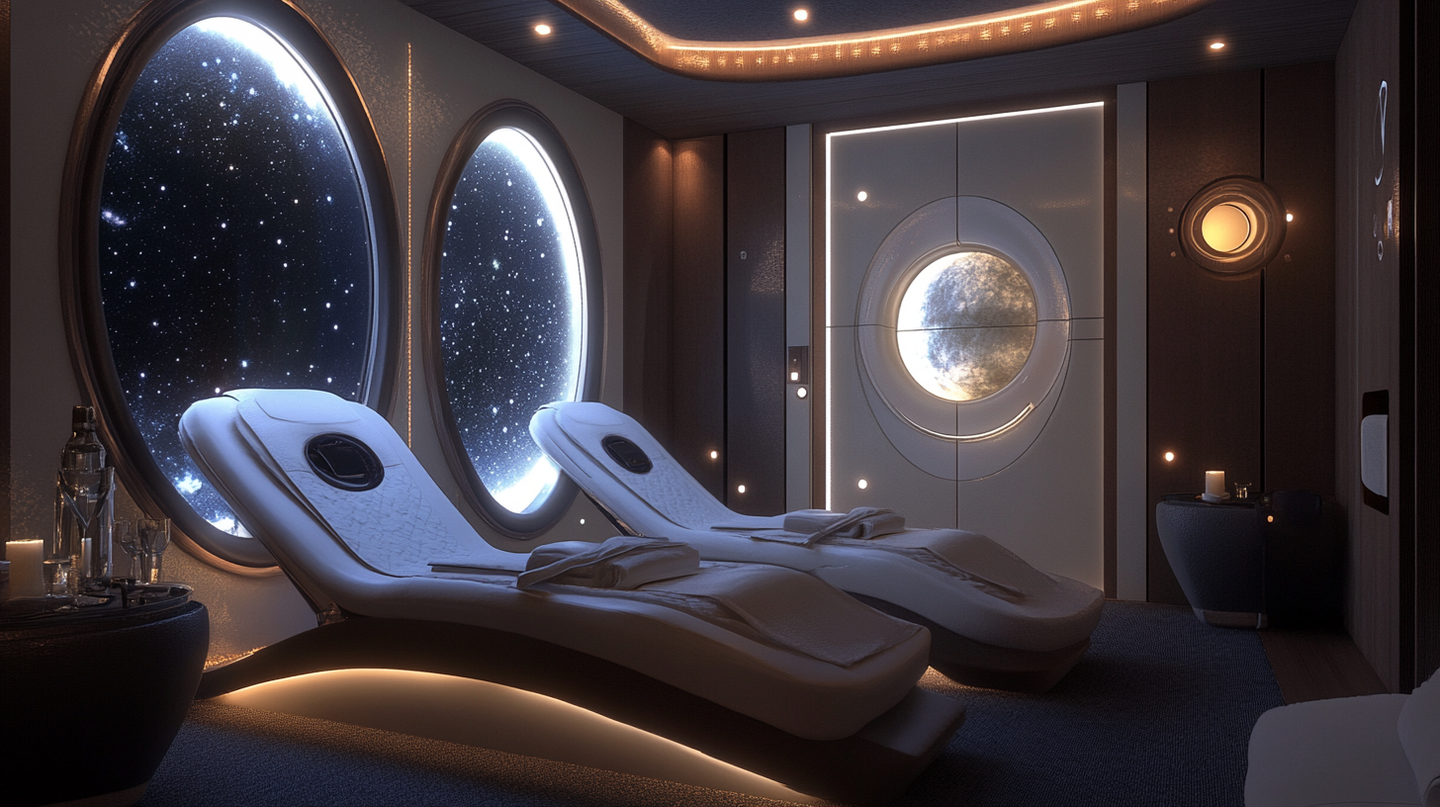
SAFE’s designs for their "aeries" offer a more somber, yet equally unsettling, vision. These include amenities like robot massage parlors, complete with starlit alcoves designed for a clientele whose skulls might be imagined to be bathed in constellations, or perhaps fleeing an encroaching cosmic threat. Medical bays are depicted with gleaming bodyscans, yet conspicuously devoid of any patients, raising questions about their actual purpose. "War rooms" are styled after comic book aesthetics, replete with holographic globes and banks of monitors, projecting an image of preparedness that feels more theatrical than functional.
Throughout these designs, there is a palpable effort to negate the reality of absolute containment. Mirrors, textured facades, and cleverly concealed lighting are employed to create the illusion of expansive distances and simulate the presence of an unseen sun. This elaborate theater of illusion underscores the fundamental disconnect between the desire for survival and the psychological toll of prolonged isolation.

Echoes in the Digital Realm: Video Games as Precursors
The architectural and psychological dimensions of these luxury bunkers bear a striking resemblance to the environments found in video games. The reliance on optical illusions, the creation of enclosed spaces designed to mimic larger, more dynamic worlds, and the narrative progression tied to overcoming obstacles are all hallmarks of game design. It’s plausible that former video game designers are contributing to the conceptualization of these subterranean havens.
The parallels are particularly strong with games that explore themes of isolation, survival, and the dark side of human ambition. BioShock, with its underwater city of Rapture, serves as an archetypal example of the elite seeking refuge from societal decay, only to succumb to their own hubris. Similarly, the Fallout series, with its vast network of nuclear redoubts, depicts a world reshaped by catastrophe and the desperate measures taken to endure.
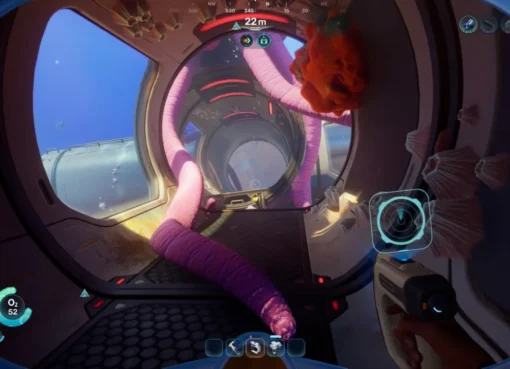
However, the sheer unsettling nature of the imagery associated with these luxury bunkers also evokes the palpable dread found in Frictional Games’ Amnesia: The Bunker. This critically acclaimed horror title plunges players into the claustrophobic confines of a World War I tunnel network, now the hunting ground of a monstrous entity. Even before the creature’s emergence, the soldiers inhabiting this grim environment harbored few illusions about their predicament. One soldier’s letter poignantly captures the stark reality: "They want a grand subterranean hub of courage, steel, and intelligence," he writes, "We both know what they will get: a rancid, stinking pit. A void, a hole. Full of men, scared and confused. Then they will proclaim it a success and issue a new order: dig again. Deeper this time."

Amnesia: The Bunker as a Counterpoint to Opulence
While Amnesia: The Bunker is not a satire of ostentatious billionaires, its grim narrative offers a powerful counterpoint to the syrupy imaginings of Vivos and SAFE. The game’s underground church, for instance, is a place where "whittling" has clearly taken a more sinister turn, with confession booths overflowing with viscera. Despite the pervasive gloom, grime, and utilitarian proportions of the environment, there are moments that echo the "decadent false skies" of SAFE’s Aeries.
The pillbox in Amnesia: The Bunker serves as a particularly compelling example. Initially appearing as a wallscreen offering an illusion of spaciousness, it ultimately punishes the player for succumbing to its deceptive charm. Ascending into the pillbox offers a fleeting glimpse of ‘open air,’ a dark and golden vista of a ruined earth beneath a creeping sun. This war-torn landscape, rendered with an almost Arcadian beauty, transforms the chaotic expanse of "No Man’s Land" into an ornamental canvas. The effect is akin to the breathtaking, albeit temporary, relief of reaching Anor Londo in Dark Souls after navigating the relentless undeath of the Undead Parish – a shock of majesty after prolonged suffering. This visual respite, however, is always tempered by the underlying threat, a stark reminder that the "bullet" is always waiting.
The Descent into Nihilism: Toussaint Beaufoy’s Vision
Within the grim confines of Amnesia: The Bunker, the character of Toussaint Beaufoy serves as a disturbing analogue to the self-interred tycoon, his mind slowly unraveling amidst his self-imposed isolation. As one of the few surviving soldiers, Beaufoy’s psyche is profoundly tainted by supernatural forces. A discovered letter recounts a nightmarish vision of "sex and gore, a terrible whirl of horrors, bloody and twirled, that make the charnel pit of the war seem like mere play." While revolted, Beaufoy also finds himself inexplicably drawn to these visions, confessing, "The worst part, at the end of every day, I want to be asleep. I want to go back to that place."

Beaufoy’s obsession with the word "twirl" becomes his narrative anchor. In an anti-war poem, penned during a fateful excavation of a Roman mithraeum – a subterranean temple filled with interdimensional debris and spectral presences – he muses: "We whirl the world, the world we whirl, it all gets lost in a terrible twirl." His verse captures a mind succumbing to the centrifugal force of despair, where the war’s horrors bleed into a monotonous, ever-widening gyre of quotidian entropy. The poem’s descent into a litany of bleak observations – "a snarl in the dark, a sad day in the park, a stone reminder…" – mirrors the overwhelming sense of a universe devoid of meaning.
The "Terrible Twirl" of Armageddon
This pervasive sense of nihilism, this feeling of a universe collapsing into a meaningless "terrible twirl," resonates powerfully with the exhaustive inventory of armageddons offered by Vivos to persuade the uber-wealthy to retreat underground. The catalog of threats – Nostradamus, Fatima, Edgar Cayce, Russian nukes, superbugs, rogue comets – becomes not a call to action or a practical preparedness strategy, but a monotonous recitation of impending doom. It is a weary acknowledgment that, in the grand scheme, all these distinct cataclysms ultimately blend into one overwhelming, indistinguishable descent.
The ultimate irony, and perhaps the most chilling aspect of this phenomenon, is the embrace of subterranean fantasy as an escape. The appeal of "reigning down here on your knees," surrounded by the stern visages of emperors and the spectral beauty of floating stone, offers a perverse sense of control and grandeur in the face of an uncontrollable and ungrand reality. When players finally encounter Beaufoy in the Roman tunnels, he has renounced the surface world entirely, having self-inflicted blindness to escape the torment of his visions. He wanders the "luxuriant ruin" with a shotgun, reciting his poem to the statues, a solitary figure lost in the endless, meaningless "twirl" of his own creation. This tragic figure, a product of war and psychological torment, serves as a stark, albeit fictional, warning about the true cost of seeking sanctuary in the depths of one’s own making.