The Great Expansion: Why Large-Format 16:9 Displays Are Dominating the 2026 Gaming Landscape
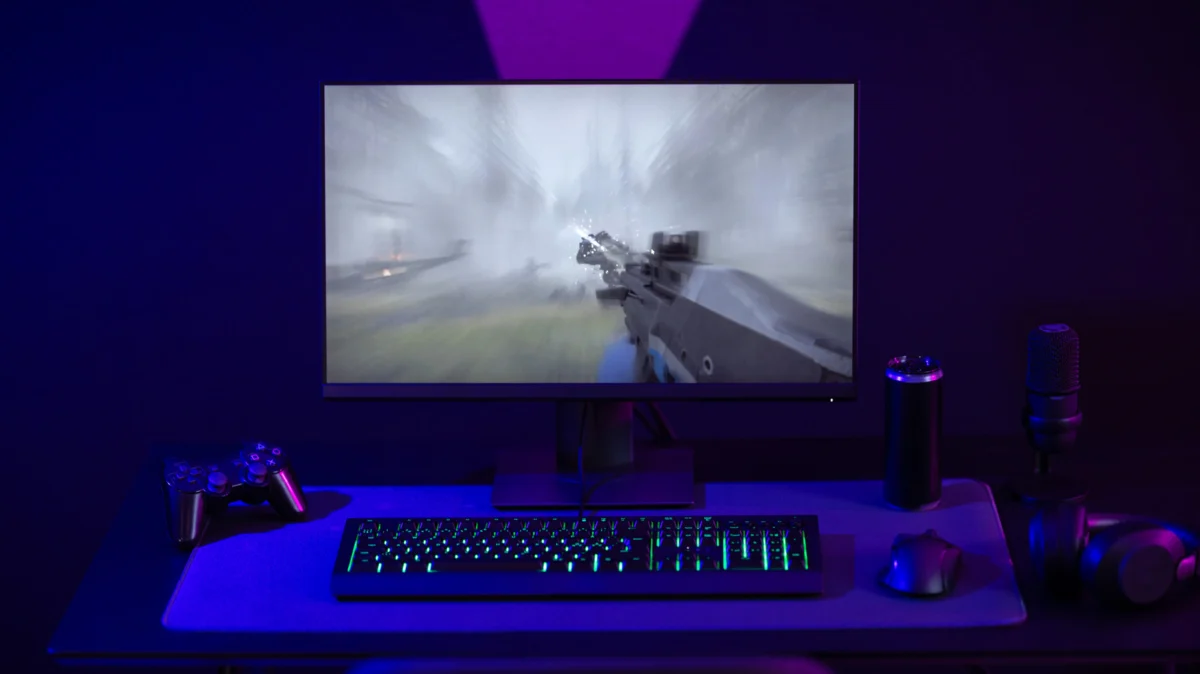
The landscape of PC gaming aesthetics has undergone a radical transformation over the last decade. For years, the "ultrawide" revolution—defined by 21:9 and 32:9 aspect ratios—was touted as the pinnacle of immersion. However, as we move through 2026, a significant shift is occurring. High-end gamers are increasingly returning to the traditional 16:9 format, albeit at scales previously reserved for living room televisions.
The resurgence of the "Big Gaming Monitor" is driven by a convergence of hardware power, console parity, and the refinement of panel technologies like QD-OLED and Mini-LED. With the current generation of GPUs, such as the NVIDIA RTX 50-series, finally capable of driving native 4K resolutions at high refresh rates without compromise, the demand for 32-inch to 55-inch displays has skyrocketed.
Main Facts: The 2026 Standard for Desktop Immersion
In 2026, the definition of a "large" gaming monitor has shifted. While 27 inches was once the enthusiast standard, the market has bifurcated into two primary segments: the 32-inch "sweet spot" and the 40-plus-inch "cockpit" displays.
The primary advantage of these large 16:9 displays over their ultrawide counterparts lies in universal compatibility. While ultrawides often suffer from "black bar" syndrome in cutscenes or require community-made patches to function with older titles, 16:9 remains the native language of the digital world. From Netflix streaming to competitive console gaming on the PlayStation 5 Pro or the latest Xbox hardware, these monitors provide a seamless, full-screen experience.
The Top Contenders of 2026
To understand the current market, one must look at the five displays currently setting the benchmark for performance, color accuracy, and sheer scale:
- Alienware AW3225QF: The QD-OLED pioneer.
- MSI MPG 321URX QD-OLED: The productivity-gaming hybrid.
- Samsung Odyssey Ark 2nd Gen: The 55-inch vertical-tilting behemoth.
- Samsung Odyssey Neo G7: The Mini-LED powerhouse for bright rooms.
- LG UltraGear 32GS95UE-B: The dual-resolution innovator.
Chronology: The Road to 4K Dominance
The journey to the 2026 monitor market began in earnest around 2022, when OLED technology finally migrated from high-end TVs to desktop-sized panels.
- 2022-2023: The first wave of 42-inch OLEDs (like the LG C-series) proved that gamers were willing to use "TVs" as monitors if the response times and refresh rates were competitive.
- 2024: The introduction of third-generation QD-OLED panels addressed early concerns regarding text clarity and brightness, making 32-inch 4K monitors the new aspiration for PC builds.
- 2025: The "Refresh Rate War" saw 4K panels jump from 144Hz to 240Hz as a standard, necessitating the adoption of DisplayPort 2.1 and advanced DSC (Display Stream Compression) technologies.
- 2026: We now see a mature market where the "Big Monitor" is no longer a niche luxury but a foundational component of the high-end gaming ecosystem, supported by GPUs that can finally saturate these panels’ capabilities.
Supporting Data: Technical Specifications and Performance Metrics
When selecting a large-format monitor in 2026, the choice between OLED and Mini-LED remains the most critical technical decision a consumer can make.
The OLED Vanguard: Alienware, LG, and MSI
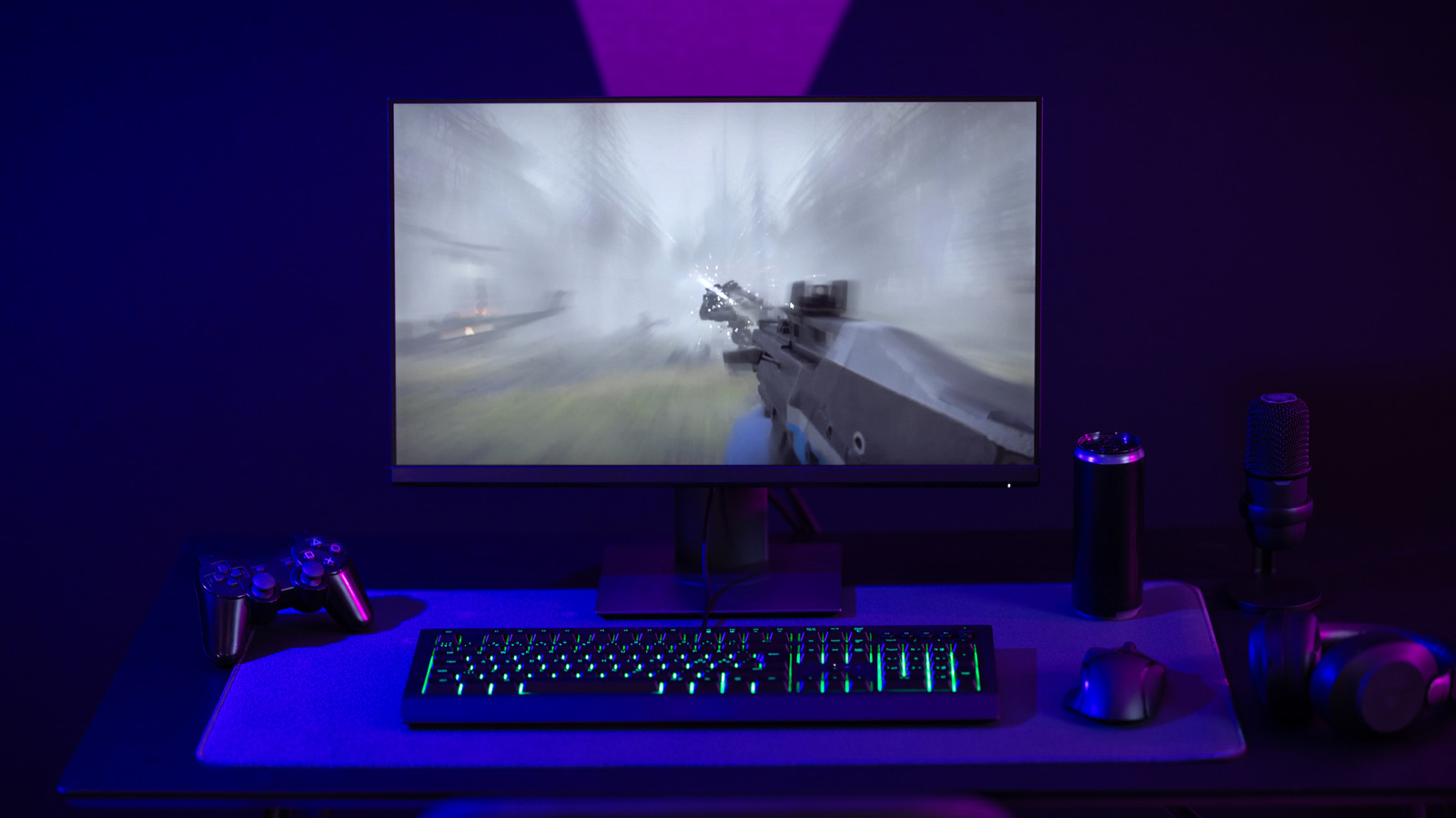
The Alienware AW3225QF and MSI MPG 321URX represent the pinnacle of 32-inch QD-OLED technology. These panels offer a 240Hz refresh rate and a 4K resolution, resulting in a pixel density that ensures crisp text for productivity and breathtaking detail in-game.
- Key Data: Response times on these units are measured in the 0.03ms (GtG) range, effectively eliminating motion blur.
- The Curve Factor: Alienware utilizes a subtle curve to bring the edges of the 32-inch screen into the user’s peripheral vision, whereas MSI opts for a flat panel favored by digital artists who require straight-line accuracy.
The LG UltraGear 32GS95UE-B introduces a "Dual Mode" feature that has become a case study in versatility. It allows users to toggle between 4K at 240Hz for cinematic titles and 1080p at a staggering 480Hz for competitive eSports. This hardware-level switching ensures that a single large screen can serve two diametrically opposed gaming genres perfectly.
The Mini-LED Giants: Samsung’s Dominance
For users who game in bright, sunlit rooms, the Samsung Odyssey Neo G7 (43-inch) and the Odyssey Ark 2nd Gen (55-inch) utilize Mini-LED backlighting.
- Luminance Data: While OLEDs struggle to maintain high full-field brightness, these Mini-LED panels can sustain over 1,000 nits, making HDR highlights in games like Cyberpunk 2077 or Starfield feel physically impactful.
- The Ark’s Scale: The 55-inch Odyssey Ark provides 80 PPI (pixels per inch). While lower than a 32-inch screen, its 1000R curve and "Cockpit Mode" (which allows the screen to rotate vertically) offer a level of immersion previously only possible with multi-monitor setups.
Official Responses: Manufacturer Philosophies
Industry leaders have shifted their messaging to reflect the "all-in-one" nature of these displays. In recent product briefings, Samsung representatives emphasized that the Odyssey line is no longer just a peripheral but a "central hub." This is evidenced by the integration of the Samsung Gaming Hub and Smart TV features into the Neo G7, allowing the monitor to function as a standalone streaming device without a PC.
LG and Alienware (Dell) have focused their official communications on "Panel Longevity." Following early criticisms of OLED burn-in, both companies have implemented aggressive thermal management and software-based pixel-shifting algorithms. LG’s official stance in 2026 highlights their "Micro Lens Array" (MLA) technology, which increases brightness without increasing power consumption—a key factor in extending the life of the organic pixels.
MSI has carved out a niche by focusing on the "Prosumer" gamer. Their official response to the market trend was the inclusion of 90W USB-C Power Delivery and integrated KVM switches. Their philosophy suggests that a large gaming monitor must also be the ultimate workstation for the modern remote professional.
Implications: The Future of the Gaming Setup
The rise of these massive 16:9 displays carries significant implications for the future of interior design and hardware development.
1. The Death of the Dual-Monitor Setup
As 32-inch and 43-inch 4K monitors become more affordable and performant, the traditional "two 24-inch monitors" setup is becoming obsolete. The "Multiview" modes found in the Samsung Ark and the high resolution of the LG UltraGear allow users to snap multiple windows into a single, seamless canvas, eliminating the distracting bezel in the center of their field of view.
2. Ergonomic Challenges
The shift to 40-plus-inch screens is forcing a redesign of the gaming desk. Standard 24-inch deep desks are often insufficient for a 43-inch or 55-inch screen, as the user sits too close to comfortably track the entire display. This is driving a secondary market for "deep-format" furniture and heavy-duty monitor arms capable of supporting 30-to-50-pound displays.
3. Convergence of TV and Monitor
The line between a "Gaming TV" and a "Gaming Monitor" has effectively blurred into non-existence. With monitors now featuring remote controls, smart OS platforms, and high-fidelity speakers, the "monitor" is becoming the primary entertainment unit for younger generations who may not own a traditional television at all.
4. The GPU Burden
Finally, the move to 4K as a standard for large screens places a permanent demand on the high-end GPU market. While AI upscaling technologies like DLSS 4.0 and FSR 4.0 have made 4K gaming more accessible, the sheer pixel count of these large displays ensures that the arms race between display manufacturers and silicon giants will continue unabated.
Conclusion
In 2026, the best "big" gaming monitor is no longer a compromise between size and speed. Whether it is the lightning-fast dual-mode of the LG UltraGear, the color-perfect curves of the Alienware QD-OLED, or the massive, immersive embrace of the Samsung Odyssey Ark, the industry has reached a pinnacle of display technology. For the consumer, the choice now rests not on technical limitations, but on how much desk space they are willing to surrender to the ultimate visual experience.