The Great Divergence: Musk’s Visionary Projections Clash with Corporate Pragmatism in SpaceX’s Debut Earnings Call
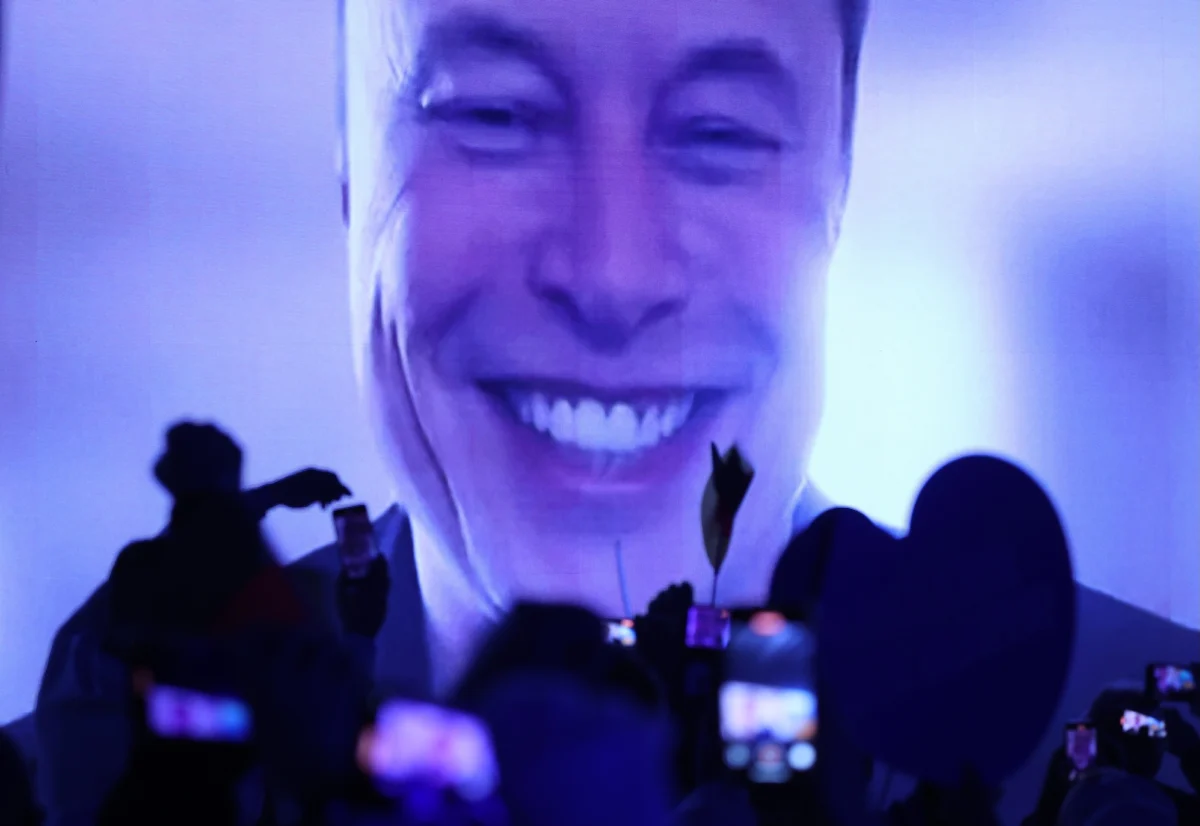
The transition of SpaceX from a closely-held private entity to a high-stakes public corporation has long been anticipated by the global financial community. However, the company’s inaugural earnings call as a public entity provided more than just a balance sheet update; it offered a stark look at the internal tug-of-war between Elon Musk’s boundless optimism and the grounded, "lawyered-up" realities of his executive suite.
As SpaceX navigates its new life under the scrutiny of the public markets, the debut conference call highlighted a recurring pattern familiar to Tesla observers: a Chief Executive Officer who speaks in terms of "infinity futures" and "solved" engineering impossibilities, followed immediately by lieutenants attempting to translate those visions into the conservative language of SEC-compliant guidance.
Main Facts: A Trillion-Dollar Trajectory
The core of the earnings call centered on three primary pillars of SpaceX’s evolving business model: the Starlink satellite internet constellation, the Starship launch system, and a burgeoning "compute-leasing" business that leverages the company’s massive infrastructure for AI applications.
Key takeaways from the report include:
- Revenue Milestones: SpaceX has officially moved its internal projection for reaching $1 trillion in annual revenue from 2031 to 2030, with Musk suggesting 2029 is a possibility.
- Compute Revenue: The company is seeing a massive surge in demand for AI-related compute power, reporting $6.7 billion in newly contracted cloud services revenue in just the first few weeks of Q3.
- Starlink Dominance: Musk claimed Starlink would provide the "majority of the world’s internet" within a decade, a claim that would require displacing established terrestrial fiber and 5G networks globally.
- Starship Readiness: Despite ongoing technical hurdles with heat shielding and re-entry, Musk asserted that Starship would be flying daily by next year.
Chronology of the Call: The Pattern of Inflation
The call followed a distinct rhythm: an executive would present a carefully phrased, data-backed projection, only for Musk to intervene and amplify the claim, often removing the "hedges" designed to protect the company from legal liability.
The Compute and ARR Revelation
Early in the call, Chief Financial Officer Bret Johnsen addressed the company’s newest revenue stream: renting out compute power to AI developers. Johnsen highlighted a "supply-demand imbalance" in the market that SpaceX is uniquely positioned to exploit.
Johnsen stated that the company had contracted $6.7 billion in revenue over a six-month ramp-up period starting in October. He concluded with a specific, carefully worded target: SpaceX believes it is on a trajectory to reach $100 billion in Annualized Revenue Run Rate (ARR) by the end of December.
Twenty minutes later, Musk effectively "bulldozed" the caution in Johnsen’s voice. "To be clear, the $100 billion ARR in December is not a question mark," Musk said. "That’s what we would achieve if we basically did nothing. It probably will be higher than that."
The Starlink Timeline
The dialogue shifted to Starlink and the upcoming "V3" satellite launches. Musk took the lead, suggesting that Starlink’s bandwidth capacity is growing so rapidly that it is "not out of the question" for the service to deliver the majority of the world’s internet traffic in less than ten years.
Chief Operating Officer Gwynne Shotwell, a figure often credited with being the stabilizing force within SpaceX, followed Musk with a subtle correction. While acknowledging Musk’s sentiment, she rephrased the goal: Starlink is expected to represent a "significant portion" of global traffic. The shift from "majority" to "significant portion" is a critical distinction in the eyes of regulators and institutional investors.
The Starship and Moon Milestones
The final segment of the call focused on Starship, the vehicle SpaceX is developing for NASA’s Artemis program. When asked about progress on the Human Landing System (HLS), Musk suggested that the rocket would be ready for human flight by the end of next year. He further claimed SpaceX would be flying Starships once a day, or "possibly more," by this time next year.
Shotwell immediately stepped in to clarify that the company remains focused on specific NASA-mandated milestones, setting a more realistic—though still aggressive—goal of putting "boots on the moon in 2028."
Supporting Data: The Economics of Space and AI
The financial figures disclosed during the call suggest that SpaceX is no longer merely a transportation company; it is becoming an infrastructure giant.
The $100 Billion ARR Goal
The $100 billion ARR target by year-end is an extraordinary figure for a company that was, until recently, valued primarily on its launch frequency. This growth is driven by:
- Starlink V3: These satellites offer significantly higher bandwidth, allowing for a higher density of users per orbital plane.
- Compute Leasing: By leveraging the power and cooling infrastructure designed for Starlink ground stations, SpaceX has found a secondary market in AI compute.
- Cursor Integration: The company’s acquisition and integration of AI-driven tools like Cursor have reportedly streamlined internal software development and provided new service offerings for cloud clients.
Heat Shield Technicalities
A major point of contention during the call was the Starship heat shield. The upper stage of the rocket must survive temperatures exceeding 2,500 degrees Fahrenheit during re-entry. While the most recent test flight in the Indian Ocean saw the rocket remain intact, it exhibited significant damage to the flap joints.
Musk’s claim that the "heat shield problem is solved" stands in contrast to the engineering reality that consistent, multi-use re-entry has not yet been demonstrated. For the company to reach its goal of "daily flights," the heat shield must not only work but require zero maintenance between launches—a feat never achieved in the history of aerospace.
Official Responses and Executive Tempering
The dynamic between Musk, Shotwell, and Johnsen during the call illustrates the "Musk Premium" and the "Musk Discount." Investors often value Musk’s companies based on his vision (the premium), but discount the actual timelines (the discount) based on his history of missed deadlines.
Shotwell’s interjections were particularly notable. As the executive responsible for the day-to-day operations and government relations, her primary role on the call appeared to be maintaining SpaceX’s credibility with NASA and the Department of Defense. By emphasizing "NASA-mandated milestones" over Musk’s "daily flight" predictions, she ensured that the company’s primary revenue source—government contracts—remained secure.
Johnsen’s role was similarly corrective. His use of the phrase "based on our expected revenue in the month of December" was a classic accounting safeguard. By Musk dismissing the "question mark" around these figures, he effectively converted a projection into a promise—a move that typically triggers alarm bells for corporate legal departments.
Implications: The Public Company Reality
Now that SpaceX is a public entity, the stakes for Musk’s rhetoric have shifted. As a private company, SpaceX could miss Mars deadlines or Starlink targets with little consequence beyond internal frustration. As a public company, however, these statements fall under the jurisdiction of securities law.
Regulatory Oversight
Historically, the Securities and Exchange Commission (SEC) has been the primary watchdog for executive "puffery" that crosses into fraud. While the current regulatory environment has seen a pullback in aggressive corporate enforcement, a public company’s CEO making claims about "trillion-dollar revenue" and "solved" engineering problems could invite "Section 10(b)" lawsuits if those claims are found to have no reasonable basis in fact.
The "Texas Shield"
SpaceX’s recent move to incorporate in Texas provides a significant layer of protection against shareholder activism and certain types of civil litigation. Texas corporate law is generally perceived as more management-friendly than Delaware’s, where Musk recently faced a legal defeat regarding his Tesla pay package. This move may embolden Musk to continue making aggressive claims, knowing that the legal threshold for shareholders to sue for "unfulfilled promises" is higher in the Lone Star State.
Historical Context and Future Risk
The pattern of the SpaceX call mirrors Musk’s behavior at Tesla. In 2016, Musk claimed Tesla would have a car drive itself across the country by 2017; as of 2024, that has not occurred. He claimed in 2016 that SpaceX would put humans on Mars by 2022.
The danger for SpaceX investors is that the company’s valuation is now inextricably tied to these hyper-aggressive timelines. If Starlink does not capture the "majority" of the world’s internet, or if Starship remains a prototype through 2026, the gap between Musk’s "infinity future" and the company’s actual quarterly earnings could lead to significant market volatility.
Conclusion
SpaceX’s first earnings call confirmed that the company is a financial juggernaut with unprecedented growth in the space and AI sectors. However, it also confirmed that the "Elon Musk Experience"—characterized by a total disregard for traditional corporate caution—is now a permanent fixture of the public markets. Whether his executives can continue to "bring his ideas closer to Earth" before they collide with regulatory and technical reality remains the billion-dollar question for the company’s new shareholders.