The Ink and the Image: Chronicling the Evolution, Legal Battles, and Cultural Archetypes of the American Press
Introduction
The American newspaper is more than a mere vehicle for daily information; it is a living artifact of the nation’s democratic experiment. From the colonial printing presses of the 17th century to the digital-first newsrooms of the 21st, the history of journalism is a sprawling narrative of innovation, ego, legal warfare, and cultural iconography. Recent developments in the media landscape—ranging from the publication of a definitive new history of the trade to a high-stakes trademark settlement in Washington, D.C., and a bizarre intersection of federal infrastructure and comic book villainy—highlight the enduring relevance of the "Fourth Estate."
As scholars look backward to understand the "Printers, Rogues, and Radicals" who built the industry, modern publishers are fighting to reclaim the prestige of legacy titles. Simultaneously, the visual language of the past, specifically the grotesque caricatures of the Dick Tracy era, continues to provide a framework for how the public perceives political and corporate figures in the digital age.
I. The Historiography of the American Press: From Hudson to Wright
For historians of the media, the documentation of the American newspaper has often been as episodic as the news itself. The study of journalism history requires navigating a landscape where the primary sources are often the very institutions being studied.
The Foundation: Frederic Hudson and the 19th Century
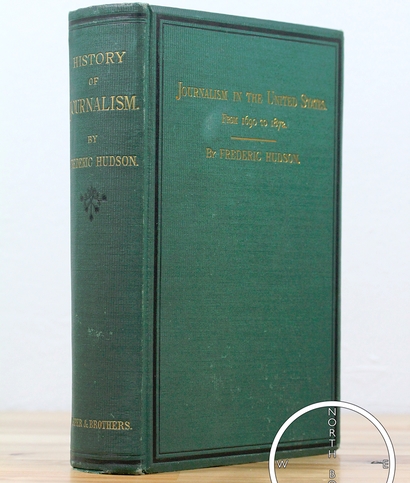
The bedrock of this academic pursuit was laid by Frederic Hudson. In 1873, Hudson, a veteran editor of the New York Herald, published Journalism in the United States, from 1690 to 1872. This seminal work remains the primary reference point for the "Heroic Age" of journalism. Hudson’s account focused on the transition from the partisan press of the post-Revolutionary era to the "Penny Press" of the mid-19th century, which prioritized sensationalism and mass appeal.

The Revised Narratives: Lee and Tebbel
Following Hudson, the narrative was picked up by James Melvin Lee, whose 1923 History of American Journalism offered a more structured, academic revision of the trade’s evolution. Lee’s work reflected a period when journalism was attempting to professionalize and distance itself from the "yellow journalism" of the Hearst-Pulitzer era.
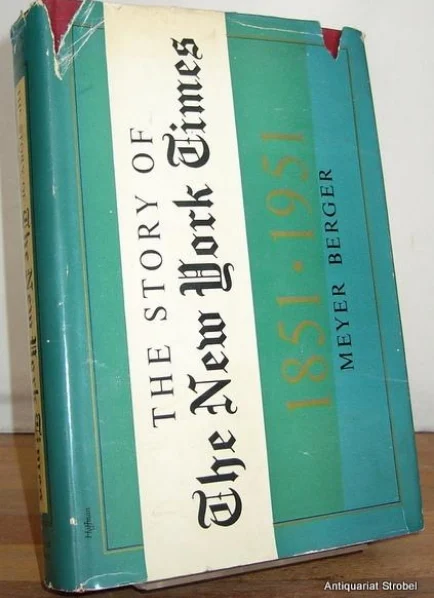
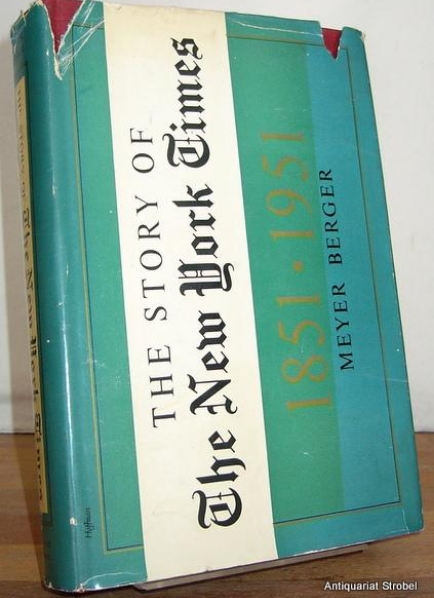
By 1969, John Tebbel’s The Compact History of the American Newspaper provided a mid-century synthesis, capturing the industry at its peak of cultural and economic power before the disruptive arrival of the 24-hour news cycle and the internet. Despite these efforts, the "70" and "71" sections of library shelves—the Dewey Decimal classification for journalism—have remained remarkably sparse for decades, often filled with individual biographies or memoirs rather than comprehensive structural histories.
A New Chapter: Empire of Ink
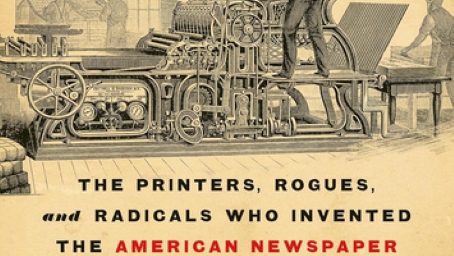
The announcement of Alex Wright’s Empire of Ink: The Printers, Rogues, and Radicals Who Invented the American Newspaper marks a significant addition to this canon. Wright’s work promises to re-examine the foundational figures of the press through a modern lens, focusing on the "radicals" who used the printing press as a weapon of social and political upheaval. This new history arrives at a time when the very definition of a "newspaper" is being interrogated by the digital transition.
II. The Battle for the "Star": A Legal and Familial Conflict
While historians document the past, modern media moguls are engaged in a fierce battle over its remains. This is most evident in the recently settled legal dispute between the Allbritton Journalism Institute’s NOTUS and the revived Washington Star.
Chronology of the Dispute
- The Original Star (1852–1981): For over a century, the Washington Star was the "afternoon paper of record" in the nation’s capital. It was owned by Joe L. Allbritton from 1974 until 1978, shortly before it ceased publication in 1981.
- The NOTUS Initiative: In early 2024, Robert Allbritton (son of Joe L. Allbritton and founder of Politico) launched NOTUS (News of the United States) under the Allbritton Journalism Institute. Plans were announced to eventually rebrand the outlet as the Star, reclaiming the family legacy.
- The Efune Revival: Simultaneously, Dovid Efune, publisher of the New York Sun, purchased the trademark for the Washington Star in 2024 and revived it as a newsletter-based publication on Substack.
- Trademark Litigation: Efune’s Washington Star filed a trademark infringement lawsuit against NOTUS, arguing that the latter’s plan to use the "Star" name would cause market confusion and dilute the value of the purchased trademark.
The Settlement and Its Terms
On June 20, 2026, it was reported that a settlement had been reached. According to reporting by Scott Nover at The Washington Post, NOTUS has agreed to abandon its plans to adopt the "Star" name. As a condition of the deal, NOTUS will select a different brand identity entirely, leaving Dovid Efune as the sole proprietor of the Washington Star name in the D.C. market.
This settlement underscores the immense value still placed on legacy media brands. Despite the original Star being defunct for over 40 years, the "brand equity" associated with its name remains a valuable commodity in the quest for institutional authority.
III. The Reflecting Pool Fiasco: When Infrastructure Meets Iconography
The intersection of journalism, politics, and pop culture took a surreal turn this week as social media users found a bizarre parallel between a botched federal project and the rogues’ gallery of Chester Gould’s Dick Tracy.
The Botched Renovation
The Lincoln Memorial Reflecting Pool, one of the most iconic landmarks in the United States, has been plagued by a failing filtration system. Investigations revealed that the Trump administration had awarded a no-bid contract for the pool’s renovation to Greenwater Services, an Ohio-based firm. The company is owned by the J.J. Cafaro Investment Trust, led by John J. Cafaro.
Cafaro, a prominent political donor, has a checkered legal history, including a prior conviction related to a bribery scandal. The failure of the filtration system, which has left the pool in a state of disrepair, has sparked renewed scrutiny into the "cronyism" of the contract awarding process.
The "Dick Tracy" Archetype
The controversy took on a visual life of its own when a photograph of John J. Cafaro began circulating on social media. Commentators were quick to note Cafaro’s striking resemblance to the exaggerated, often grotesque villains of the Dick Tracy comic strip.
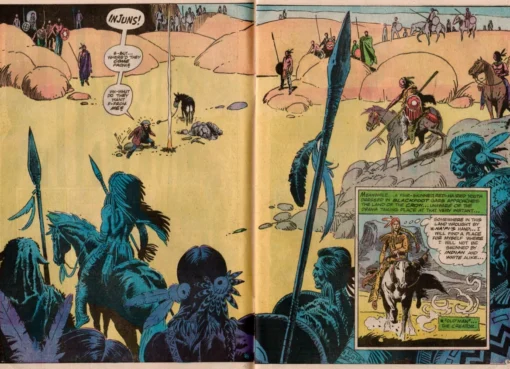
Dick Tracy, created by Chester Gould in 1931, was famous for its "Rogues Gallery"—villains with names like "Flat-top," "The Brow," and "Big Boy Caprice," whose physical deformities were intended to mirror their moral failings. Social media users compared Cafaro to "Big Boy" (the mobster based on Al Capone) and "Stooge Viller," a classic Gould henchman.
This phenomenon is more than just "internet roasting." It represents the way the American public uses historical pop-culture archetypes to process modern political corruption. The visual language of the 1930s—a time of intense public fascination with "G-Men" and organized crime—remains a potent tool for satirizing contemporary figures.
IV. Supporting Data: The Cost of Legacy and Failure
The Economic Stakes of Media Trademarks
The value of the Washington Star trademark, while not publicly disclosed in the settlement, is estimated by industry analysts to be in the low seven figures. This is based on the trend of "zombie brands"—defunct publications being revived to provide instant gravitas to new digital ventures. Examples include the revival of Life magazine and The Messenger’s (failed) attempt to leverage legacy-style authority.
The Infrastructure Toll
The Reflecting Pool renovation contract was valued at several million dollars. The failure of the Greenwater Services filtration system not only represents a loss of taxpayer funds but also an aesthetic blow to the National Mall, which sees approximately 25 million visitors annually. The "no-bid" nature of the contract is a focal point for government oversight committees, who cite it as a primary reason for the project’s technical shortcomings.
V. Official Responses and Implications
From NOTUS and Allbritton
In a statement following the settlement, a spokesperson for NOTUS stated: "While we remain proud of the Allbritton family’s historical connection to the Washington Star, our priority is delivering high-impact journalism under a brand that is uniquely ours. We are pleased to put this litigation behind us and look forward to unveiling our new identity."

From the Washington Star (Efune)
Dovid Efune’s team celebrated the settlement as a victory for trademark integrity. "The Washington Star is a storied institution. We are committed to ensuring that this name stands for the same rigorous reporting and civic engagement that defined it for over a century."
Broader Implications for Journalism
The convergence of these stories—the scholarly interest in newspaper history, the legal battles over legacy names, and the use of comic book archetypes to critique public figures—reveals a deep cultural obsession with the image of the press.
As we move further into the 21st century, the "Empire of Ink" described by Alex Wright is being replaced by an empire of digital pixels and intellectual property. Yet, the ghosts of the past—whether they are the editors of the 1870s, the afternoon dailies of the 1970s, or the square-jawed detectives of the 1930s—continue to haunt and shape the way we communicate today. The lesson of the Washington Star and the Reflecting Pool is clear: in the world of American public life, history is never truly dead; it is simply waiting for a new publisher or a new caricature to bring it back to life.