Fair is Fair: The Cult Legacy and Cultural Resonance of ‘The Legend of Billie Jean’
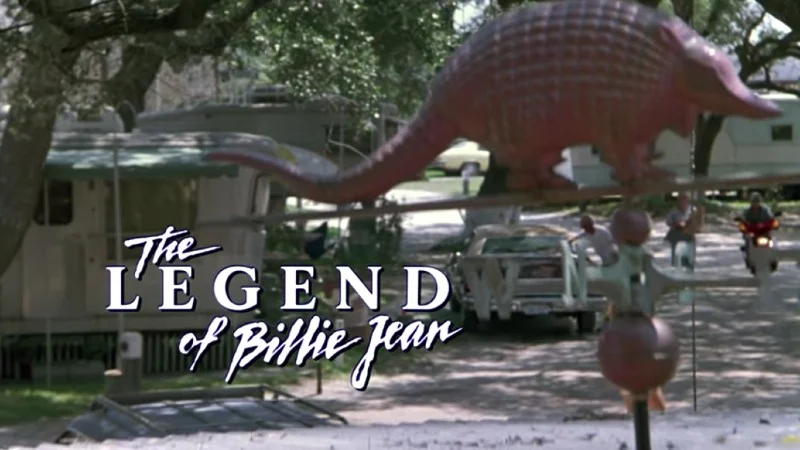
In the pantheon of 1980s cinema, certain titles serve as the pillars of the decade’s pop-culture identity. Films like The Goonies, Back to the Future, and The Breakfast Club are etched into the collective memory of a generation. However, tucked away in the shadows of these giants lies a film that was dismissed upon arrival but has since grown into a potent symbol of teenage rebellion and feminist awakening. The Legend of Billie Jean (1985) is more than just a footnote in the career of a young Helen Slater; it is a film that predicted the mechanics of viral fame and the commodification of outrage decades before the advent of social media.
Main Facts: A Misunderstood Relic of 1985
Released in the sweltering summer of 1985, The Legend of Billie Jean arrived during what is now considered the "golden age" of teen adventure movies. Directed by Matthew Robbins and produced by Rob Cohen for TriStar Pictures, the film tells the story of Billie Jean Davy (Helen Slater), a teenager from a Texas trailer park who becomes an accidental outlaw.
The narrative is set in motion by a seemingly small act of suburban cruelty. When a local bully, Huby, trashes the motor scooter belonging to Billie Jean’s brother, Binx (played by a young Christian Slater), Billie Jean attempts to seek restitution from the bully’s father, Mr. Pyatt (Richard Bradford). Pyatt, a local businessman and a moral vacuum, attempts to extort sexual favors from Billie Jean in exchange for the repair money. The ensuing confrontation results in an accidental shooting, sending Billie Jean, Binx, and their friends on the run from the law.
Despite its high-octane premise and a hit soundtrack featuring Pat Benatar’s "Invincible," the film was a commercial failure. It grossed only a fraction of its budget and was savaged by critics who viewed it as a hollow attempt to capitalize on the youth market. However, its subsequent life on cable television and home video transformed it into a cult classic, celebrated for its "fair is fair" mantra and its surprisingly sharp critique of patriarchal power structures.
Chronology: From India to the Texas Coast
The evolution of The Legend of Billie Jean is a tale of creative ambition filtered through the often-reductive lens of the Hollywood studio system.
The Original Inspiration
The screenplay, credited to Mark Rosenthal and Lawrence Konner, had an unlikely and sophisticated origin. Rosenthal has stated that the story was loosely inspired by Phoolan Devi, the "Bandit Queen" of India. Devi was a woman from a lower caste who led a gang of outlaws after suffering years of systemic abuse and sexual violence. Her transition from a victim of the caste system to a folk hero and, eventually, a member of the Indian Parliament, provided the thematic blueprint for Billie Jean’s journey.

Script Development and Studio Interference
The project initially attracted interest because of its "rabble-rousing" subject matter. There are indications that an earlier draft may have been touched by Walter Bernstein, a formerly blacklisted writer known for his political convictions. However, as the film moved toward production, Rosenthal and Konner were reportedly sidelined. Rosenthal later lamented that the studio "simplified and dumbed down" the script, removing much of the character-driven drama in favor of a more standard "teens on the run" adventure.
The Summer of 1985
When the film finally hit theaters in July 1985, it faced insurmountable competition. Moviegoers were preoccupied with the time-traveling antics of Back to the Future or the hyper-masculine violence of Rambo: First Blood Part II. In a summer defined by blockbusters, a story about a girl from a trailer park demanding "fairness" felt small. Furthermore, Helen Slater was coming off the box-office disappointment of Supergirl (1984), and the industry was skeptical of her bankability as a leading lady.
Supporting Data: Critical Scorn and Commercial Performance
The data surrounding the film’s initial release paints a picture of a project that was almost universally rejected by the establishment.
Box Office and Critical Reception
The Legend of Billie Jean earned approximately $8 million at the domestic box office against a production budget that, while modest, required a much larger turnout to be considered a success.
The critical response was particularly harsh. Janet Maslin of The New York Times famously described the film as "bankrupt beyond belief," suggesting it lacked any artistic merit. David Edelstein of The Village Voice was equally dismissive, calling it a "cretinous bit of bubble-gum mythmaking." These reviews focused on the film’s perceived lack of logic and its "MTV-style" aesthetics, failing to recognize the underlying feminist message that would eventually resonate with later audiences.
The Cable TV Renaissance
The film’s "success" is better measured by its longevity on television. Throughout the late 1980s and early 1990s, The Legend of Billie Jean became a staple of afternoon cable rotations. This exposure allowed the film to reach its intended audience—young people who identified with the feeling of being unheard by adults. It was during this period that the film’s iconography, specifically Billie Jean’s Joan of Arc-style haircut and her sleeveless wetsuit, became symbols of 80s rebellion.

Official Responses: The Creators and Cast Look Back
In the decades following the film’s release, those involved have offered varying perspectives on why the film failed to connect initially and why it has endured.
The Screenwriters’ Frustration
Mark Rosenthal has been vocal about his dissatisfaction with the final product. In various interviews, he has pointed out that the "dumbed down" version of the script lost the gritty realism of the Phoolan Devi inspiration. He noted that the film’s obsession with "Vermont" (Christian Slater’s character’s dream destination) was a nod to his and Konner’s time at the University of Vermont, a personal touch that remained even as other character depths were stripped away.
Helen Slater’s Perspective
Helen Slater, who provided a commentary track for a rare DVD release alongside co-star Yeardley Smith, has expressed a mix of affection and bewilderment regarding the film’s legacy. She has acknowledged the difficulty of the Texas accent she was required to use but has also spoken about the empowering nature of the role. For Slater, Billie Jean was a character who took control of her own image—a rarity in the mid-80s "bimbo" or "damsel" archetypes.
The Debut of Christian Slater
The film also serves as the cinematic debut of Christian Slater. While he was not related to Helen, their chemistry as siblings was a highlight of the film. Critics and fans have often noted that the "nervy, high-wire energy" that would later define his performances in Heathers and Pump Up the Volume was already visible in his portrayal of Binx.
Implications: A Proto-Viral Manifesto and Feminist Critique
Looking at The Legend of Billie Jean through a modern lens reveals a film that was remarkably ahead of its time in its understanding of media and gender politics.
The Invention of the Viral Celebrity
The most prophetic element of the film is Billie Jean’s use of video to communicate her message. After being branded a criminal by the media and the corrupt Mr. Pyatt, Billie Jean records a manifesto. She cuts her hair, dons a new "uniform," and speaks directly to the camera, declaring, "Fair is fair!"

This sequence predates YouTube and TikTok by decades, yet it perfectly captures the essence of viral activism. Billie Jean realizes that she cannot win against the system using the system’s rules; she must instead weaponize her image and bypass the gatekeepers to speak directly to the public. The film depicts how this image is then commodified—Mr. Pyatt sells "Billie Jean" merchandise even as he tries to have her arrested—highlighting the cynical intersection of capitalism and social movements.
A Radical Feminist Subtext
While often dismissed as "bubble-gum," the film’s central conflict is rooted in a refusal to accept sexual harassment and economic exploitation. Billie Jean’s "crime" is not a desire for wealth or chaos, but a demand for a $602 repair bill. The escalation of the conflict is entirely driven by the refusal of adult men to treat a young woman with dignity.
By adopting the look of Joan of Arc, Billie Jean aligns herself with a history of female martyrs and revolutionaries. The film suggests that for a woman to achieve "fairness" in a patriarchal society, she must often step outside the law and redefine her identity on her own terms.
Conclusion: The Enduring Power of "Fair is Fair"
The Legend of Billie Jean may lack the polished cinematography of a Spielberg production or the philosophical depth of a Coppola drama, but its "workmanlike" quality lends it a sense of suburban naturalism. It captures the "sunburned, summertime exhaustion" of youth and the righteous anger that comes when the world proves to be inherently unfair.
Ultimately, the film’s "B" grade from modern critics belies its cultural importance. It remains a defiant "rebel yell" against injustice, proving that even a "cretinous bit of bubble-gum mythmaking" can carry a message that resonates long after the neon lights of the 1980s have faded. For those who discovered it on a lazy summer afternoon on cable, Billie Jean isn’t just a character; she is a reminder that sometimes, you have to cut your hair, find a sleeveless wetsuit, and demand that the world play fair.