The Resurgence of "Zombie Tech": Analyzing the $99 S1 Mini PC and the Ethics of AI Washing
Introduction: When Marketing Meets Antiquity
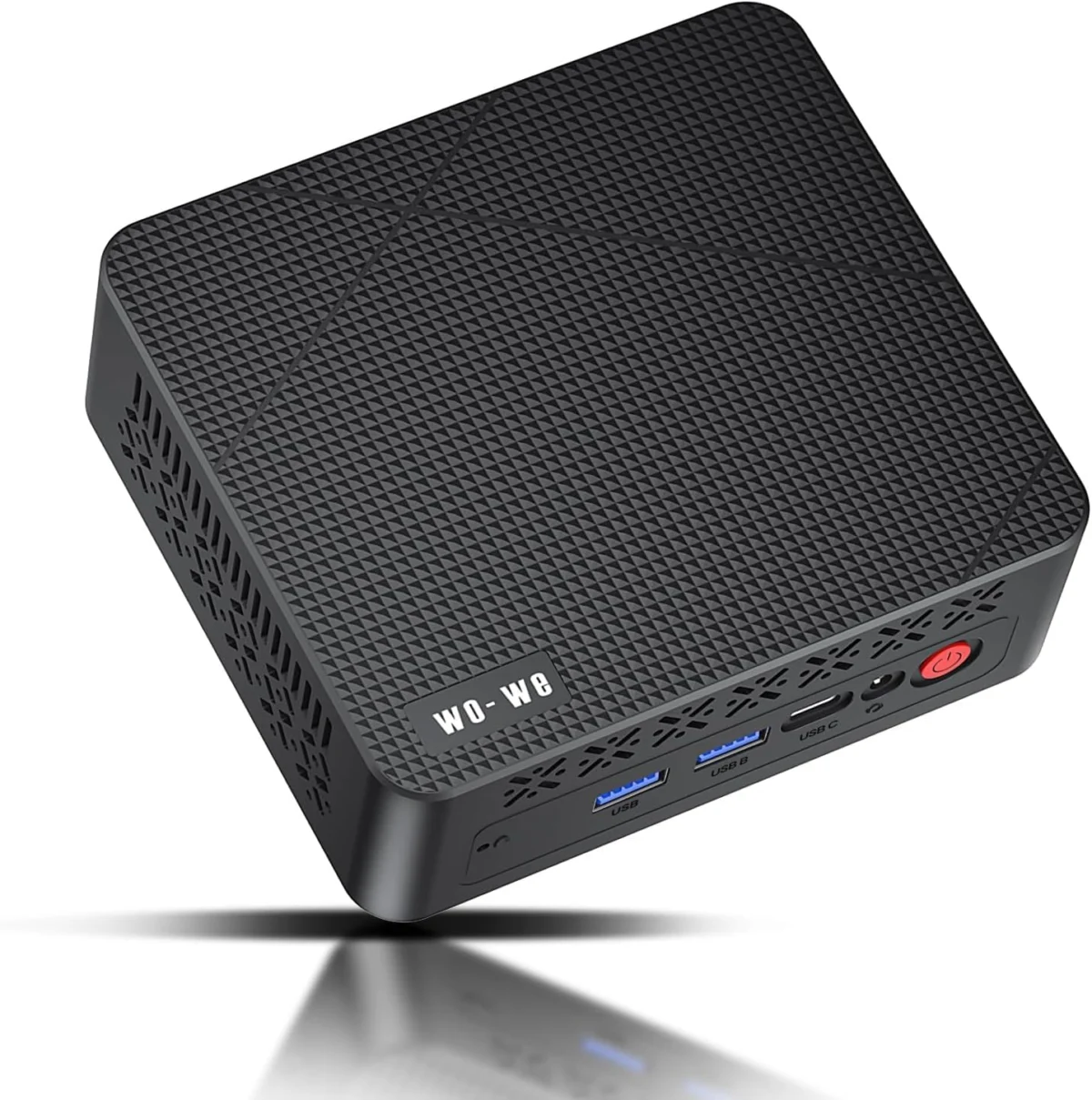
In the rapidly evolving landscape of consumer electronics, the term "Artificial Intelligence" has become the ultimate catalyst for sales. However, a recent product listing on Newegg has sparked significant controversy within the tech community, highlighting a predatory trend known as "AI washing." The S1 Mini PC, a device recently unveiled by the same manufacturer behind a previously scrutinized "bonkers" Xeon-based system, is being marketed as a cutting-edge solution for AI task automation.
The reality, however, is far less futuristic. Beneath the sleek chassis of the S1 lies an Intel Core i3-2100—a processor that made its debut in early 2011. This 13-year-old piece of silicon is being repackaged and sold to unsuspecting consumers for $99 (purportedly discounted from $199). This report examines the technical fallacies of the S1, the rise of "zombie hardware" in modern marketplaces, and the broader implications for consumer protection in the age of AI hype.
I. Main Facts: Deconstructing the S1 Mini PC
The S1 Mini PC is positioned as a "low-budget mini PC for AI task automation," specifically leveraging a software framework called OpenClaw. To understand why this product has drawn such sharp criticism from industry experts, one must look at the specifications provided in the listing.
Technical Specifications
- Processor: Intel Core i3-2100 (Sandy Bridge architecture, released Q1 2011).
- Core Count: 2 Cores, 4 Threads.
- Lithography: 32nm (compared to modern 3nm or 4nm processes).
- Base Frequency: 3.10 GHz (no Turbo Boost).
- Graphics: Intel HD Graphics 2000.
- TDP (Thermal Design Power): 65W.
- Marketed Use Case: AI automation via OpenClaw.
- Current Price: $99.00 USD.
The fundamental issue lies in the disparity between the hardware’s capabilities and its marketed purpose. The Intel Core i3-2100 lacks the instruction sets (such as AVX2 or VNNI) and the raw computational power required for even basic modern AI workloads. Furthermore, the Intel HD 2000 integrated graphics are entirely incompatible with modern GPU-accelerated AI frameworks like CUDA or ROCm.
II. Chronology: From Sandy Bridge to "AI Automation"
To understand how a 13-year-old processor ended up in a "new" 2024 product, we must trace the timeline of the hardware and the shifting tides of the secondary market.
2011: The Peak of Sandy Bridge
In January 2011, Intel launched the Sandy Bridge architecture. At the time, the i3-2100 was a respectable entry-level dual-core processor for office work and light browsing. It was never intended for high-performance computing, let alone the neural network processing that defines modern AI.
2016–2021: The Accumulation of E-Waste
As global corporations upgraded their infrastructure, millions of Sandy Bridge-era machines (like the Dell OptiPlex 390 or HP Compaq 6200) were decommissioned. These units were often sold in bulk to recyclers for pennies on the pound. Large stockpiles of these chips remained in warehouses across East Asia.
2023: The AI Gold Rush
With the explosion of Generative AI and Large Language Models (LLMs), "AI" became the most searched and marketed term in technology. Small-scale manufacturers began looking for ways to move stagnant inventory by rebranding old hardware with modern buzzwords.
July 2024: The Launch of the S1
The manufacturer, having recently tested the waters with a Xeon-based "server" PC, officially listed the S1 on major e-commerce platforms. By pairing the ancient i3-2100 with a modern-looking shell and referencing "OpenClaw"—an obscure automation tool—the company created a product designed to catch the eye of budget-conscious shoppers looking to "get into AI."
III. Supporting Data: Benchmarking the Past Against the Present
The performance gap between the S1’s i3-2100 and modern budget alternatives is not just a slight difference; it is an oceanic divide.
Performance Comparisons
| Feature | Intel Core i3-2100 (2011) | Intel N100 (2023 – Modern Budget Standard) |
|---|---|---|
| Cores/Threads | 2 / 4 | 4 / 4 |
| PassMark Score | ~1,800 | ~5,600 |
| TDP (Power Use) | 65W | 6W |
| Instruction Sets | SSE4.1/4.2, AVX | AVX2, VNNI (AI Optimized) |
| Windows 11 Support | No (Lacks TPM 2.0/CPU Support) | Yes |
The Power Efficiency Crisis
One of the most overlooked aspects of the S1 is its power consumption. The i3-2100 has a TDP of 65W. In a mini-PC form factor, cooling this chip requires a noisy fan, and the energy costs over a year of "automation" could easily exceed a significant portion of the device’s purchase price. In contrast, the Intel N100 offers three times the performance at less than one-tenth the power draw.
Software Incompatibility
Modern AI tasks, even those involving simple automation or local LLMs (like Llama 3), require modern instruction sets. The i3-2100 does not support AVX2, which is a requirement for many modern libraries. Users attempting to run "AI tasks" on this machine will likely face frequent software crashes or performance so slow as to be unusable.
IV. Official Responses and Marketplace Accountability
The appearance of the S1 on Newegg raises questions about the responsibility of third-party marketplaces. While Newegg provides a platform for various sellers, the promotion of a 15-year-old CPU as an "AI PC" borders on deceptive trade practices.
The Manufacturer’s Position
The manufacturer, RMATAMINI (and associated white-label brands), positions these units as "repurposed for sustainability." However, critics argue that shipping obsolete hardware in new plastic shells is the opposite of sustainability, as these devices are likely to end up in landfills within months when the user realizes they cannot run modern software.
Industry Expert Warnings
Tech analysts have been quick to issue warnings. "This is a cautionary tale of ‘AI Washing,’" says one senior editor at TechRadar. "Selling a Sandy Bridge i3 in 2024 is effectively selling e-waste. To market it as an AI-capable machine is a disingenuous attempt to exploit consumers who may not understand the hardware requirements of modern neural networks."
Platform Response
Major retailers like Newegg and Amazon often rely on automated algorithms to manage thousands of listings. As of this writing, there has been no official move to delist the S1, despite the "museum-grade" hardware inside. This highlights a gap in consumer protection where technical specifications are technically "accurate" (it is indeed an i3-2100) but the marketing narrative is misleading.
V. Implications: The Ethical and Environmental Cost
The existence of the S1 Mini PC is a symptom of a larger issue in the global tech supply chain.
1. The Rise of "AI Washing"
Just as "Greenwashing" plagued the early 2000s, AI Washing is the new frontier of corporate deception. By attaching the "AI" label to any device that performs a calculation, companies dilute the meaning of the technology and mislead consumers. This creates a "lemon market" where low-quality goods drive out legitimate innovation.
2. The Environmental Impact of "Zombie Tech"
While reusing old chips is theoretically better than mining new minerals, the S1 is an environmental net negative. Because it lacks the efficiency of modern chips and cannot run modern, secure operating systems (like Windows 11), it has a very short remaining lifecycle. The energy required to manufacture the new case, motherboard, and power supply for a 13-year-old chip is largely wasted when the device is discarded shortly after purchase.
3. Security Vulnerabilities
Older processors like the i3-2100 are susceptible to hardware-level vulnerabilities (such as Spectre and Meltdown) that are not fully mitigated in older microcode. Furthermore, since these chips are not officially supported by Windows 11, users are often forced to use "hacked" ISOs or outdated versions of Windows 10, leaving them exposed to cybersecurity threats.
VI. Recommendations: Better Alternatives for Under $200
For consumers with a $100 to $200 budget, the S1 is a poor investment. Experts recommend several alternatives that offer significantly better performance, security, and longevity:
The Refurbished Business Desktop
For $90–$130, one can find refurbished Dell OptiPlex or HP EliteDesk units on sites like eBay or Amazon Renewed. These often come with 8th or 9th Gen Intel Core i5 processors (e.g., i5-8500), which are Windows 11 compatible and significantly more powerful than the i3-2100.
The Intel N100 Mini PC
Brand-new Mini PCs featuring the Intel N100 processor frequently go on sale for $140–$160. These units are silent, consume almost no power, and include modern features like Wi-Fi 6, USB-C, and hardware-accelerated AV1 decoding.
Used Gaming PCs
For those specifically interested in AI, a used PC with a dedicated (even if older) NVIDIA GPU (such as a GTX 1060) would provide a vastly superior experience for learning machine learning basics compared to any dual-core CPU-based system.
Conclusion: A Museum Piece in a Modern Shell
The S1 Mini PC serves as a stark reminder that in the world of technology, "new" does not always mean "modern." The use of a 15-year-old Intel Core i3-2100 in a device marketed for AI is more than just an "outrageous design"—it is a deceptive practice that exploits the complexity of modern hardware to sell obsolete components.
As the AI revolution continues, consumers must remain vigilant. A $99 price tag may seem attractive, but when the hardware belongs in a museum rather than a home office, the true cost is much higher than the sticker price. The S1 is not a tool for the future; it is a ghost of the past, dressed in the trendy clothing of the present.