The Great Unreal Transition: Epic Games Unveils Unreal Engine 6 and the End of the Blueprint Era
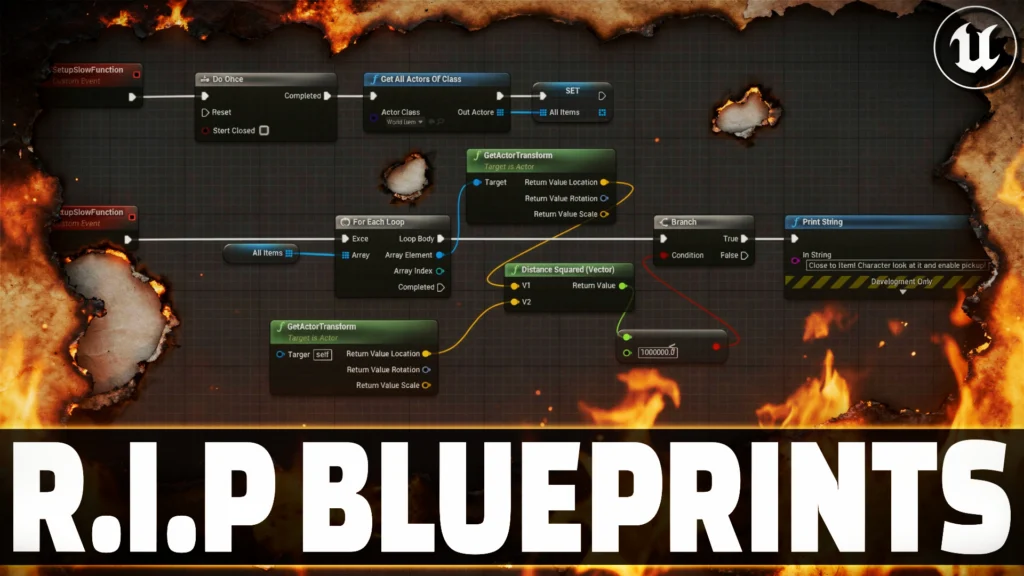
The landscape of interactive entertainment and real-time 3D development shifted fundamentally during the State of Unreal 2026. While the presentation was punctuated by the immediate release of Unreal Engine 5.8 and the introduction of a new open-source version control system, the most significant revelations were tucked away in the technical roadmaps and blog posts accompanying the event. Epic Games has officially announced Unreal Engine 6 (UE6), signaling not just a numerical iteration, but a total paradigm shift that will eventually see the deprecation of the two pillars of modern Unreal development: the Actor system and Blueprint visual scripting.
As the industry digests the news, it is becoming clear that Epic Games is moving toward a unified "Metaverse" architecture, merging the high-end capabilities of traditional game development with the live-service agility of the Unreal Editor for Fortnite (UEFN).
Main Facts: A New Foundation for the Next Decade
The announcement of Unreal Engine 6 represents the most ambitious architectural overhaul in the engine’s history since the transition from UE3 to UE4. The core of this transition lies in the unification of two development streams that have, until now, operated in parallel.
The Convergence of UE5 and UEFN
For the past several years, Epic Games has maintained two distinct development environments. Unreal Engine 5 served the traditional AAA market—studios building standalone titles like Senua’s Saga: Hellblade II or the upcoming The Witcher titles. Simultaneously, the Unreal Editor for Fortnite (UEFN) acted as a "live laboratory" for a new programming model, utilizing the Verse programming language and a modern Scene Graph architecture.
With UE6, these two streams merge. Developers will no longer have to choose between the "traditional" engine and the "metaverse" engine. UE6 is designed to allow creators to ship projects as standalone applications, directly into the Fortnite ecosystem, or into their own interoperable networks using a shared codebase.
The Deprecation of Blueprints and Actors
The "bombshell" for veteran developers is the planned retirement of the Actor-component model and Blueprint visual scripting. For over a decade, the "Actor" has been the fundamental object in an Unreal scene, and Blueprints have allowed non-programmers to create complex logic.
Epic Games confirmed that while UE6 will initially support these legacy systems to ensure a "manageable path forward" for current projects, they are officially considered legacy technology. Once the new Verse-driven framework and Scene Graph system reach maturity, Actors and Blueprints will be deprecated and eventually removed from the engine.
Introduction of "Lore" Version Control
In a move to solve long-standing industry frustrations with version control, Epic also announced "Lore." This is a new, free, and open-source version control system specifically designed to handle the massive binary files and complex dependencies inherent in modern game development. Lore is intended to replace or augment existing solutions like Perforce and Git, offering a more seamless experience within the Unreal ecosystem.
Chronology: The Road to 2029
The transition to Unreal Engine 6 is not an immediate "hard break," but rather a multi-year migration strategy designed to prevent the fragmentation of the developer base.
- Last Week (State of Unreal 2026): Epic officially announced UE6 and released the "ue6-main" branch on GitHub. This allows developers to see the ongoing work on the Verse language implementation and the new Scene Graph in real-time.
- Current Phase (UE 5.8): Unreal Engine 5.8 has been released. Epic noted that while 5.8 is the current production standard, they reserve the right to release a version 5.9 if stability fixes or minor features are required before the next generation is ready.
- Late 2027 (Early Access): Epic is targeting the end of 2027 for the Early Access release of Unreal Engine 6. This version will likely be used by early adopters and Epic’s internal teams to refine the new framework.
- 2028–2029 (Full Release): The full, production-ready release of UE6 is expected 12 to 18 months after Early Access. This puts the wide-scale adoption of the new Verse/Scene Graph workflow toward the end of the decade.
- Post-2029: Once UE6 is established, Epic will begin the formal deprecation process for Actors and Blueprints, providing conversion tools to help studios migrate legacy assets to the new system.
Supporting Data: The Technical Shift to Verse and Scene Graph
To understand why Epic is moving away from Blueprints and Actors, one must look at the technical limitations of the current architecture in the context of massive, persistent, and interoperable worlds.
The Limitations of the Actor System
The current "Actor" system is an object-oriented framework that can be "heavy." Every Actor in a scene carries a certain amount of overhead that can impact performance when dealing with millions of entities. Furthermore, the Actor model was designed for single-server or local play, making it difficult to scale across the "massive concurrency" required for Epic’s vision of the Metaverse.
The Power of Verse
Verse is a "web3-ready" (in the architectural sense) functional-logic language. Unlike C++, which is powerful but prone to memory errors, or Blueprints, which can become unmanageable "spaghetti" in large projects, Verse is designed for:
- Scalability: Handling millions of players and objects in a shared space.
- Learnability: Offering a bridge between the simplicity of visual scripting and the power of traditional coding.
- Safety: Reducing common programming bugs through its type system and transactional memory.
The New Scene Graph
The Scene Graph is the replacement for the traditional world outliner and actor hierarchy. It is a more modular, component-based system that allows for better data-oriented design. This architecture is essential for the "hot-reloading" of content, where worlds can be updated live without requiring players to disconnect or download massive patches.
Official Responses: Epic Games’ Philosophy
In their official blog post, "The Road to UE6," Epic Games addressed the concerns of the developer community regarding the radical changes to the workflow.
"Our philosophy through this transition is to bring existing projects along, not to force a hard break. Studios shipping on UE5 today should expect a manageable and clear path forward when UE6 is ready for them."
Epic emphasized that the transition is about convergence rather than replacement. By moving the Verse implementation to a public GitHub stream, they are inviting the community to watch the engine evolve in a transparent manner.
Regarding the deprecation of legacy tools, Epic stated:
"Actors and Blueprints will be in early versions of UE6. Eventually, these will be deprecated when the new framework is sufficiently mature, and you’ll have conversion tools to move projects from one framework to the other."
This indicates that Epic is aware of the billions of dollars currently invested in Blueprint-based logic across the industry and intends to provide an automated or semi-automated bridge to the new system.
Implications: What This Means for the Industry
The shift to Unreal Engine 6 has profound implications for developers, studios, and the broader tech economy.
1. The Skill Gap and Re-skilling
For the past decade, "Blueprint Visual Scripting" has been a primary entry point for game designers. The deprecation of this system means that an entire generation of developers will need to learn Verse. While Verse is designed to be accessible, it represents a move back toward text-based coding, which may raise the barrier to entry for some while increasing the productivity of others.
2. The End of "Engine Fragmentation"
By merging UEFN and UE5, Epic is positioning itself as the sole provider of a unified creative ecosystem. A developer could theoretically build a high-fidelity car model once and have it function identically in a bespoke AAA horror game, a social space in Fortnite, or a corporate digital twin application. This interoperability is the "Holy Grail" for Epic CEO Tim Sweeney’s vision of the Metaverse.
3. Version Control as a Competitive Advantage
The introduction of "Lore" is a direct challenge to companies like Perforce. By offering a free, open-source version control system that is "Unreal-aware," Epic is lowering the overhead costs for indie and mid-sized studios. This could democratize high-end development further by removing one of the most expensive and technically difficult parts of the pipeline.
4. Long-term Project Planning
Studios currently in pre-production for games targeting a 2028 or 2029 release face a difficult choice. Do they continue with the tried-and-true Actor/Blueprint model, knowing it will be "legacy" by the time they ship? Or do they begin experimenting with the UE6 GitHub stream and Verse now to stay ahead of the curve?
Conclusion
Unreal Engine 6 is more than a software update; it is a declaration of the future of digital creation. By sunsetting the Actor and Blueprint systems, Epic Games is clearing the decks for a more robust, scalable, and unified future. While the "dead man walking" status of Blueprints may cause temporary anxiety in the developer community, the 2027-2029 timeline provides a generous window for the industry to adapt to the Verse era. The State of Unreal 2026 will likely be remembered as the moment the industry began its transition from traditional game development to the era of the unified, persistent metaverse.