The Slapstick Stoicism of Moon Mullins: A Rebound Relationship with a Forgotten Icon
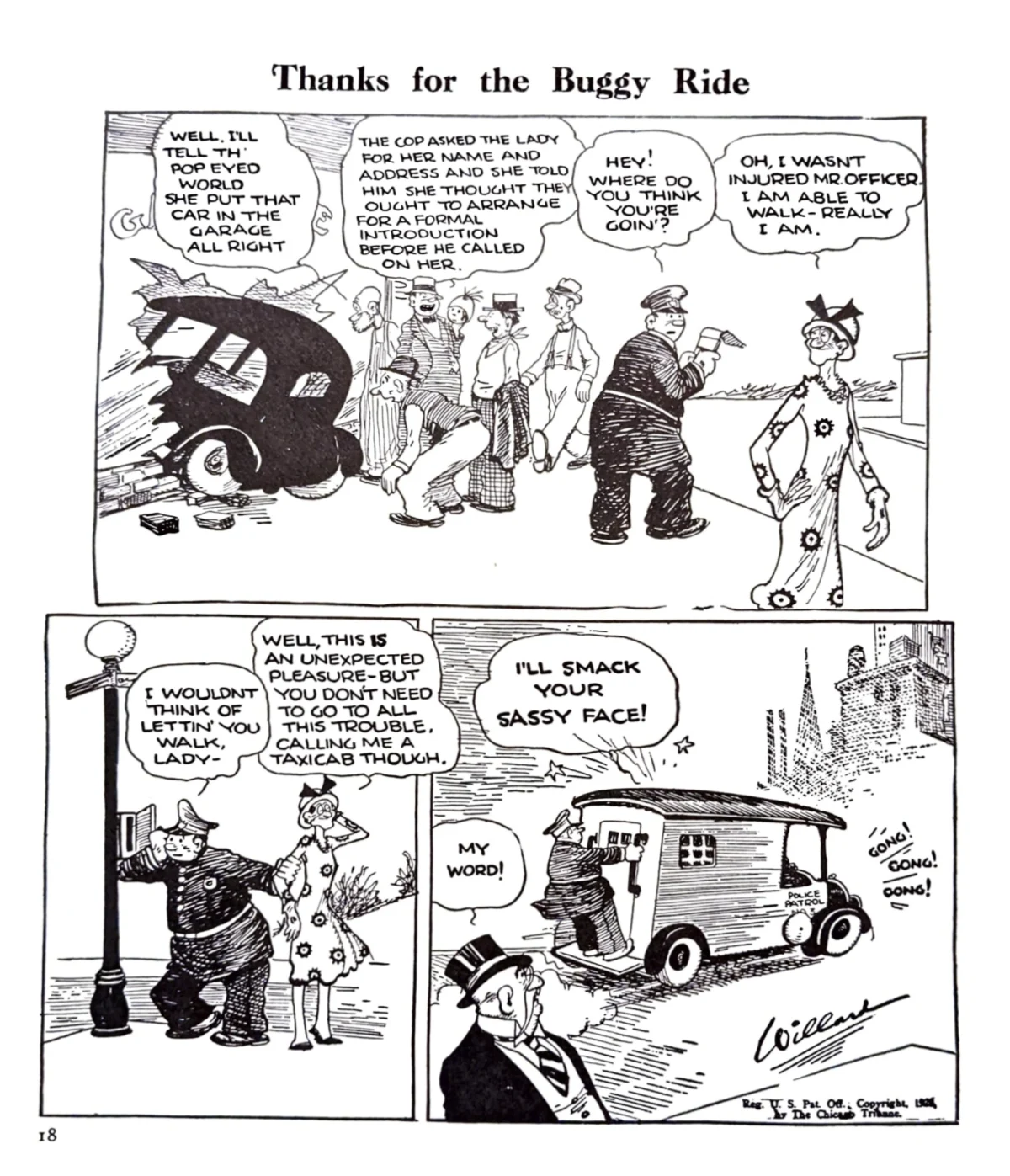
The history of American comic strips is often written through the lens of high-art innovators like Winsor McCay or the philosophical depth of Charles Schulz. However, for a significant portion of the 20th century, the pulse of the American working class beat through the ink and grit of "lowbrow" comedy. Chief among these was Moon Mullins, a strip that, at its zenith, commanded a daily audience of 14 million readers across 350 North American newspapers. Created by Frank Willard in 1923, Moon Mullins offered a window into a world of prize-fighters, rooming houses, and the "frank-hearted pluck" of the urban poor.
For modern readers—and specifically for those navigating personal crises—the strip serves as more than a historical curiosity. It represents a specific form of cultural manna: a world where humor is the only defense against a series of unrelenting "clouts to the skull."
Main Facts: The Rise of a Prizefighting Legend
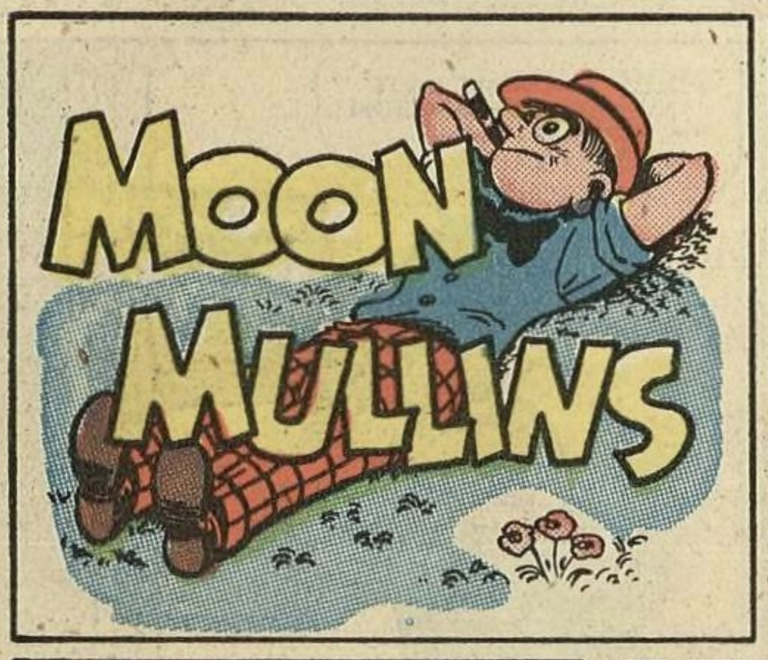
Moon Mullins premiered in June 1923, distributed by the Chicago Tribune New York News Syndicate (later part of King Features). The strip’s titular lead was Moonshine "Moon" Mullins, a feckless, often unemployed prizefighter who resided in a boarding house at 1323 Wump Street. The setting was a crucible for comedy, forcing together a "crackbrain ensemble" of working-class "undesirables" and downwardly mobile aristocrats.
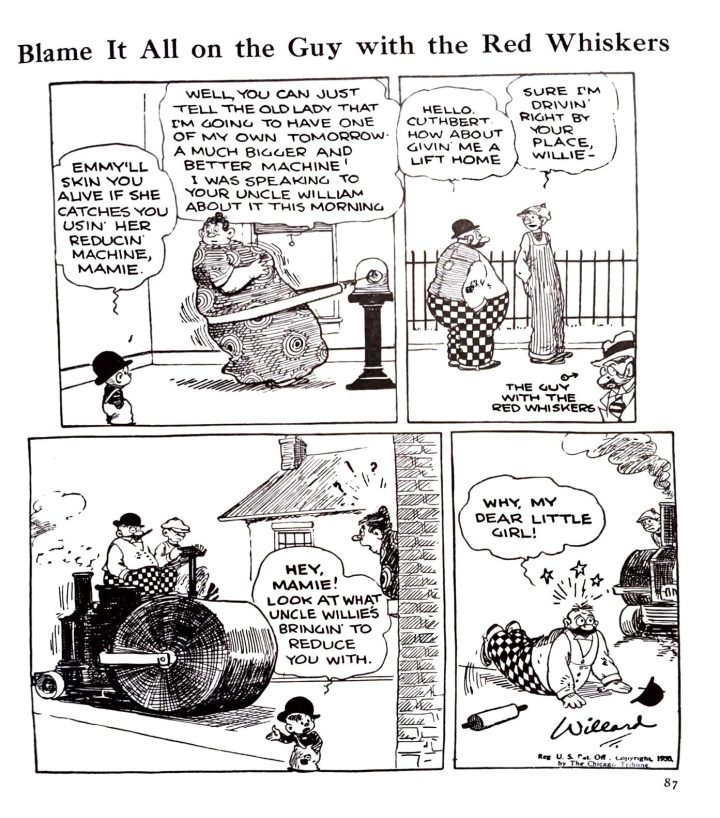
The strip was the brainchild of Frank Willard, a cartoonist whose personal life often mirrored the chaotic, rough-and-tumble nature of his creation. Willard’s work was characterized by its massive physical scale; original drawing boards often measured a hulking 22 inches by 16.5 inches. This gargantuan format allowed for a level of physical detail and kinetic energy that defined the "big foot" style of early 20th-century cartooning.

While the strip’s popularity waned in the post-WWII era as American tastes shifted toward suburban domesticity, it remained a staple of the funny pages for 68 years. Its legacy is one of survival, both in terms of the characters’ ability to endure poverty and the strip’s ability to outlive its creator by several decades.
Chronology: From the Jazz Age to the Digital Archive
The timeline of Moon Mullins reflects the broader shifts in American media and social mores:
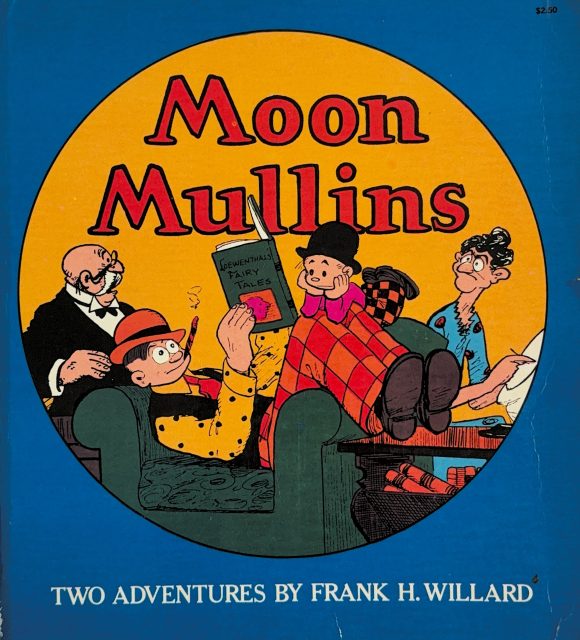
- June 1923: Moon Mullins makes its debut. Frank Willard establishes the core cast, including Moon’s younger brother Kayo, landlady Emmy Schmaltz, and the long-suffering Lord Plushbottom.
- The 1930s: The strip reaches its peak popularity during the Great Depression. Its themes of economic "bootstrapping" and the absurdity of social pretensions resonate deeply with a public facing real-world financial ruin.
- 1933–1943: Willard’s assistant, Ferd Johnson, begins taking on a greater share of the workload. Johnson later claimed he was drawing the majority of the strip by 1933 and writing it by 1943, as Willard increasingly prioritized golf, drinking, and a general "layabout" lifestyle.
- 1958: Frank Willard dies. Ferd Johnson officially takes over the strip, attempting to modernize the characters by moving them into the middle class and cleaning up the rougher edges of the humor.
- 1970s: The characters see a brief resurgence in popular culture through appearances in the Archie’s TV Funnies cartoon segments and various merchandise, including a Milton Bradley board game.
- 1991: After nearly 70 years of continuous publication, Moon Mullins is retired.
- 21st Century: The strip becomes a niche interest for collectors and historians. Original art boards become highly sought after in online auctions, often serving as the primary way for new readers to discover Willard’s unexpurgated early work.
Supporting Data: The Anatomy of a Rooming House Ensemble
The enduring appeal of Moon Mullins lay in its archetypal characterizations, which provided a "typology of personages" that readers recognized in their own lives.
The Wump Street Cast
- Moon Mullins: The "banjo-eyed" protagonist. A man of "hangman’s stoicism," Moon accepted his social standing with a mix of laziness and resilience.
- Kayo: Moon’s younger brother, who famously slept in a dresser drawer. He often served as the pragmatic foil to Moon’s get-rich-quick schemes.
- Emmy Schmaltz: The landlady of the rooming house. She represented the "attention-starved" gatekeeper, constantly oscillating between maternal care and litigious fury.
- Lord Plushbottom: An aristocrat who had fallen on hard times. His presence allowed Willard to lampoon the nouveau riche and the absurdity of maintaining social "airs" while living in a tenement.
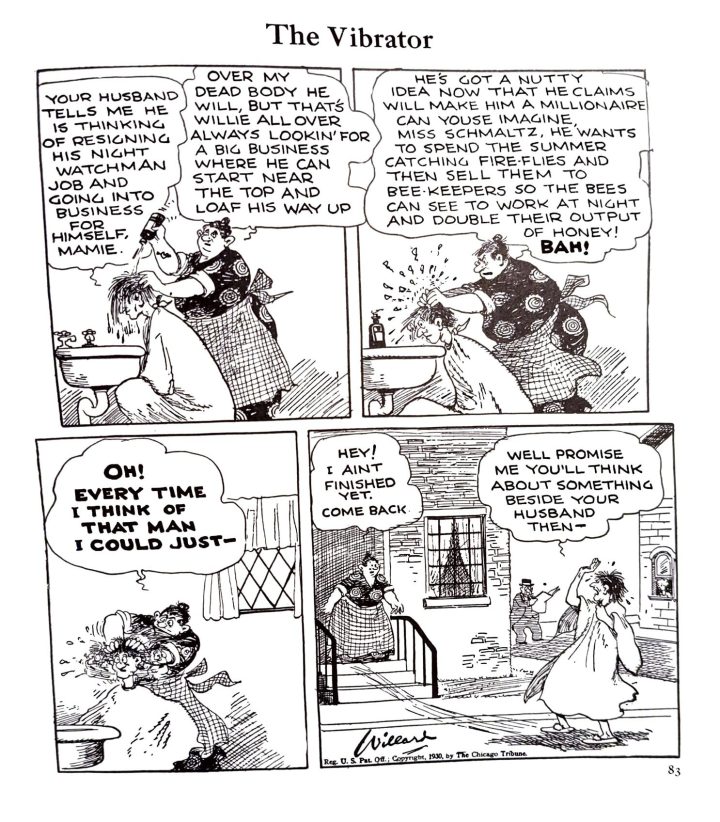
- Uncle Willie and Aunt Mamie: The quintessential bickering couple, representing the domestic friction of the era.
The Scale of the Art
The physical production of the strip was an athletic feat. The 22-inch boards were significantly larger than contemporary comic art. This scale was necessary to accommodate the "slapstick" nature of the gags—characters being launched through windows or engaging in exaggerated fisticuffs required room for the eye to follow the action. This aesthetic was shared by other masters of the era, such as Rudolph Dirks (The Katzenjammer Kids) and Harry Tuthill (The Bungle Family).
Official Responses and Critical Context: A "Bitter Tonic"
The critical reception of Moon Mullins has evolved from populist acclaim to historical scrutiny. While it was once hailed as a masterpiece of "lowbrow comedy for the masses," modern scholars must contend with its more problematic elements.
The Issue of Representation
Like many products of the early 20th century, Moon Mullins relied on tropes that are now indefensible. The character "Mushmouth," Lord Plushbottom’s driver, is a prominent example of minstrel-show representation, utilizing derisive caricatures of African American Vernacular English. Furthermore, the depiction of women was largely confined to three rigid categories: the "floozy," the "shrew," and the "matron."
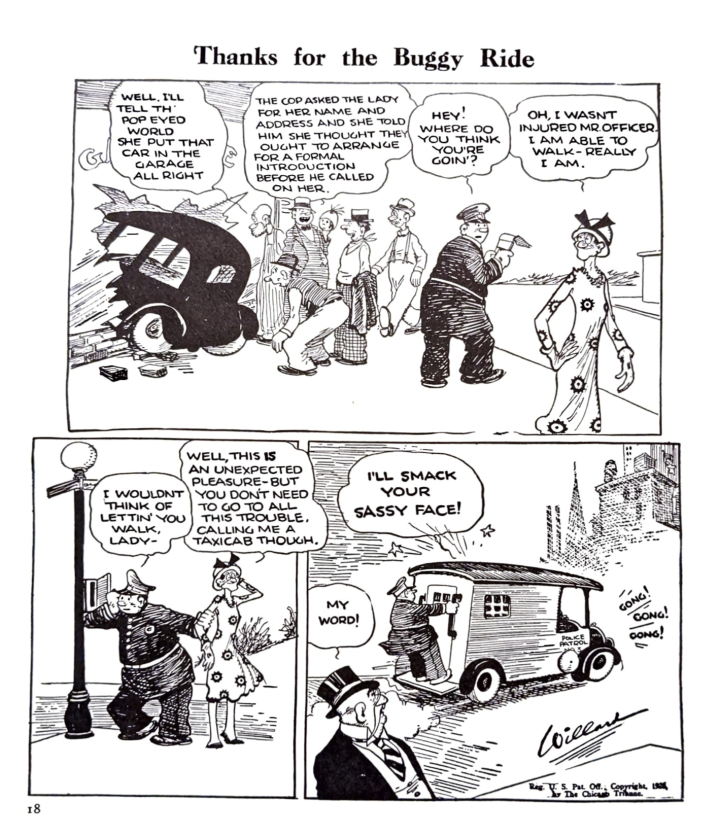
Comic historian R.C. Harvey, in his definitive history Frank Willard and a Touch of Moonshine, notes that these elements make the strip a "bitter tonic." Harvey argues that while Willard’s work is a vital historical text, it requires a dispassionate exploration of its flaws rather than a simple denouncement.
The "Magnificent Roughneck"
The "official response" to Willard himself was often one of exasperated awe. Clive Howard’s 1947 Saturday Evening Post article, "The Magnificent Roughneck," painted a picture of a man who lived exactly like his characters. Willard was known for his "parsimony," once being mistaken for a gardener on his own estate because he was working in the dirt in an undershirt and threadbare pants. He was also notoriously combative; he once punched King Features editor Rudolph Bloch for allegedly stealing his ideas for other strips.
Implications: The Therapeutic Power of the Loser
The survival of Moon Mullins in the cultural consciousness—even if only in the margins—suggests a deeper psychological utility for this kind of art. For the writer or reader facing "mounting legal troubles" or the "oppressive confines" of a failing marriage, Moon Mullins offers a unique form of therapy.
Slapstick as Stoicism
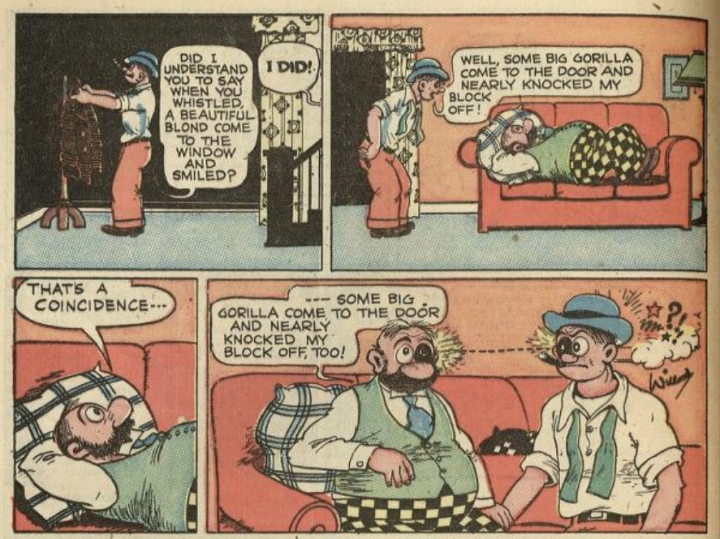
There is a specific comfort in the "close quarters conflict" of the rooming house. It mirrors the claustrophobia of personal crisis. Moon Mullins, buffeted by ill-circumstance and "constantly falling afoul of his closest intimates," takes his lumps with a trademark indifference. This "hangman’s stoicism" is a survival mechanism.
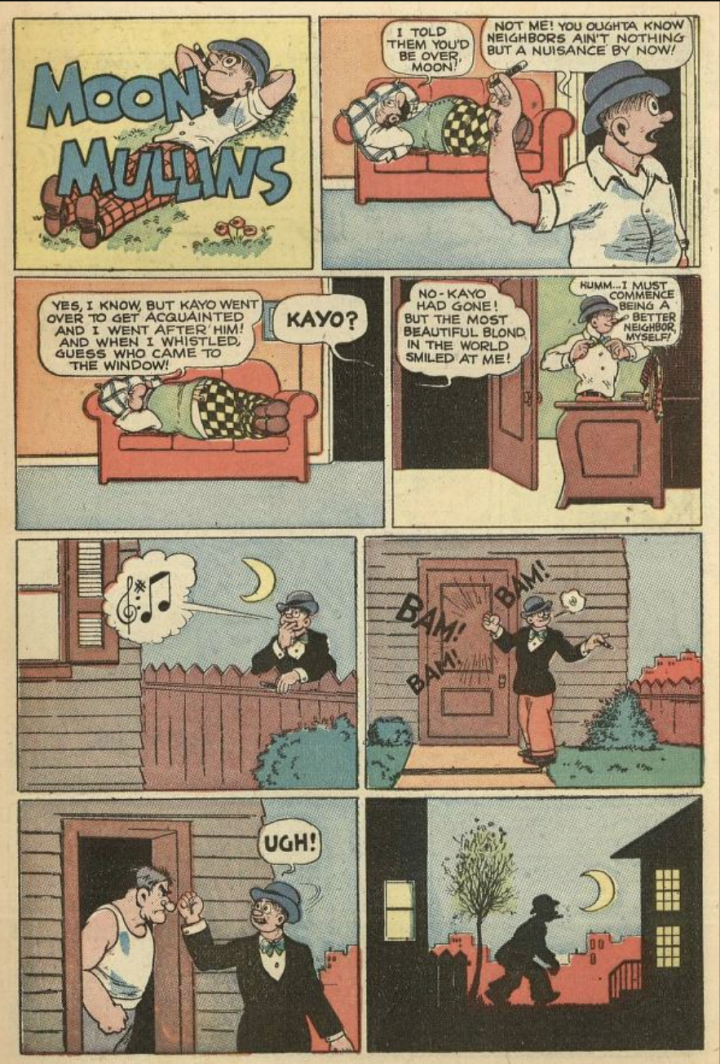
In one famous Sunday strip from 1930, Moon falls unconscious after eating spoiled potato salad. While he sleeps, his cigar ignites a pile of newspapers. He awakens to a room engulfed in flames and, believing he has died, simply remarks: "So! This is where they sent me."
The Persistence of the Type
The characters of Wump Street have not disappeared; they have simply changed their wardrobes. The "attention-starved landlord" and the "underwitted boss putting on airs" are universal figures. By engaging with Willard’s work, readers find a way to "savour the richness of life" post-separation or post-failure. It provides a framework for viewing one’s own life not as a tragedy, but as a long-running, slightly problematic, but ultimately resilient comic strip.
Conclusion: A Future When All’s Well
The legacy of Frank Willard and Moon Mullins is a reminder that art does not need to be "earth-shattering" to be essential. Sometimes, the most revitalizing tonic is a world of "comedic lightness" where the stakes are small, the characters are flawed, and the protagonist—no matter how many times he is knocked down—always returns for the next panel. In the face of divorce, debt, or social upheaval, the "feckless prizefighter" reminds us to endure the inferno with a matter-of-fact shrug, believing in a "future when all’s well."