William N. Copley’s "X-Rated" Series Ignites Dialogue on Art, Eroticism, and Societal Norms at Galerie Max Hetzler
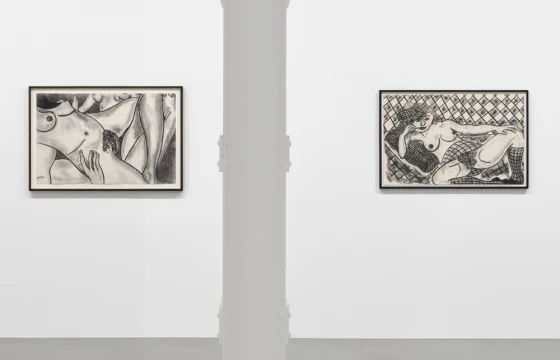
Berlin, Germany – [Insert Date] – Galerie Max Hetzler in Berlin is set to unveil "X-Rated (1972-1974)," a significant solo exhibition dedicated to the provocative paintings and works on paper of American artist William N. Copley. This marks the gallery’s fourth presentation of Copley’s oeuvre, offering a deep dive into a pivotal period of his artistic output. The exhibition will be on view until April 22, 2026, inviting audiences to engage with Copley’s unique exploration of sexuality, humor, and the boundaries of artistic expression.
Copley’s journey into the art world was unconventional, beginning with aspirations as a writer and a brief but influential stint in the late 1940s co-founding and managing Copley Galleries in Beverly Hills. This venture, alongside his brother-in-law John Ployardt, placed him at the epicenter of the Surrealist movement, fostering close relationships with luminaries such as Man Ray, Max Ernst, and Marcel Duchamp. It was through the encouragement of dealer Alexander Iolas that Copley began to seriously pursue his nascent artistic practice. Adopting the distinctive moniker "CPLY" around the time the gallery ceased operations, he made his public debut as an artist in 1951 at a Los Angeles bookstore, shortly before relocating to France.
While a generation younger than the core Surrealist group, Copley’s work is profoundly imbued with the movement’s conceptual and personal underpinnings. His signature style, characterized by bold black outlines and a self-taught figurative approach reminiscent of comic strips and Pop Art, belies a deeply literary sensibility. Copley employed narrative strategies that not only echoed Surrealist principles but also propelled the structural evolution of his compositions. Like many Surrealists, he embraced humor, psychology, and eroticism as fundamental pillars of his creative process. However, his engagement with overtly sexual subject matter pushed beyond the often playful eroticism of his contemporaries, venturing into territories that challenged conventional perceptions.
The Genesis of "X-Rated": A Bold Exploration of Sexuality
The exhibition prominently features works from Copley’s prolific "X-Rated" series, created between 1972 and 1975. This body of work, first exhibited in 1974 at the New York Cultural Center under the same title, draws heavily from erotic imagery and ritualized motifs found in adult magazines. Copley himself articulated his ambition for this series as a desire "to break through the barrier of pornography into the area of joy."
This period in the United States was marked by legal restrictions on the sale of hardcore pornography, making Copley’s acquisition of "adult magazines" a clandestine act of purchasing "under the counter." These publications served as a rich source of inspiration for his inventive figurative and narrative paintings, which delved into the complexities of eroticism, sexual politics, and the uninhibited pursuit of pleasure. The "X-Rated" paintings demonstrate a remarkable range of tone, from the tender emotion evoked in works like The Seven Year Itch (1973) to the exuberant energy of Viridiana (1973). Nearly all of these pieces exude an undeniable and often disarming humor. Copley’s philosophy on sexuality was one of open-ended exploration, famously stating, "That’s what makes sex so much fun: since nobody really understands it, the possibilities for originality are endless."
The Artistic Process: From Sketch to Canvas
Copley’s meticulous approach to painting involved a distinct two-stage preparatory drawing process. He would begin with an initial, small-scale study to capture the essence of his idea, followed by a larger, more refined version. In this second stage, he meticulously honed the composition, introduced significant changes, and amplified the work’s pictorial dynamism. The resulting paintings, though born from this careful planning, retain a deliberately "slapdash" style, with figures rendered with a loose, gestural quality rather than precise detail. The exhibition effectively illuminates this developmental trajectory by presenting pairings of preparatory drawings alongside their completed paintings, offering visitors a unique insight into Copley’s creative evolution. A notable example of this is the pairing of the drawing Calcutta (1973) with its corresponding painting, Untitled (1973).
Visual Language: Challenging Conventions Through Form and Color
The canvases of the "X-Rated" series depict scenes of copulation and orgies, often set against vibrantly colored backgrounds animated by bold, geometric patterns. This deliberate artistic treatment led critic James R. Mellow to observe that the works were "too artful to be libidinous, let alone lascivious." The distinctive style, characterized by contorted and entwined bodies with attenuated limbs and schematic outlines, has prompted critics to draw parallels between Copley’s work and that of Henri Matisse.
However, while traditional depictions of the nude and sexual imagery throughout art history have often relied on suggestion and idealization, Copley opted for a direct and unvarnished portrayal of the sexual act, leaving little to the viewer’s imagination. This departure from convention marked a significant challenge to established artistic norms and societal expectations surrounding the representation of sexuality.
Cultural Resonance: Titles, Classification, and Critical Reception
Copley’s choice of titles for his "X-Rated" works often referenced Hollywood movies, such as Les Quatre Cent Coups, The Exorcist, and Tobacco Road. This practice served to temper the potential shock value of the pornographic imagery through a lens of playful absurdity and pop cultural sensibility. In a manner that aligns with Surrealist principles of disjunction, the film titles rarely bore an explicit connection to the visual content of the artworks. Nevertheless, they acted as catalysts, igniting a cascade of associations and interpretations for the viewer.
The very title of the series, "X-Rated," is itself a nod to the film industry. Until the 1990s, the "X-rated" classification in the United States was reserved for films deemed suitable only for adults. This nomenclature underscored the provocative nature of Copley’s subject matter. Despite the cautionary notices that accompanied the 1974 exhibition at the New York Cultural Center, warning visitors of potentially offensive content, the show, curated by the progressive director Mario Amaya, garnered a notably positive critical response. Peter Schjeldahl, writing for Art in America, lauded the exhibition as "uniformly gorgeous" and a "highly satisfying development in Copley’s work."
Legacy and Enduring Impact: Subversion in an Uncensored Age
The "X-Rated" series stands as a singular and distinct chapter within William N. Copley’s broader artistic oeuvre, deliberately diverging from the prevailing artistic currents of the early 1970s. Even in today’s image-saturated and ostensibly uncensored world, Copley’s suggestive canvases retain a potent subversive charge. By artfully merging the realms of high art and eroticism, Copley not only challenged conservative societal norms but also rejected the notion of artistic neutrality. His work actively dismantled moralistic constraints, championing instead a spirit of directness, uninhibited expression, and a profound embrace of humor as a powerful tool for exploring the complexities of human experience and desire. The exhibition at Galerie Max Hetzler promises to be a significant event, re-examining Copley’s enduring contribution to the discourse on art, sexuality, and the ever-evolving landscape of societal taboos.