Bridging Two Eras: How the ‘Avatar Aang’ Feature Film Architected the World of ‘The Legend of Korra’
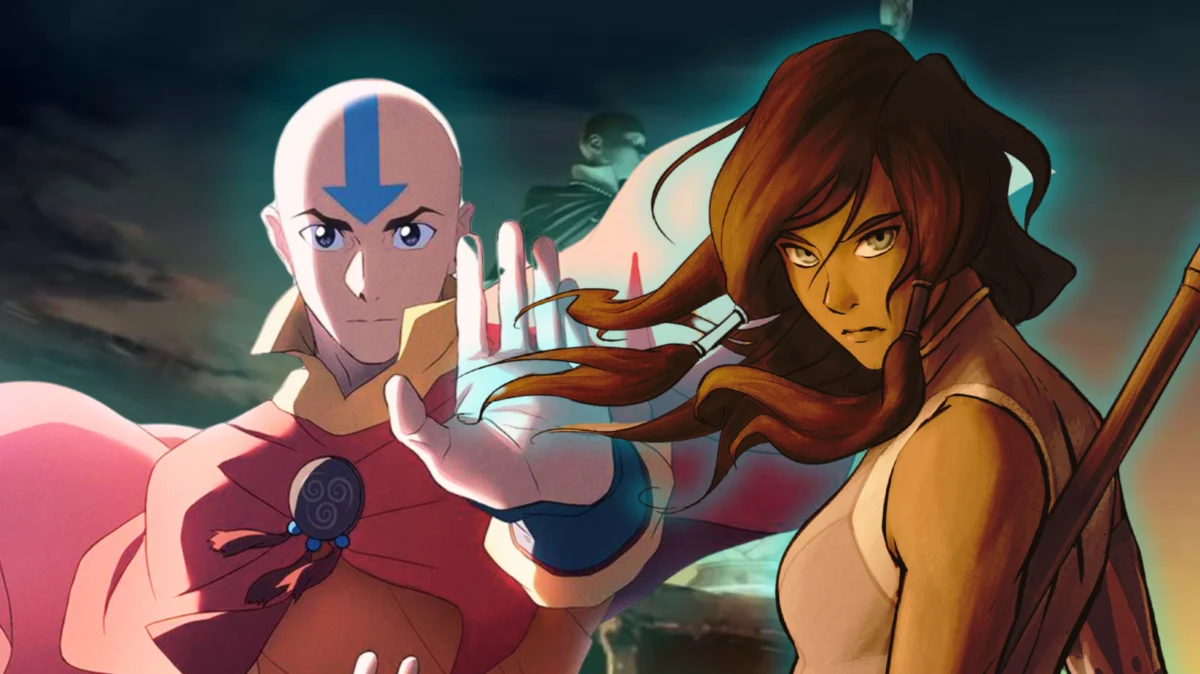
The "Avatar: The Last Airbender" franchise has long been celebrated for its intricate world-building and its ability to weave complex themes of trauma, redemption, and sociopolitical evolution into an accessible animated medium. With the release of the feature film Avatar Aang: The Last Airbender, fans have finally received the missing link between the original 2005 series and its 2012 successor, The Legend of Korra. Set approximately a decade after the fall of Fire Lord Ozai, the film serves as more than just a nostalgic return to Team Avatar; it is a deliberate architectural blueprint for the future of the United Republic of Nations.
By introducing the early days of Republic City, the origins of the Air Acolytes, and the ideological precursors to the Equalist movement, Avatar Aang transforms from a standalone adventure into a foundational text for the "Korra" era.
Main Facts: The Narrative Core of the Aang Sequel
The film centers on a young adult Aang (voiced by Eric Nam), who, despite being the savior of the world, remains haunted by his status as the "last" of his kind. While the original series focused on the external threat of the Fire Nation, this cinematic entry pivots toward internal and cultural preservation.
The narrative catalyst is the discovery of Tagah (Dave Bautista), an ancient Airbender who survived the centuries in a state of suspended animation similar to Aang. However, Tagah is not a mentor but a mirror—a cautionary tale of what Air Nomad philosophy looks like when twisted by vengeance and the pursuit of power. Alongside Tagah comes a new faction known as "The Denied," a group of non-benders who feel marginalized in a world increasingly defined by the "miracles" of benders.
Through these characters, the film explores the "Staff of Sonam," a MacGuffin with the power to bestow bending onto non-benders. Aang’s ultimate decision regarding this power—and his commitment to rebuilding his culture through non-bending "Air Acolytes"—sets the stage for the specific tensions and triumphs witnessed 70 years later in The Legend of Korra.
Chronology: From the 100-Year War to the Republic Era
To understand how Avatar Aang bridges the gap, one must look at the chronological progression of the world’s geopolitical landscape.
1. The Post-War Reconstruction (0–5 AG)
Following the defeat of Ozai, Aang and Fire Lord Zuko (voiced by Steven Yeun) faced the daunting task of "de-colonization." As established in the Avatar graphic novels and referenced in the film, the Fire Nation colonies in the Earth Kingdom could not simply be dismantled, as the populations had become inextricably mixed. This led to the formation of the "Cranefish Town" settlement, which would eventually evolve into Republic City.
2. The Era of the Film (Approx. 10–15 AG)
The film takes place during this transitional phase. Republic City is no longer a small colony but a burgeoning metropolis. It is here that we see the first signs of urban friction. The city is a melting pot of the Four Nations, yet Aang feels a profound sense of isolation. This period is defined by the "Air Nomad Problem"—the realization that while the world is at peace, an entire branch of the Four Nations remains extinct.
3. The Discovery of the Sky Bison (The Film’s Climax)
A pivotal moment in the film’s finale is the discovery of a hidden herd of sky bison. In the original series, Appa was believed to be the last of his species. The film reveals that small pockets of these creatures survived in the wild, specifically near a hidden ancient temple. This explains the presence of "Oogi" and other bison in The Legend of Korra, resolving a decade-long continuity question for fans.
4. The Passing of the Torch (Post-Film to 170 AG)
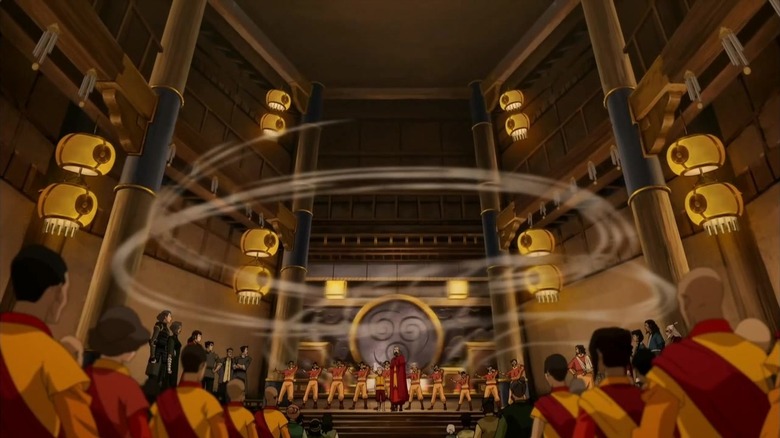
The film ends with the establishment of Air Temple Island in Republic City’s harbor. This ensures that by the time Korra (the next Avatar) arrives in the city, the infrastructure of the Air Nomads—and the political weight of the Avatar’s family—is already a cornerstone of the world’s capital.
Supporting Data: The Mechanics of the "Staff of Sonam"
The introduction of the "Staff of Sonam" (voiced by Frieda Pinto) provides a critical lore expansion regarding the nature of bending. According to the film, Sonam was an Avatar from 5,000 years prior who sought to maintain balance by elevating non-benders to protect the less-populous Air Nomads.
- Spiritual Awakening vs. Genetic Inheritance: The film clarifies that bending is not merely biological but spiritual. Tagah uses the staff to "awaken" the latent potential in the Denied.
- The Energybending Connection: Aang’s eventual destruction of the staff echoes his use of Energybending on Ozai and Yakone. It reinforces the theme that the Avatar’s role is not to give or take power at will, but to ensure that power does not become a tool of tyranny.
- Precedent for "Harmonic Convergence": The film provides a spiritual precedent for the events of The Legend of Korra Book 2. When thousands of non-benders suddenly become Airbenders in Korra, it is not a random mutation but a "correction" by the universe—a concept first touched upon by Avatar Xian (Ke Huy Quan) in his spiritual guidance to Aang during the movie.
Official Responses and Production Context
The creative team at Avatar Studios, led by original creators Michael DiMartino and Bryan Konietzko, has been vocal about their intent to create a "cohesive cinematic universe." In promotional interviews, the producers noted that the casting of Eric Nam and Steven Yeun was intended to reflect the maturity of the characters as they transitioned from wartime refugees to global statesmen.
Dave Bautista’s portrayal of Tagah was specifically designed to challenge Aang’s pacifism. "We wanted a villain who wasn’t just ‘evil’ like Ozai," the writers noted in a production featurette. "Tagah is a man who lost everything and thinks he’s doing the right thing by ‘restoring’ the Air Nation. He forces Aang to define what it actually means to be an Air Nomad. Is it just the bending? Or is it the philosophy?"
The inclusion of "The Denied" was also a deliberate choice to address long-standing fan critiques regarding the inherent unfairness of the bending world. By showing Aang struggle with these complaints, the filmmakers provided a more grounded, political dimension to his heroism.
Implications: Setting the Stage for the "Korra" Conflict
The most significant contribution of Avatar Aang is the thematic groundwork it lays for the first season of The Legend of Korra.
The Rise of the Equalists
The "Denied" in the film are the clear ideological ancestors of the Equalists. Their leader’s rhetoric—"If we want change, we need power"—is a direct precursor to Amon’s "Equality" movement. However, the film shows a failure of the Avatar to fully address the root cause of this resentment. While Aang defeats Tagah and destroys the staff, the social stratification remains. This "glossed over" inequality in Aang’s era becomes the explosive revolution of Korra’s era.
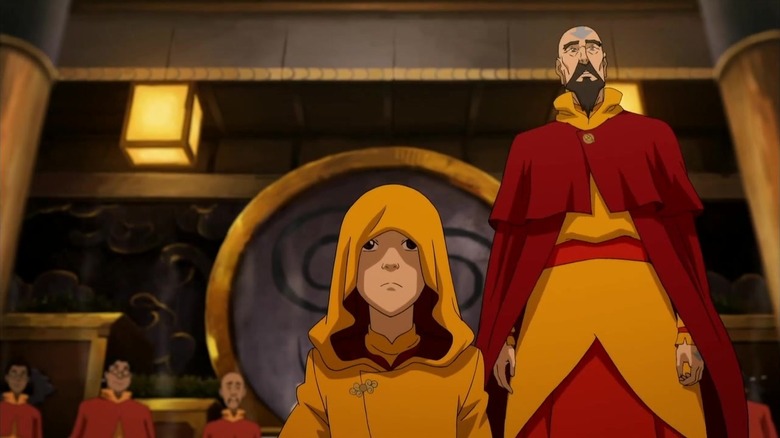
The Air Acolytes as a Cultural Bridge
By the end of the film, Aang accepts that he cannot "force" the return of Airbending. Instead, he recruits the Air Acolytes—non-benders who study and practice Air Nomad traditions. This group is essential to The Legend of Korra, as they maintain the temples and provide the cultural framework for the new Air Nation that eventually emerges. The film proves that Aang’s greatest legacy wasn’t his power, but his ability to inspire non-benders to keep a dead culture alive.
A More Human Avatar
Ultimately, Avatar Aang humanizes the legendary figure seen in the statues of The Legend of Korra. It shows him as a man prone to doubt, struggling with the weight of genocide, and making difficult choices about the distribution of power. When Korra eventually communicates with Aang’s spirit, the audience now understands the specific burdens he carried—not just as a child of war, but as the architect of a new, complicated world.
In conclusion, Avatar Aang: The Last Airbender is a masterclass in "bridge-building" storytelling. It satisfies the desire for a sequel while meticulously planting the seeds for the future. By the time the credits roll, the world of Korra feels less like a radical departure and more like the inevitable evolution of the seeds Aang planted during his tenure as the "Last" Airbender.