Unveiling the Abyss: I.V. Marie’s "Ruinous Ends" Plunges Blackwood Academy into Deeper Shadows
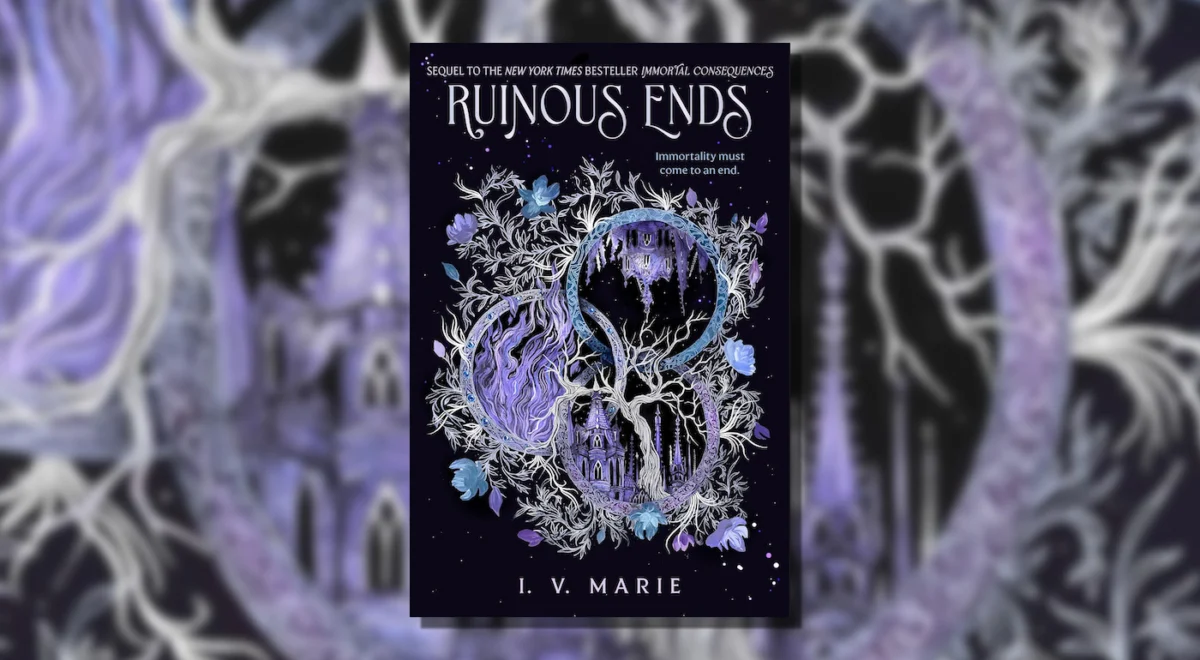
New York, NY – June 18, 2026 – As the literary world eagerly anticipates its next thrilling dark fantasy saga, Delacorte Press prepares to unleash Ruinous Ends, the second installment in I.V. Marie’s captivating Young Adult trilogy, Souls of Blackwood Academy. Slated for release on July 14th, this eagerly awaited sequel promises to plunge readers even further into a perilous afterlife where the lines between hero and villain blur, and the fate of souls hangs precariously in the balance. A recently released excerpt offers a chilling glimpse into the fractured mind of one of its central characters, Augustine Hughes, hinting at the profound sacrifices and moral quandaries that define this unfolding epic.
Main Facts: The Anticipated Return to a Perilous Afterlife
Ruinous Ends by I.V. Marie marks the highly anticipated continuation of the Souls of Blackwood Academy trilogy, a YA dark fantasy series that has already captivated audiences with its intricate world-building and morally complex characters. Published by Delacorte Press, a division of Penguin Random House known for its impactful YA titles, the book is scheduled to hit shelves on July 14th. The series is set within the enigmatic confines of Blackwood Academy, an institution that serves as a crucible for souls in the afterlife, harboring ancient secrets and profound lies beneath its venerable facade.
The core premise of Ruinous Ends centers on the aftermath of the Decennial, an event whose conclusion has only intensified the struggle for control over the afterlife. Six former pupils of Blackwood Academy find themselves at the epicenter of this cosmic conflict, each embodying a distinct archetype crucial to the unfolding drama: “The charmer and the golden boy,” “The traitor and the girl desperate to save her,” and “The Chosen One and the one who would choose her over and over again.” Their collective actions, or inactions, will determine whether the afterlife finds its much-needed hero or succumbs to a villain who will shatter it forever. The publisher’s synopsis teases a grand revelation: "Blackwood’s biggest secret has yet to come to light—and when it does, it will shake the institution to its core." This foundational mystery, coupled with the deeply personal struggles of its protagonists, sets the stage for a narrative steeped in suspense, dark magic, and heart-wrenching decisions.
A Deep Dive into the Narrative Chronology: From Decennial’s End to Augustine’s Descent
The narrative of Ruinous Ends picks up immediately following the conclusion of the Decennial, an event that has seemingly resolved little, instead unearthing deeper layers of intrigue and peril within Blackwood Academy. While the first book, presumably, introduced the rules and stakes of this otherworldly institution, the sequel promises to delve into the consequences of those initial trials. The battle for the afterlife, far from over, has merely shifted, becoming more insidious and personal.
Central to this escalating conflict is the character of Augustine Hughes, whose harrowing experience forms the core of the provided excerpt. His personal chronology within the story is one of profound suffering and transformative change. When we first encounter Augustine, he is adrift in the "outskirts of purgatory," his mind fragmented, wrestling with an "agony" that permeates his entire being. Time has become "fickle and unstable," and he grapples with the terrifying reality of losing his sanity in the afterlife—an ironic twist given his previous assumption that death would signify the end of his troubles. This torment, he realizes, is the direct consequence of a deliberate act: "He had carved out his humanity. He had opened the locked door and invited the shadows inside, sealing his fate." This "purging," as he identifies it, is a known phenomenon within "the Order," involving days of writhing pain and horrifying hallucinations.
The excerpt then transports the reader through a series of Augustine’s flickering memories, presented as "vignettes of a life that was no longer his." This chronological progression of his past traumas serves to contextualize his current, tormented state and the drastic measures he has taken.
- The Mother’s Demise: The earliest memory reveals a chilling act of patricide: "He was the one who’d killed her, after all." Augustine witnesses his mother’s burial, his sister Edith’s profound grief, and their father’s cold indifference, hinting at a deeply dysfunctional and violent family history.
- Edith’s Vengeance: This memory shows a pivotal conversation between young Augustine and Edith. Driven by sorrow and rage, Edith proposes a horrifying act of vengeance against their father: "We can make it look like an accident." Augustine, wrestling with his conscience and fearing for Edith’s soul, tries to dissuade her, but her resolve is palpable, her eyes "locked on that study window." This moment establishes Edith as a character consumed by a thirst for retribution and foreshadows her tragic end.
- The Fateful Night: The most brutal and impactful memory details the actual murder attempt and its catastrophic fallout. Augustine, disturbed by Edith’s earlier words, discovers an empty vial of "Arsenic" in the kitchen, realizing her intent. He rushes to his father’s study, interrupting Edith’s plan as their father begins to sip the poisoned tea. The ensuing confrontation is a blur of violence and horror: their father realizes the plot, attacks Edith, Augustine intervenes and suffers a broken leg, Edith stabs their father, who then retaliates, brutally killing Edith with the same knife. As the room catches fire from a toppled candle, Augustine is left broken and choking, witnessing his sister’s lifeless form, a "ghost of a smile on her lips." Crucially, through the smoke, he "swore he saw someone standing on the other side of the room… watching," an ominous detail suggesting a deeper conspiracy or a sinister observer. Consumed by the flames, he plunges into darkness.
Upon awakening in a cave, Augustine’s fragmented reality coalesces. He recognizes the rapidly healing blisters on his hands and the streaks of blood as his own, evidence of his struggle. The physical manifestation of shadows coiling around his wrist confirms his terrifying transformation. He is now irrevocably bound to shadow magic, a path that renders him unable to cross to the "Other Side" and threatens to erode his very identity, mirroring Edith’s corruption. This personal chronology, from his past traumas to his current, shadow-infused state, positions Augustine as a character fundamentally altered, his humanity sacrificed for a higher purpose. This transformation is not merely a character arc but a pivotal plot point that will undoubtedly shape the direction of the entire trilogy, especially as it ties into the collective destiny of the six pupils.
Supporting Data: Excerpts, Themes, and World-Building Elements
The provided excerpts are rich with details that illuminate the intricate world and profound themes of Ruinous Ends. The overarching synopsis sets a tone of high stakes and moral ambiguity:
"The Decennial is over, but for the students of Blackwood Academy, the fight for the afterlife has just begun.
The infamous school was hiding more secrets—and lies—than any of the Decennial’s participants could have imagined. And there’s still so much that remains buried beneath its ancient foundations. Now the future of the academy, and all the souls within it, rests in the hands of six former pupils:
The charmer and the golden boy…
The traitor and the girl desperate to save her…
The Chosen One and the one who would choose her over and over again…
Any of them could be the hero the afterlife needs… or the villain who will destroy it for good. Because the truth is, Blackwood’s biggest secret has yet to come to light—and when it does, it will shake the institution to its core."
This passage introduces the central cast through compelling archetypes, each hinting at complex backstories and potential roles. While Augustine is clearly "the one who would choose her over and over again" for Wren (presumably "The Chosen One"), his transformation into a shadow-infused being profoundly complicates this dynamic. His sister Edith, in his memories, perfectly embodies "The traitor" due to her murderous intent and potential corruption by shadows, further suggesting a cycle of darkness within their family line. The "charmer and the golden boy" remain enigmatic, adding layers of mystery to the ensemble.
Augustine’s internal monologue and memories serve as a powerful testament to the novel’s dark themes:
- Humanity vs. Inhumanity: Augustine’s act of "carving out his humanity" is a literal and metaphorical journey into the abyss. The shadows now flowing through his veins represent a tangible loss, a trade-off for power. This raises profound questions about the cost of power and the definition of the soul in this afterlife.
- Vengeance and Morality: Edith’s desperate quest for vengeance against their abusive father highlights the destructive nature of unchecked rage, blurring the lines between justice and murder. Augustine’s struggle to dissuade her, fearing for her soul, underscores the moral tightrope characters in this world must walk.
- Sacrifice and Love: Despite his terrifying transformation and self-perception as "broken and tarnished and wretched," Augustine’s ultimate motivation is pure: to save Wren. His promise, "Find me. Wherever you are, wherever we end up, don’t stop looking for me," drives his drastic actions. This theme of profound, self-sacrificing love against a backdrop of darkness adds emotional resonance to the narrative.
- Destiny and Free Will: Augustine believes he "could somehow trick the hand of fate," but ultimately accepts his new, shadowed reality, believing he is not a hero. This internal conflict suggests a larger struggle against predetermined destinies within the Blackwood Academy lore.
The world-building hints are equally compelling. Blackwood Academy is more than just a school; it’s a repository of "secrets—and lies" and "ancient foundations," implying a deep, perhaps malevolent, history. The "Decennial" is a significant, yet unexplained, event. "Purgatory" and the "Other Side" delineate the different realms of the afterlife, while "the Order" suggests a structured organization overseeing, or perhaps exploiting, these spiritual dynamics. The "shadows" are not merely symbolic but a tangible force, capable of poisoning and transforming souls, linking to a potent system of magic and corruption. The "unfathomable pain" and "agony" Augustine experiences are not just emotional but physical, emphasizing the visceral reality of this dark afterlife.
Official Responses and Publisher’s Vision
While direct official statements from Delacorte Press or I.V. Marie regarding this specific excerpt are not yet available, the very act of its release speaks volumes. Penguin Random House’s decision to publish Ruinous Ends underscores their confidence in I.V. Marie’s ability to craft a sophisticated and impactful YA narrative. The selection of such a dark, character-driven excerpt indicates a strategic move to highlight the series’ mature themes and complex psychological depth, distinguishing it within the competitive YA fantasy market.
It can be inferred that Delacorte Press envisions Souls of Blackwood Academy as a flagship series that pushes the boundaries of young adult literature. The trilogy appears designed to appeal to readers who crave morally ambiguous protagonists, intricate world-building, and high-stakes emotional drama. The focus on themes like sacrifice, vengeance, and the battle for one’s soul suggests a commitment to exploring profound philosophical questions within an accessible fantasy framework. I.V. Marie’s narrative choices, particularly in depicting Augustine’s agonizing transformation and his traumatic past, align with a publisher’s desire to deliver stories that resonate deeply and provoke thought, rather than merely entertain. The anticipation around Ruinous Ends confirms that readers are eager to witness how these dark threads will intertwine and unravel.
Implications: A Soul-Stirring Journey into Moral Ambiguity
The implications of Augustine Hughes’s harrowing journey, as revealed in this excerpt, are far-reaching, promising to reshape the dynamics of Ruinous Ends and the entire Souls of Blackwood Academy trilogy.
For the Characters: Augustine’s transformation into a shadow-infused being drastically alters his role among the six pupils. No longer merely "the one who would choose her over and over again," he is now a tainted force, a potential anti-hero. His internal struggle between his love for Wren and the corrupting influence of the shadows will undoubtedly be a central conflict. How will Wren react to this change? Can their bond survive such a profound shift in his essence? The excerpt strongly hints at a tragic trajectory for Augustine, where his desperate efforts to save Wren may ultimately cost him his soul and identity, fulfilling his self-prophecy of being "broken and tarnished and wretched." The revelation of the mysterious watcher during his family’s fiery demise also suggests a hidden hand guiding or manipulating events, potentially connecting to the larger "secrets and lies" of Blackwood Academy.
For the Blackwood Academy World: The existence of "the Order" and the process of "purging" suggest a formalized, yet sinister, structure within the afterlife. The "biggest secret" that will "shake the institution to its core" could be intrinsically linked to the origin or nature of these shadows, the purpose of the Decennial, or the true identity and motives of Blackwood Academy’s overseers. Augustine’s new abilities, coupled with his willingness to sacrifice himself, could make him a powerful, albeit dangerous, asset or threat to any faction vying for control of the afterlife. The struggle for the afterlife is not just a battle of wills but a clash of fundamental forces, where shadows and humanity are in constant contention.
For the Reader: Ruinous Ends promises an emotionally intense and morally complex reading experience. I.V. Marie challenges conventional notions of heroism, presenting protagonists who are deeply flawed and willing to embrace darkness for what they perceive as a greater good. Readers can expect a narrative rich in psychological depth, where characters grapple with their past traumas, the consequences of their choices, and the eternal fight between light and shadow. The novel’s unflinching portrayal of violence, grief, and existential torment will resonate with those seeking a more mature and thought-provoking entry into the YA dark fantasy genre. The compelling blend of personal sacrifice and grand-scale conflict ensures that Ruinous Ends will not only advance the plot but also deepen the emotional investment in the fate of Blackwood Academy and its haunted souls.
As the release date draws near, Ruinous Ends stands poised to deliver a gripping, soul-stirring chapter in the Souls of Blackwood Academy trilogy. With its intricate plot, unforgettable characters, and profound thematic explorations, I.V. Marie invites readers to confront the darkness within and without, questioning what it truly means to be a hero when the afterlife itself is on the brink of ruin.